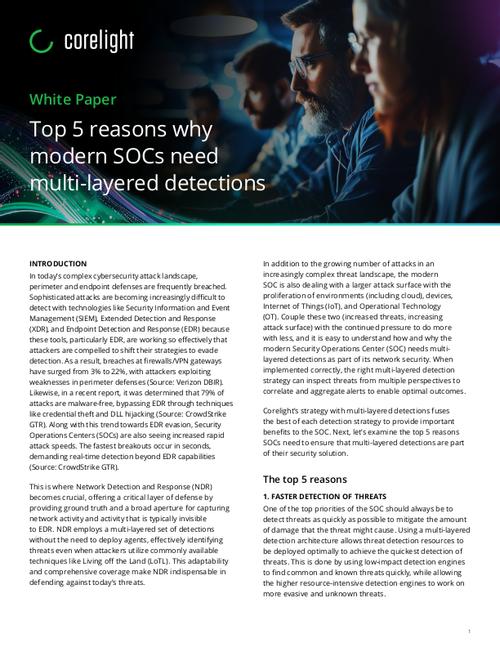
This whitepaper explains why multi-layered detections are essential for modern SOCs to combat advanced, fast-moving, and malware-free threats that evade traditional EDR and SIEM systems. It highlights how Corelight’s Open NDR architecture fuses behavioral analytics, signatures, machine learning, and threat...
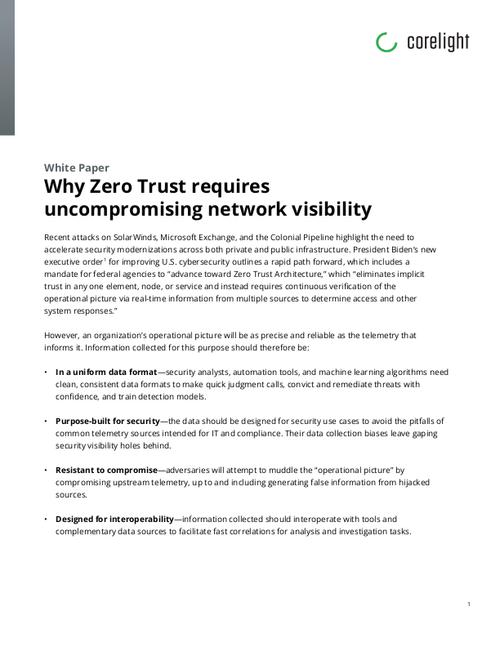
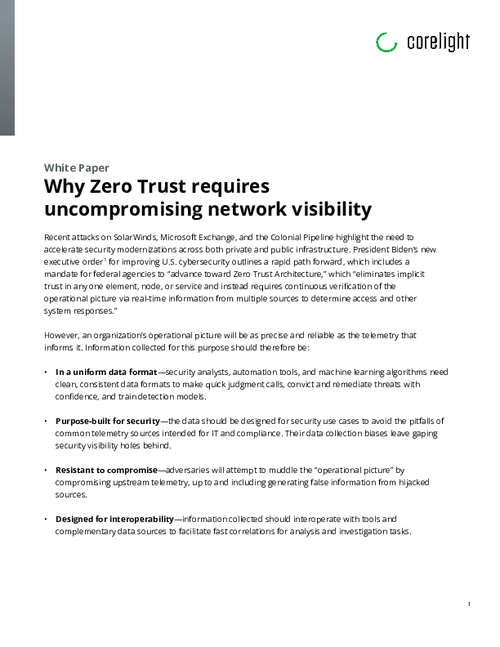
This whitepaper outlines why Zero Trust architectures demand uncompromising network visibility to deliver continuous verification, resilience, and interoperability across hybrid environments. It demonstrates how relying solely on endpoint detection leaves critical blind spots, while comprehensive network telemetry...
British outsourcing giant Capita must pay 14 million pounds to British data regulators for privacy violations tied to a 2023 hack that impacted 6 million individuals. An EDR system caught the malicious file within 10 minutes but the company didn't respond to the alert until 58 hours later.
Rapidly acting on security alerts and activating third-party incident response help are the top two ways organizations have successfully arrested an in-progress ransomware attack before it gets to the encryption, according to a review of more than two years' worth of incident response engagements.
Cyberattacks are becoming increasingly more sophisticated and bypassing traditional defenses such as EDR, with 79% of attacks now operating malware-free and having breakout times of just seconds. As attack surfaces grow across cloud, IoT, and OT, security teams need increased visibility so they can correlate evasive...
As geopolitical tensions rise, companies face an expanding threat landscape - particularly through IoT and OT vulnerabilities that leave cloud infrastructures at risk, said PJ Hamlen at Amazon Web Services, and Julie Bernard at Deloitte & Touche LLP.
Traditional endpoint security tools like endpoint detection and response (EDR) are no longer enough to defend against ransomware and other sophisticated identity-based attacks. Modern threat actors exploit stolen credentials, overprivileged accounts and other identity security vulnerabilities to infiltrate systems and...
There’s a significant difference between endpoint privilege management and endpoint privilege security. And when it comes to defending against today’s endpoint-focused attacks, organizations need the best of both – it should not be an either-or proposition. To help you identify the controls needed to protect...
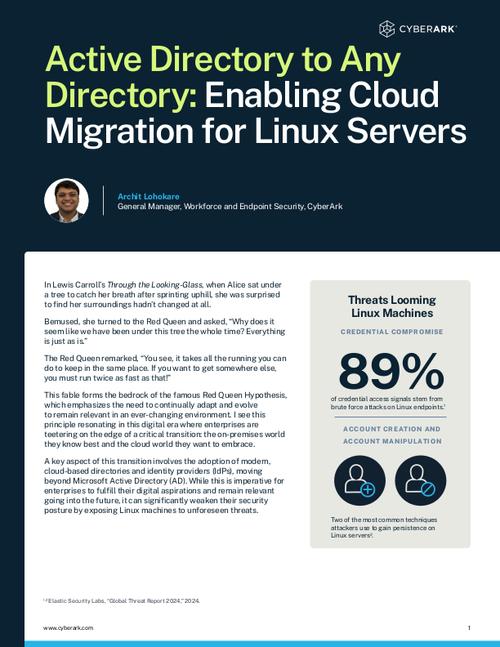
With organizations moving to the cloud, Linux security poses a significant challenge as it doesn’t support modern, cloud-based directories. In addition, decentralized identity and access management (IAM) tactics give rise to privilege sprawl, resulting in a weakened security posture. In this whitepaper, Archit...
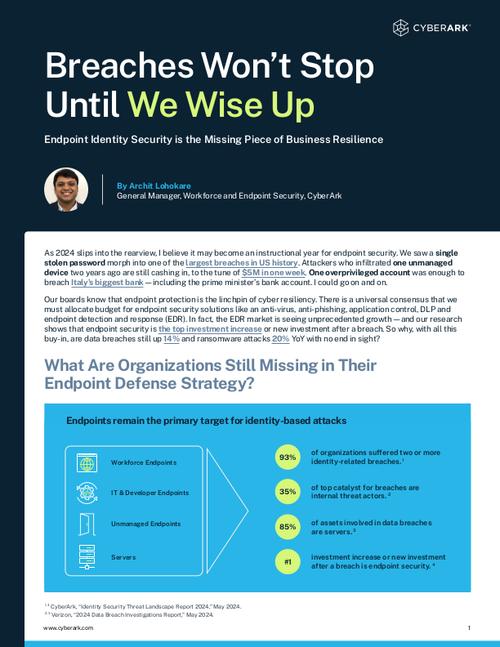
Data breaches are rising, even as organizations invest heavily in endpoint security. The problem? Overprivileged users, unmanaged devices and stolen credentials leave gaps that traditional tools miss. Reactive strategies, designed to combat known threats, fail to address how attackers commonly infiltrate and move...
Recent high-profile cyberattacks, including those on SolarWinds, Microsoft Exchange, and Colonial Pipeline, have underscored the urgent need for organizations to modernize their security posture. The move toward Zero Trust Architecture (ZTA) is a critical step in this journey, requiring organizations to eliminate...
Cybersecurity incidents can strike without warning, disrupting operations, compromising data and damaging reputations. For many organizations, the difference between a minor setback and a full-blown catastrophe comes down to preparation. This white paper explores how a cybersecurity services retainer could have...
In the rapidly evolving landscape of cloud-native technologies, Kubernetes has emerged as the orchestration platform of choice for deploying, scaling and managing containerized applications. This guide is a resource for those tasked with securing Kubernetes deployments, providing a foundation for the knowledge and...
In an era of rapidly evolving cyber threats, an effective services retainer can mean the difference between swift containment and catastrophic damage. This whitepaper presents 10 critical considerations to guide chief information security officers (CISOs) in selecting an IR provider that offers more than just...
Our website uses cookies. Cookies enable us to provide the best experience possible and help us understand how visitors use our website. By browsing govinfosecurity.com, you agree to our use of cookies.