Cybersecurity needs thinkers who can examine the logic underlying our systems, question assumptions and identify where traditional cryptography will no longer hold. The post-quantum challenge presents an opportunity for math-minded people to contribute in ways that will influence global security.
While quantum computing promises advances in fields such as healthcare and financial modeling, cybersecurity experts say Q-Day also poses a fundamental risk to the cryptographic standards that secure communications, digital signatures and transactions worldwide.
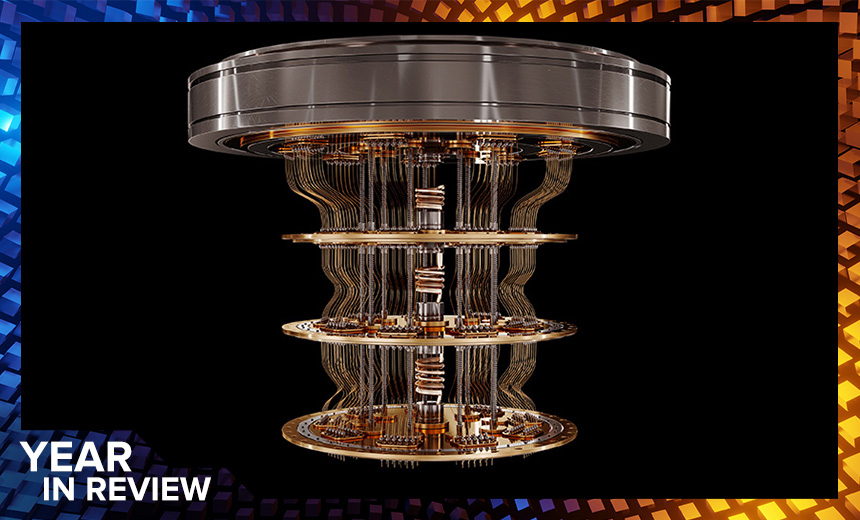
Quantum computers are finally emerging from sterile labs after decades of research and development. Recent breakthroughs and use cases indicate that the quantum decade has begun, with collaboration across the private sector, startup community, government and academia accelerating development.
Cyber resilience is a critical part of defense strategies today, and resilience is rooted in strong, well-managed cryptography, said Zulfikar Ramzan, chief technology officer at cybersecurity firm Point Wild. He shares key drivers for organizations to move toward quantum migration.
Recent attacks targeting Fortra's GoAnywhere managed file transfer software exploited a "limited" number of customers who set their on-premises installations to have an administrative console publicly exposed to the internet, which the vendor recommends customers never do.
Massimo Nardone, vice president of OT security at SSH Communications Security, outlines why ephemeral security, asset visibility and quantum readiness are vital for protecting converged IT and OT environments.
Healthcare organizations face mounting operational and patient safety risks. Now's the time to modernize cryptographic systems, said Mike Nelson, vice president of digital trust at DigiCert.
The U.K. Home Office reportedly again ordered Apple to give it backdoor access to an encrypted cloud service after backing down in August from a similar demand made earlier this year. The order comes after a similar attempt by the Home Office in January.
Attackers exploited a now-patched zero-day vulnerability in a popular content management system that powers websites for companies including HSBC, L'Oréal, Toyota and United Airlines. Attackers used a cryptography key stored in some deployments to force the system into loading malware.
After three years of litigation, Virtru and Microsoft have settled a patent infringement case involving the tech giant’s email encryption product. The suit claimed Microsoft's technology infringed Virtru’s patented identity-driven encryption method for seamless, credential-free data access.
Financial firms and government agencies adopted TeleMessage to archive off-channel messages for compliance. Doug Henkin, partner at Dentons US, said the messaging platform introduced security flaws that exposed sensitive communications and created risks for both institutions and their clients.
Quantum data centers could become viable if business use cases emerge, says Lawrence Gasman, founder, Communications Industry Researchers. Technical hurdles, such as physical form factor, environment, cost and photonic interconnects, must be addressed for enterprise adoption.
Tony Ball, the incoming CEO of Entrust, plans to shift the company's digital identity strategy beyond onboarding to support full life cycle use cases. He also plans to expand Entrust's post-quantum efforts and streamline customer delivery under one platform.
The U.K. government is reportedly set to reverse course on requiring smartphone giant Apple to give police access to device data stored as backups in the California company's cloud service. "The Home Office is basically going to have to back down," a British official said.
The global post quantum cryptography (PQC) market size is expected and forecast to hit 1.68bn USD. With such high forecasts, there is still time to address the remaining challenges, get ahead of regulation and already known attack vectors. During this session we explore: Why “Harvest Now, Decrypt Later” is a real...
Our website uses cookies. Cookies enable us to provide the best experience possible and help us understand how visitors use our website. By browsing govinfosecurity.com, you agree to our use of cookies.