The sensitive health and genomics data of 1 million Americans used by a National Institutes of Health research project could be at risk for access or theft by bad actors, including foreign adversaries, a government watchdog group. Security weaknesses discovered in an audit are being addressed.
Discover how Xinhua Financial Plaza turned a growing security and efficiency challenge into a showcase of innovation with HID Mobile Access®. By empowering thousands of users with secure mobile credentials and cloud-enabled control — all supported by next-generation HID Signo readers — the Plaza erased cloning...
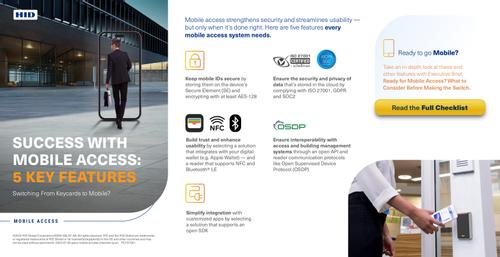
This quick-read checklist distills the five essential features that make or break a successful transition from keycards to mobile access. With guidance on Secure Element protection, digital wallet integration, open APIs, OSDP compatibility and top-tier cloud security standards, it gives organizations a clear,...
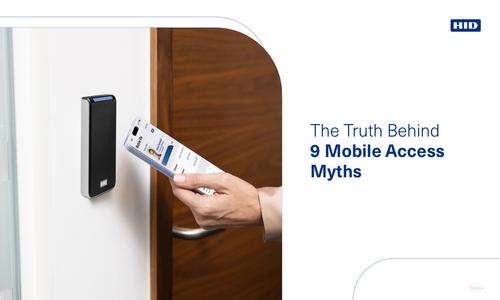
Mobile access is rapidly reshaping how organizations secure their spaces — yet outdated myths still hold many back from embracing a faster, safer and more efficient path forward. This eBook exposes the nine most common misconceptions about mobile credentials and replaces them with clear, evidence-backed truths,...
Amid rising complexity from AI agents and non-human identities, ConductorOne has raised $79 million in Series B funding. CEO Alex Bovee said the company aims to expand its identity platform, simplify access control and help security teams address evolving threats in hybrid environments.
Cybercriminals are hijacking trusted remote monitoring and management tools to bypass defenses, gain persistent access and quietly stage ransomware attacks. Experts warn MSPs and enterprises that supply chain exposure amplifies the scale of these intrusions.
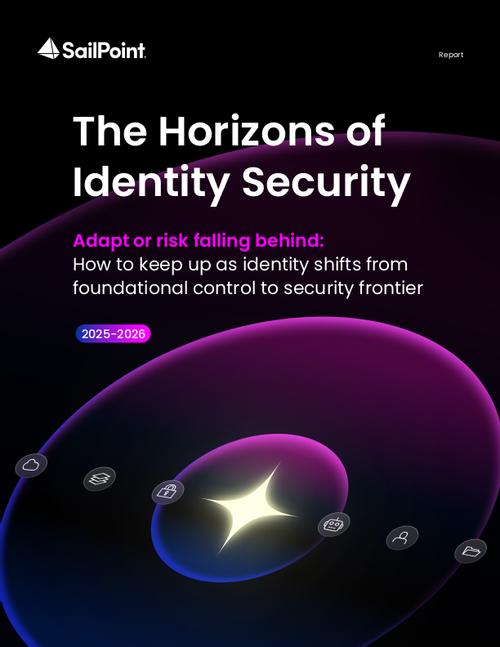
Identity has become the enterprise’s nerve center — powering access, automation, and real-time decisions. But many organizations remain stuck in manual, siloed processes. The fourth annual Horizons of Identity Security report reveals how leaders are advancing faster: securing every identity, governing AI and...
Washington D.C.-area identity verification provider ID.me has raised $340 million to develop fraud-fighting technology and prepare for long-term expansion. The investment supports product innovation to stop AI threats such as deepfakes and fake businesses.
Okta and CyberArk are moving beyond their core access management and privileged access offerings to provide integrated identity platforms as organizations seek to manage access, governance and privilege under one roof. SailPoint is doubling down on depth in identity governance.
Once built for simple text traffic, networks now face a tidal wave of AI workloads and machine identities. As Cisco, HPE and Palo Alto Networks revamp strategies, the race is on to secure and unify fragmented infrastructures and unlock the next phase of enterprise innovation.
Palo Alto Networks aims to acquire CyberArk for $25 billion, marking a major shift from its startup-focused M&A approach. Gartner VP Analyst Charlie Winckless says the deal highlights how AI and machine identity are reshaping what platform security vendors need to deliver.
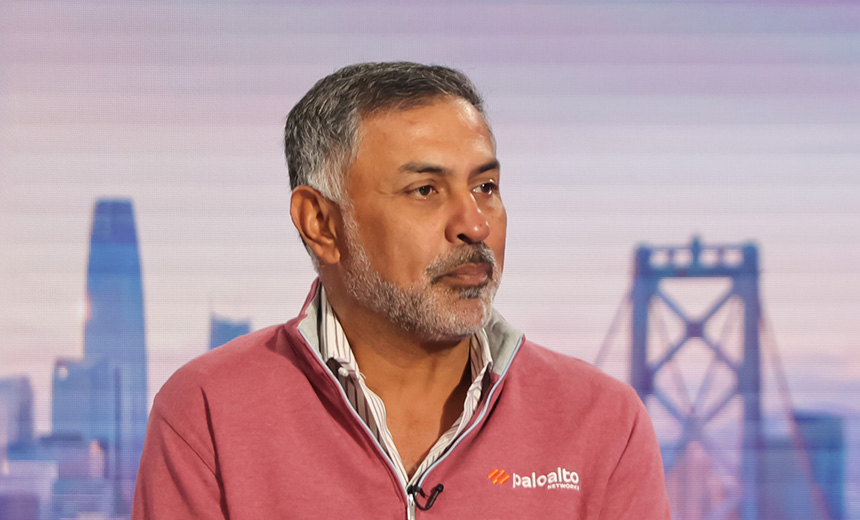
With a $25 billion acquisition of CyberArk, Palo Alto Networks expands its cybersecurity platform to secure human, machine and AI identities. CEO Nikesh Arora said the move is timely as 88% of ransomware attacks now stem from credential theft, and agentic AI emerges as a new risk vector.
Traditional IAM tools fall short in today's complex identity landscape. Twine Security's AI agent "Alex" steps in - not just automating, but acting with business context to tackle IAM tasks. It's not more tools we need, but agents who know how to use them.
Less than five months after Google agreed to spend $32 billion on red-hot cloud security startup Wiz, Palo Alto Networks is on the precipice of paying more than $20 billion for PAM goliath CyberArk, The Wall Street Journal reported Tuesday. Here's why the deal represents a major pivot for Palo Alto.
The explosion of agentic AI and autonomous bots to orchestrate cross-system tasks is turning MFA into a brittle defense. Non-human identities often bypass human-centric security controls, operating with static credentials and undefined ownership, creating exploitable identity risks.
Our website uses cookies. Cookies enable us to provide the best experience possible and help us understand how visitors use our website. By browsing govinfosecurity.com, you agree to our use of cookies.