Download as PDF, PPTX
 val first = list(0)](https://image.slidesharecdn.com/scalahome2014-wide2-160405112909/75/Demystifying-functional-programming-with-Scala-10-2048.jpg)
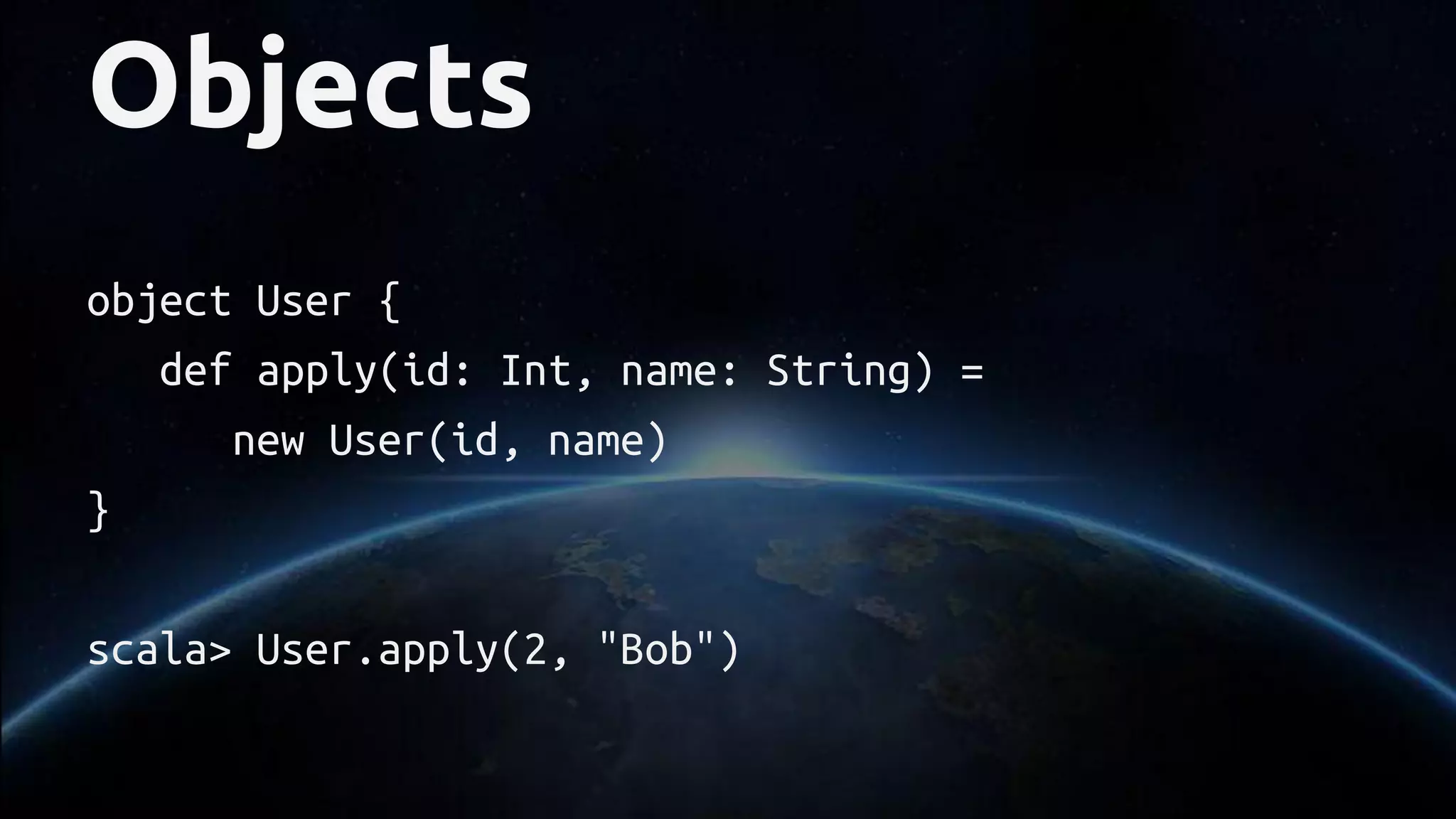
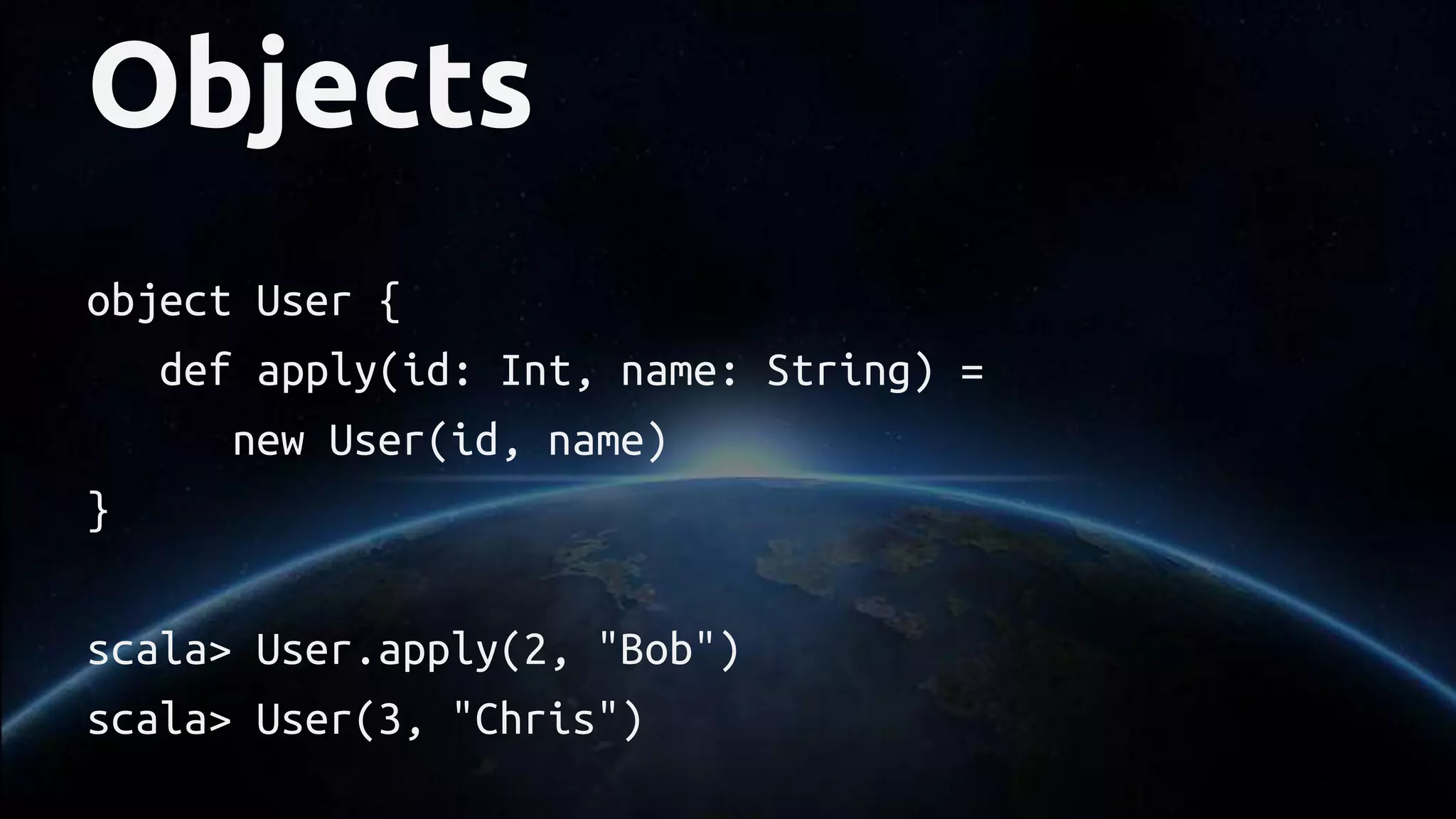
 val el = arr(1) // arr.apply(1)](https://image.slidesharecdn.com/scalahome2014-wide2-160405112909/75/Demystifying-functional-programming-with-Scala-16-2048.jpg)
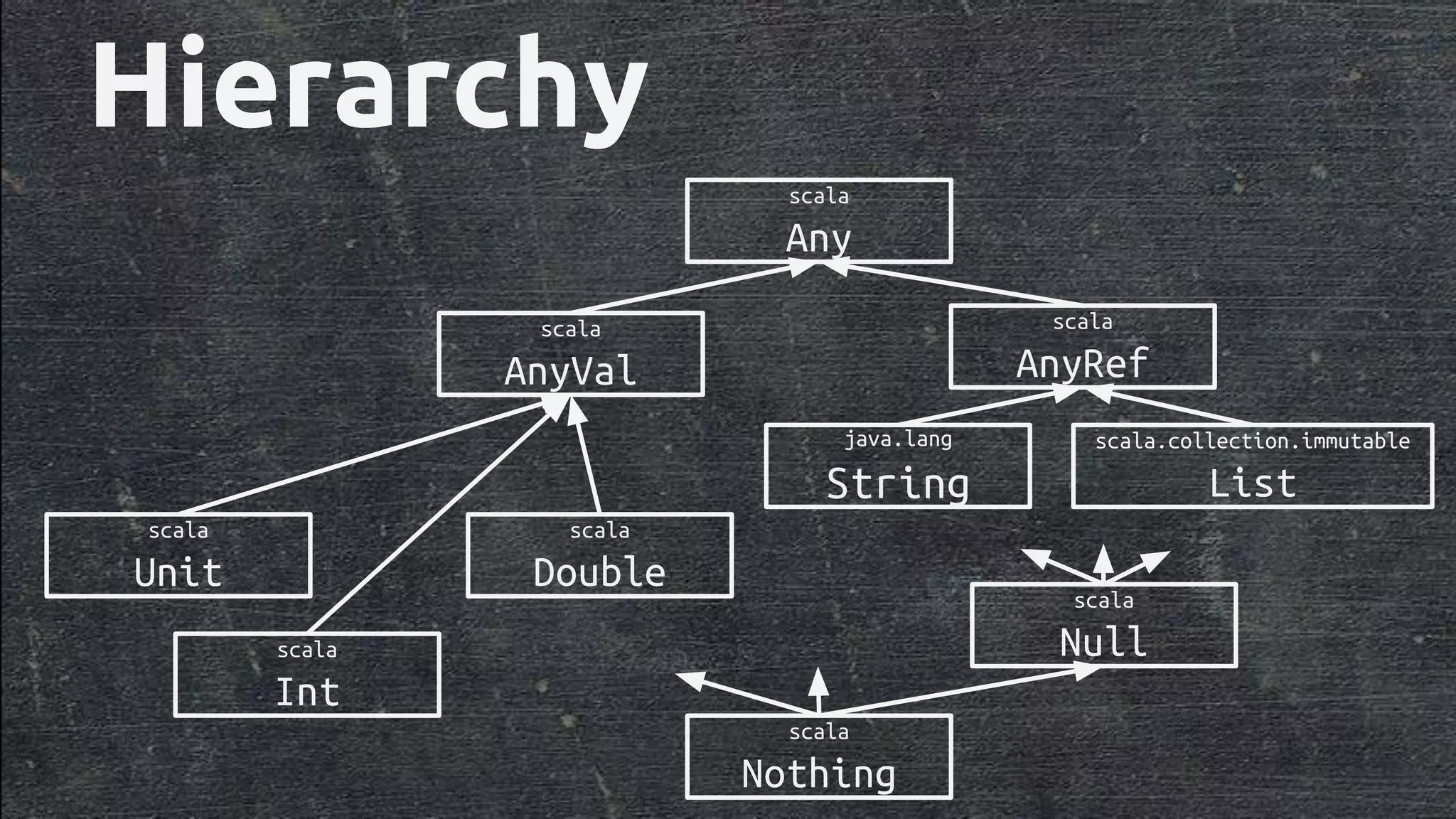
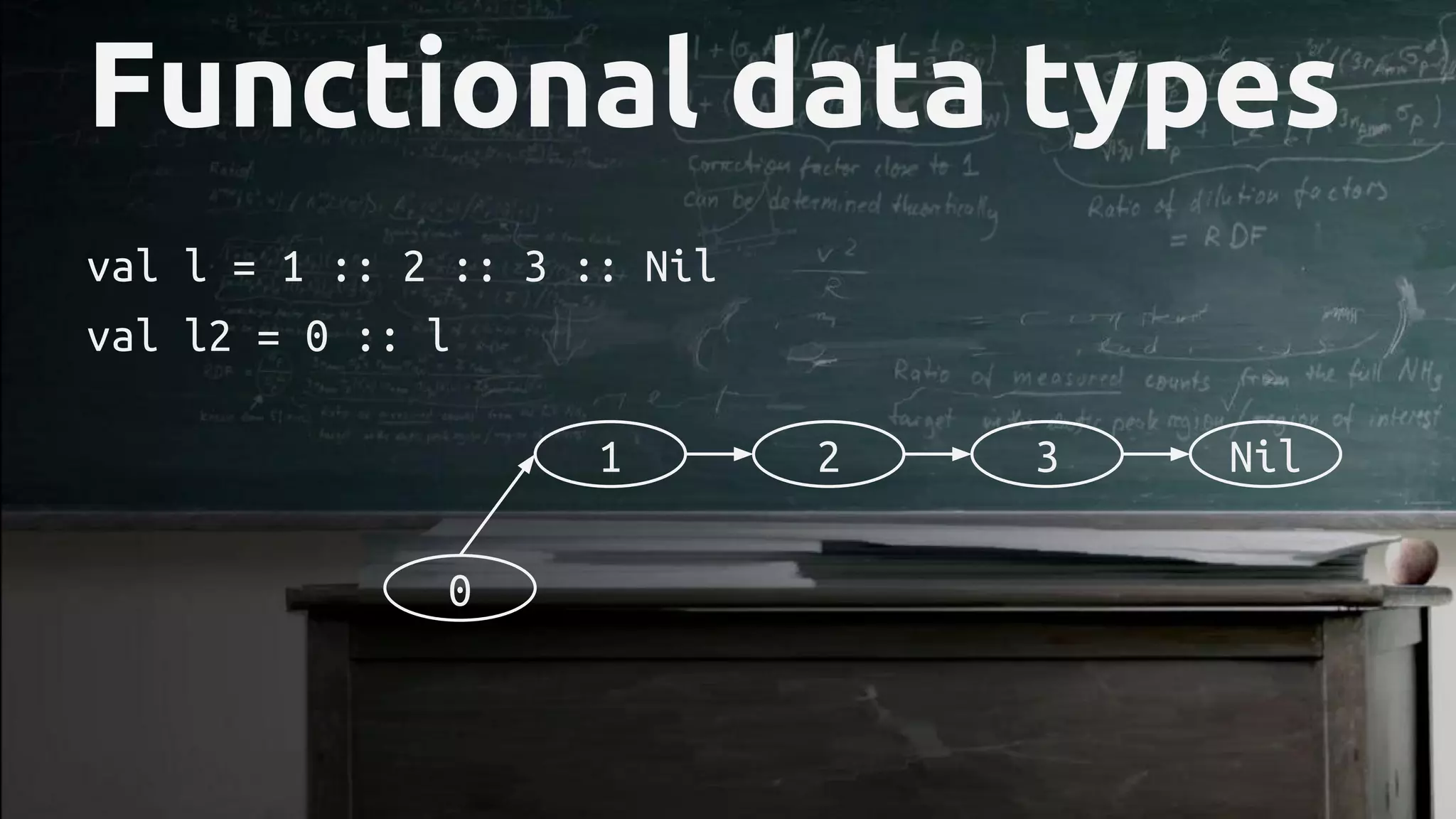
![Functional data types val l = 1 :: 2 :: 3 :: Nil // List(1, 2, 3) l.head // 1 l.tail // List(2, 3) l.isEmpty // false s.c.i Nil s.c.i ::[T] scala.collection.immutable List[+T]](https://image.slidesharecdn.com/scalahome2014-wide2-160405112909/75/Demystifying-functional-programming-with-Scala-20-2048.jpg)
![Imperative example def concat(list: List[Any]): String = { }](https://image.slidesharecdn.com/scalahome2014-wide2-160405112909/75/Demystifying-functional-programming-with-Scala-22-2048.jpg)
![Imperative example def concat(list: List[Any]): String = { val iter = list.iterator var result = "" while (iter.hasNext) { result += iter.next } result }](https://image.slidesharecdn.com/scalahome2014-wide2-160405112909/75/Demystifying-functional-programming-with-Scala-23-2048.jpg)
![Tail recursion def concat(l: List[Any]): String = if (l.isEmpty) else](https://image.slidesharecdn.com/scalahome2014-wide2-160405112909/75/Demystifying-functional-programming-with-Scala-24-2048.jpg)
![Tail recursion def concat(l: List[Any]): String = if (l.isEmpty) "" else l.head + concat(l.tail)](https://image.slidesharecdn.com/scalahome2014-wide2-160405112909/75/Demystifying-functional-programming-with-Scala-25-2048.jpg)
![Tail recursion def concatT(s: String, list: List[Any]): String = if (list.isEmpty) s else concatT(s + list.head, list.tail)](https://image.slidesharecdn.com/scalahome2014-wide2-160405112909/75/Demystifying-functional-programming-with-Scala-26-2048.jpg)
![Tail recursion def concat(l: List[Any]): String = { @tailrec def concatT(s: String, list: List[Any]): String = if (list.isEmpty) s else concatT(s + list.head, list.tail) concatT("", l) }](https://image.slidesharecdn.com/scalahome2014-wide2-160405112909/75/Demystifying-functional-programming-with-Scala-27-2048.jpg)
![Pattern matching def concat(l: List[Any]): String = l match { case Nil => case head :: tail => }](https://image.slidesharecdn.com/scalahome2014-wide2-160405112909/75/Demystifying-functional-programming-with-Scala-28-2048.jpg)
![Pattern matching def concat(l: List[Any]): String = l match { case Nil => "" case head :: tail => head + concat(tail) }](https://image.slidesharecdn.com/scalahome2014-wide2-160405112909/75/Demystifying-functional-programming-with-Scala-29-2048.jpg)
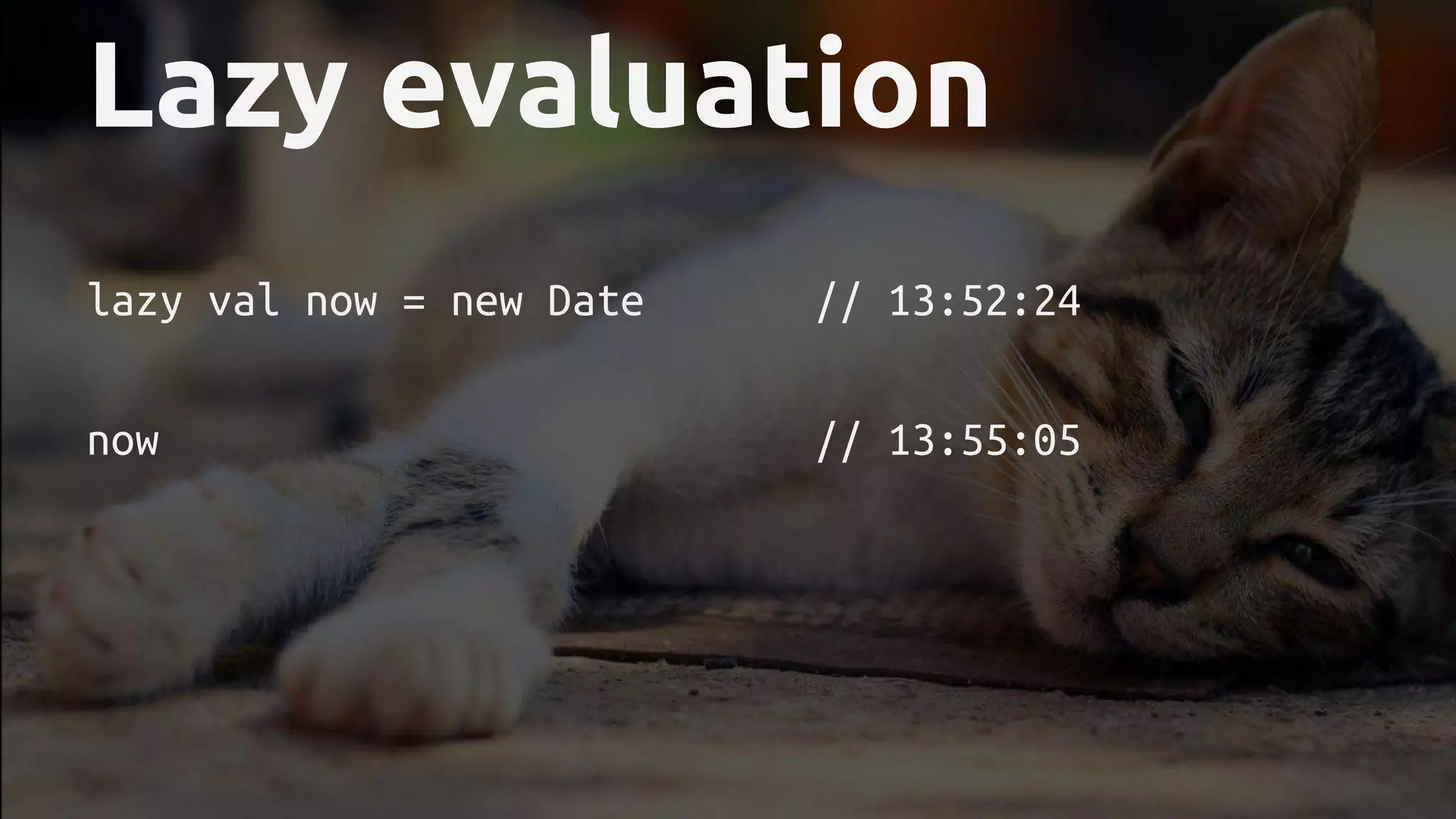
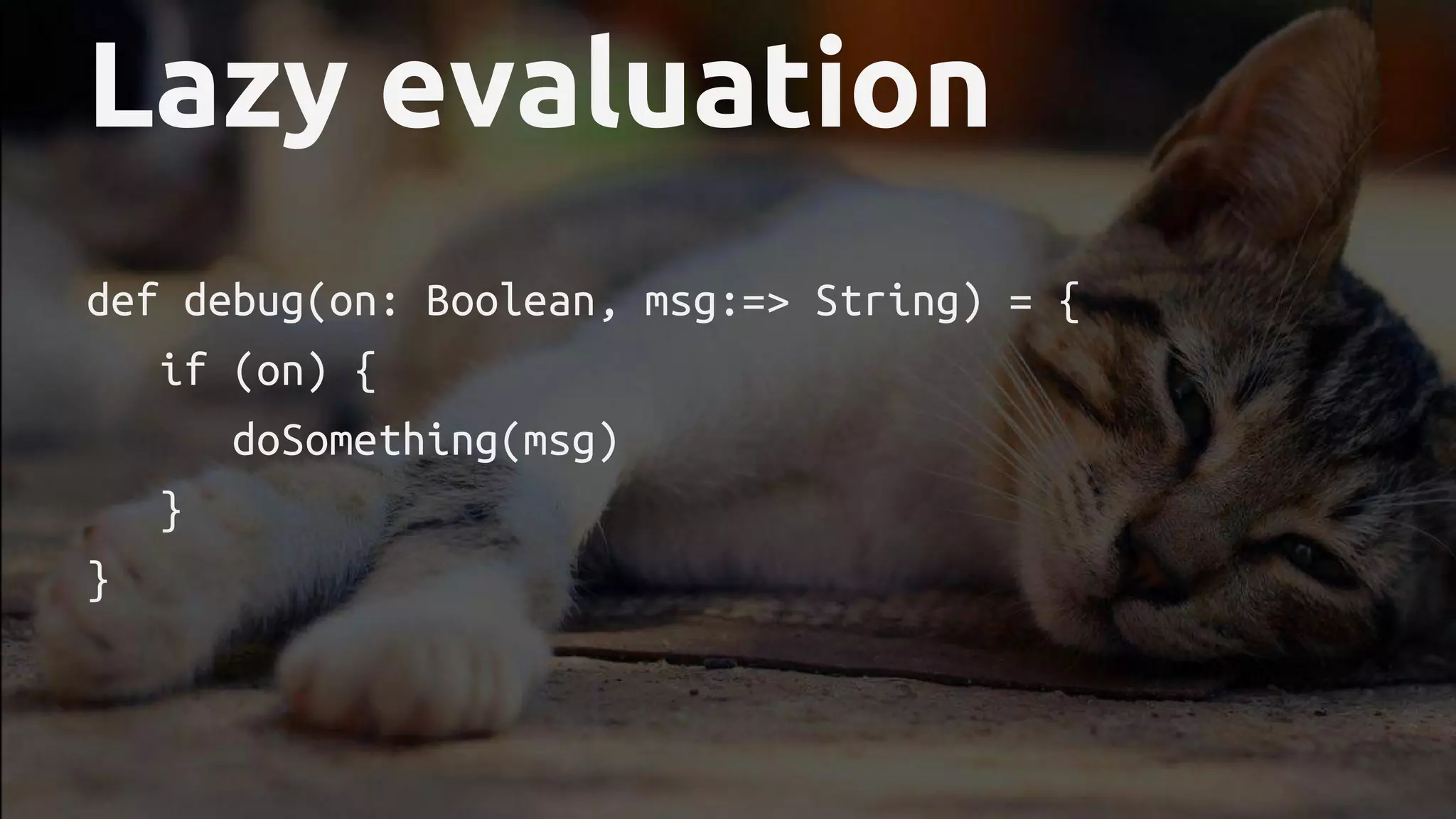
](https://image.slidesharecdn.com/scalahome2014-wide2-160405112909/75/Demystifying-functional-programming-with-Scala-32-2048.jpg)
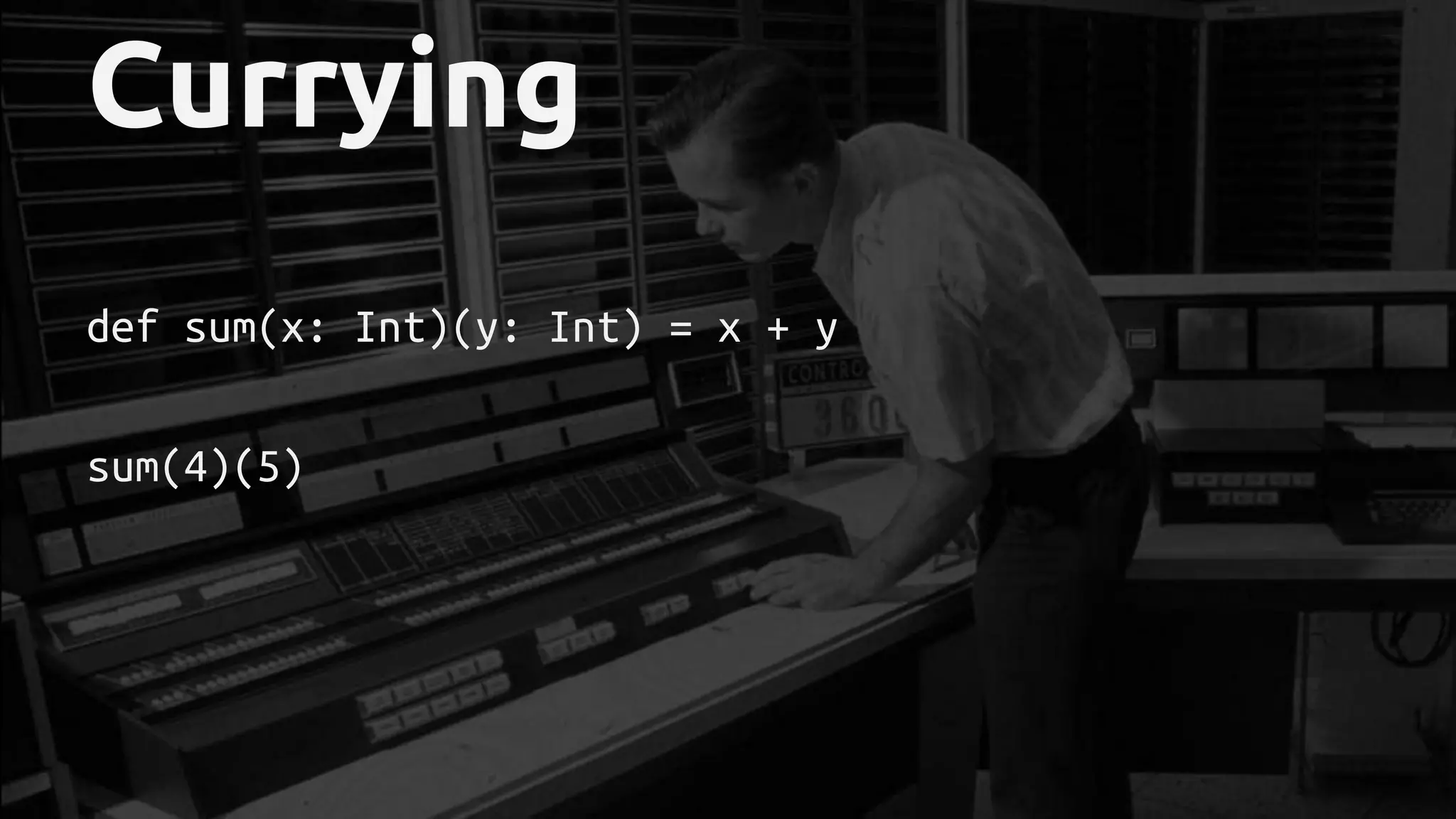
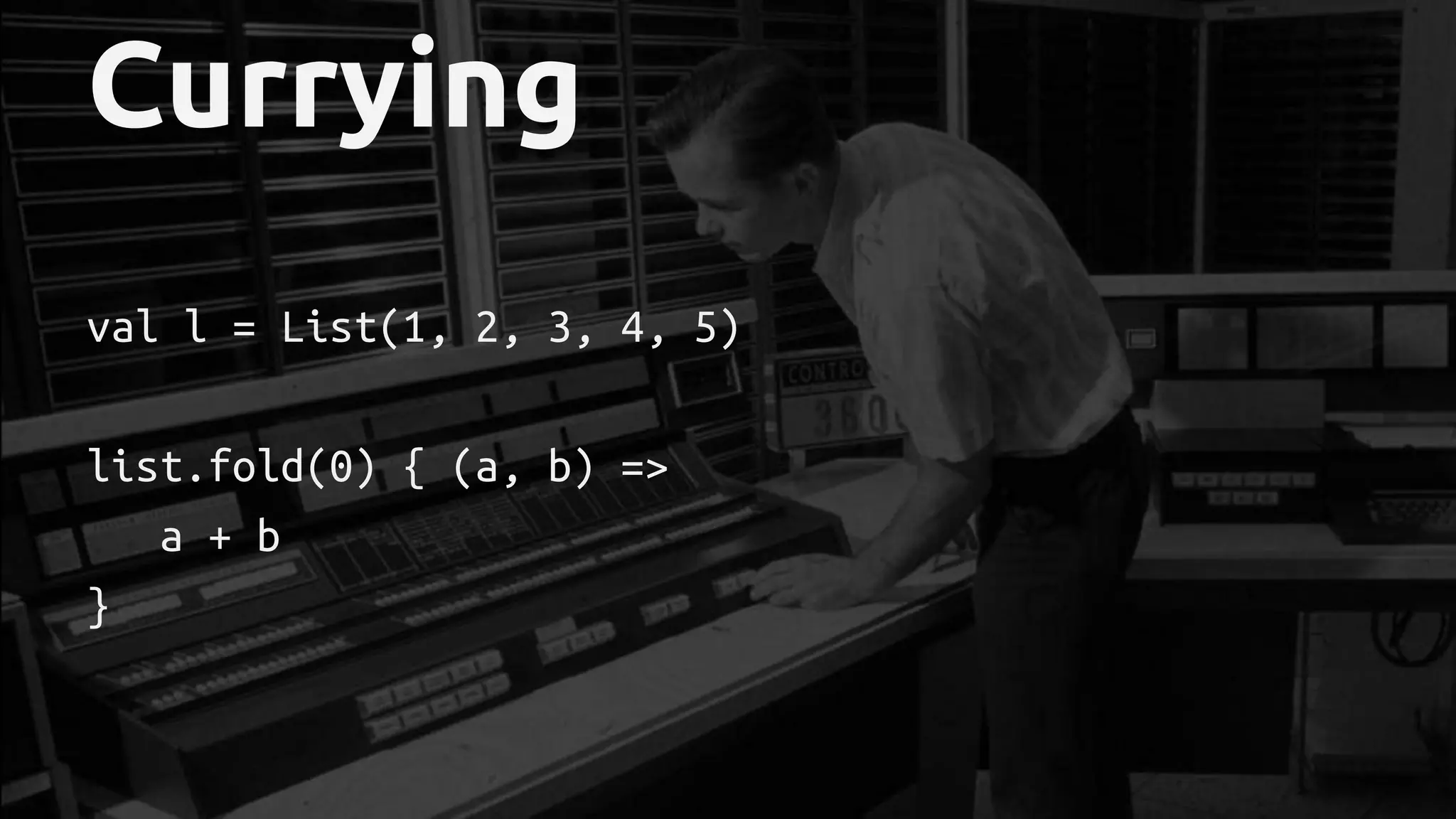
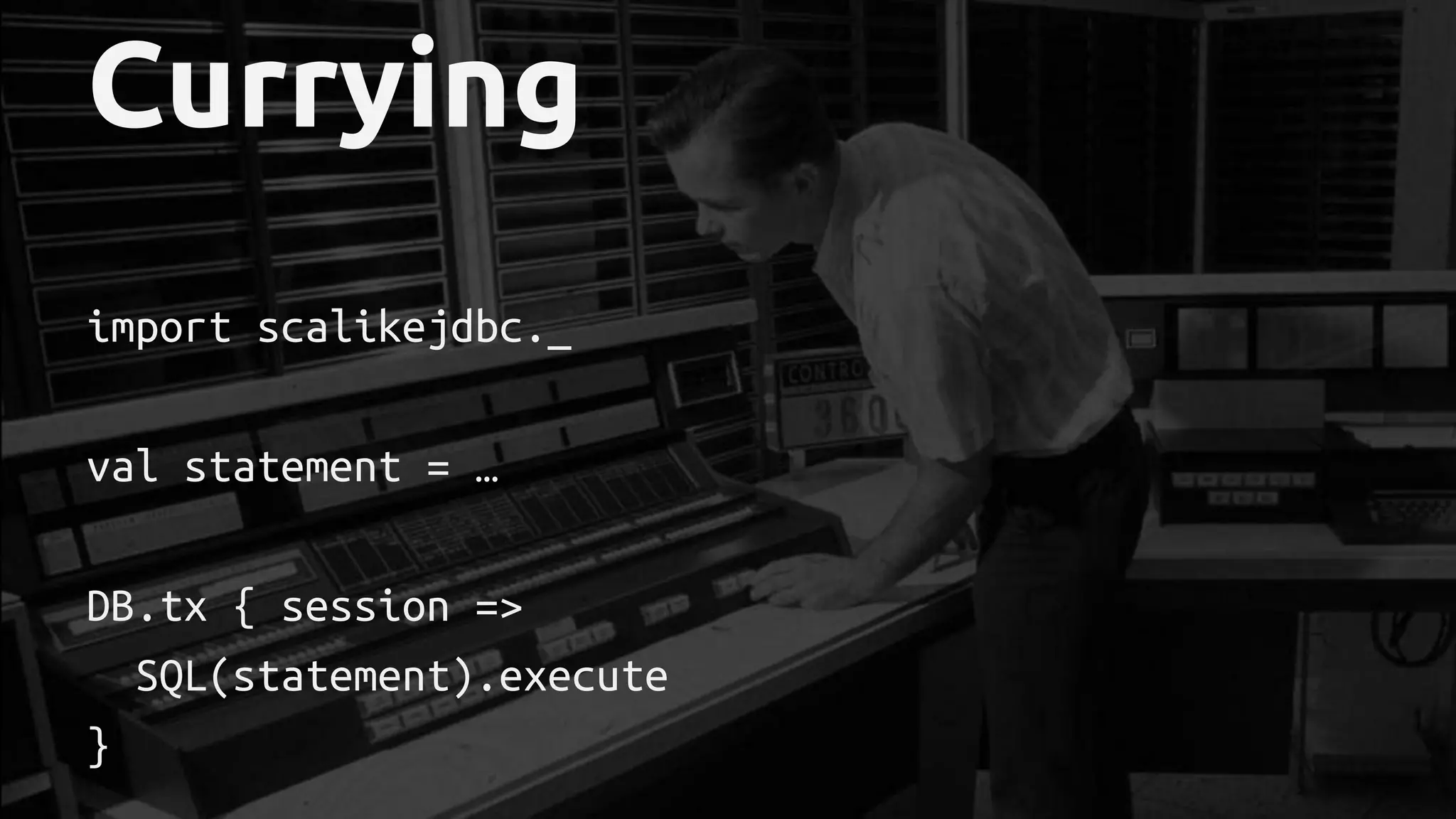
 (implicit ctx: Context)](https://image.slidesharecdn.com/scalahome2014-wide2-160405112909/75/Demystifying-functional-programming-with-Scala-38-2048.jpg)
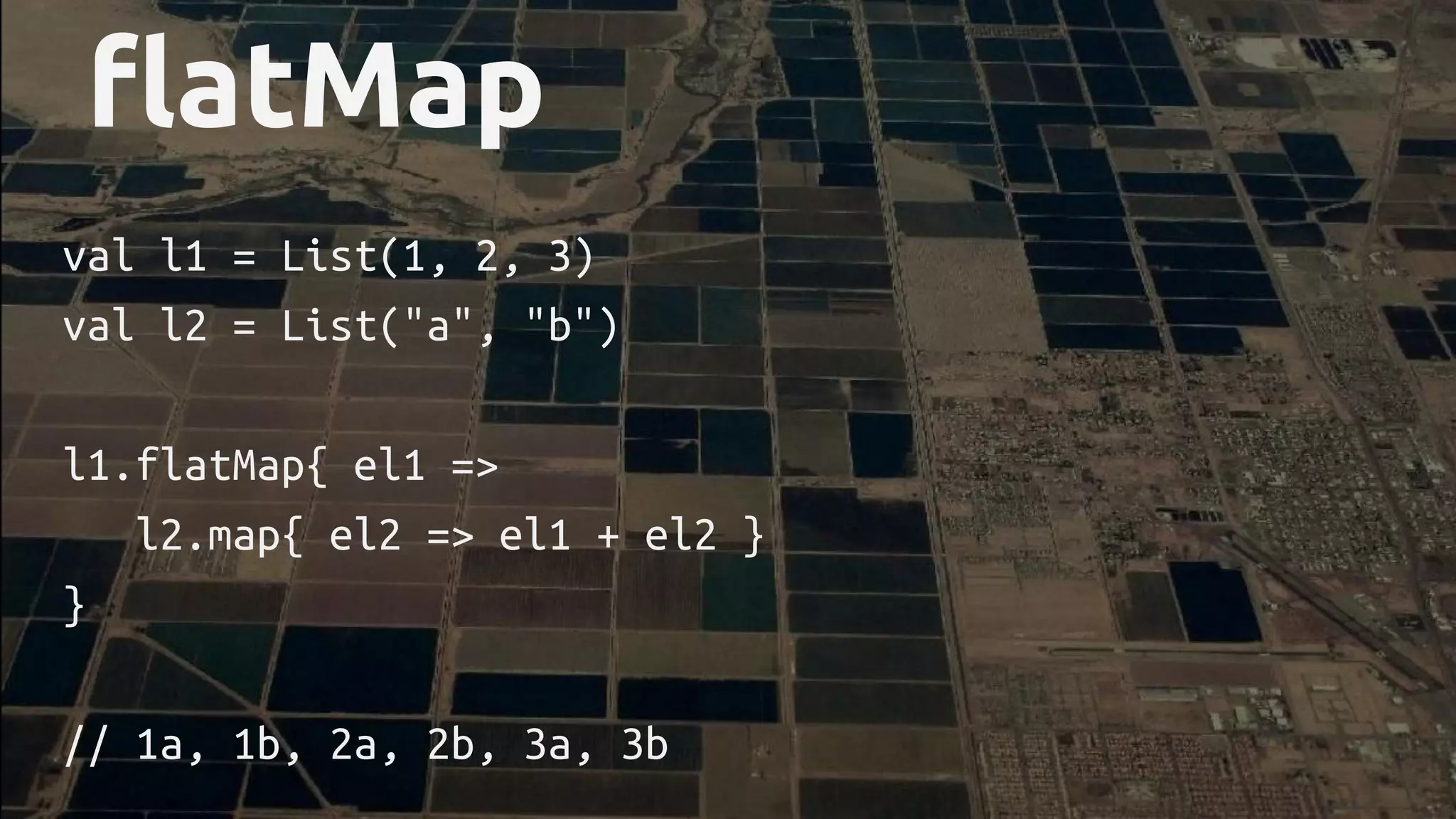
![flatMap class C[T] def map[R](block: T => R): C[R] = … def flatMap[R](block: T => C[R]): C[R] = …](https://image.slidesharecdn.com/scalahome2014-wide2-160405112909/75/Demystifying-functional-programming-with-Scala-40-2048.jpg)
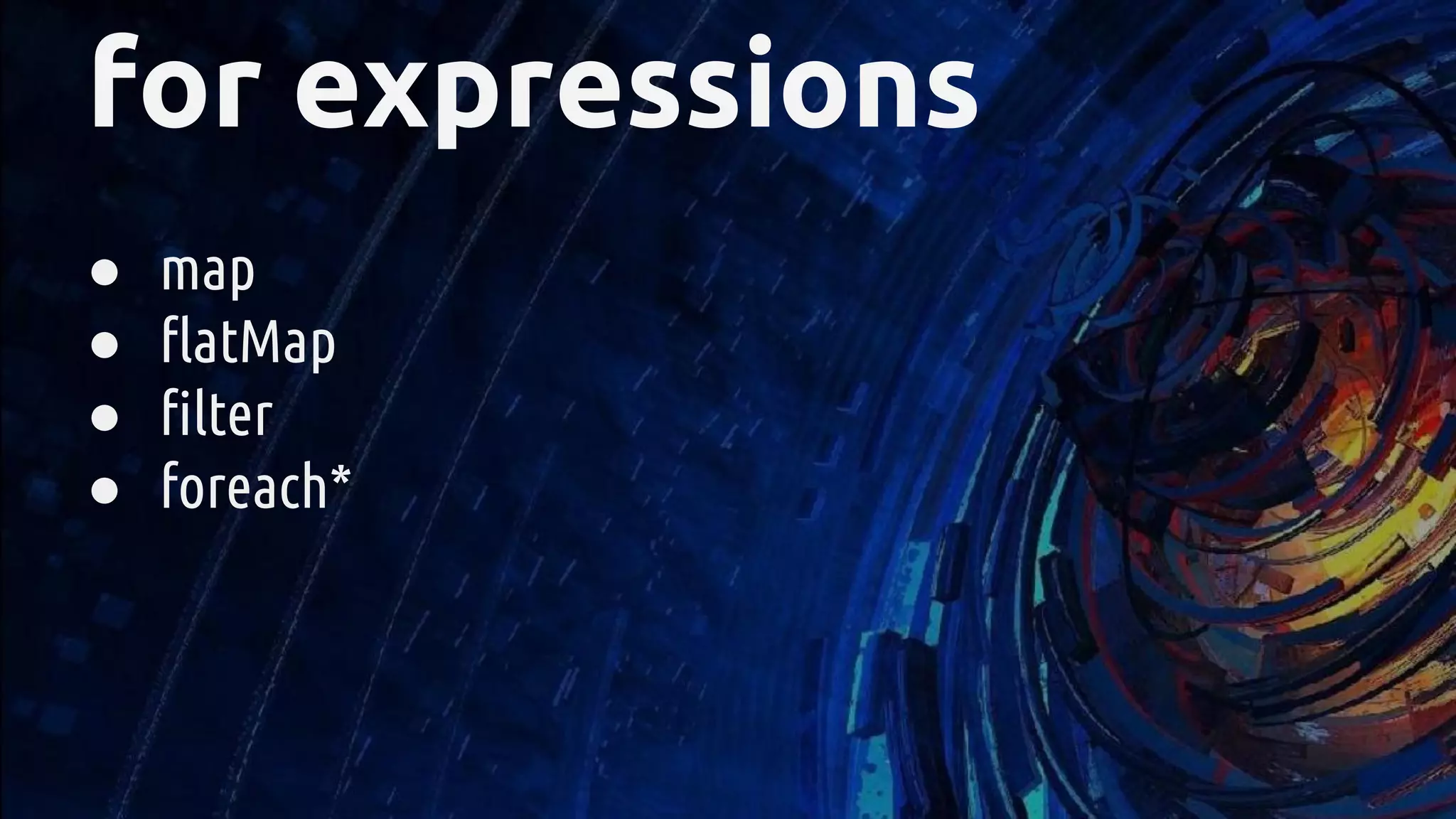
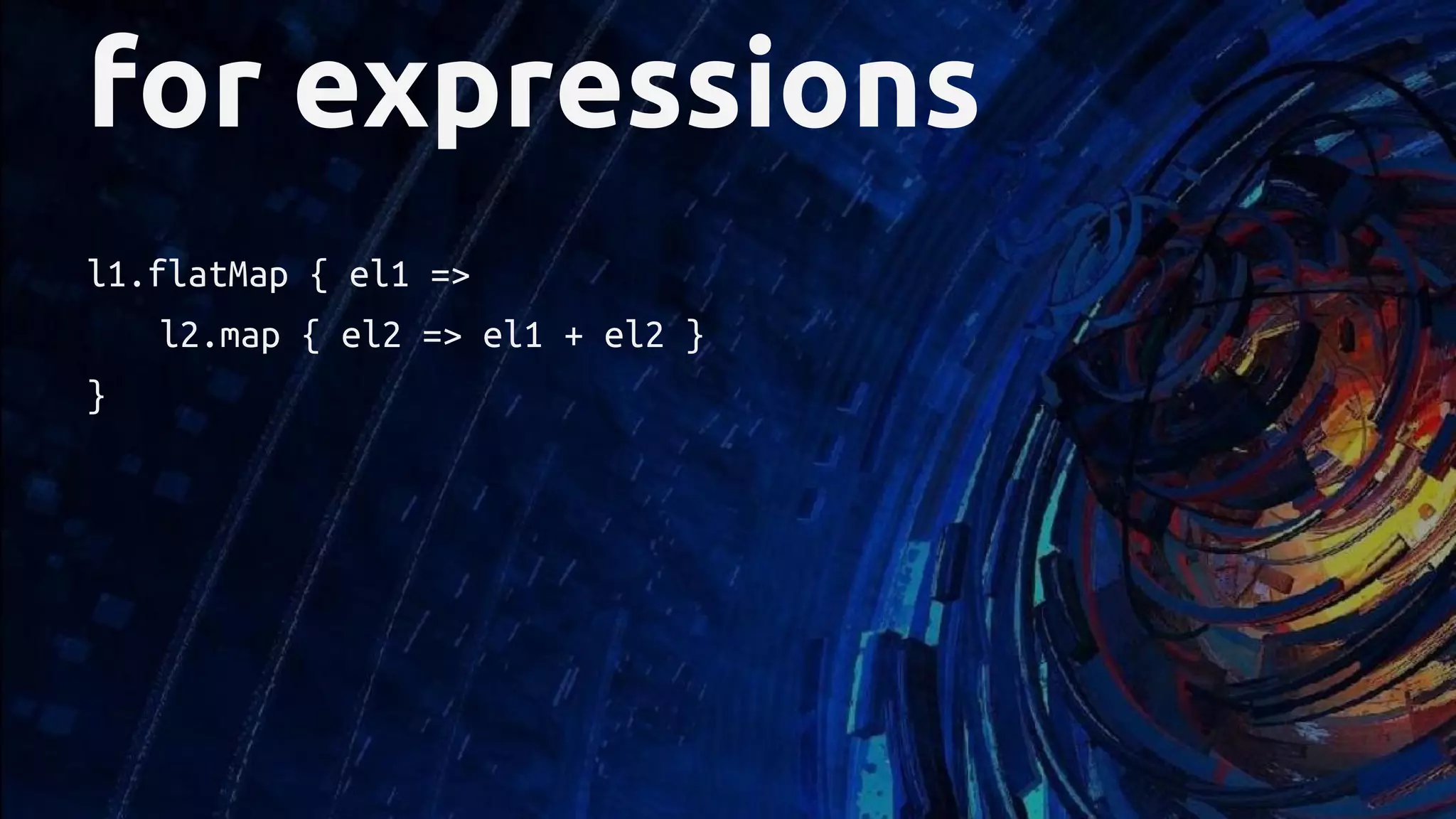
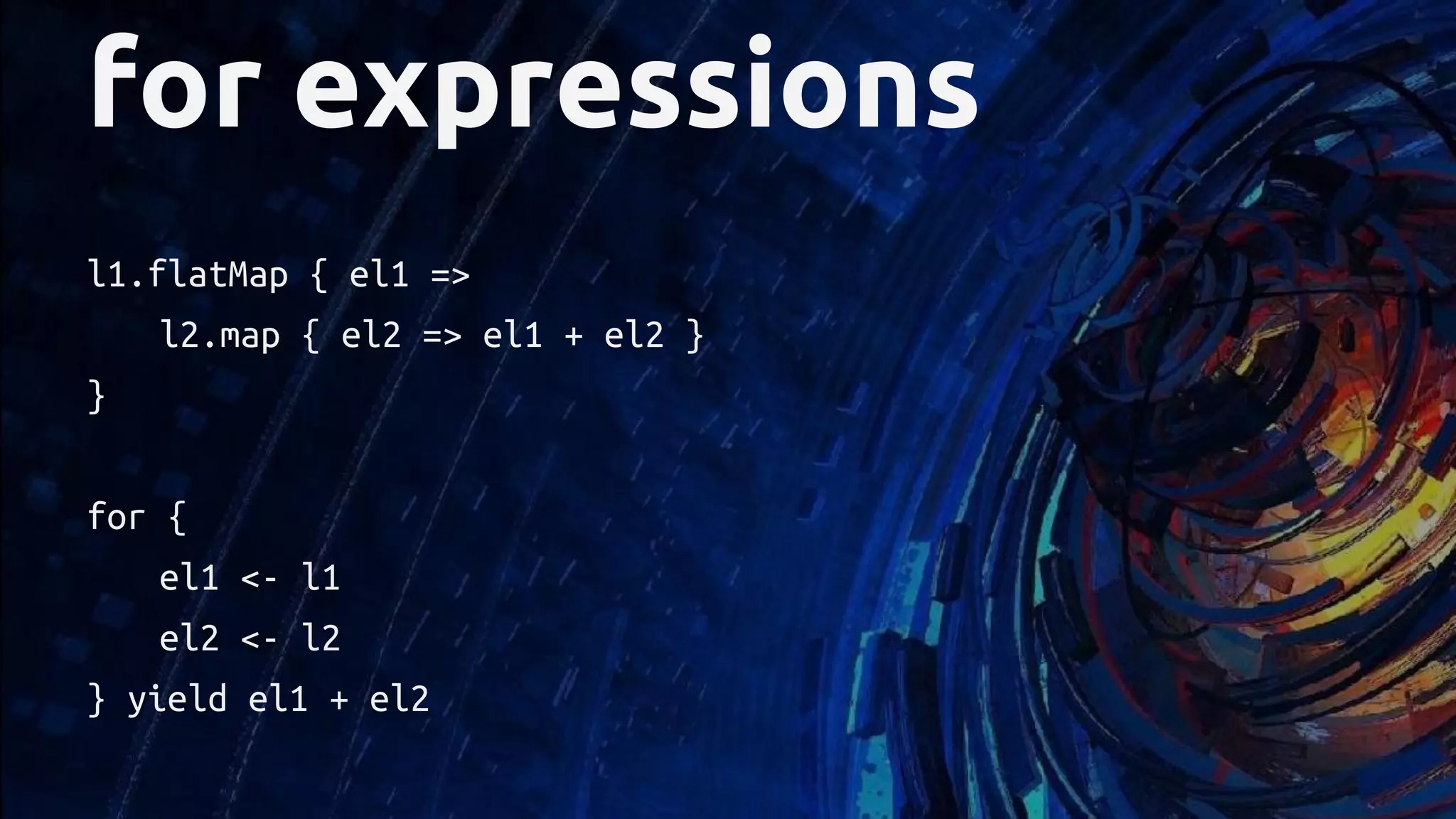
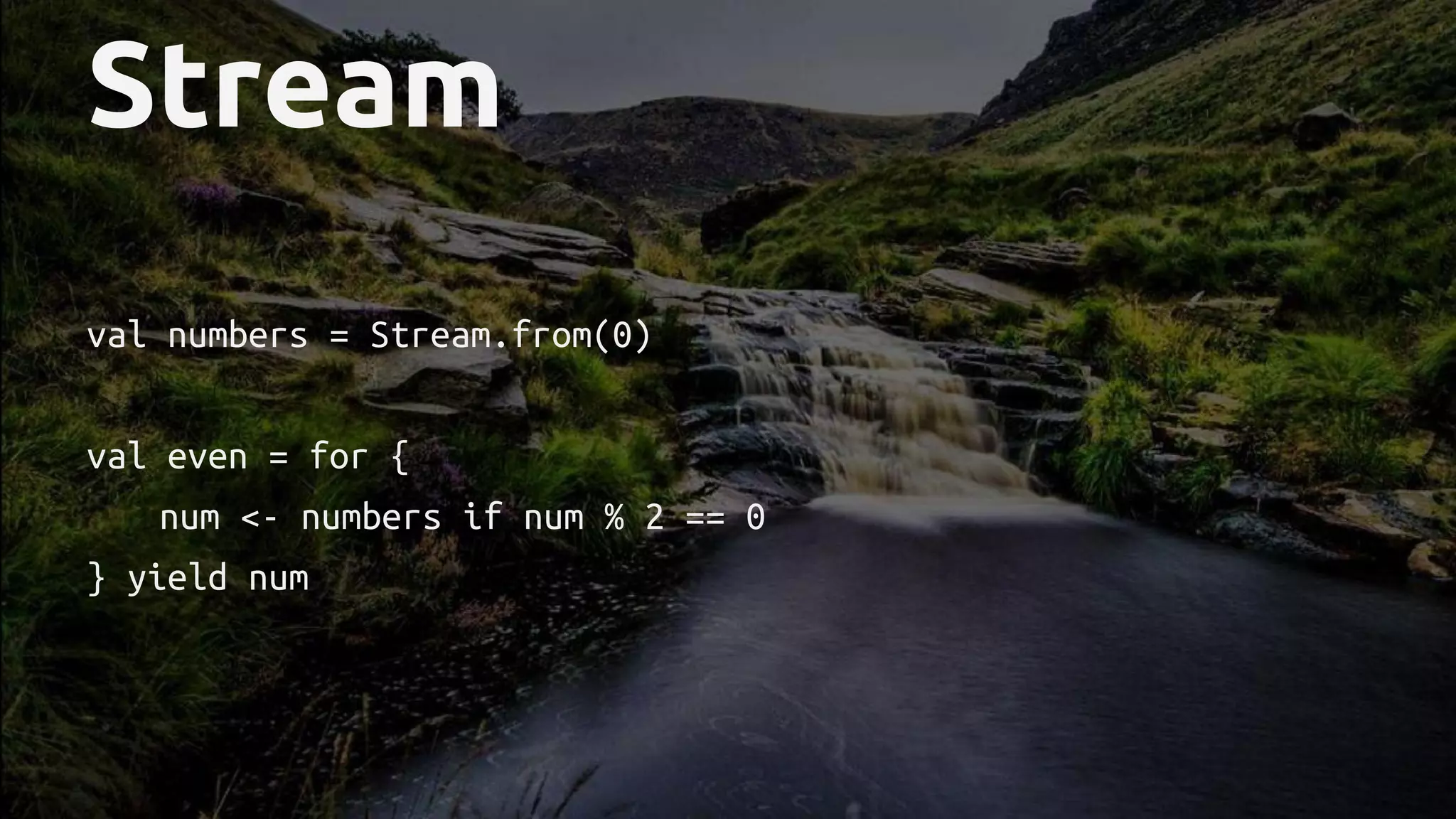
![Stream val numbers = Stream.from(0) scala.collection.immutable Stream[+T] scala.collection Traversable[+T]](https://image.slidesharecdn.com/scalahome2014-wide2-160405112909/75/Demystifying-functional-programming-with-Scala-46-2048.jpg)
: T scala None scala Some[+T] scala Option[+T]](https://image.slidesharecdn.com/scalahome2014-wide2-160405112909/75/Demystifying-functional-programming-with-Scala-48-2048.jpg)
![Option def lookup(login: String, password: String): Option[User] val maybeUser: Option[User] = …](https://image.slidesharecdn.com/scalahome2014-wide2-160405112909/75/Demystifying-functional-programming-with-Scala-49-2048.jpg)
![Option maybeUser.map { user => user.name }.map { name => "Welcome back," + name }.getOrElse("Hi") Option[User] Option[String] Option[String] String map map getOrElse](https://image.slidesharecdn.com/scalahome2014-wide2-160405112909/75/Demystifying-functional-programming-with-Scala-50-2048.jpg)

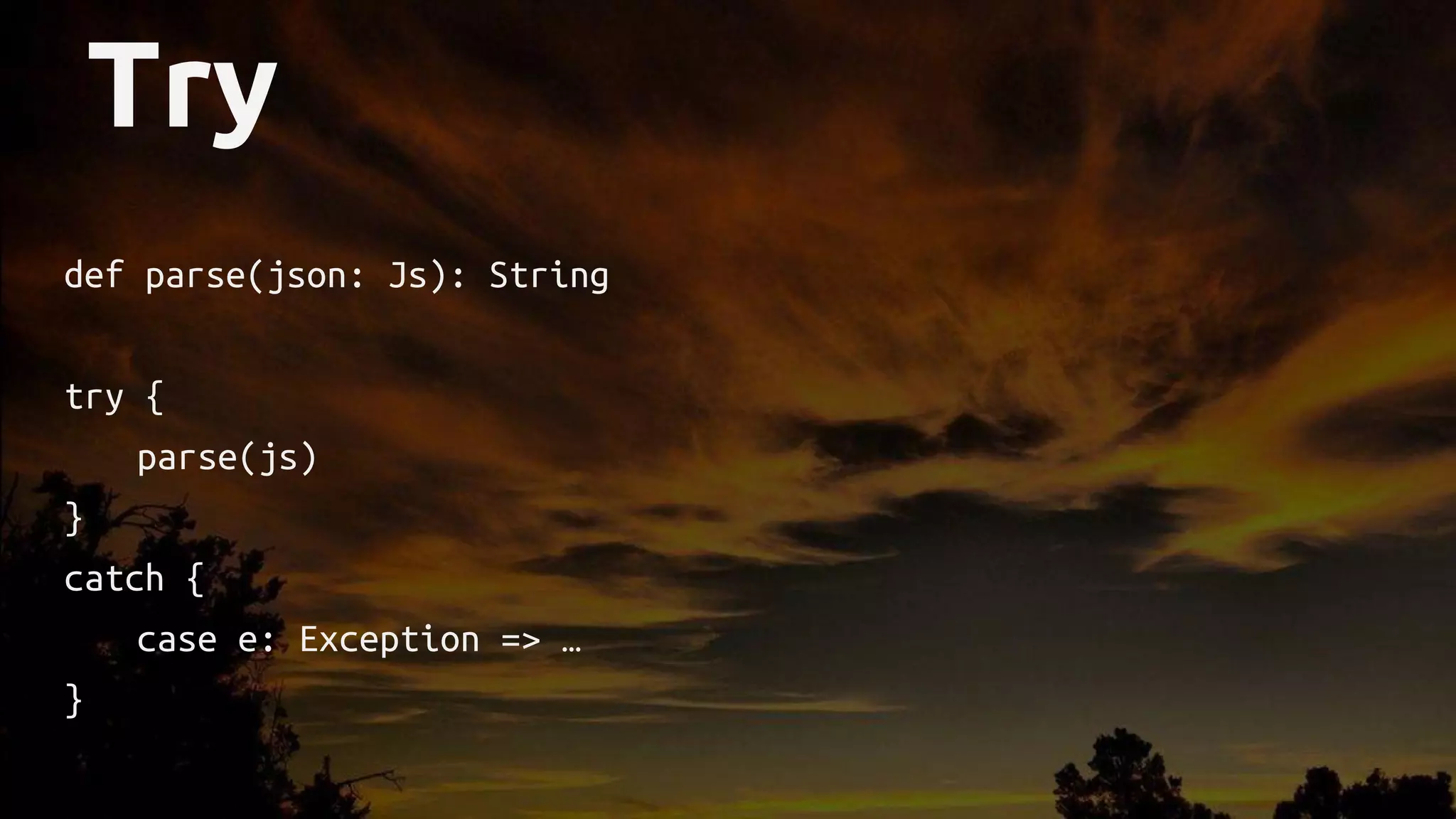
![Try def parse(js: Js): String val nameT = Try { parse(js) } val maybeName = nameT.toOption scala.util Failure[+T] scala.util Success[+T] scala.util Try[+T]](https://image.slidesharecdn.com/scalahome2014-wide2-160405112909/75/Demystifying-functional-programming-with-Scala-53-2048.jpg)
![Try def parse(js: Js): String def store(name: String): Int for { name <- Try(parse(json)) id <- Try(store(name)) } yield id scala.util Failure[+T] scala.util Success[+T] scala.util Try[+T]](https://image.slidesharecdn.com/scalahome2014-wide2-160405112909/75/Demystifying-functional-programming-with-Scala-54-2048.jpg)
![Future def query(q: String): List[String] val resF = Future { query(q) } resF.onSuccess { case list => … } resF.onFailure { case ex => … } scala.concurrent Future[+T]](https://image.slidesharecdn.com/scalahome2014-wide2-160405112909/75/Demystifying-functional-programming-with-Scala-55-2048.jpg)
![Future def query(q: String): List[String] def store(l: List[String]): Int queryF.onSuccess { case list => { val storeF = Future { store(list) } storeF.onSuccess { case id => … } } } scala.concurrent Future[+T]](https://image.slidesharecdn.com/scalahome2014-wide2-160405112909/75/Demystifying-functional-programming-with-Scala-56-2048.jpg)
![Future val resultsF = Future{ query("WTF") } for { results <- resultsF id <- Future{ store(results) } } yield id scala.concurrent Future[+T]](https://image.slidesharecdn.com/scalahome2014-wide2-160405112909/75/Demystifying-functional-programming-with-Scala-57-2048.jpg)
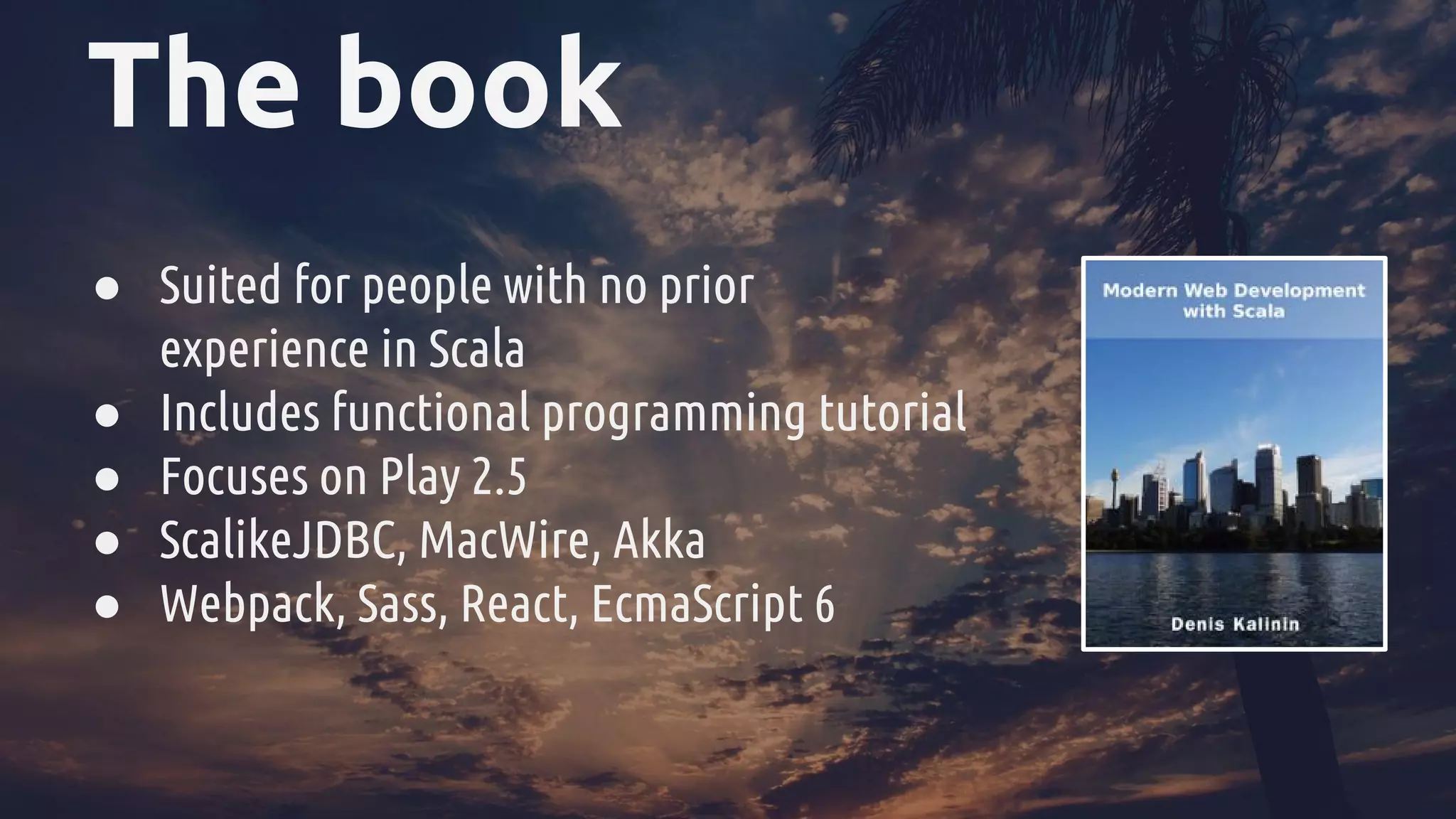


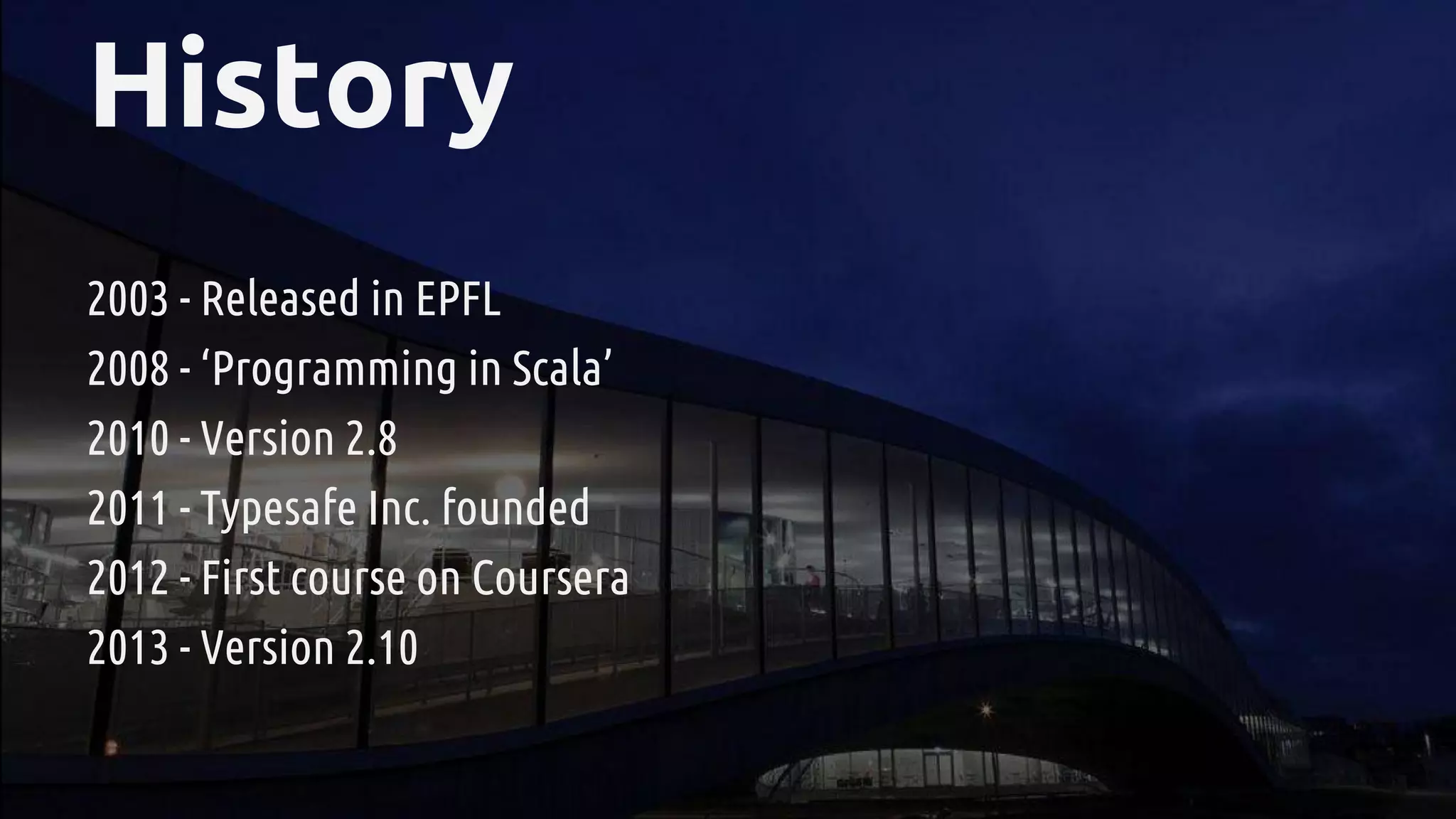
The document provides an overview of Scala, including its history, language fundamentals, and functional programming features. It covers key concepts such as classes, objects, collections, higher-order functions, and monads, along with code examples. The book is suitable for beginners and emphasizes practical tools and frameworks commonly used in Scala development.