Python Functions ● Define functions ● Passing arguments to Function ● Return a value from function ● Scope of Objects ● Default arguments ● Positional and keyword arguments ● Variable length arguments
Functions  Piece of reusable code  Solves particular task  Call function instead of writing code yourself
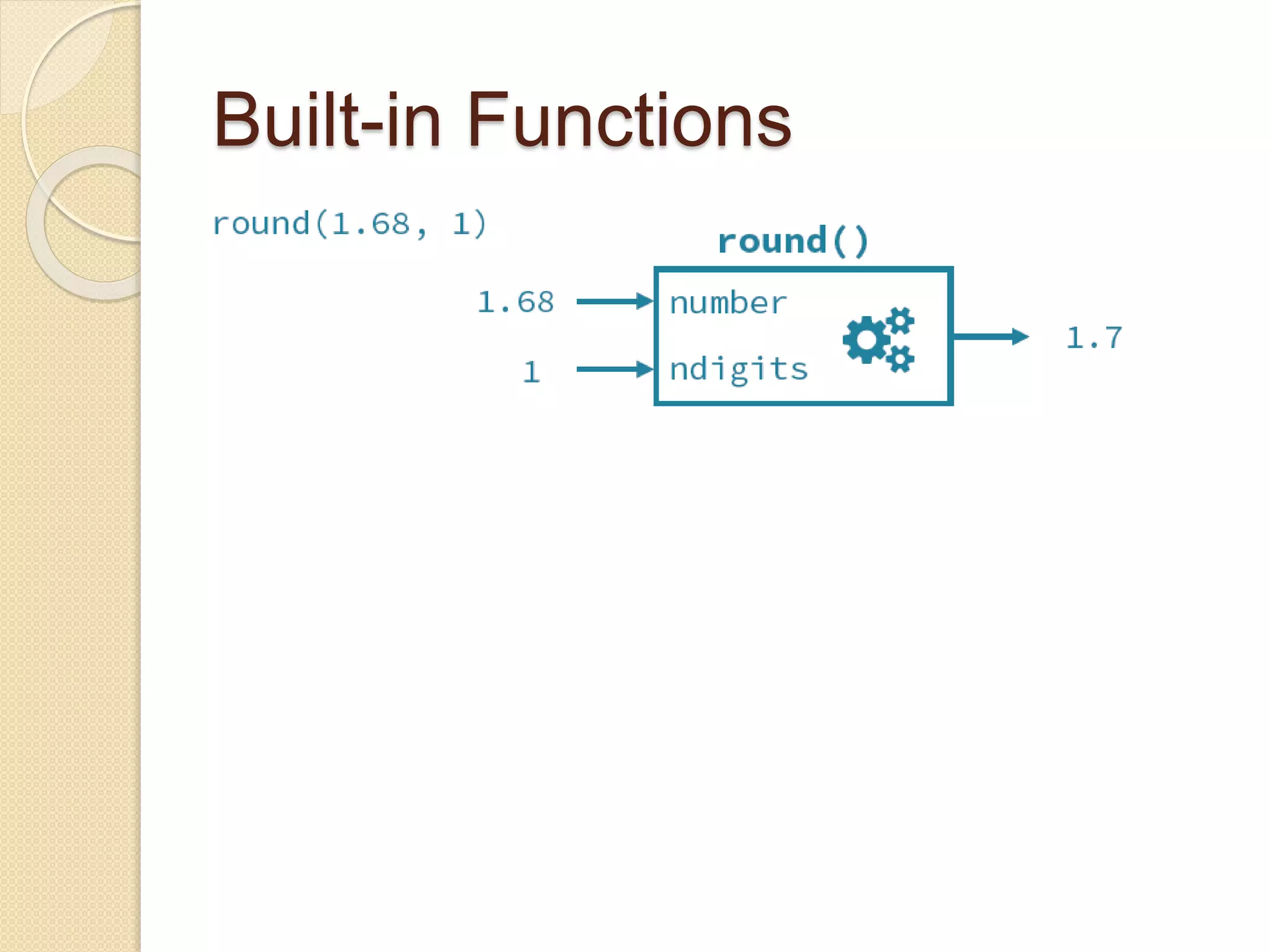
Built-in Functions
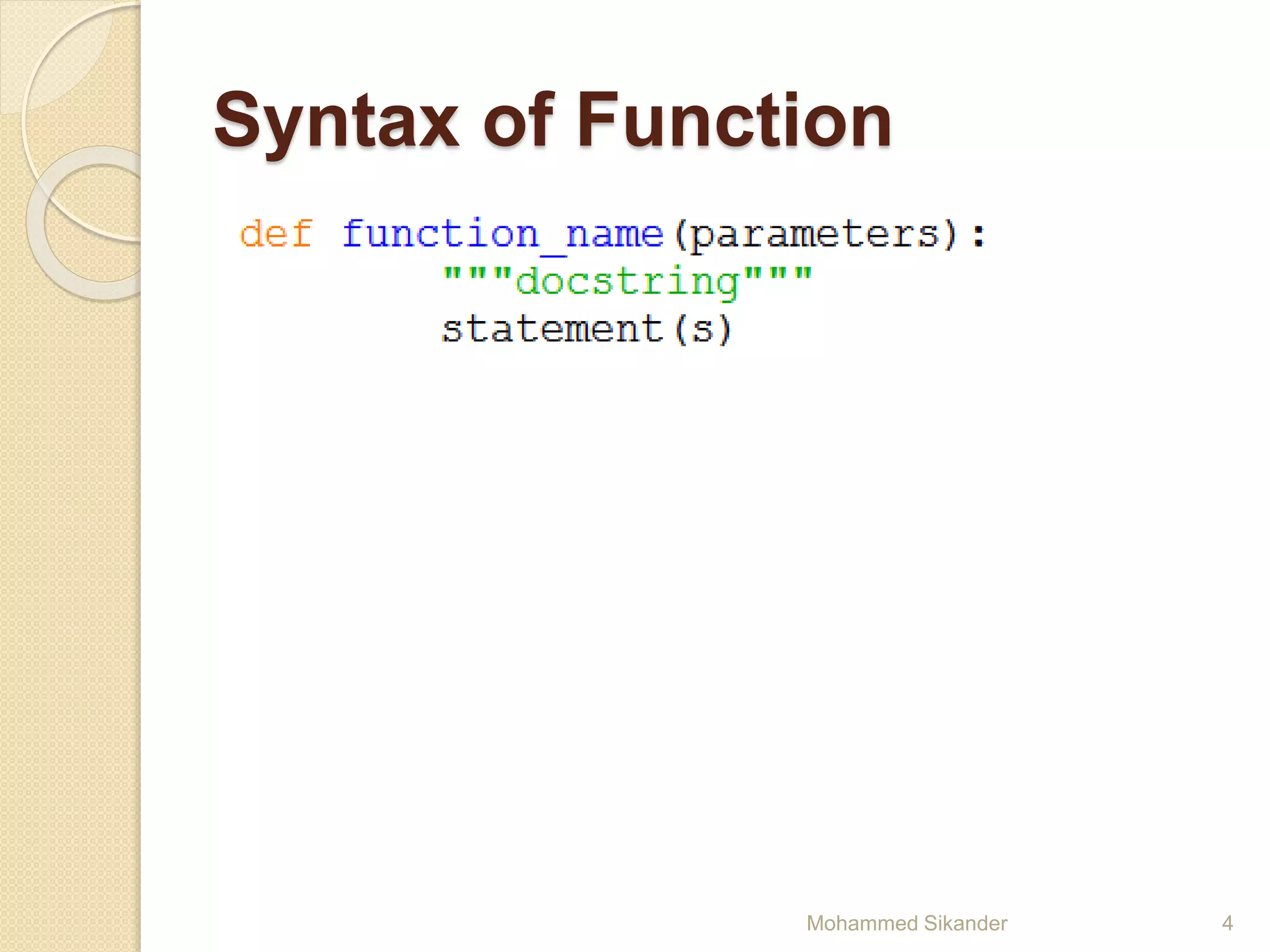
Syntax of Function Mohammed Sikander 4
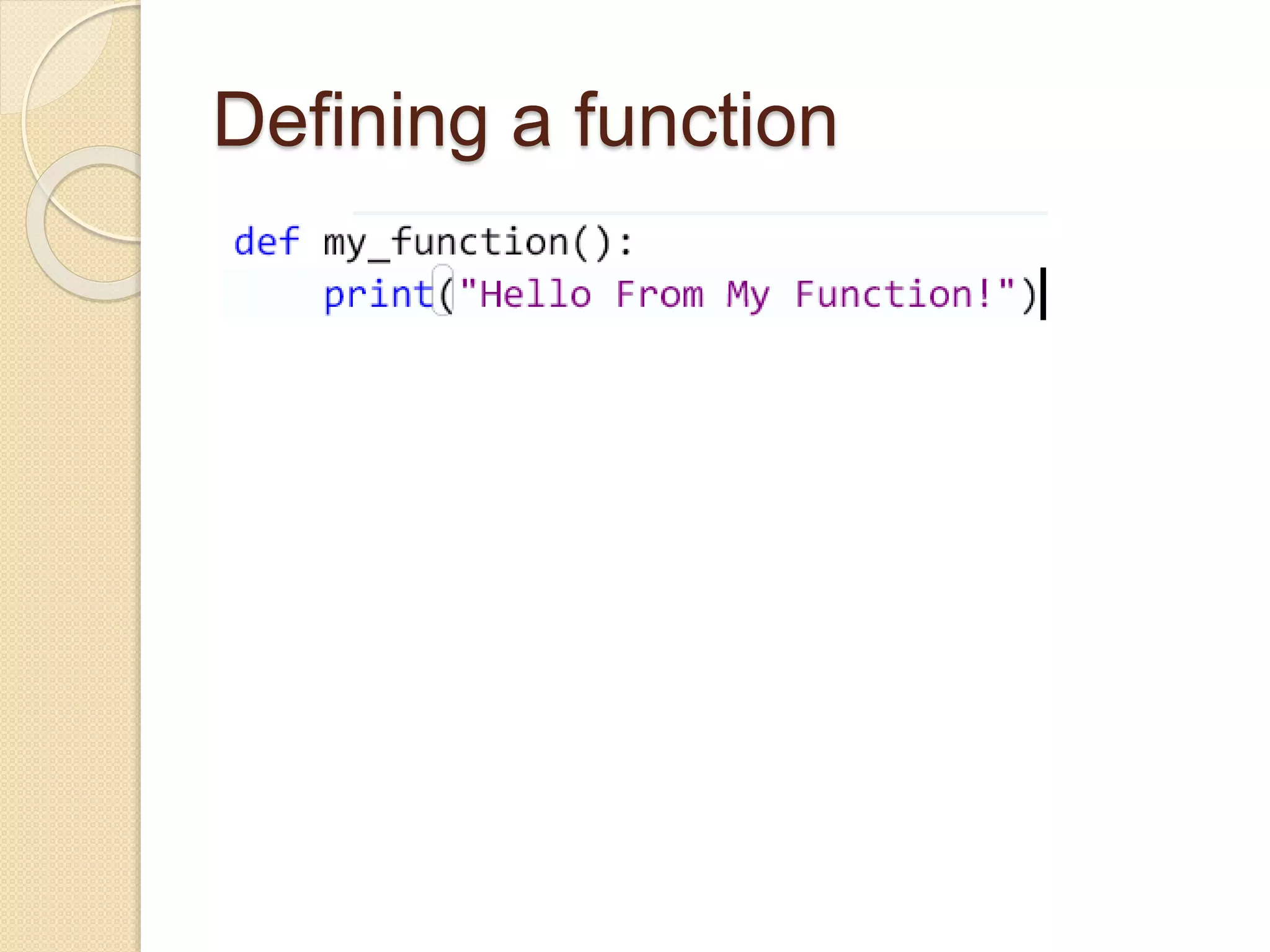
Defining a function
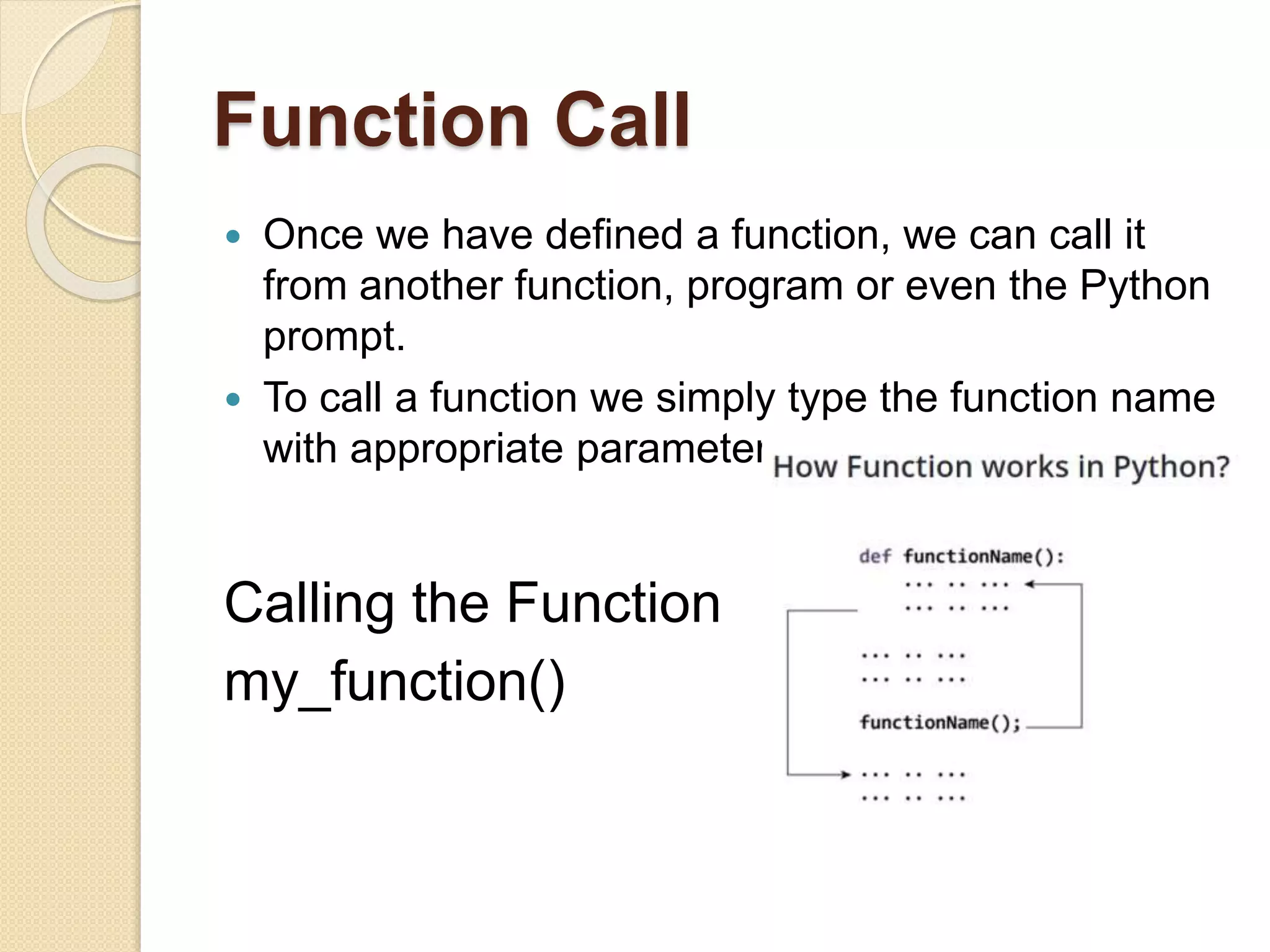
Function Call  Once we have defined a function, we can call it from another function, program or even the Python prompt.  To call a function we simply type the function name with appropriate parameters. Calling the Function my_function()
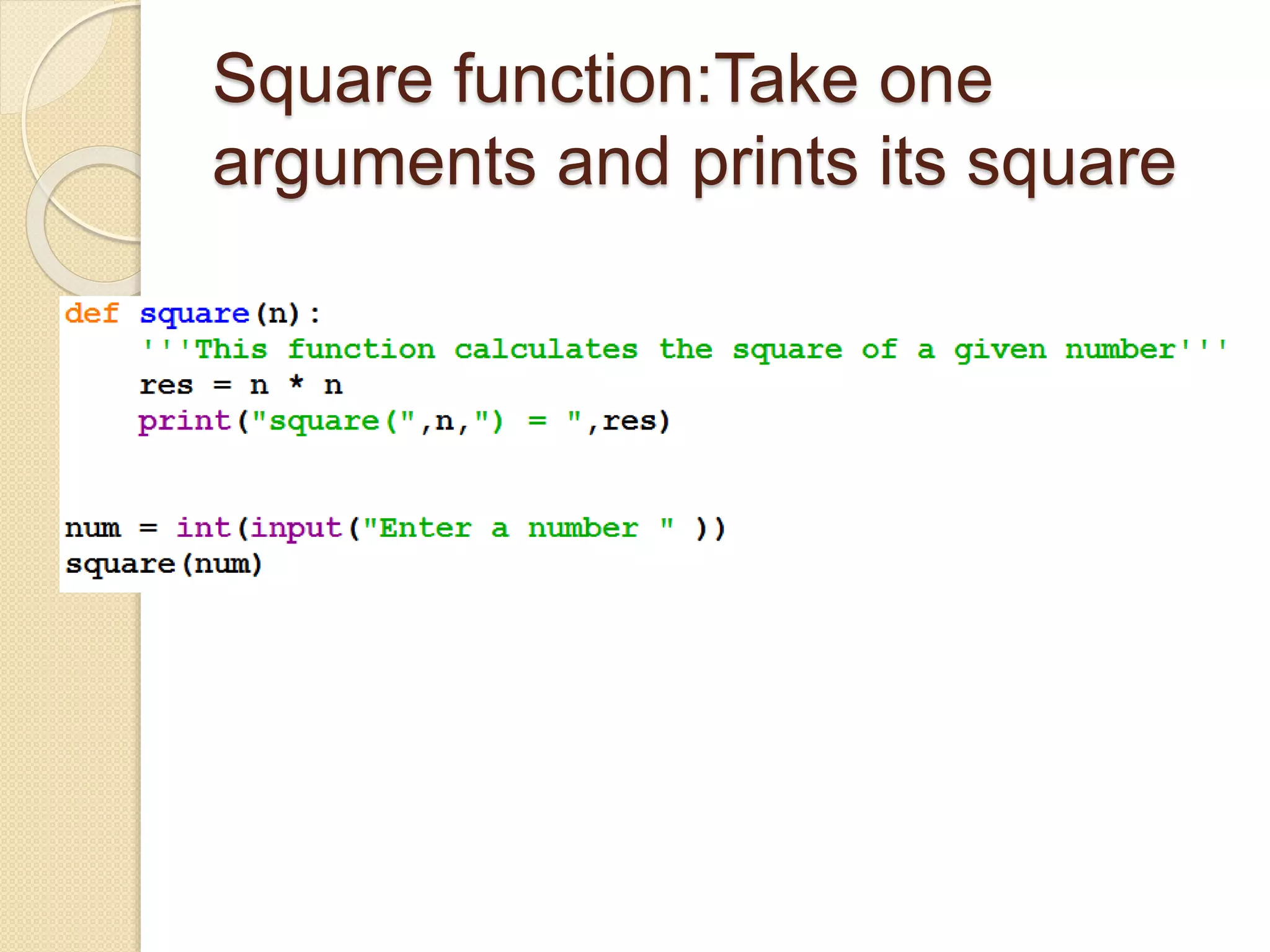
Square function:Take one arguments and prints its square
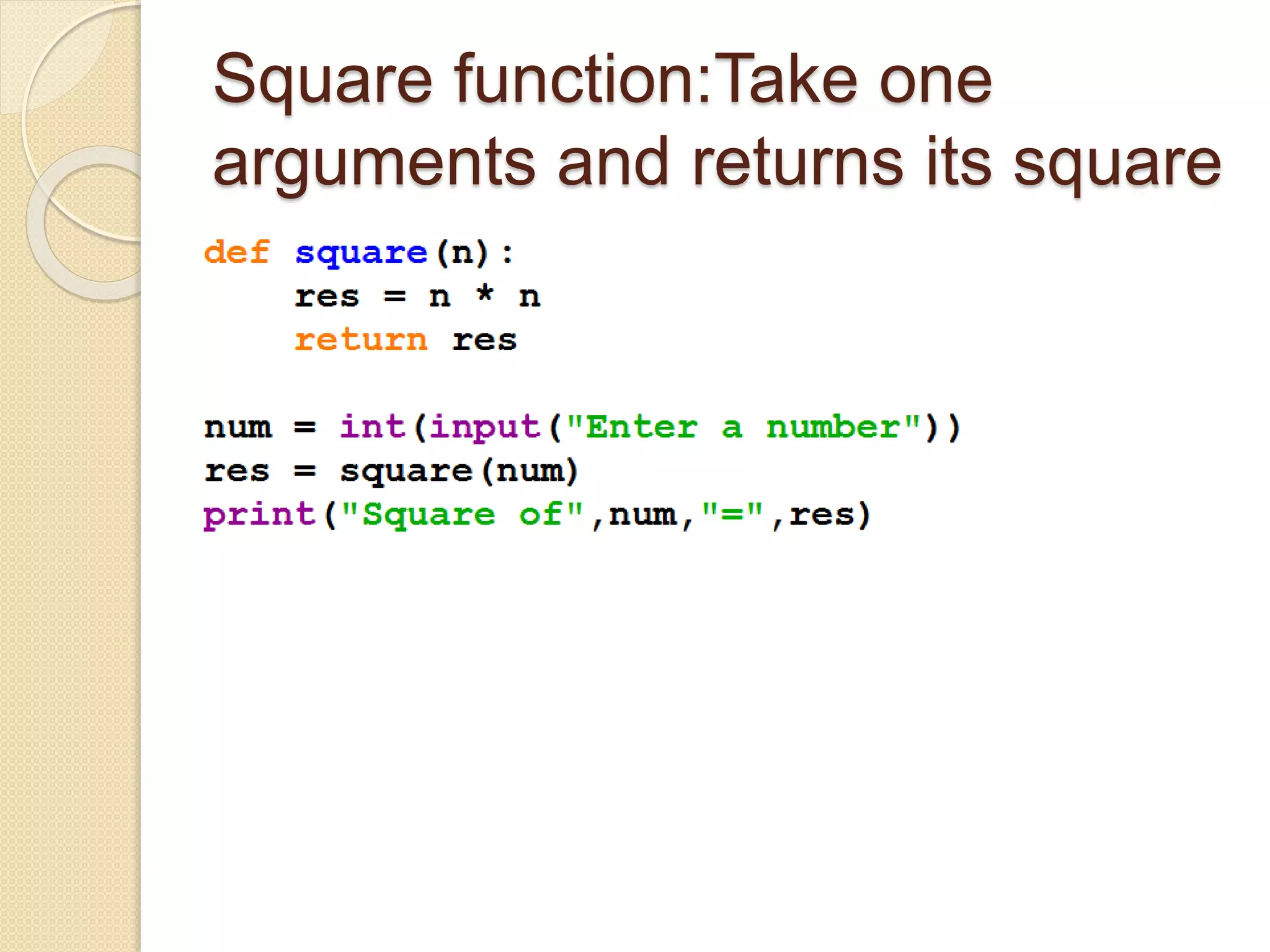
Square function:Take one arguments and returns its square
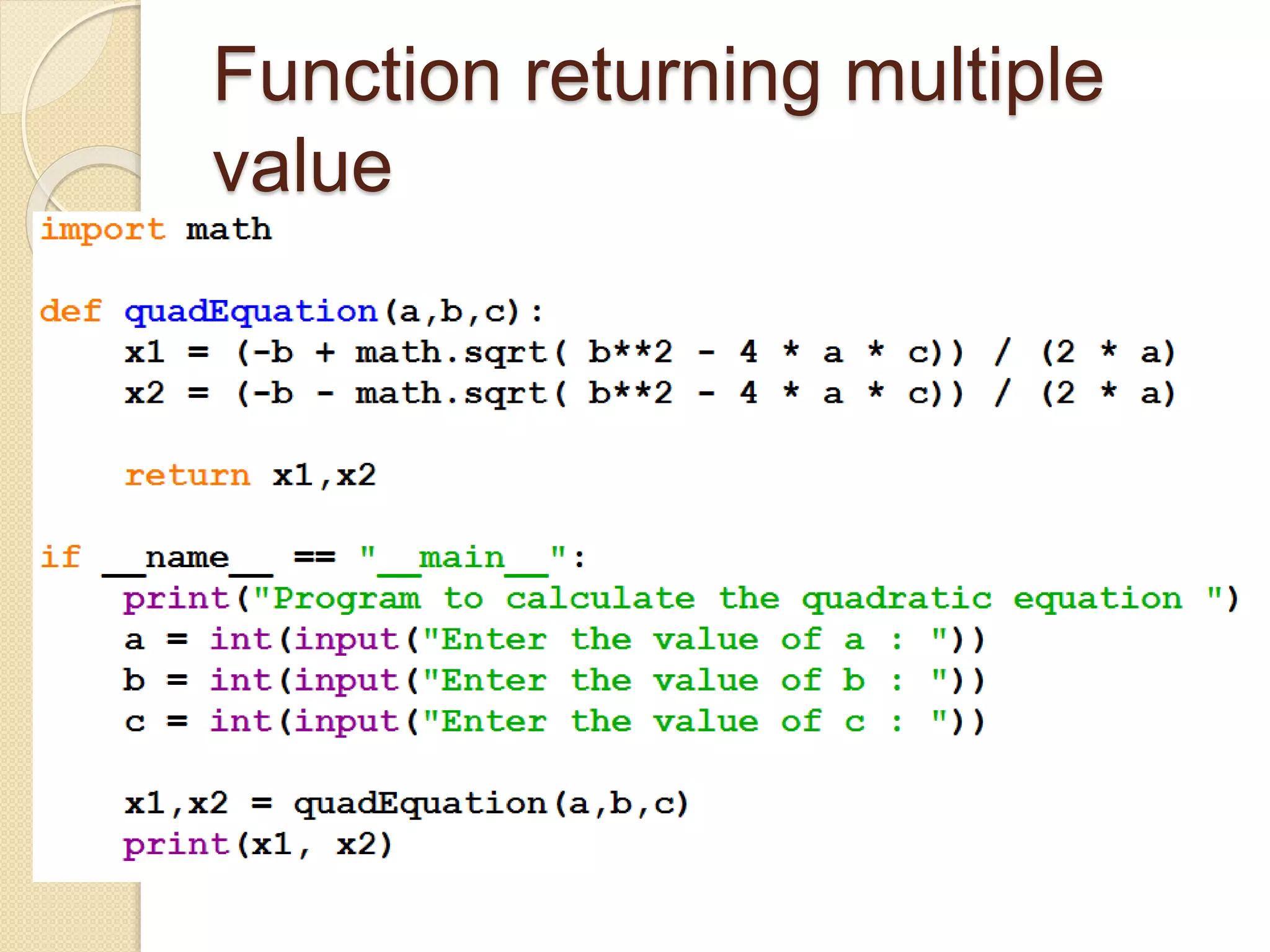
Function returning multiple value
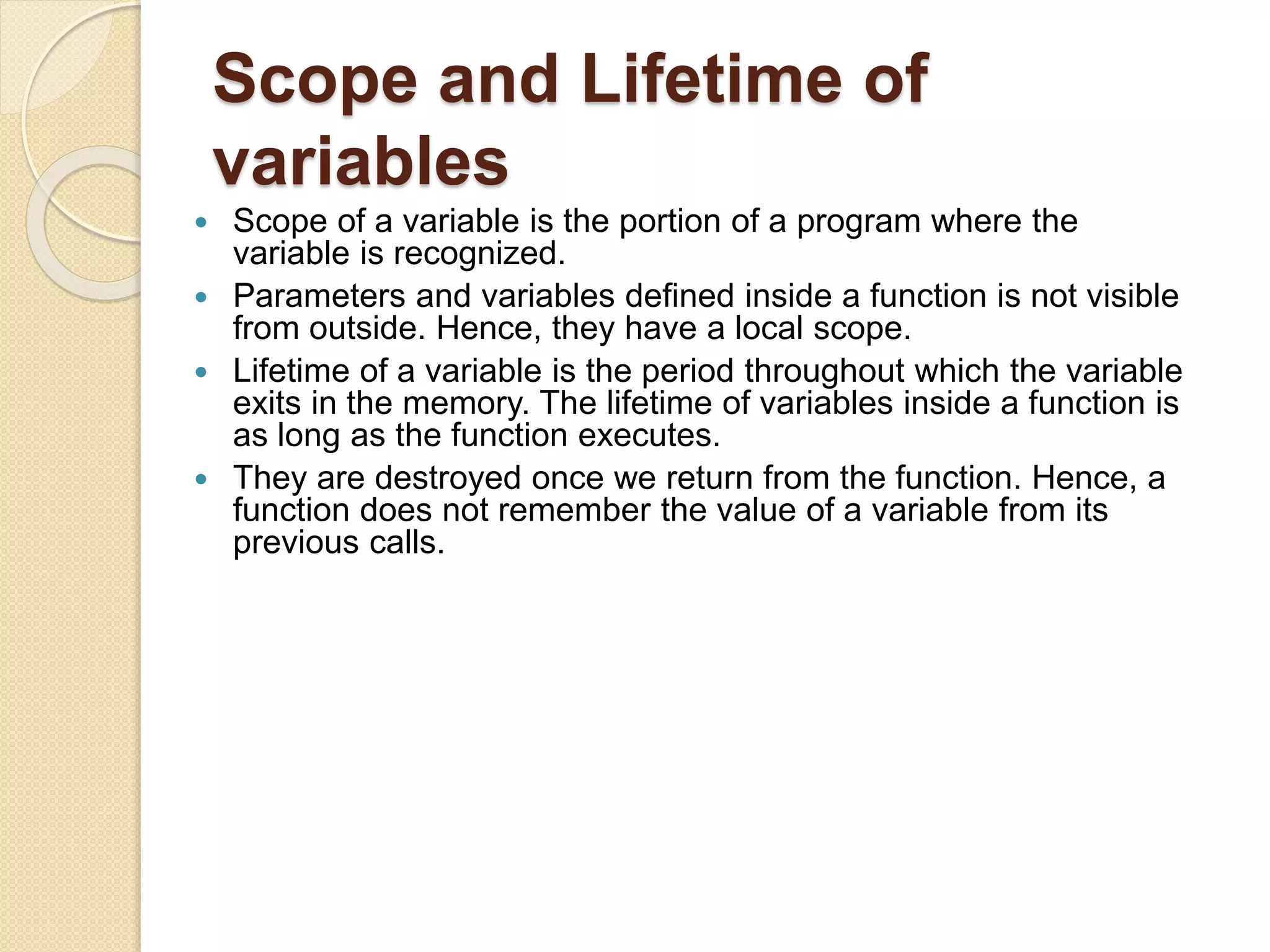
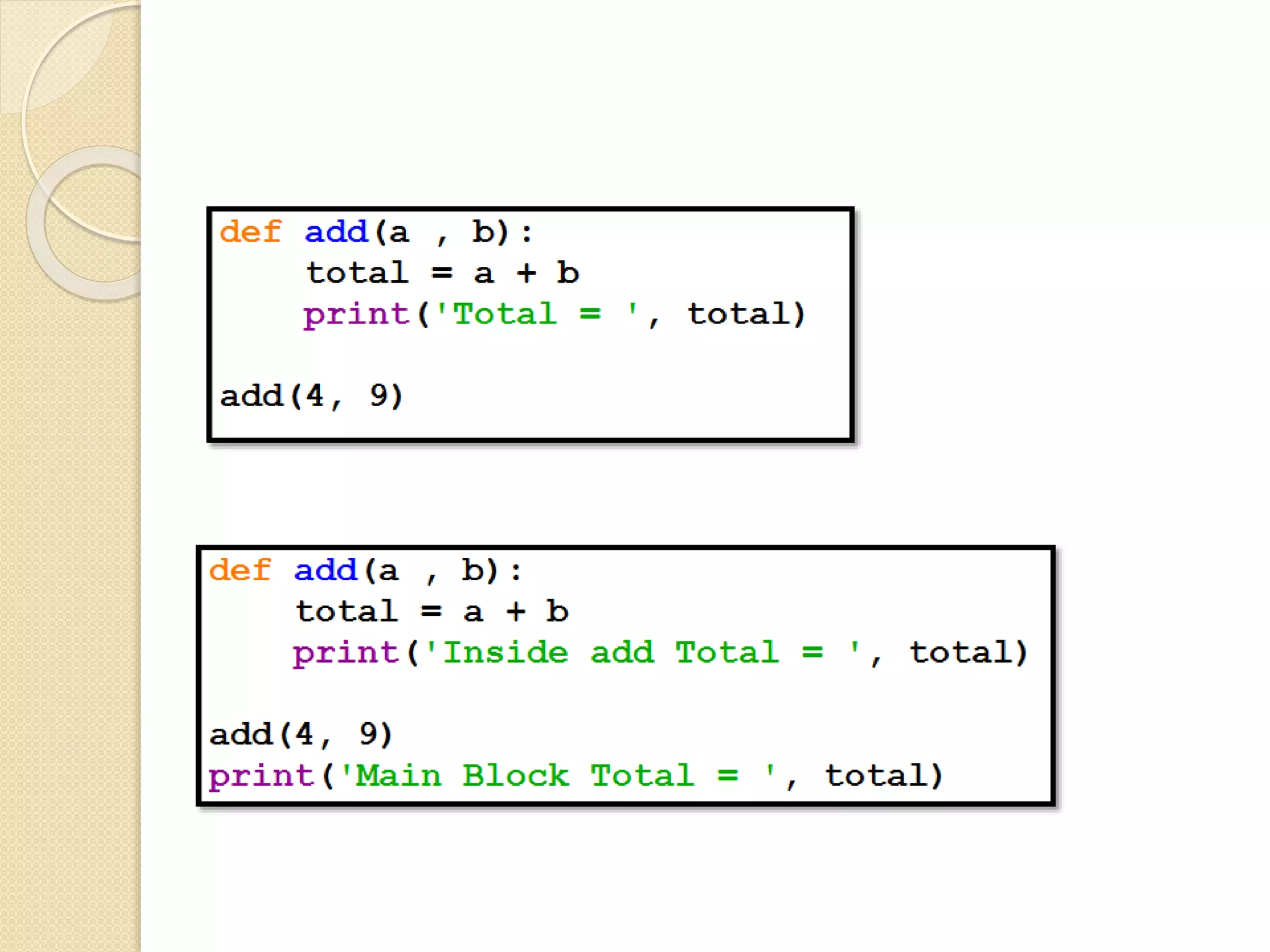
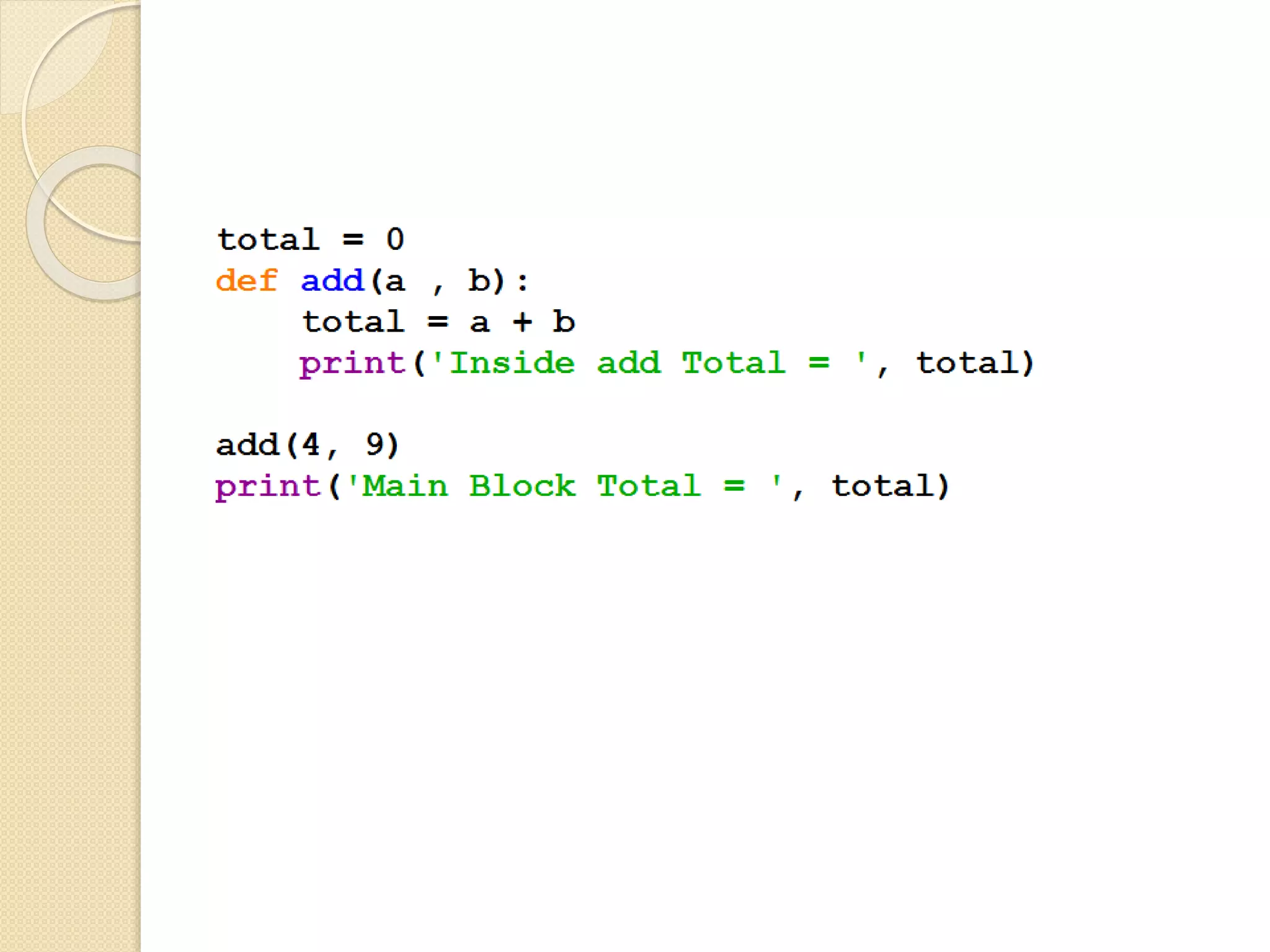
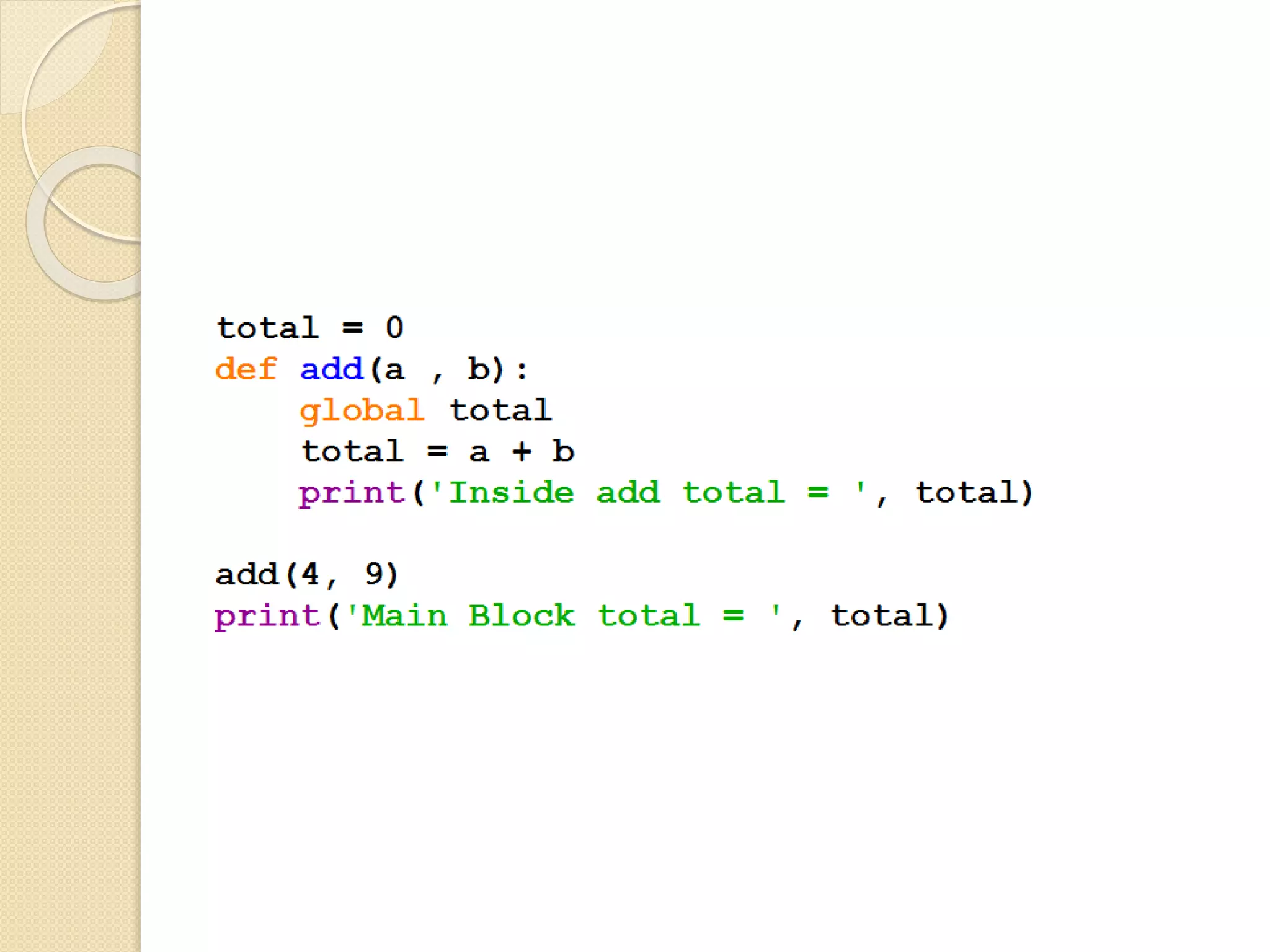
Scope and Lifetime of variables  Scope of a variable is the portion of a program where the variable is recognized.  Parameters and variables defined inside a function is not visible from outside. Hence, they have a local scope.  Lifetime of a variable is the period throughout which the variable exits in the memory. The lifetime of variables inside a function is as long as the function executes.  They are destroyed once we return from the function. Hence, a function does not remember the value of a variable from its previous calls.
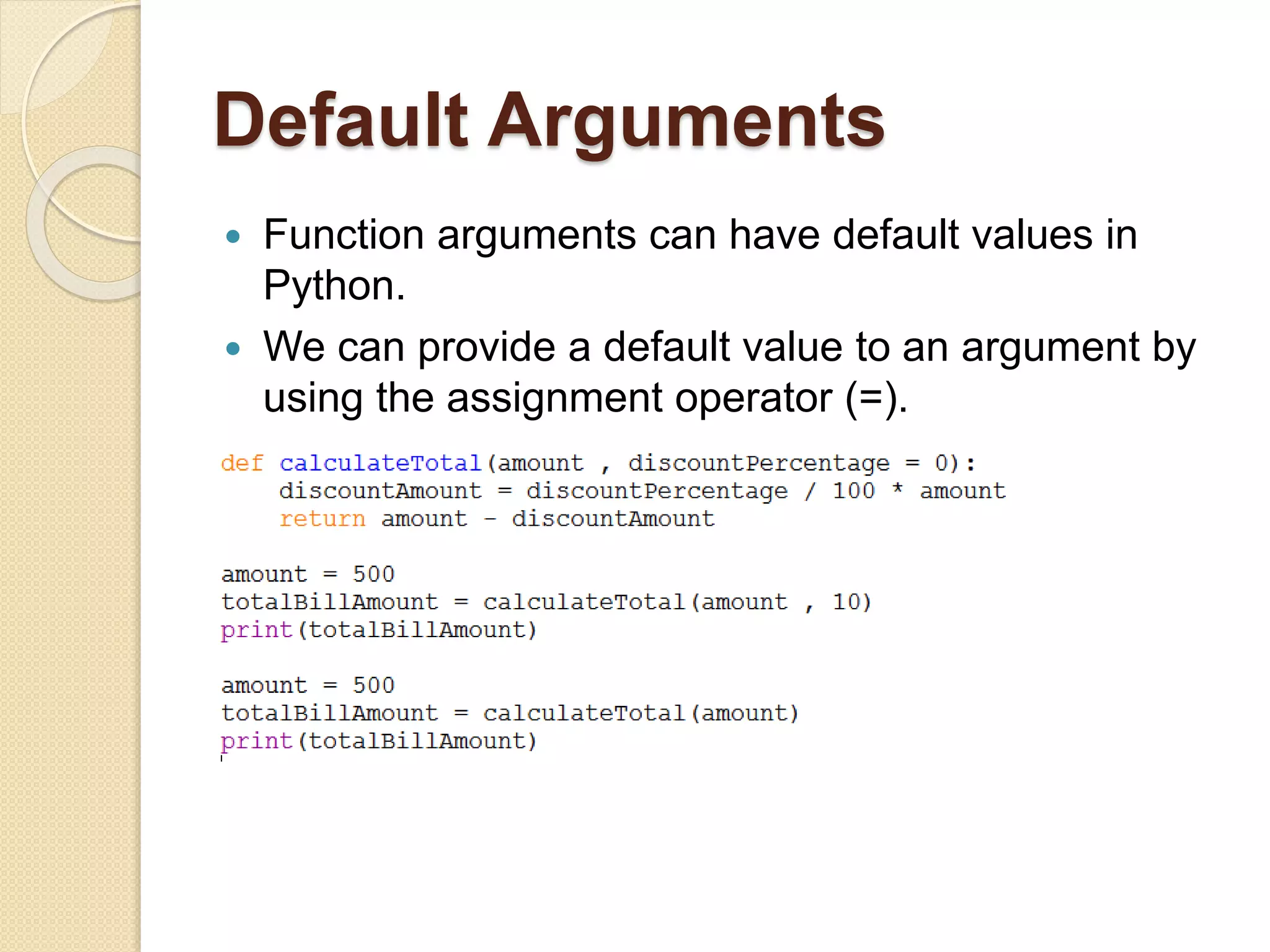
Default Arguments  Function arguments can have default values in Python.  We can provide a default value to an argument by using the assignment operator (=).
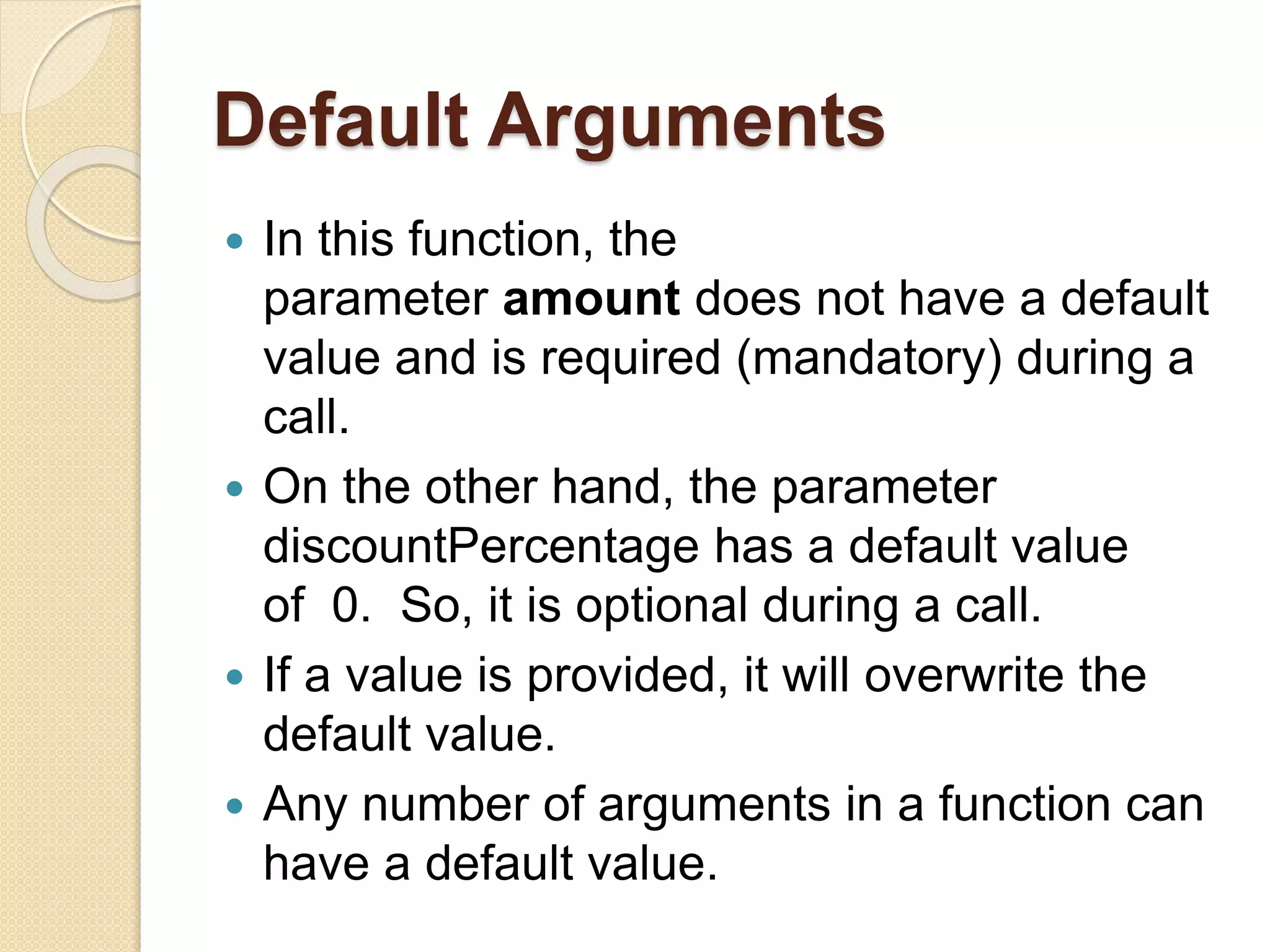
Default Arguments  In this function, the parameter amount does not have a default value and is required (mandatory) during a call.  On the other hand, the parameter discountPercentage has a default value of 0. So, it is optional during a call.  If a value is provided, it will overwrite the default value.  Any number of arguments in a function can have a default value.
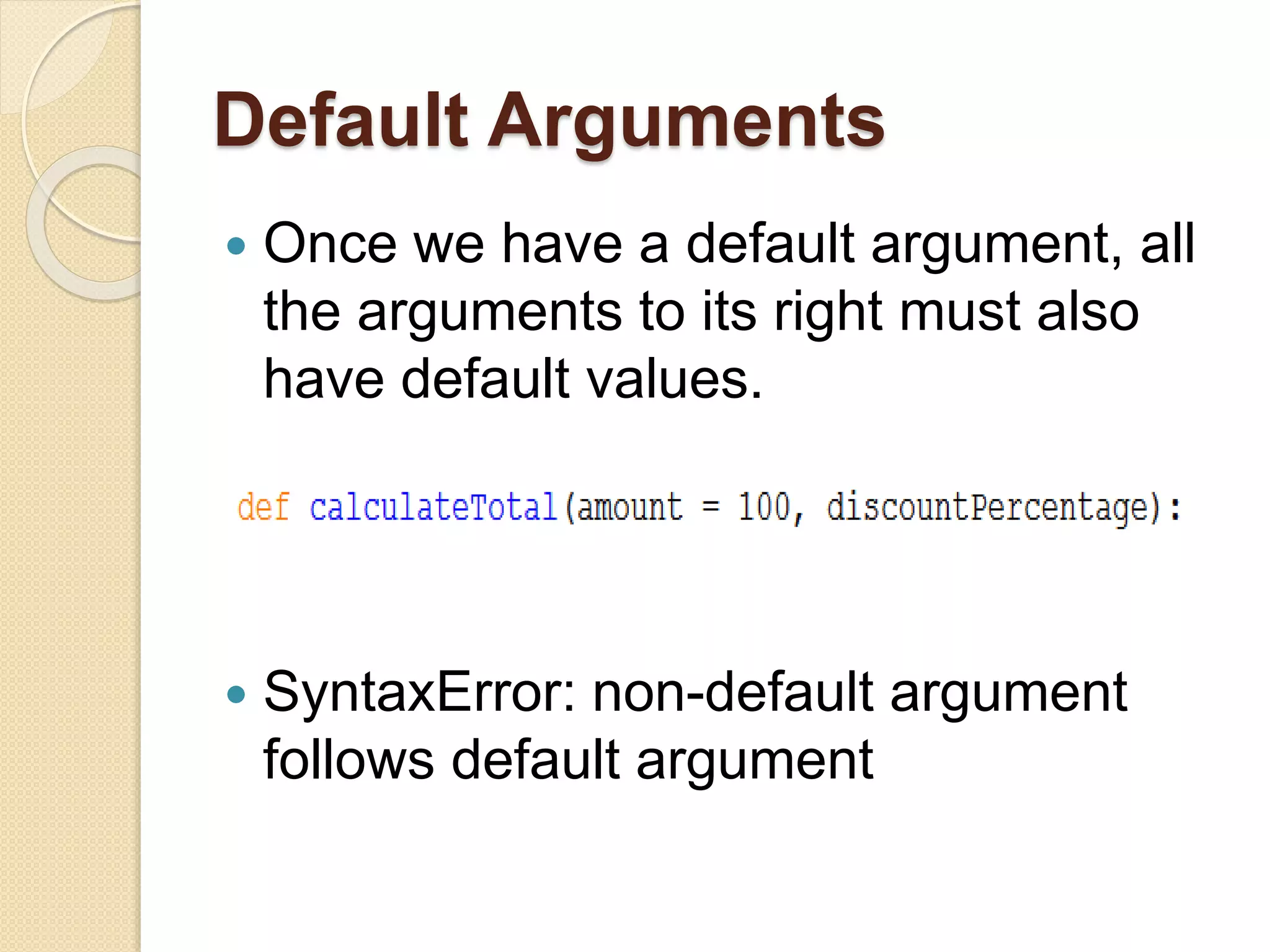
Default Arguments  Once we have a default argument, all the arguments to its right must also have default values.  SyntaxError: non-default argument follows default argument
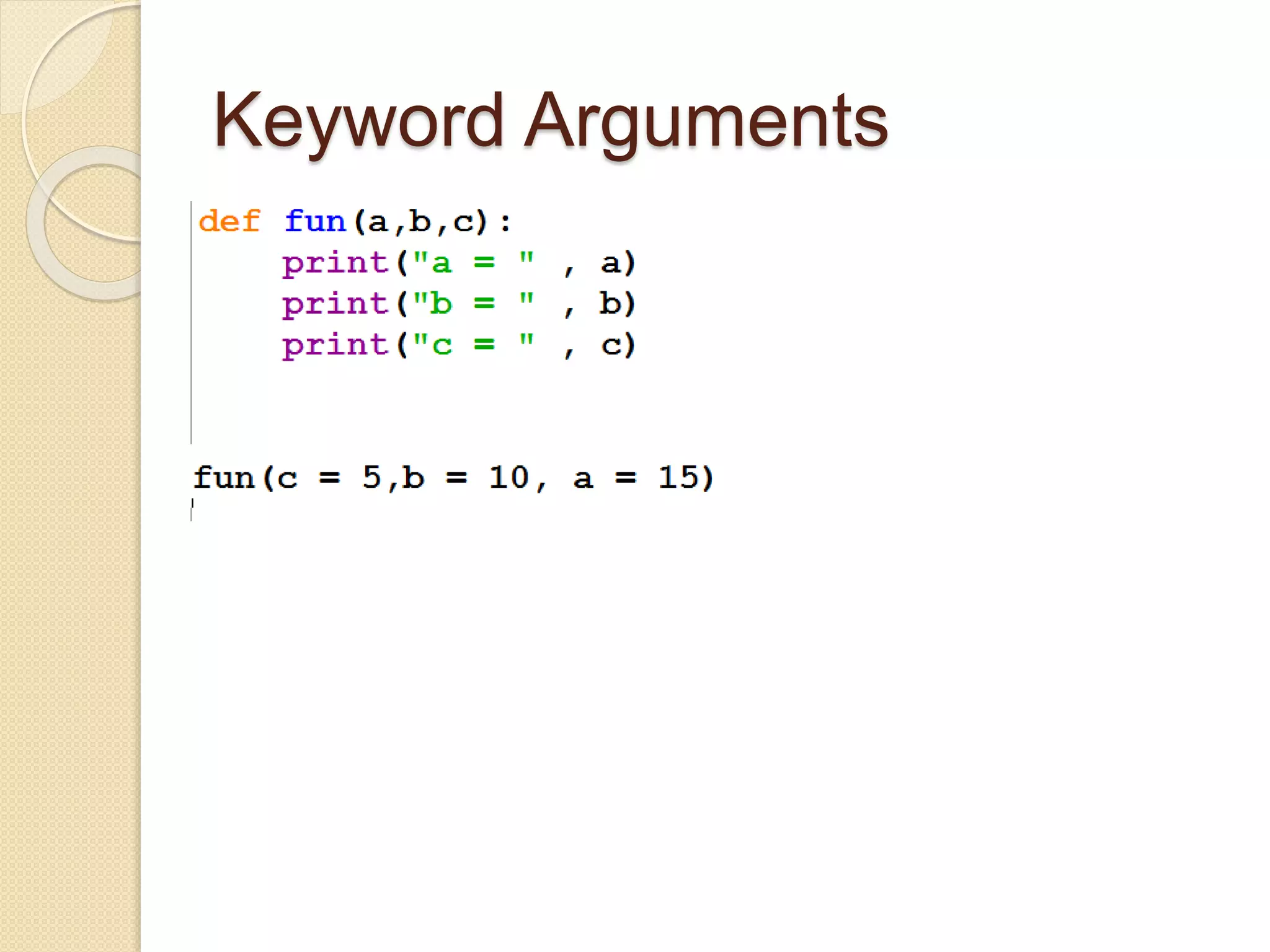
Keyword Arguments
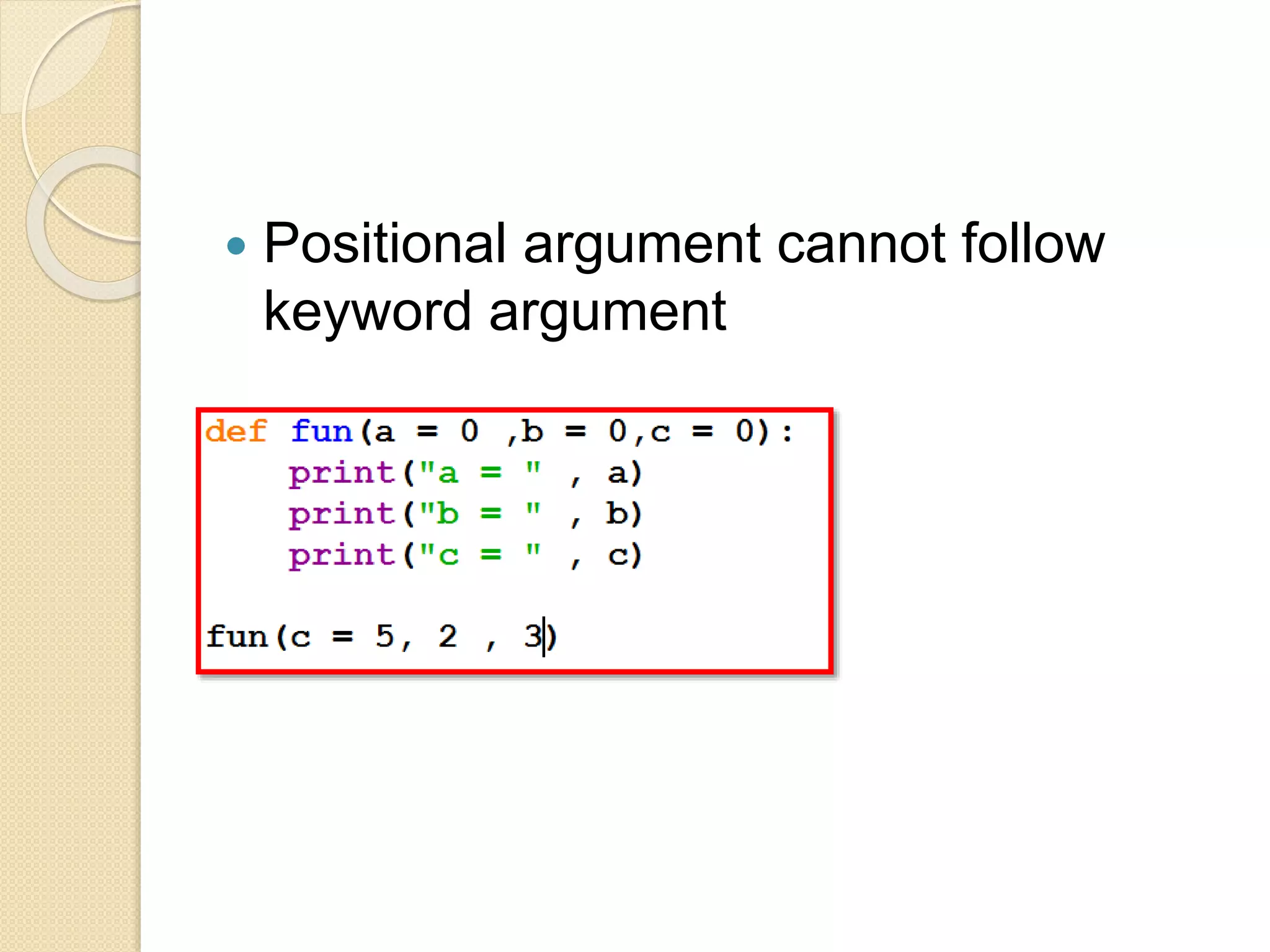
 Positional argument cannot follow keyword argument
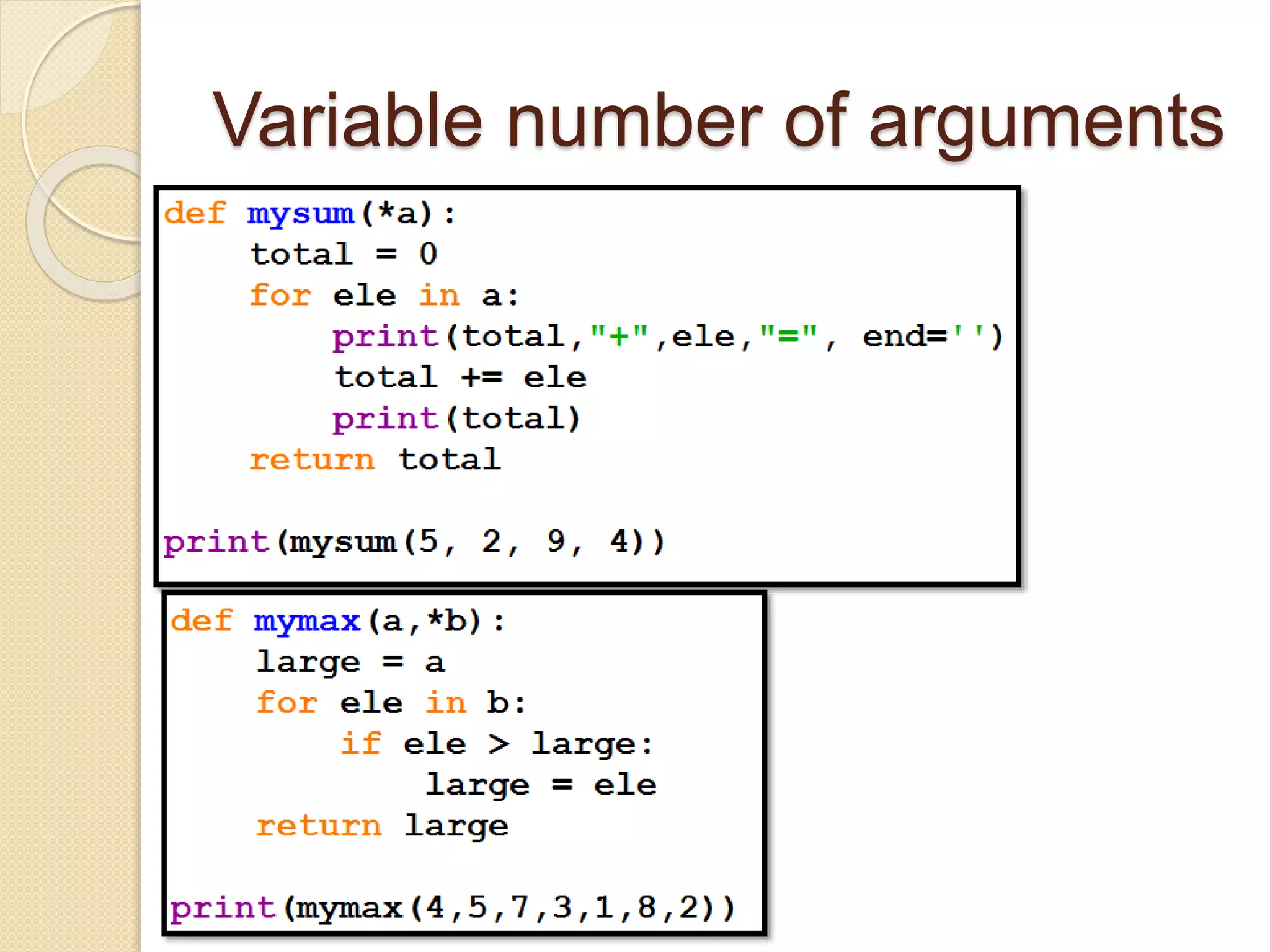
Variable number of arguments
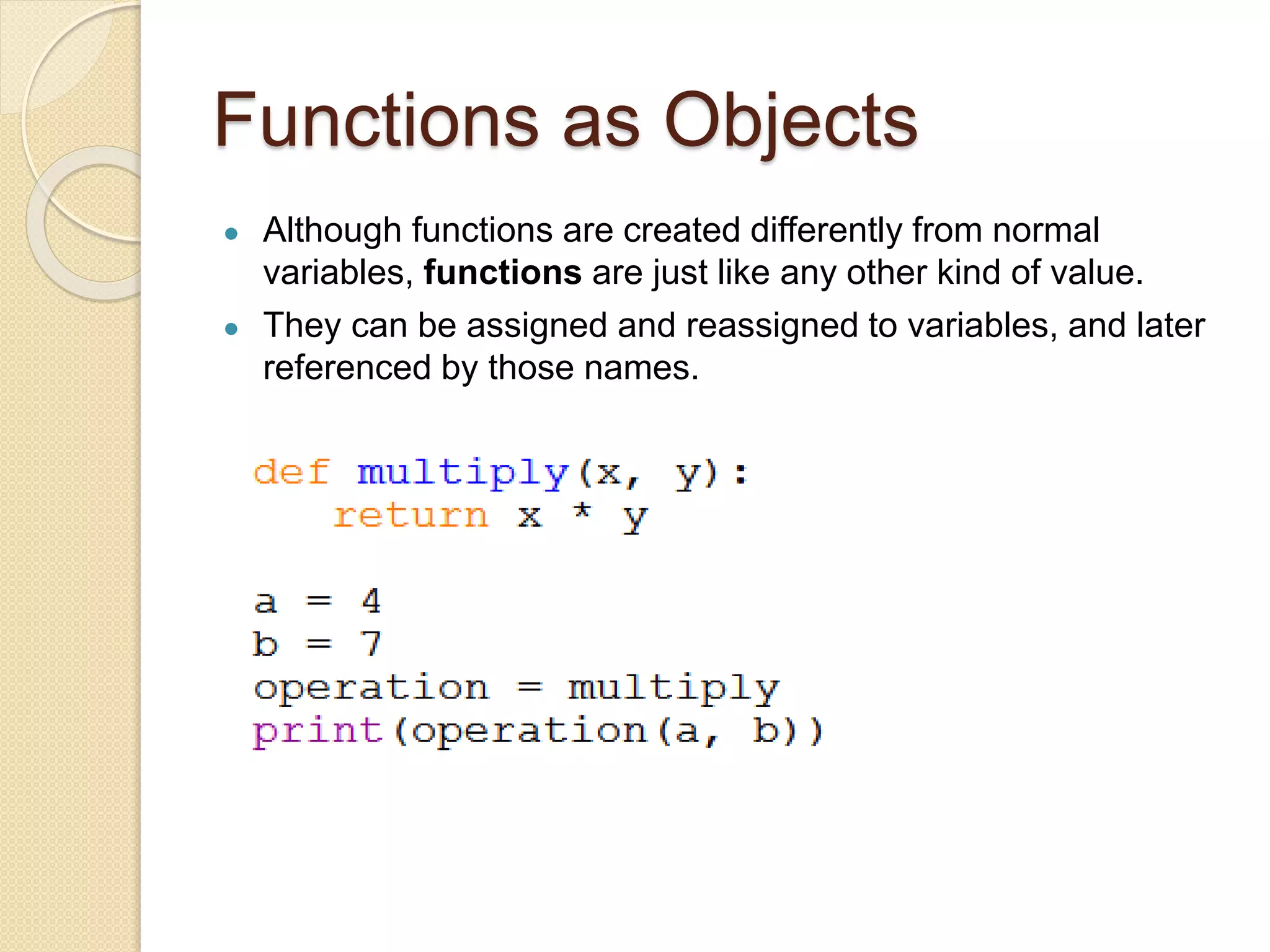
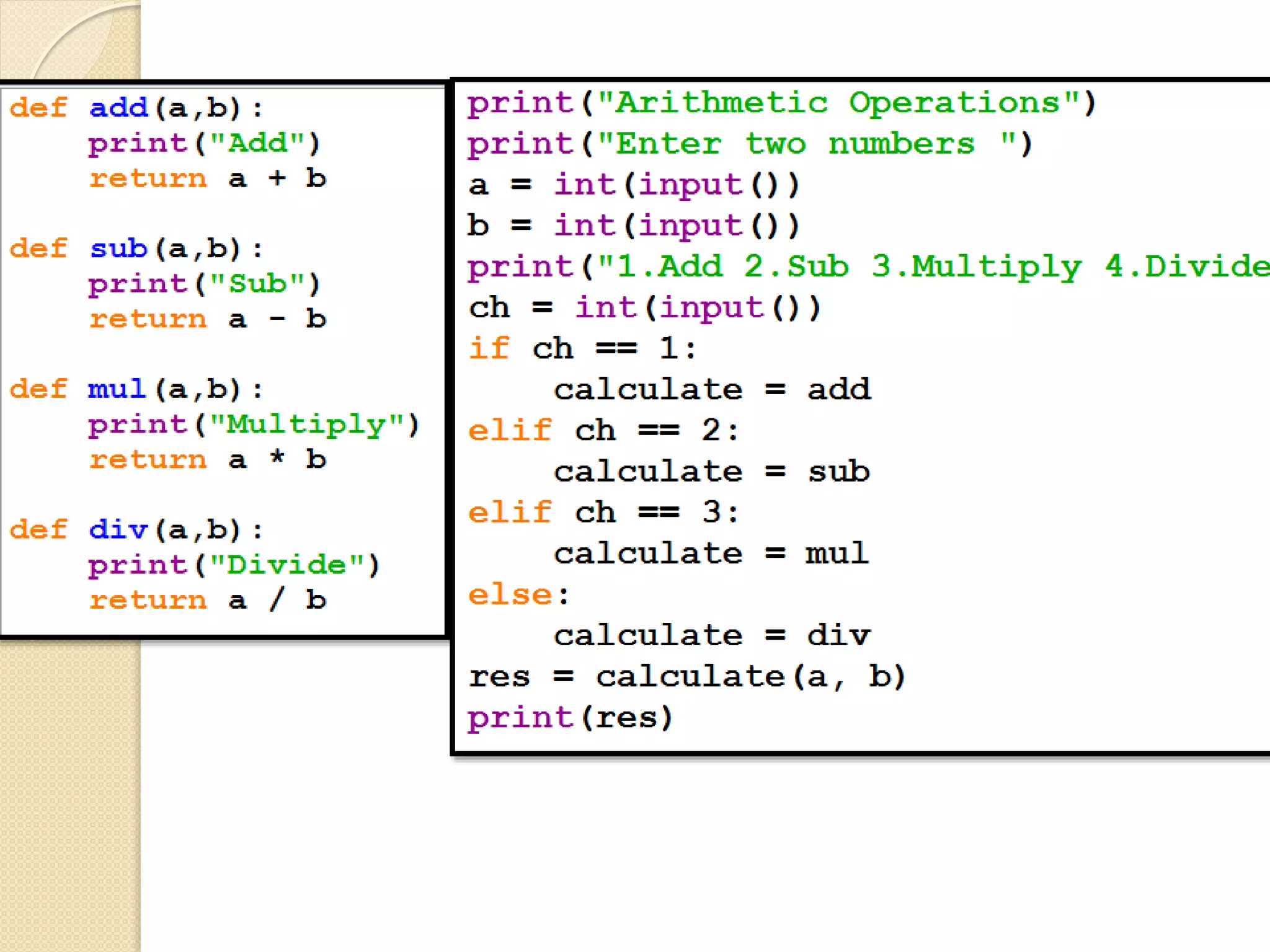
Functions as Objects ● Although functions are created differently from normal variables, functions are just like any other kind of value. ● They can be assigned and reassigned to variables, and later referenced by those names.
Python Functions

Python Functions

  • 1.
    Python Functions ● Definefunctions ● Passing arguments to Function ● Return a value from function ● Scope of Objects ● Default arguments ● Positional and keyword arguments ● Variable length arguments
  • 2.
    Functions  Piece ofreusable code  Solves particular task  Call function instead of writing code yourself
  • 3.
  • 4.
  • 5.
  • 6.
    Function Call  Oncewe have defined a function, we can call it from another function, program or even the Python prompt.  To call a function we simply type the function name with appropriate parameters. Calling the Function my_function()
  • 7.
  • 8.
    Square function:Take one argumentsand returns its square
  • 9.
  • 10.
    Scope and Lifetimeof variables  Scope of a variable is the portion of a program where the variable is recognized.  Parameters and variables defined inside a function is not visible from outside. Hence, they have a local scope.  Lifetime of a variable is the period throughout which the variable exits in the memory. The lifetime of variables inside a function is as long as the function executes.  They are destroyed once we return from the function. Hence, a function does not remember the value of a variable from its previous calls.
  • 14.
    Default Arguments  Functionarguments can have default values in Python.  We can provide a default value to an argument by using the assignment operator (=).
  • 15.
    Default Arguments  Inthis function, the parameter amount does not have a default value and is required (mandatory) during a call.  On the other hand, the parameter discountPercentage has a default value of 0. So, it is optional during a call.  If a value is provided, it will overwrite the default value.  Any number of arguments in a function can have a default value.
  • 16.
    Default Arguments  Oncewe have a default argument, all the arguments to its right must also have default values.  SyntaxError: non-default argument follows default argument
  • 17.
  • 18.
     Positional argumentcannot follow keyword argument
  • 19.
  • 20.
    Functions as Objects ●Although functions are created differently from normal variables, functions are just like any other kind of value. ● They can be assigned and reassigned to variables, and later referenced by those names.