Introduction to Sampling Methods Dr. P. VETRI SELVI Assistant Professor Department of Statistics The Madura College (Autonomous) Madurai December 2025
Outline What is Sampling? The Purpose of Sampling Types of Sampling Method
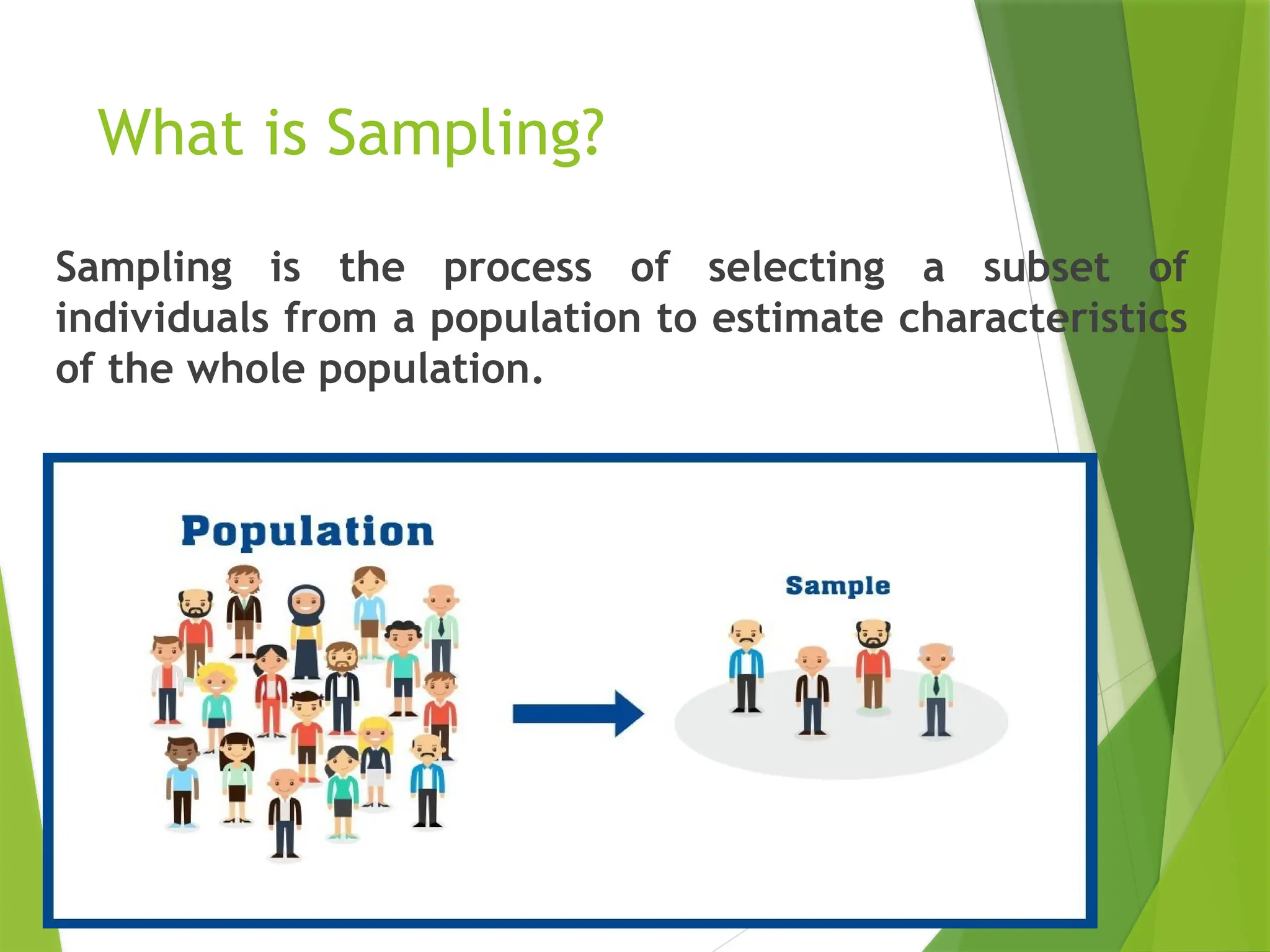
What is Sampling? Sampling is the process of selecting a subset of individuals from a population to estimate characteristics of the whole population.
The Purpose of Sampling The purpose of sampling is to study a representative subset of a larger population to draw statistically valid conclusions about the entire group, which is often impractical to study in its entirety due to constraints like cost, time, and complexity.
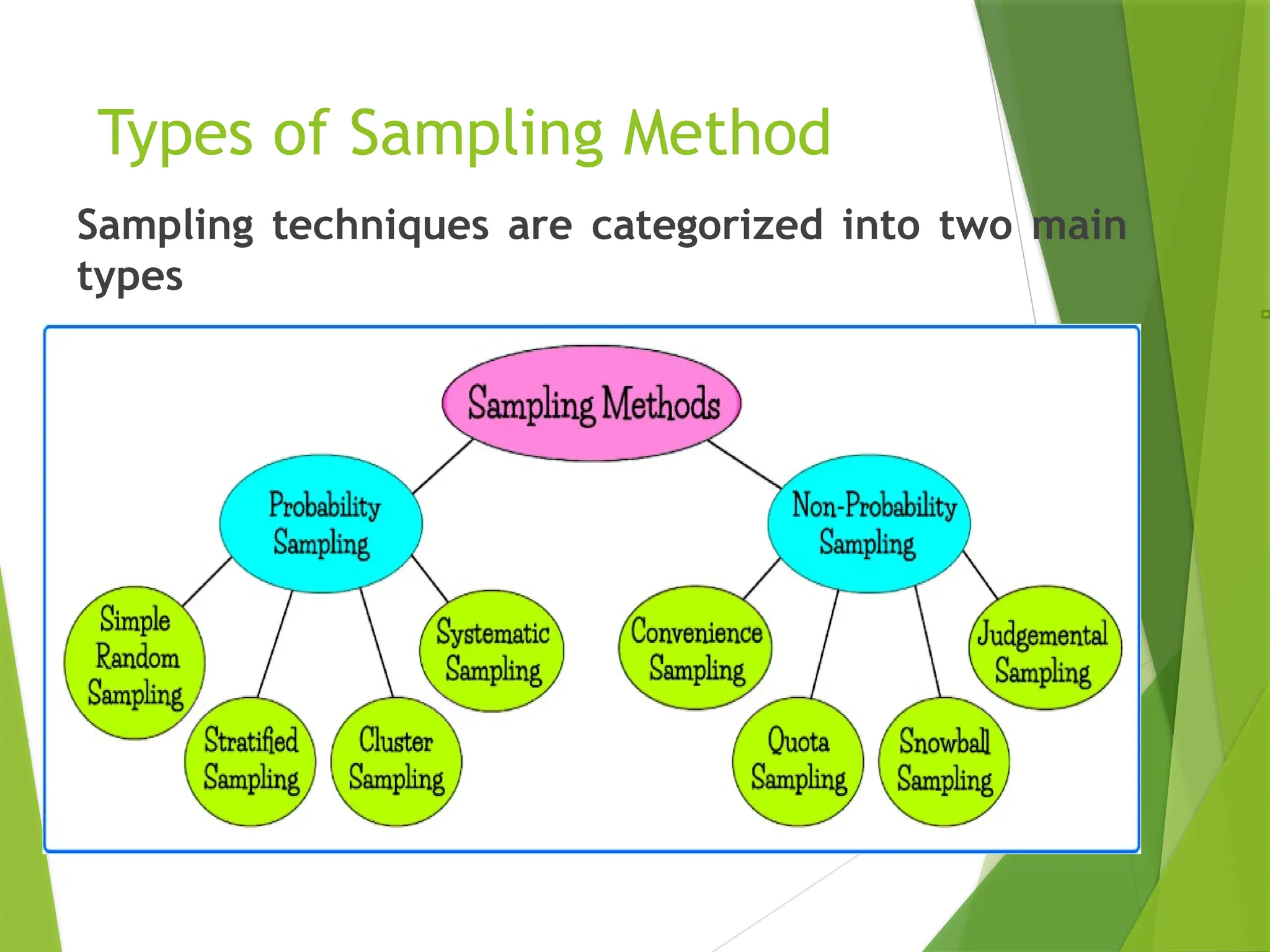
Types of Sampling Method Sampling techniques are categorized into two main types
Probability Sampling and Non -Probability Sampling The Probability sampling is defined as a sampling technique in which the researcher chooses samples from a larger population using a method based on the theory of probability. The non-probability sampling method is a technique in which the researcher selects the sample based on subjective judgment rather than the random selection
Probability Sampling Simple Random Sampling  Applicable when population is small, homogeneous and readily available  All subsets of the frame are given an equal probability. Each element of the frame thus has an equal probability of selection.  It provides for greatest number of possible samples. This is done by assigning a number to each unit in the sampling frame.  A table of random number or lottery system is used to determine which units are to be selected.
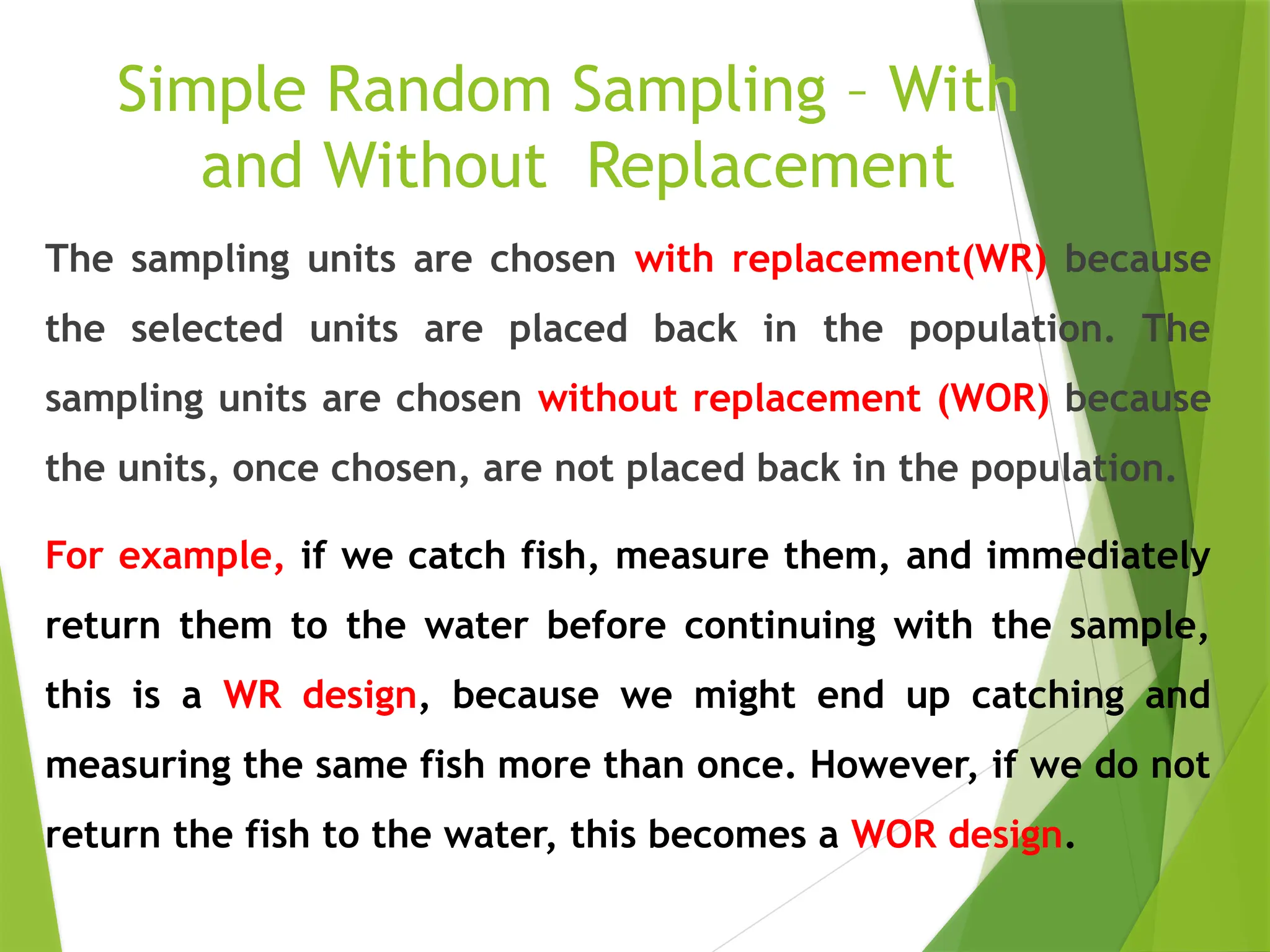
Simple Random Sampling – With and Without Replacement The sampling units are chosen with replacement(WR) because the selected units are placed back in the population. The sampling units are chosen without replacement (WOR) because the units, once chosen, are not placed back in the population. For example, if we catch fish, measure them, and immediately return them to the water before continuing with the sample, this is a WR design, because we might end up catching and measuring the same fish more than once. However, if we do not return the fish to the water, this becomes a WOR design.
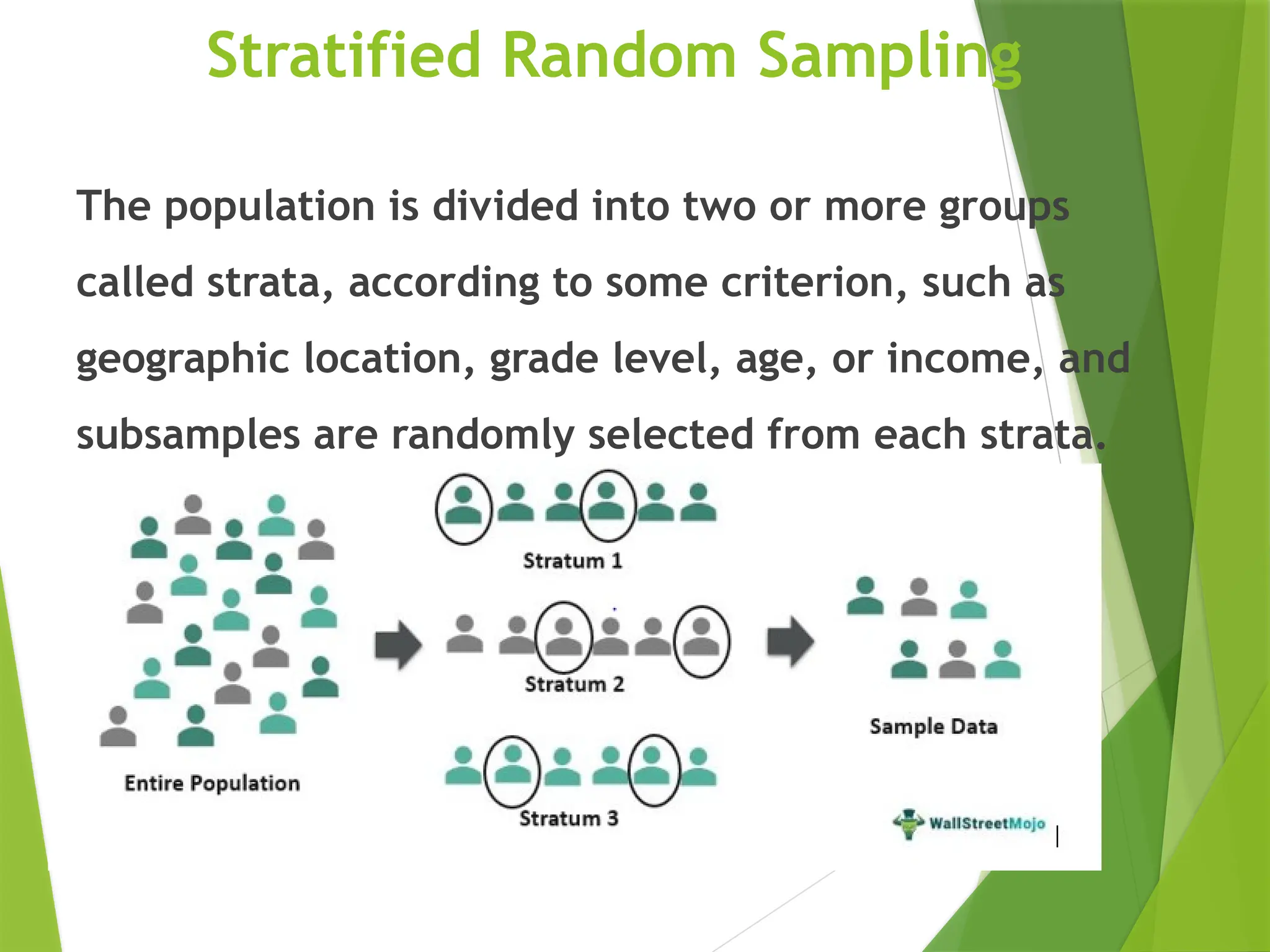
Stratified Random Sampling The population is divided into two or more groups called strata, according to some criterion, such as geographic location, grade level, age, or income, and subsamples are randomly selected from each strata.
Cluster Sampling  Cluster Sampling is an example of 'two-stage sampling' .  First stage a sample of areas is chosen;  Second stage a sample of respondents within those areas is selected.  Population divided into clusters of homogeneous units, usually based on geographical contiguity.  Sampling units are groups rather than individuals.  A sample of such clusters is then selected.  All units from the selected clusters are studied. .
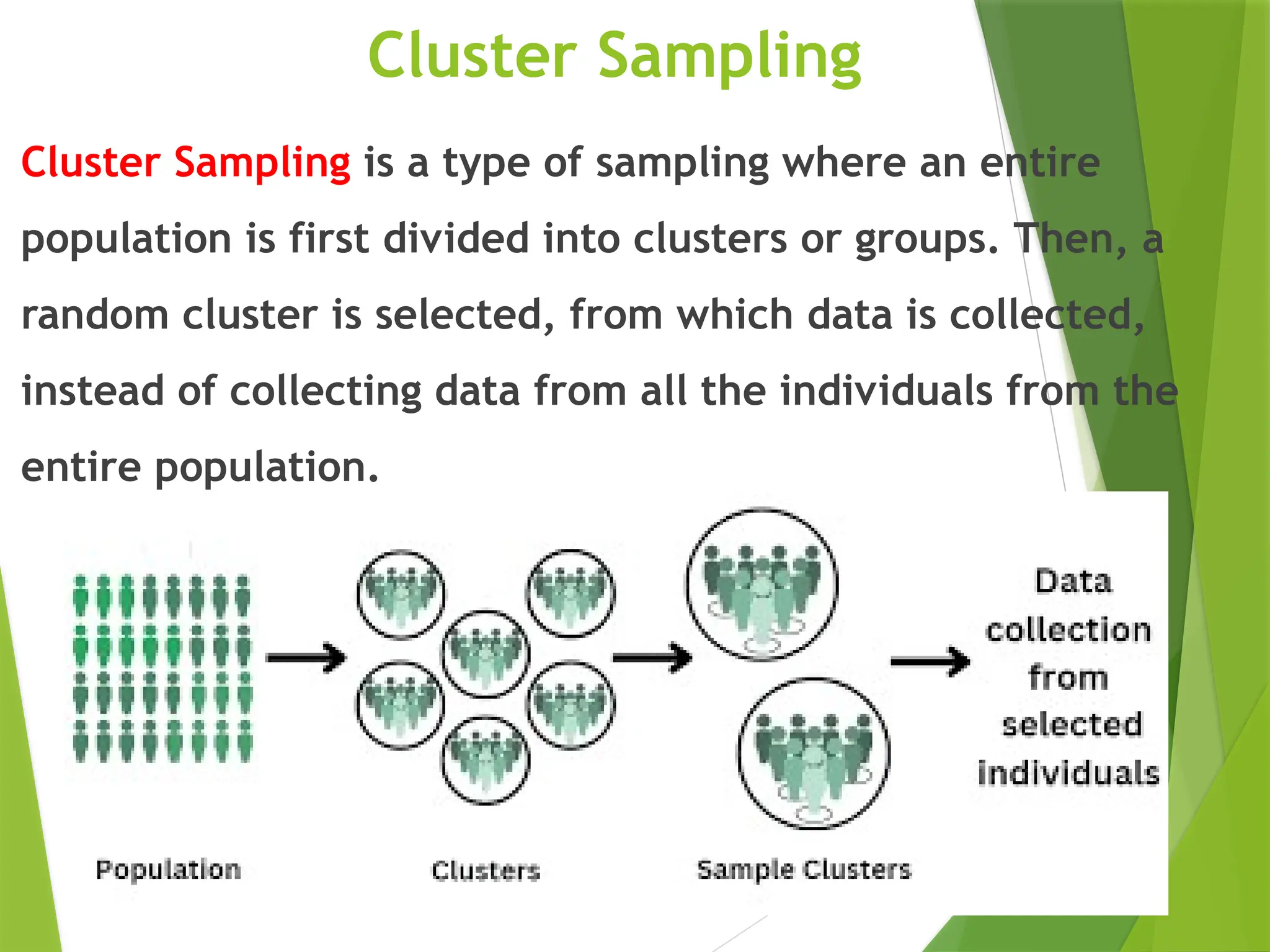
Cluster Sampling Cluster Sampling is a type of sampling where an entire population is first divided into clusters or groups. Then, a random cluster is selected, from which data is collected, instead of collecting data from all the individuals from the entire population. .
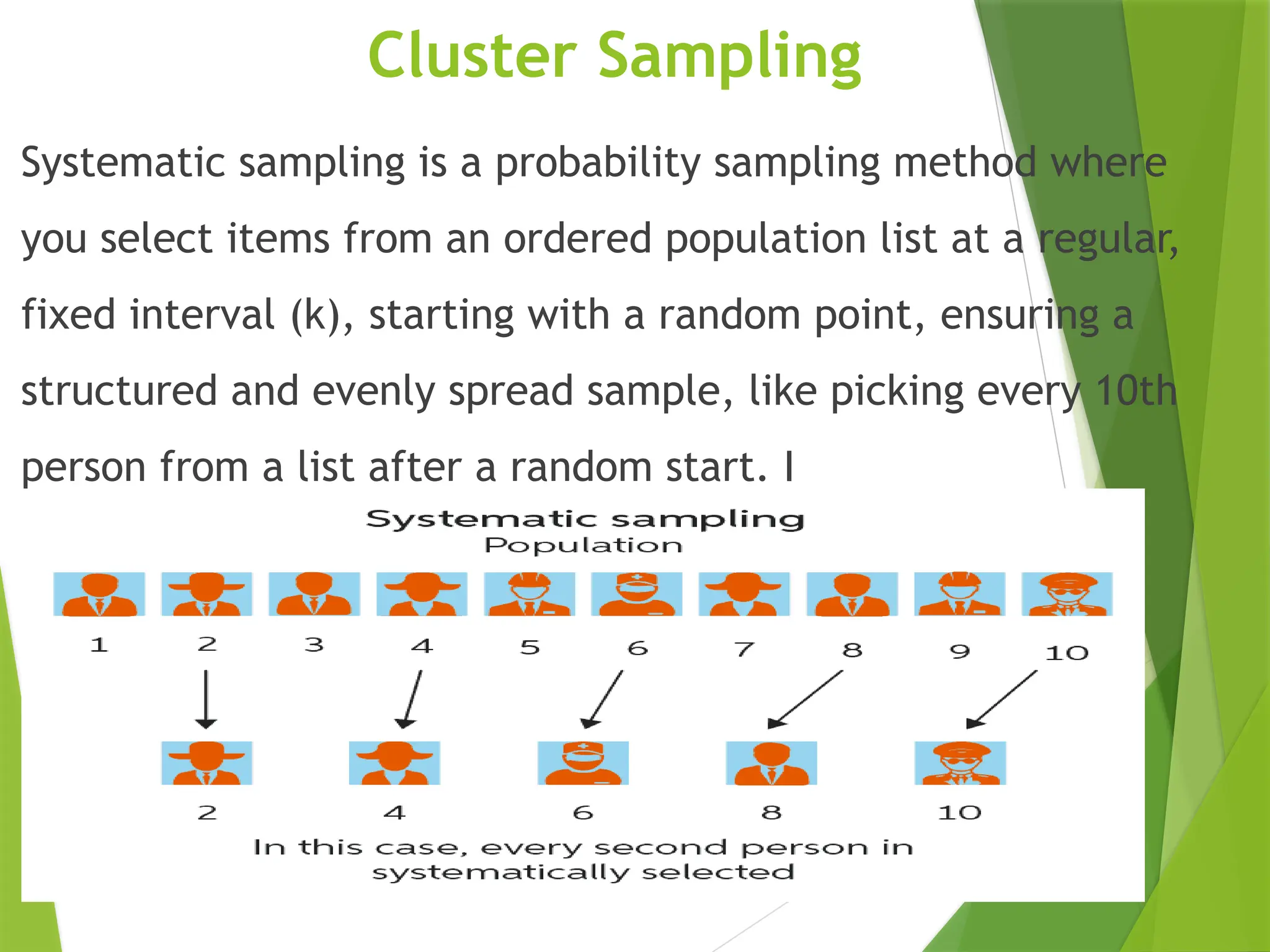
Cluster Sampling Systematic sampling is a probability sampling method where you select items from an ordered population list at a regular, fixed interval (k), starting with a random point, ensuring a structured and evenly spread sample, like picking every 10th person from a list after a random start. I
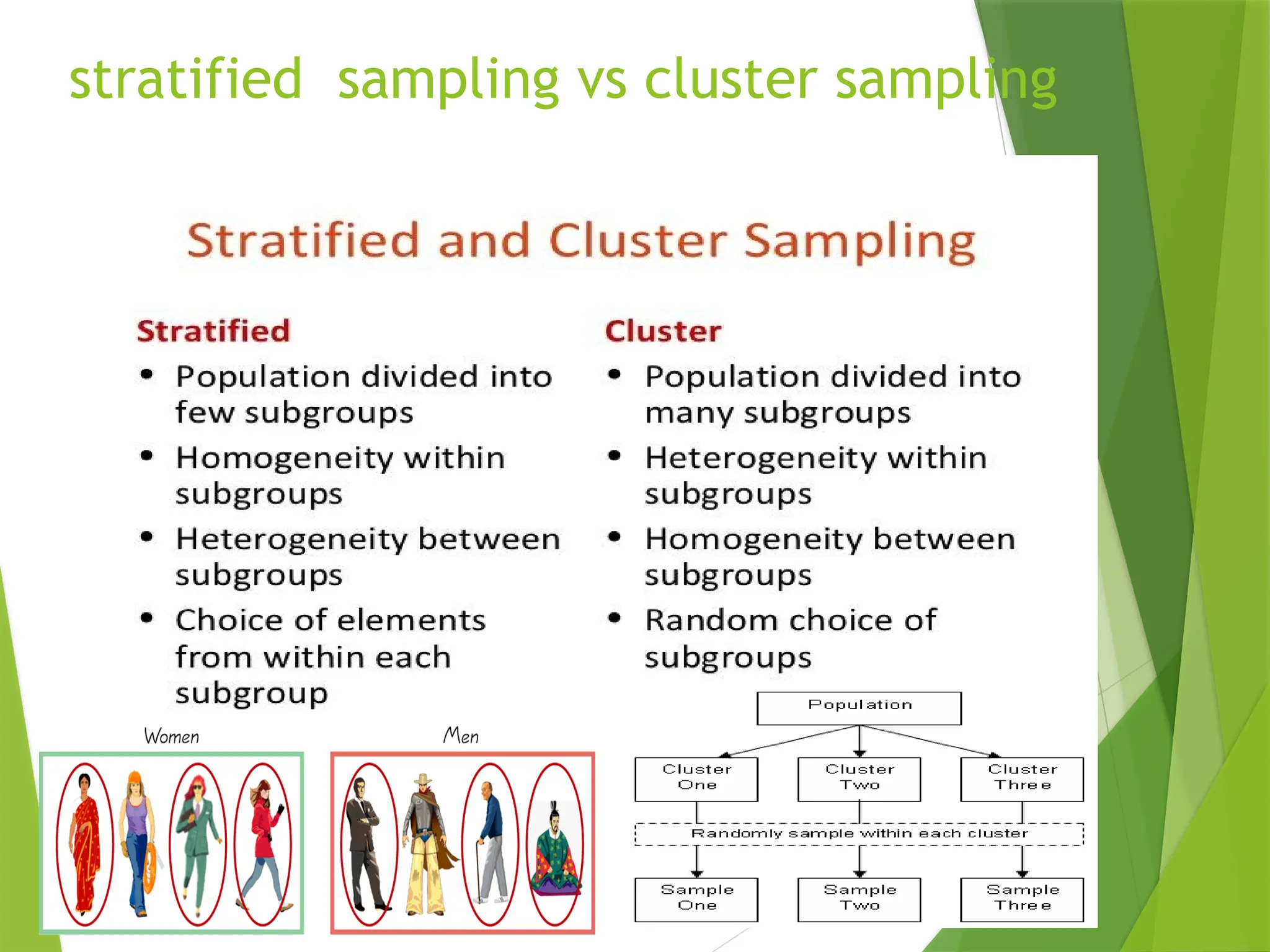
stratified sampling vs cluster sampling
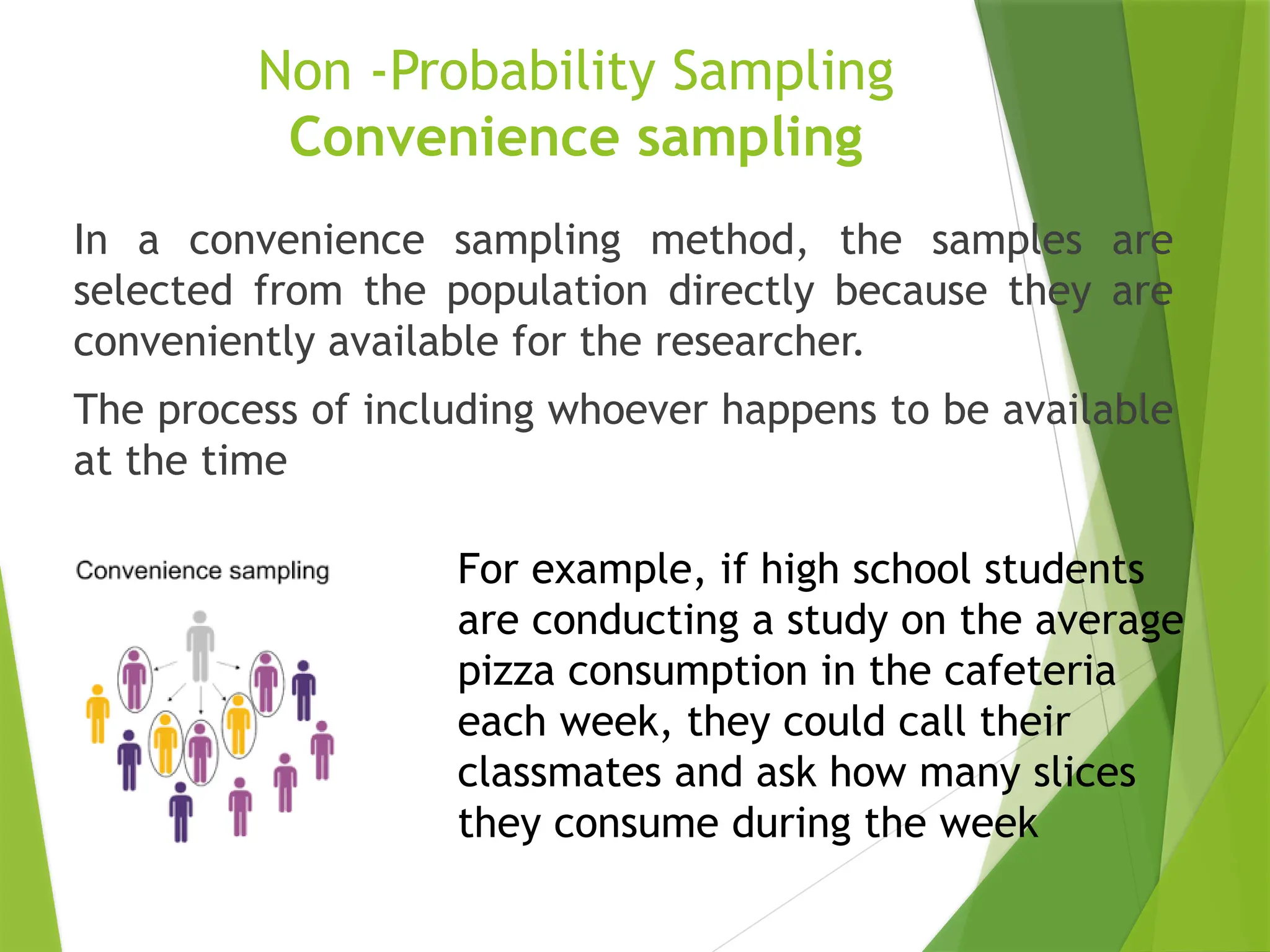
Non -Probability Sampling Convenience sampling In a convenience sampling method, the samples are selected from the population directly because they are conveniently available for the researcher. The process of including whoever happens to be available at the time For example, if high school students are conducting a study on the average pizza consumption in the cafeteria each week, they could call their classmates and ask how many slices they consume during the week
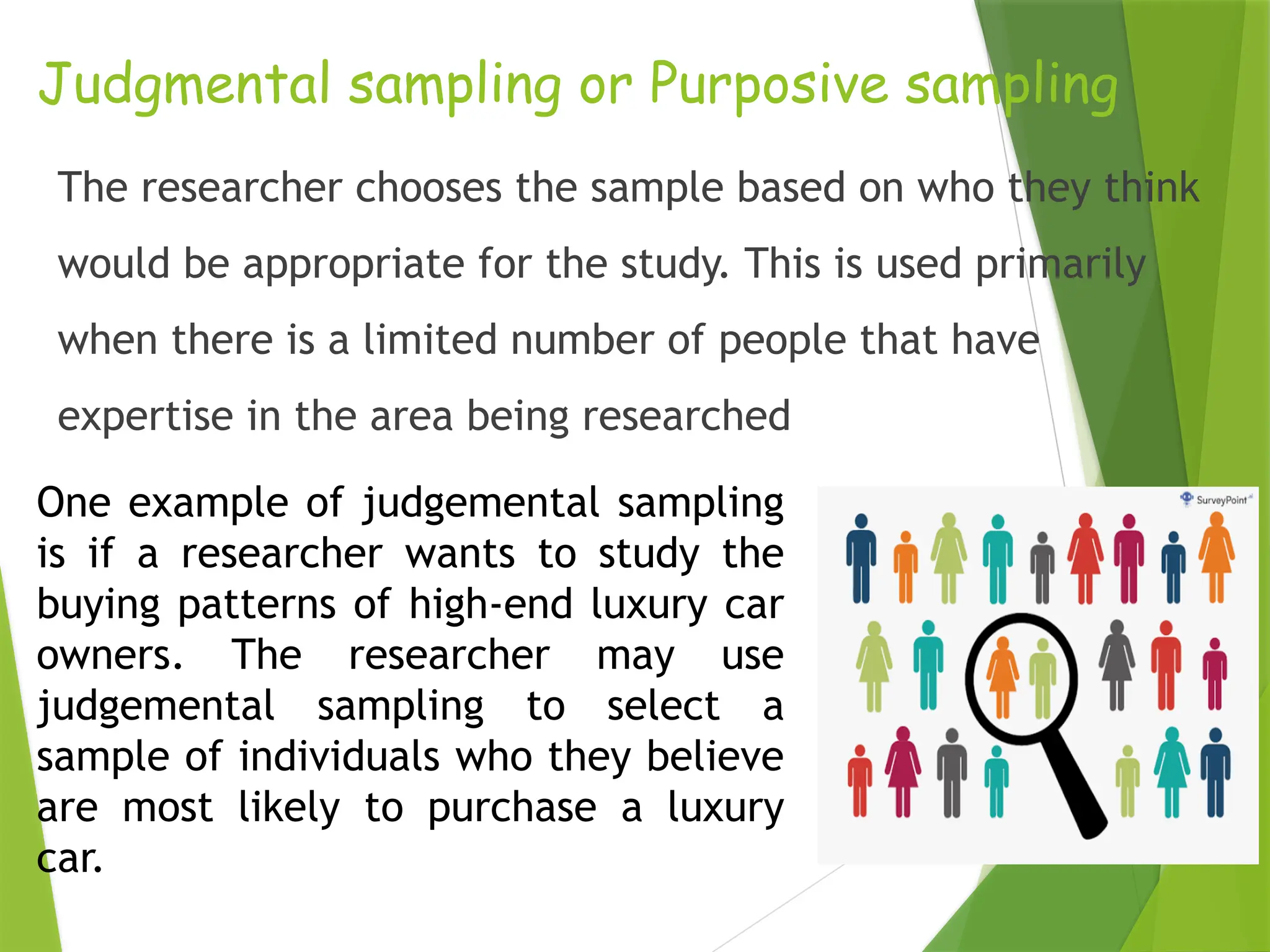
Judgmental sampling or Purposive sampling The researcher chooses the sample based on who they think would be appropriate for the study. This is used primarily when there is a limited number of people that have expertise in the area being researched One example of judgemental sampling is if a researcher wants to study the buying patterns of high-end luxury car owners. The researcher may use judgemental sampling to select a sample of individuals who they believe are most likely to purchase a luxury car.
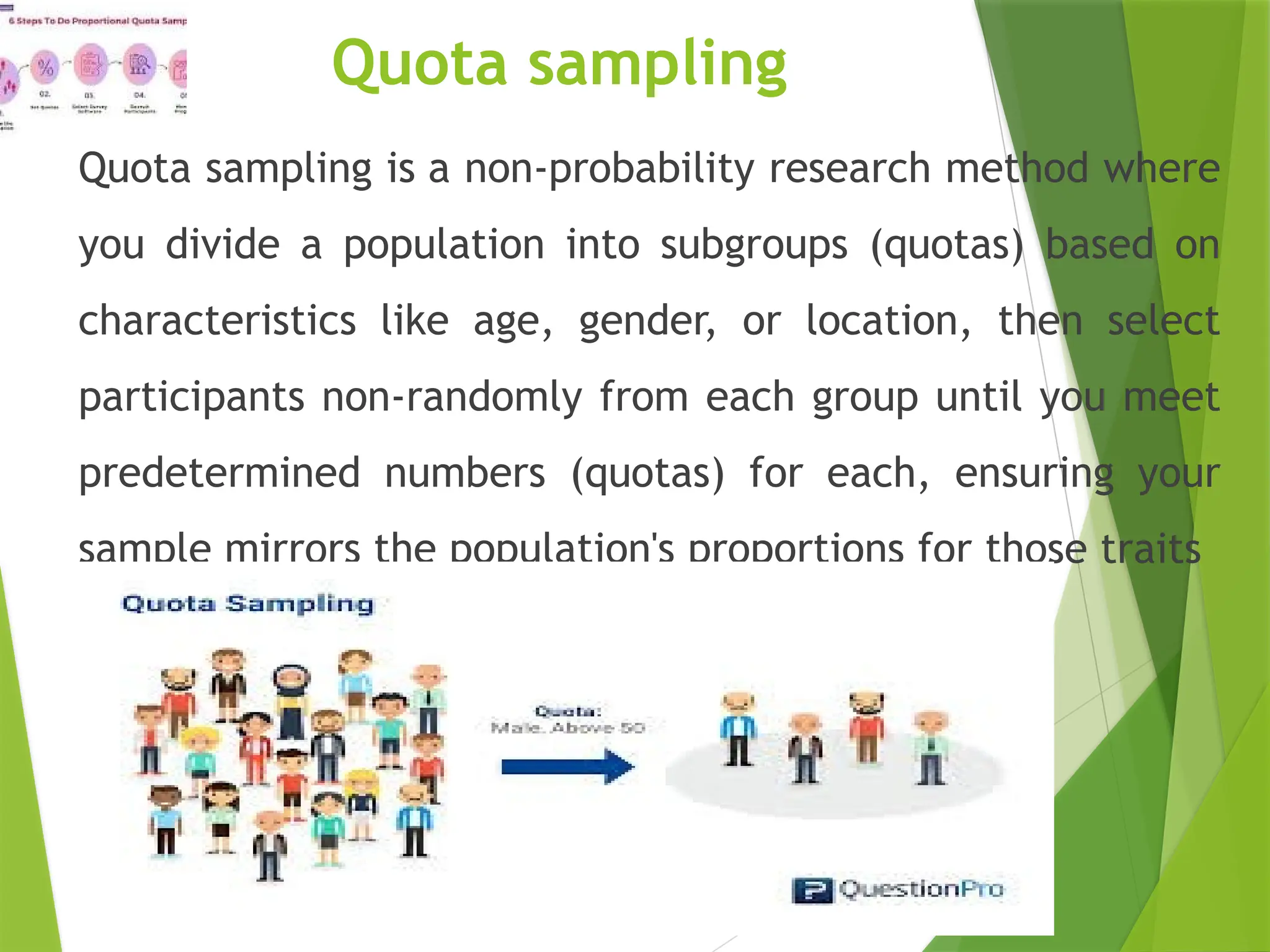
Quota sampling Quota sampling is a non-probability research method where you divide a population into subgroups (quotas) based on characteristics like age, gender, or location, then select participants non-randomly from each group until you meet predetermined numbers (quotas) for each, ensuring your sample mirrors the population's proportions for those traits
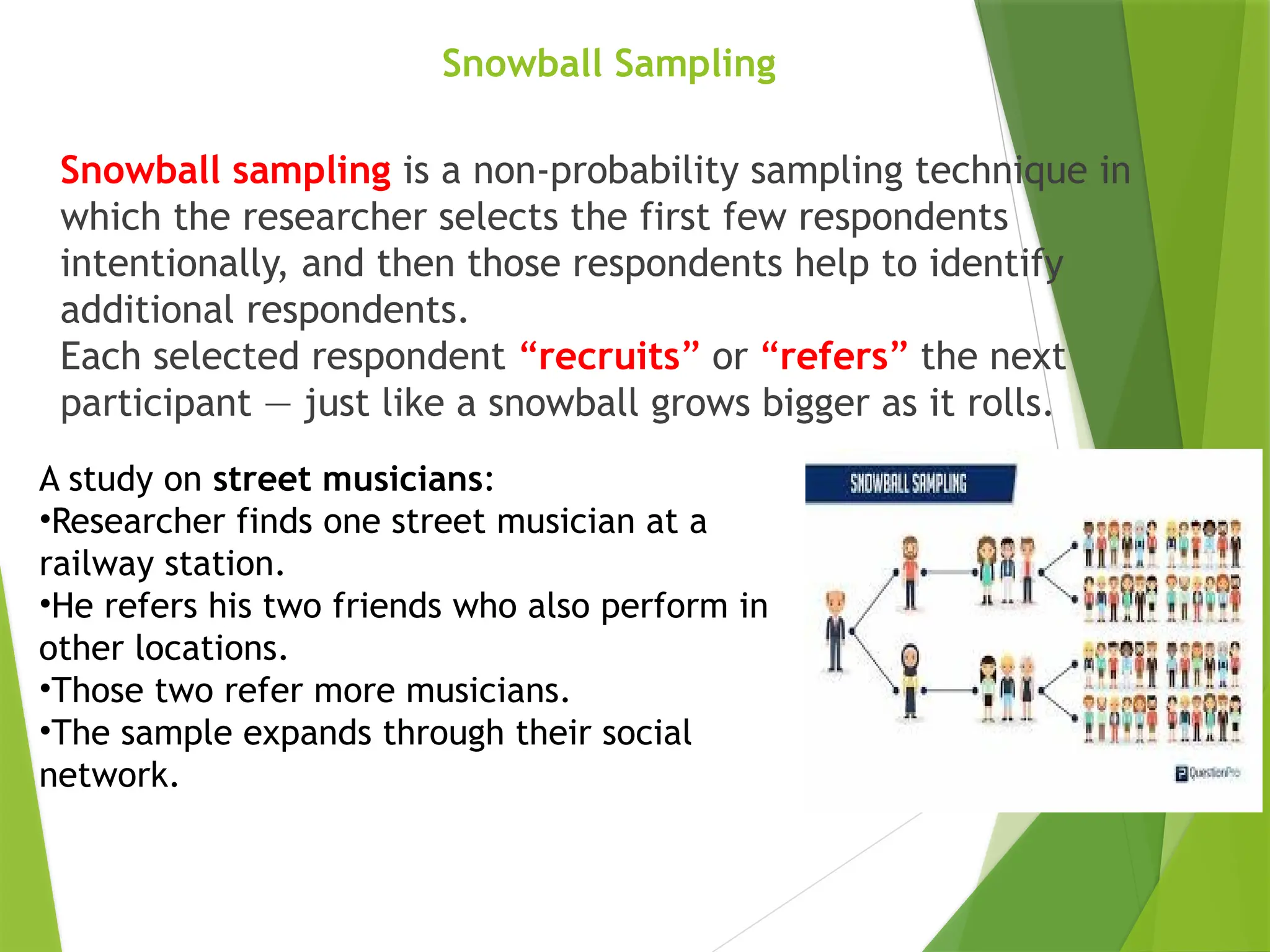
Snowball Sampling Snowball sampling is a non-probability sampling technique in which the researcher selects the first few respondents intentionally, and then those respondents help to identify additional respondents. Each selected respondent “recruits” or “refers” the next participant — just like a snowball grows bigger as it rolls. A study on street musicians: •Researcher finds one street musician at a railway station. •He refers his two friends who also perform in other locations. •Those two refer more musicians. •The sample expands through their social network.
Thank you

Introduction to Sampling Methods :Basic Concept

  • 1.
    Introduction to Sampling Methods Dr.P. VETRI SELVI Assistant Professor Department of Statistics The Madura College (Autonomous) Madurai December 2025
  • 2.
    Outline What is Sampling? ThePurpose of Sampling Types of Sampling Method
  • 3.
    What is Sampling? Samplingis the process of selecting a subset of individuals from a population to estimate characteristics of the whole population.
  • 4.
    The Purpose ofSampling The purpose of sampling is to study a representative subset of a larger population to draw statistically valid conclusions about the entire group, which is often impractical to study in its entirety due to constraints like cost, time, and complexity.
  • 5.
    Types of SamplingMethod Sampling techniques are categorized into two main types
  • 6.
    Probability Sampling and Non-Probability Sampling The Probability sampling is defined as a sampling technique in which the researcher chooses samples from a larger population using a method based on the theory of probability. The non-probability sampling method is a technique in which the researcher selects the sample based on subjective judgment rather than the random selection
  • 7.
    Probability Sampling Simple RandomSampling  Applicable when population is small, homogeneous and readily available  All subsets of the frame are given an equal probability. Each element of the frame thus has an equal probability of selection.  It provides for greatest number of possible samples. This is done by assigning a number to each unit in the sampling frame.  A table of random number or lottery system is used to determine which units are to be selected.
  • 8.
    Simple Random Sampling– With and Without Replacement The sampling units are chosen with replacement(WR) because the selected units are placed back in the population. The sampling units are chosen without replacement (WOR) because the units, once chosen, are not placed back in the population. For example, if we catch fish, measure them, and immediately return them to the water before continuing with the sample, this is a WR design, because we might end up catching and measuring the same fish more than once. However, if we do not return the fish to the water, this becomes a WOR design.
  • 9.
    Stratified Random Sampling Thepopulation is divided into two or more groups called strata, according to some criterion, such as geographic location, grade level, age, or income, and subsamples are randomly selected from each strata.
  • 10.
    Cluster Sampling  ClusterSampling is an example of 'two-stage sampling' .  First stage a sample of areas is chosen;  Second stage a sample of respondents within those areas is selected.  Population divided into clusters of homogeneous units, usually based on geographical contiguity.  Sampling units are groups rather than individuals.  A sample of such clusters is then selected.  All units from the selected clusters are studied. .
  • 11.
    Cluster Sampling Cluster Samplingis a type of sampling where an entire population is first divided into clusters or groups. Then, a random cluster is selected, from which data is collected, instead of collecting data from all the individuals from the entire population. .
  • 12.
    Cluster Sampling Systematic samplingis a probability sampling method where you select items from an ordered population list at a regular, fixed interval (k), starting with a random point, ensuring a structured and evenly spread sample, like picking every 10th person from a list after a random start. I
  • 13.
    stratified sampling vscluster sampling
  • 14.
    Non -Probability Sampling Conveniencesampling In a convenience sampling method, the samples are selected from the population directly because they are conveniently available for the researcher. The process of including whoever happens to be available at the time For example, if high school students are conducting a study on the average pizza consumption in the cafeteria each week, they could call their classmates and ask how many slices they consume during the week
  • 15.
    Judgmental sampling orPurposive sampling The researcher chooses the sample based on who they think would be appropriate for the study. This is used primarily when there is a limited number of people that have expertise in the area being researched One example of judgemental sampling is if a researcher wants to study the buying patterns of high-end luxury car owners. The researcher may use judgemental sampling to select a sample of individuals who they believe are most likely to purchase a luxury car.
  • 16.
    Quota sampling Quota samplingis a non-probability research method where you divide a population into subgroups (quotas) based on characteristics like age, gender, or location, then select participants non-randomly from each group until you meet predetermined numbers (quotas) for each, ensuring your sample mirrors the population's proportions for those traits
  • 17.
    Snowball Sampling Snowball samplingis a non-probability sampling technique in which the researcher selects the first few respondents intentionally, and then those respondents help to identify additional respondents. Each selected respondent “recruits” or “refers” the next participant — just like a snowball grows bigger as it rolls. A study on street musicians: •Researcher finds one street musician at a railway station. •He refers his two friends who also perform in other locations. •Those two refer more musicians. •The sample expands through their social network.
  • 18.