Symfony2 & REST API Alexey Verkeenko Grossum alex.verkeenko@gmail.com
WHAT IS REST? • REST (Representational State Transfer) is the software architectural style of the World Wide Web. • REST gives a coordinated set of constraints to the design of components in a distributed hypermedia system that can lead to a higher-performing and more maintainable architecture.
A BIT OF REST HISTORY • This technology became popular, when it was described in detail and presented by Roy Fielding in his doctoral dissertation called “Architectural Styles and the Design of Network-based Software Architectures” in 2000.
REST RULES • The general rule stands that each unit of information is identified by URL – which means, in turn, that URL in essence is the primary key for the data unit. • For example, third book on the bookshelf would have a view of /book/3, and 35th page of that book would be found here: /book/3/page/35.
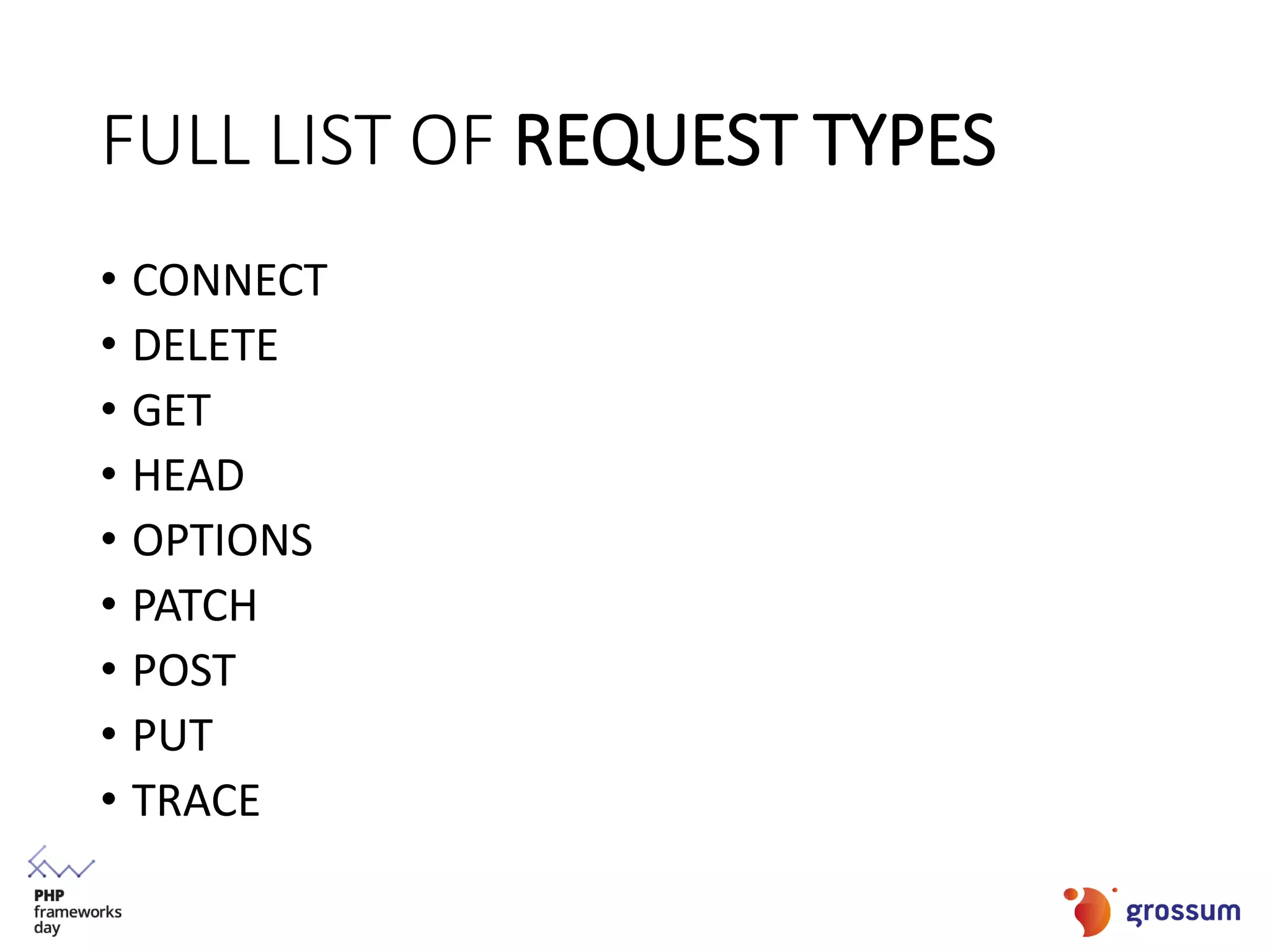
FULL LIST OF REQUEST TYPES • CONNECT • DELETE • GET • HEAD • OPTIONS • PATCH • POST • PUT • TRACE
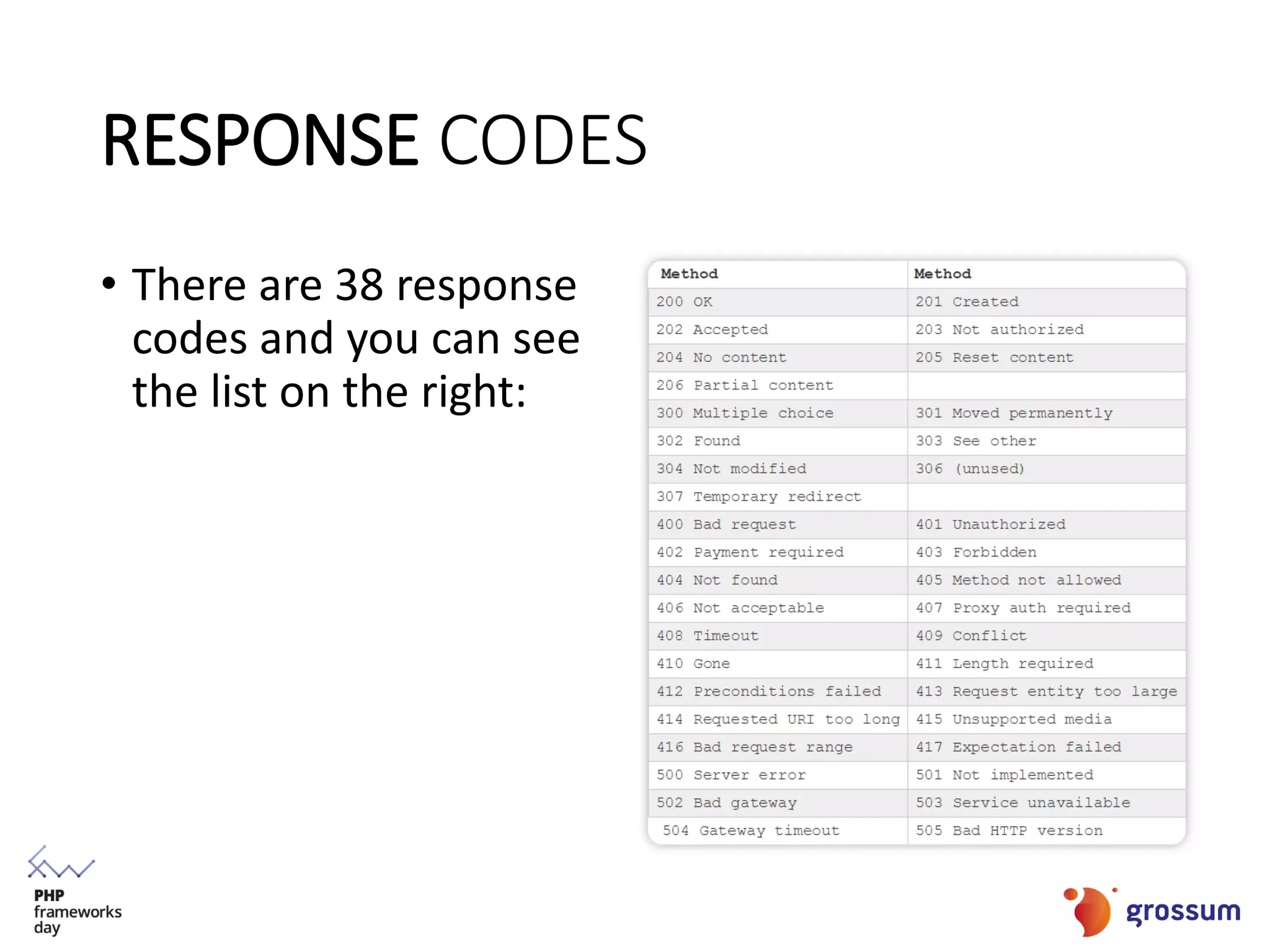
RESPONSE CODES • There are 38 response codes and you can see the list on the right:
API TRANSACTION EXAMPLE • One transaction for this API would consist from following (minimum): • Request method, for example, GET • Request path, for example, /object/list • Request body, for example, form • Response code, for example, 200 OK • Response body, for example data in JSON format
REST EXCLUSIONS • You cannot call a service a REST one, if: • It has single point of entry • All requests are processed by POST method • Response metadata is located in the body of the response and not in its header • URL-addresses contain method names
REST ADVANTAGES • The advantages of using REST in our projects: • All our resources have unique identifiers (URL), which gives us an opportunity to logically formulate our requests and structure URLs available for requests • Universality. You can use the same server response data to return back to XML or JSON for software processing or to wrap in a beautiful design for people to see. • REST is a service that implements actual service- oriented architecture (SOA), an architectural pattern in computer software design in which application components provide services to other components via a communications protocol, typically over a network.
ERRORS GUIDELINES • Basic error informing guidelines: • Use expected format • Do not neglect available response types • Show coherent messages
USAGE PROBLEMS • Absence of mutual agreement and standardization • Partial support of response headers • Different clients’ behavior for the same response code • Complex process of searching for errors during development
REQUEST OPTIONS • Safe request – a request that does not change the application’s condition. • Idempotent request – a request, the multiple execution of which equals to the single execution effect.
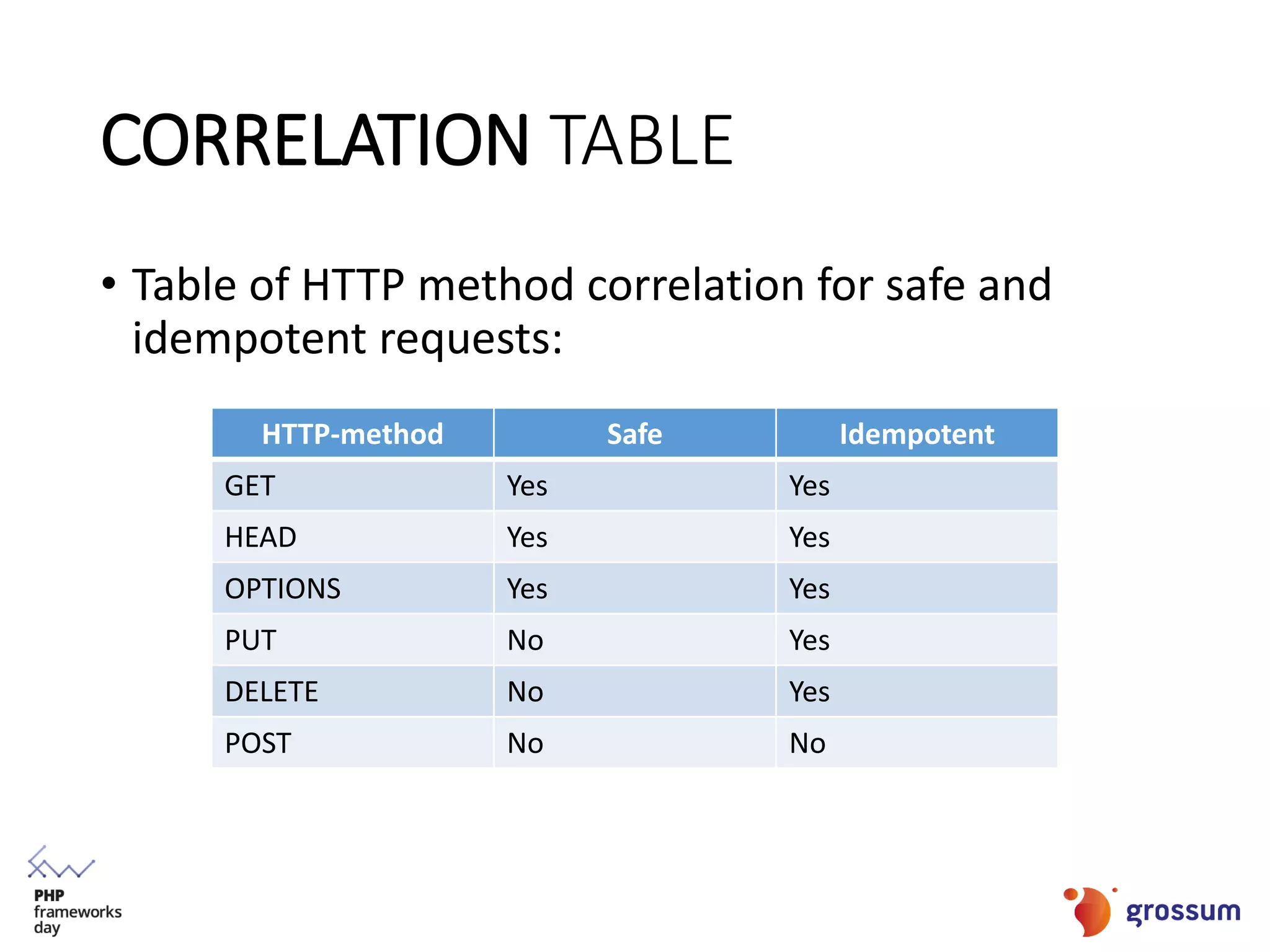
CORRELATION TABLE • Table of HTTP method correlation for safe and idempotent requests: HTTP-method Safe Idempotent GET Yes Yes HEAD Yes Yes OPTIONS Yes Yes PUT No Yes DELETE No Yes POST No No
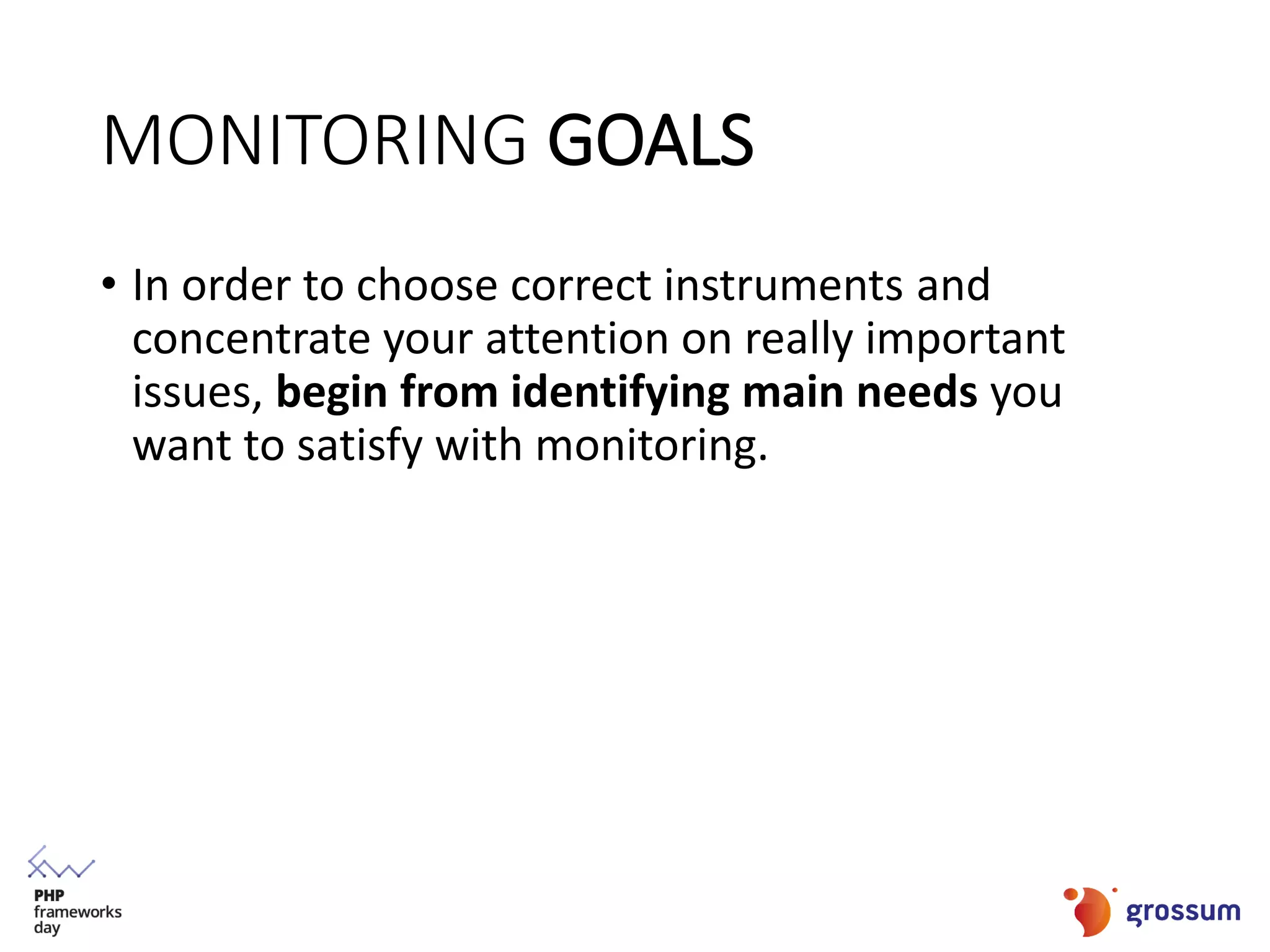
MONITORING GOALS • In order to choose correct instruments and concentrate your attention on really important issues, begin from identifying main needs you want to satisfy with monitoring.
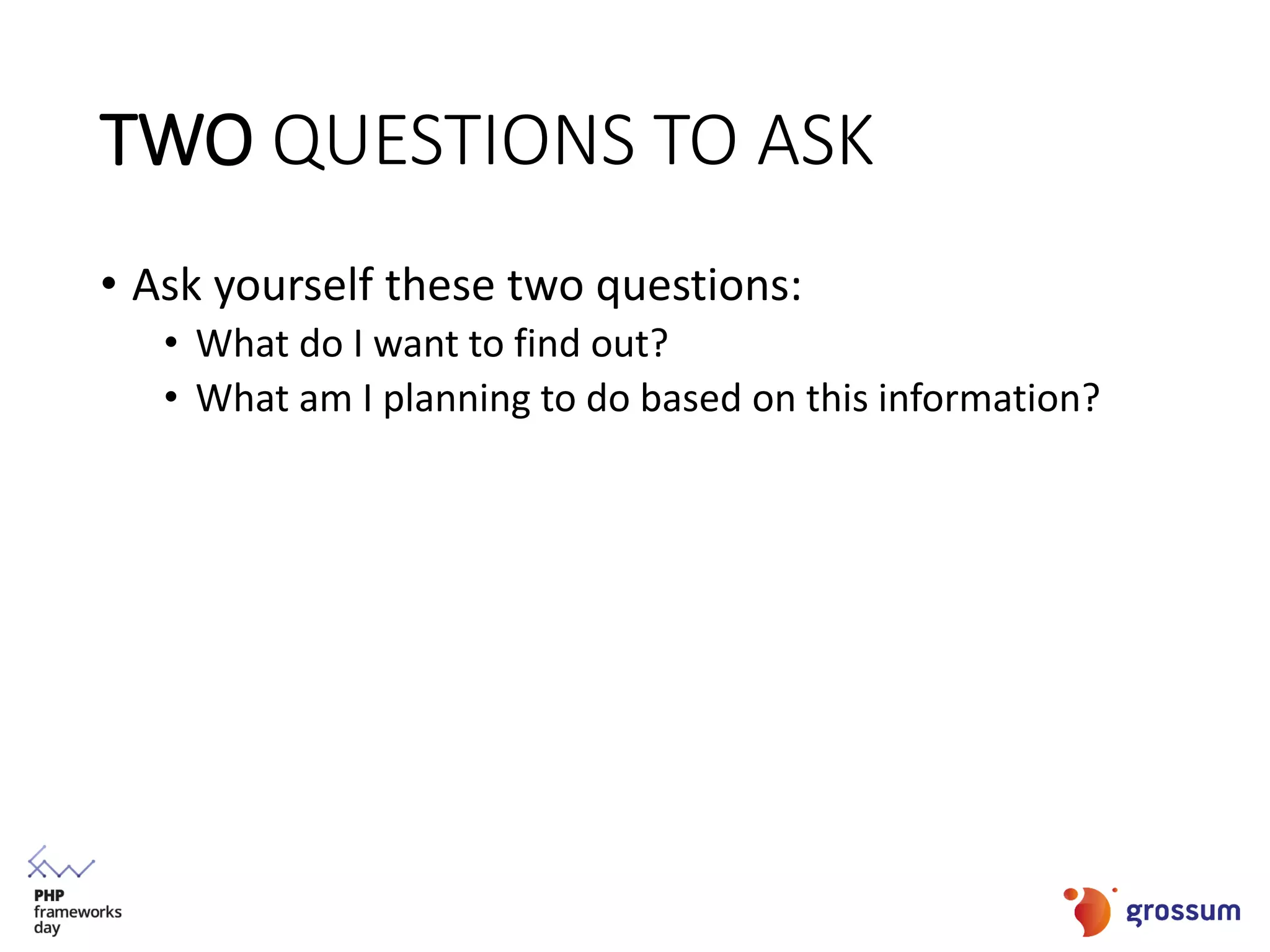
TWO QUESTIONS TO ASK • Ask yourself these two questions: • What do I want to find out? • What am I planning to do based on this information?
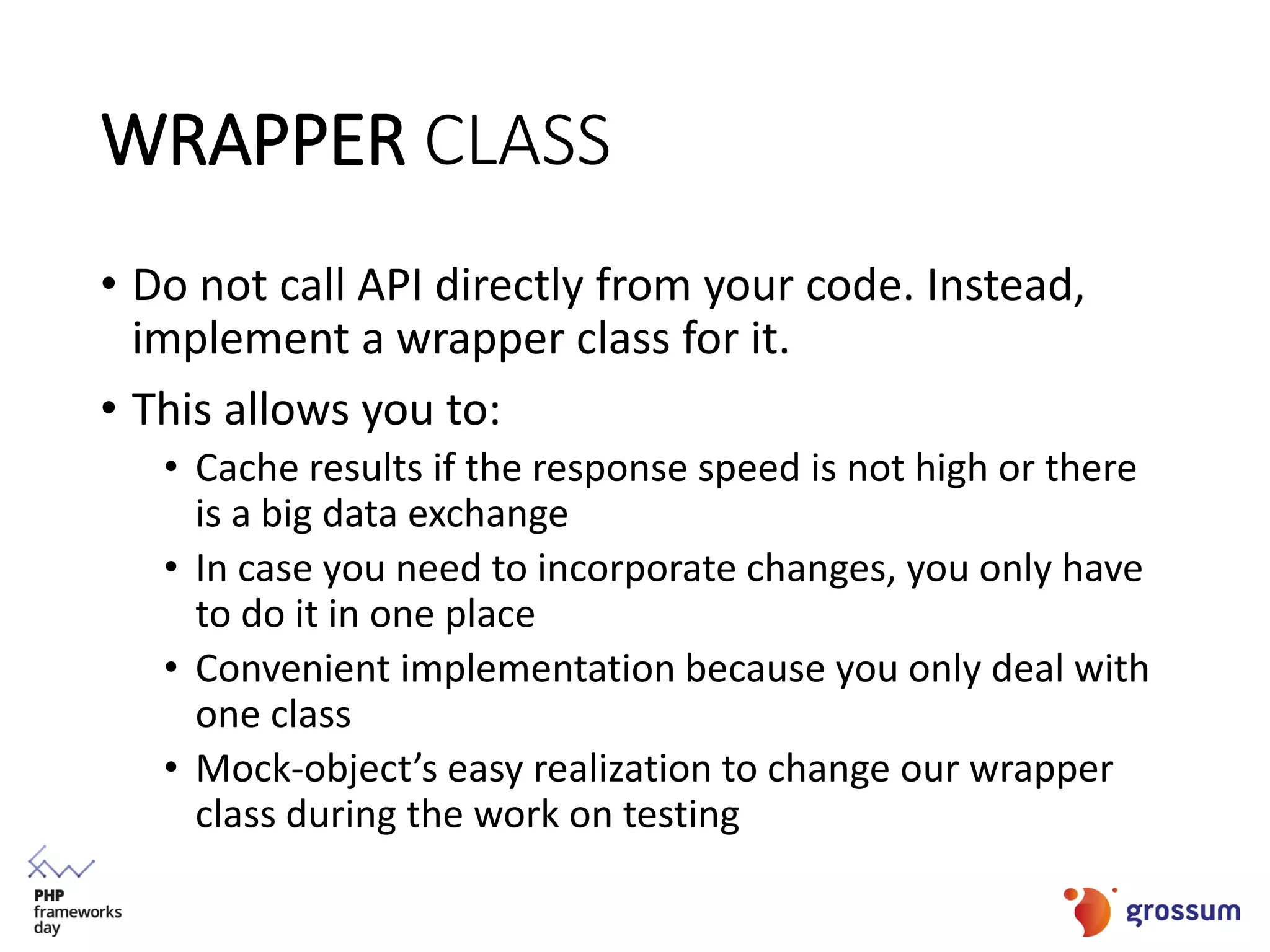
WRAPPER CLASS • Do not call API directly from your code. Instead, implement a wrapper class for it. • This allows you to: • Cache results if the response speed is not high or there is a big data exchange • In case you need to incorporate changes, you only have to do it in one place • Convenient implementation because you only deal with one class • Mock-object’s easy realization to change our wrapper class during the work on testing
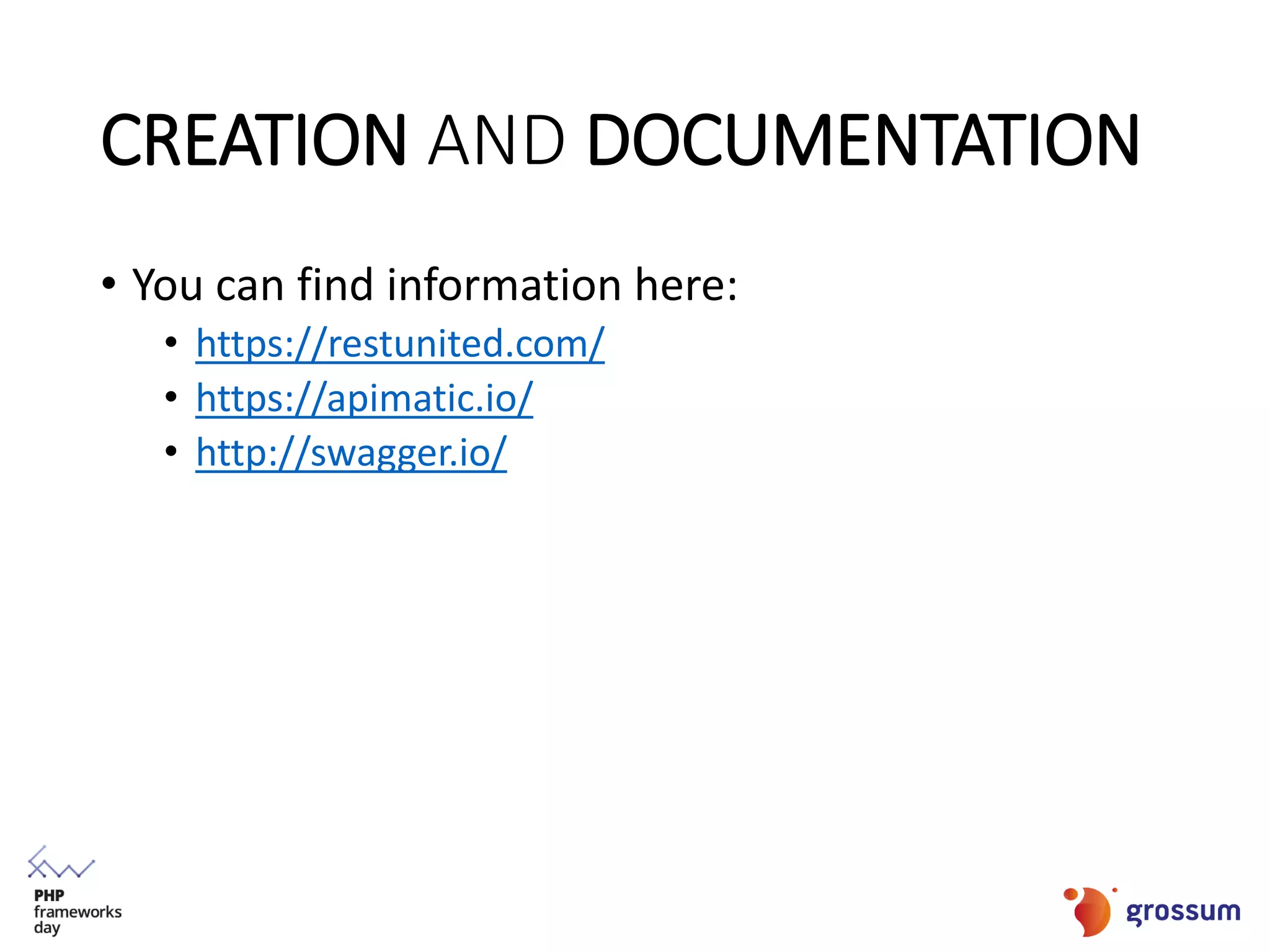
CREATION AND DOCUMENTATION • You can find information here: • https://restunited.com/ • https://apimatic.io/ • http://swagger.io/
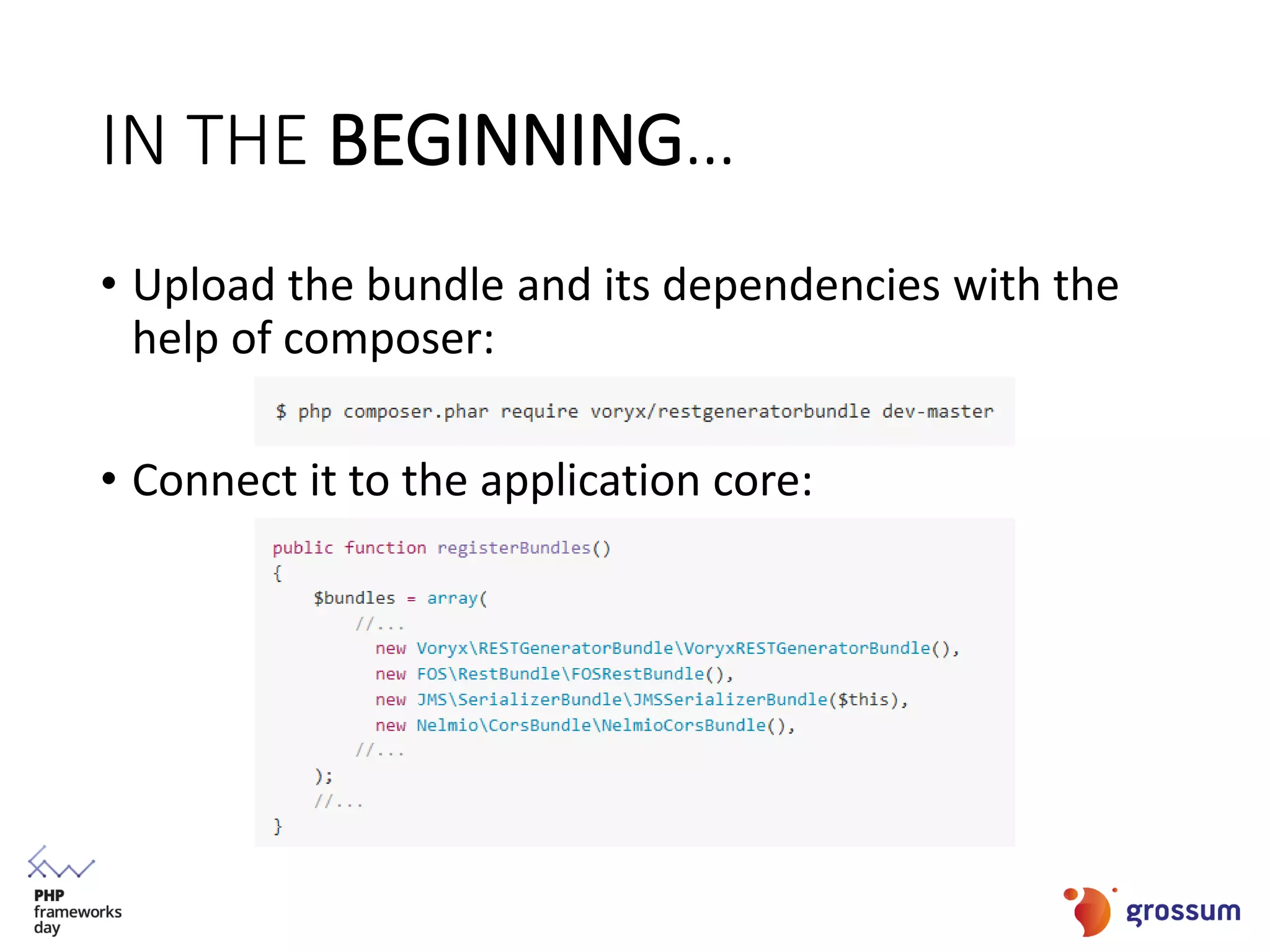
• Upload the bundle and its dependencies with the help of composer: • Connect it to the application core: IN THE BEGINNING…
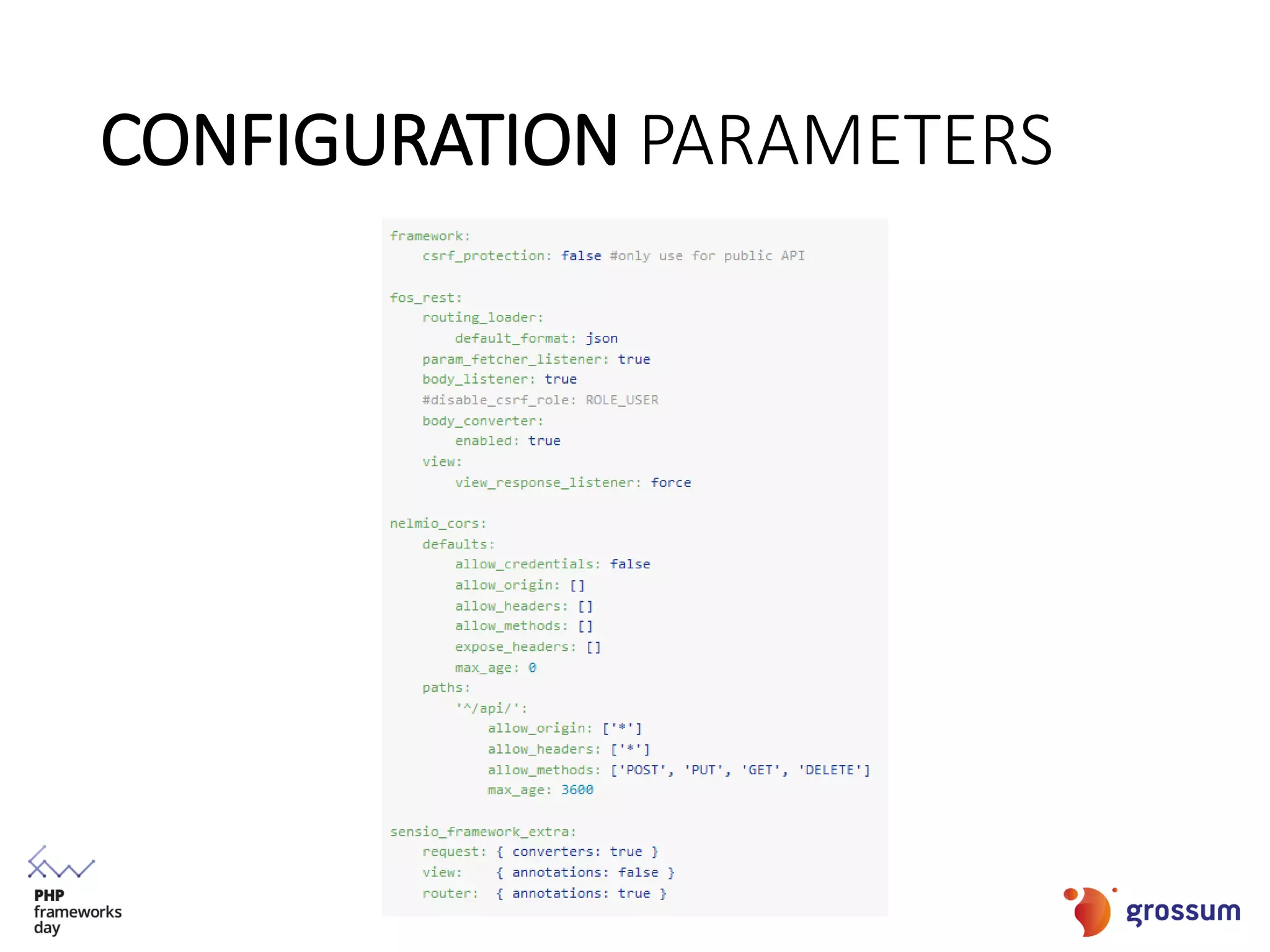
CONFIGURATION PARAMETERS
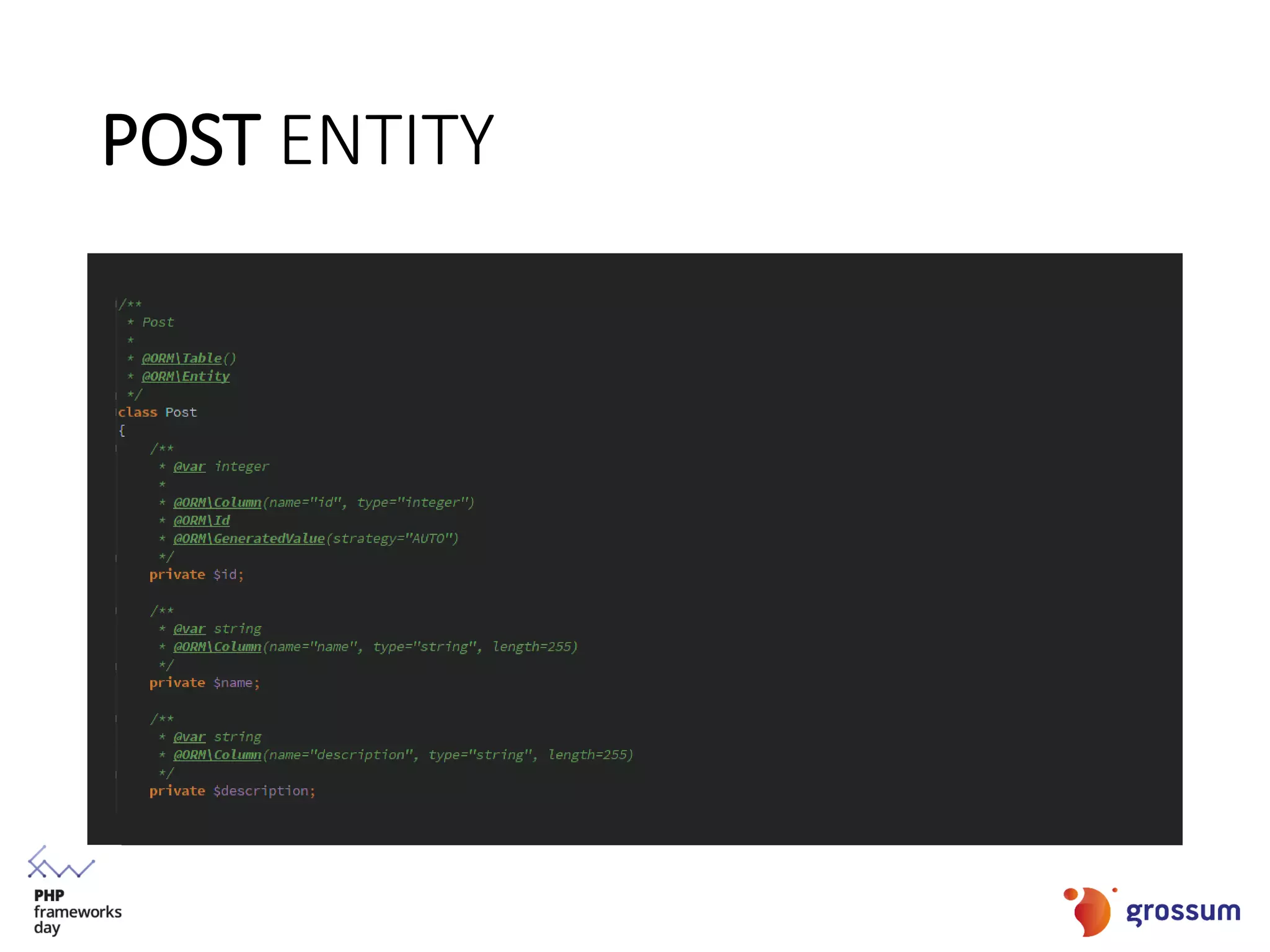
POST ENTITY
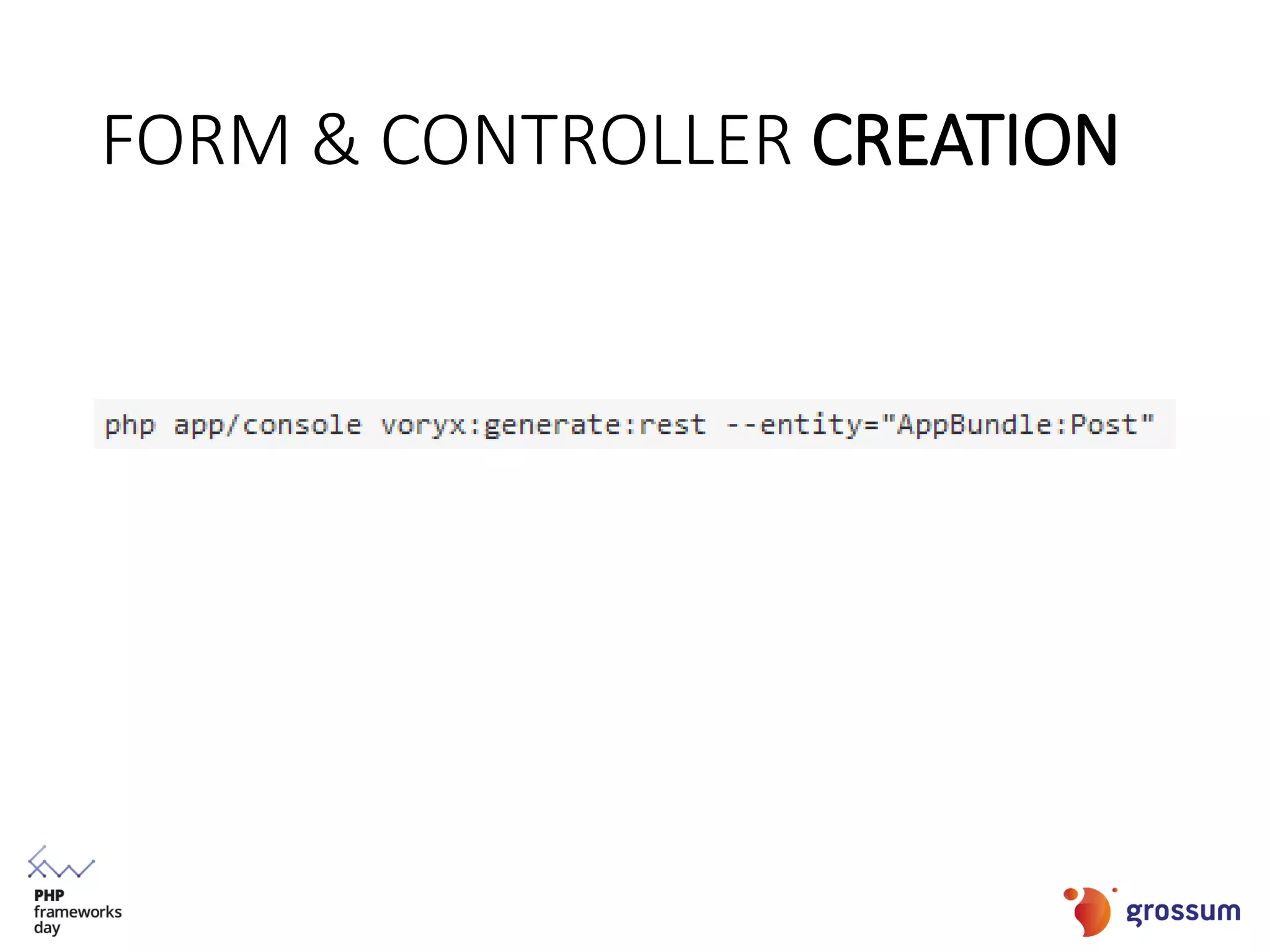
FORM & CONTROLLER CREATION
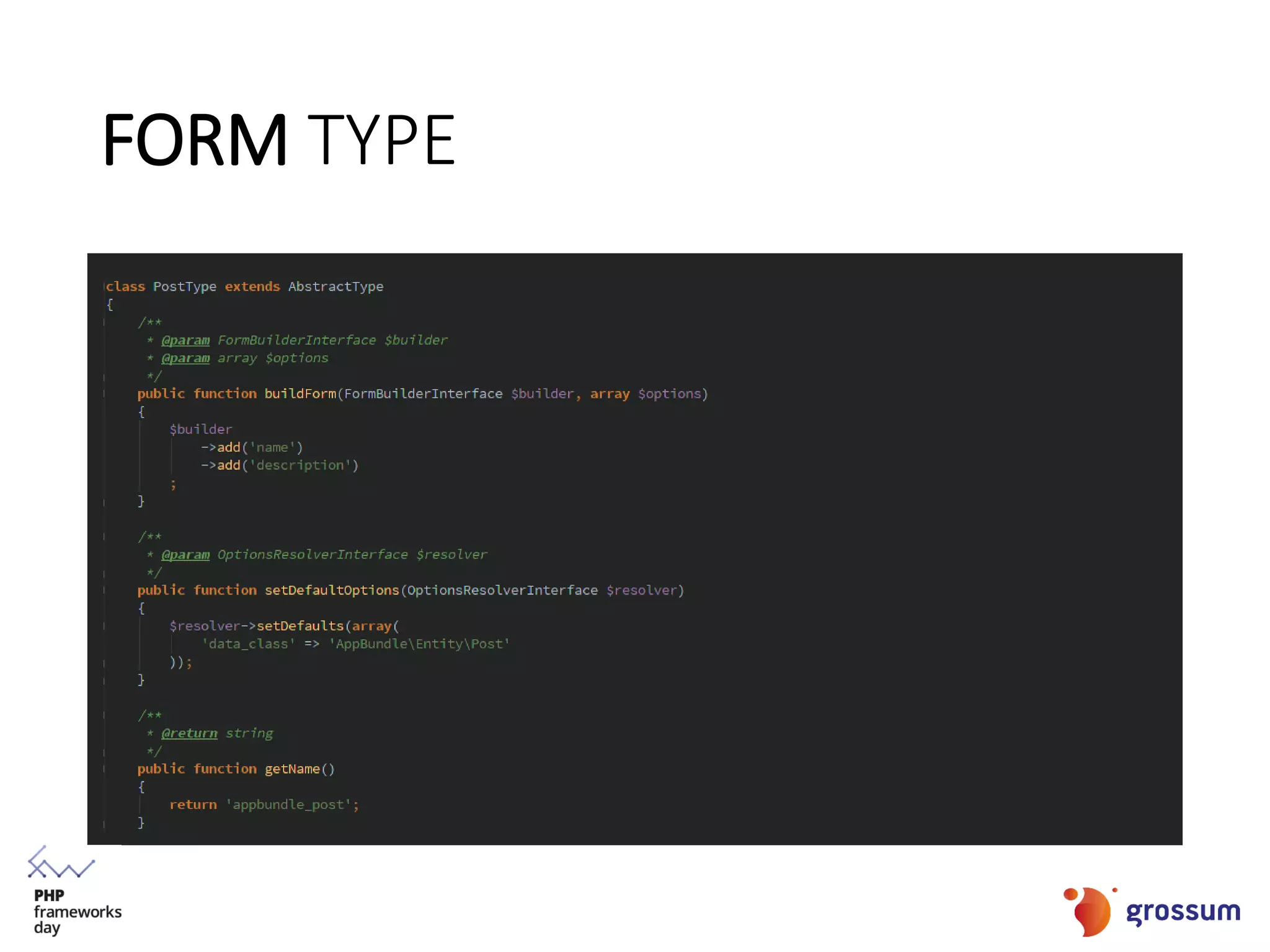
FORM TYPE
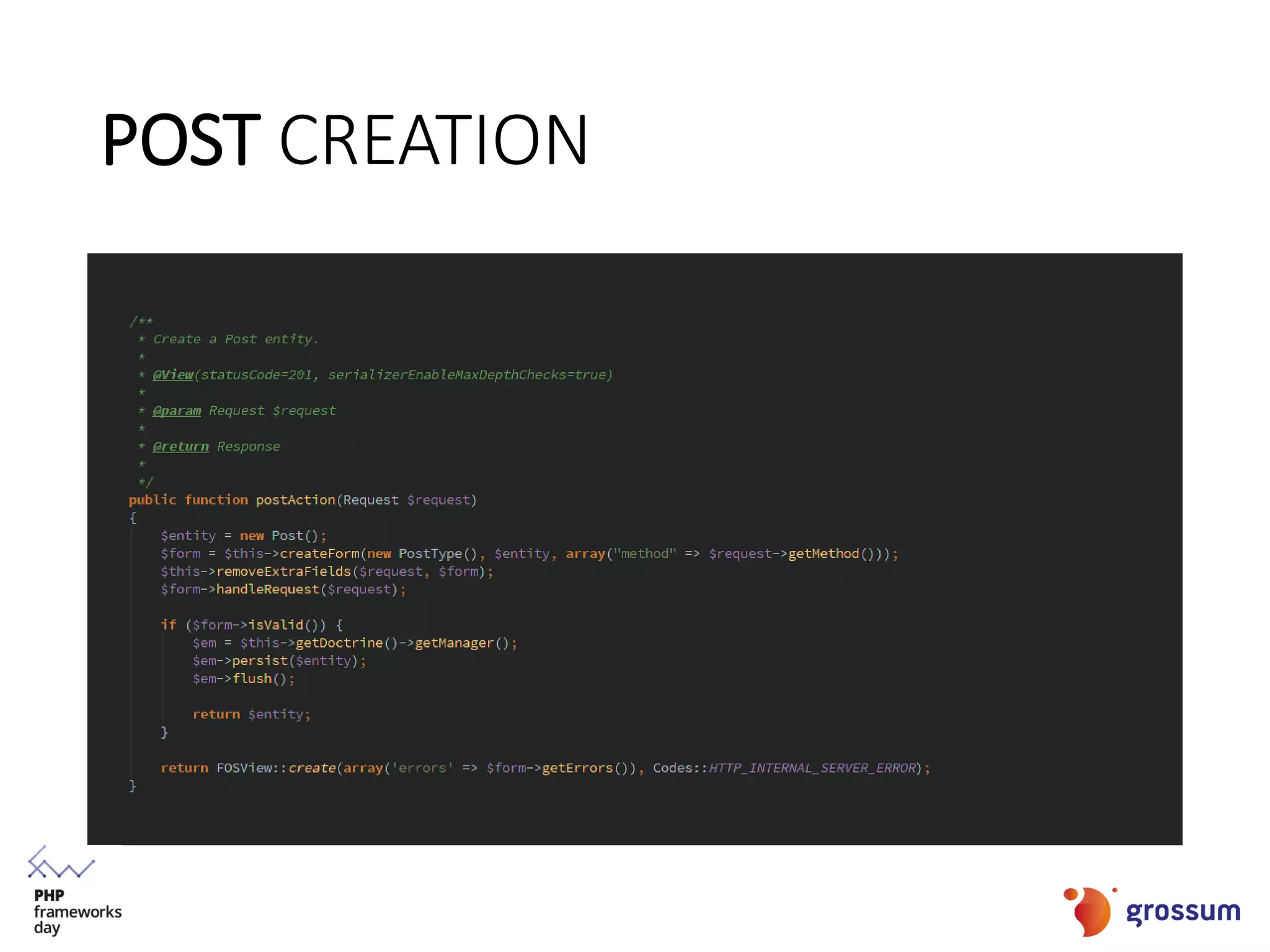
POST CREATION
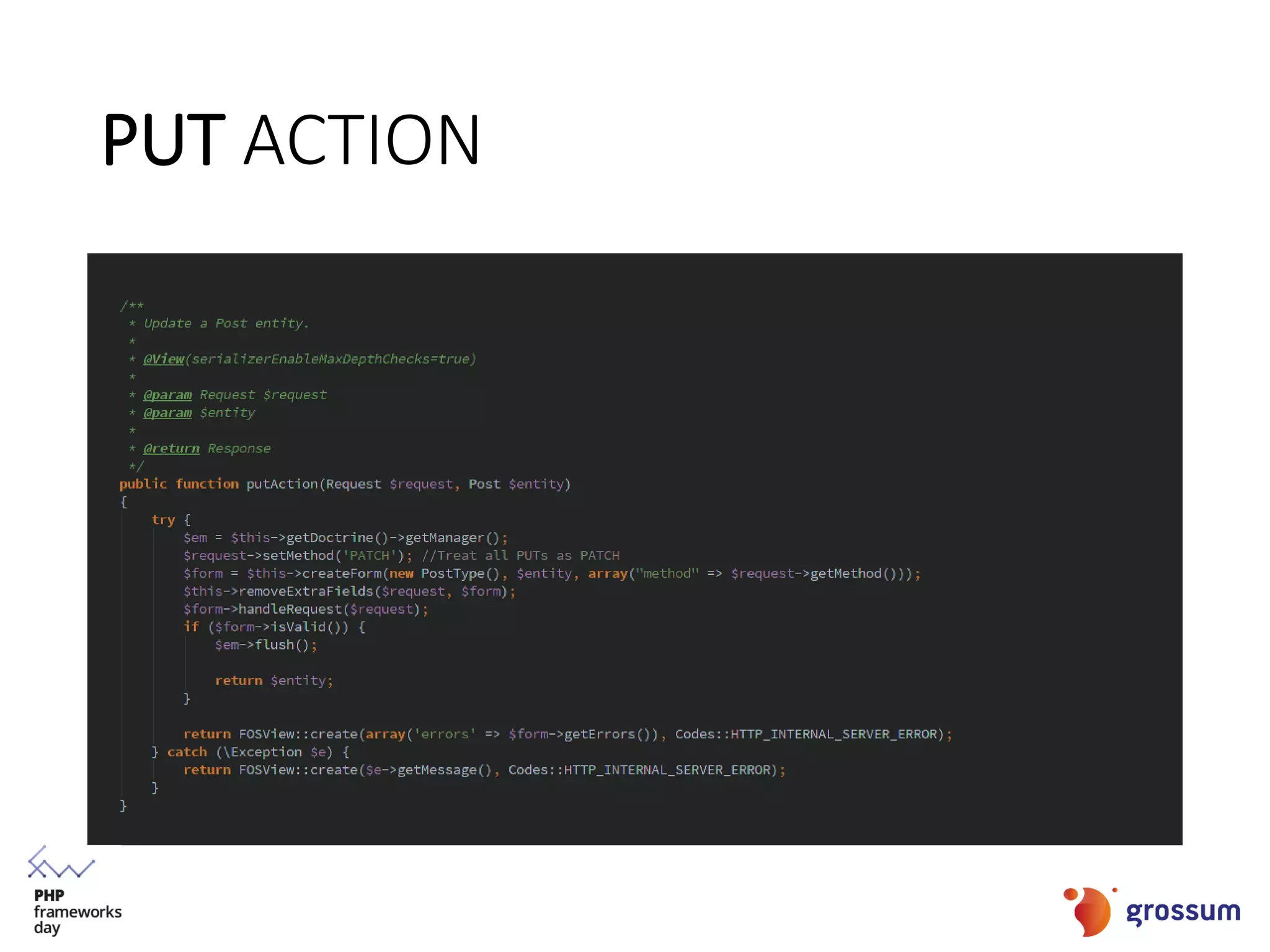
PUT ACTION
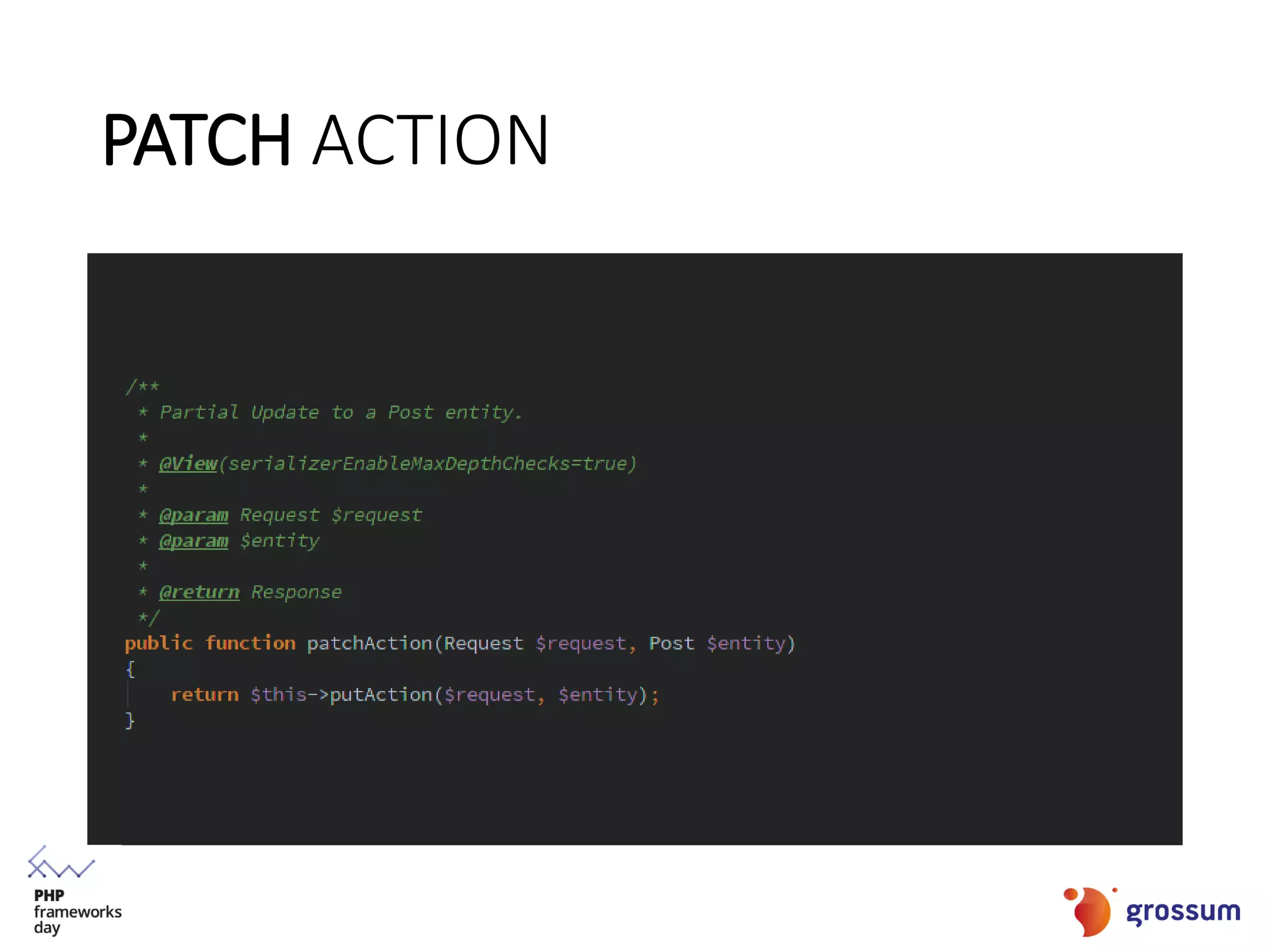
PATCH ACTION
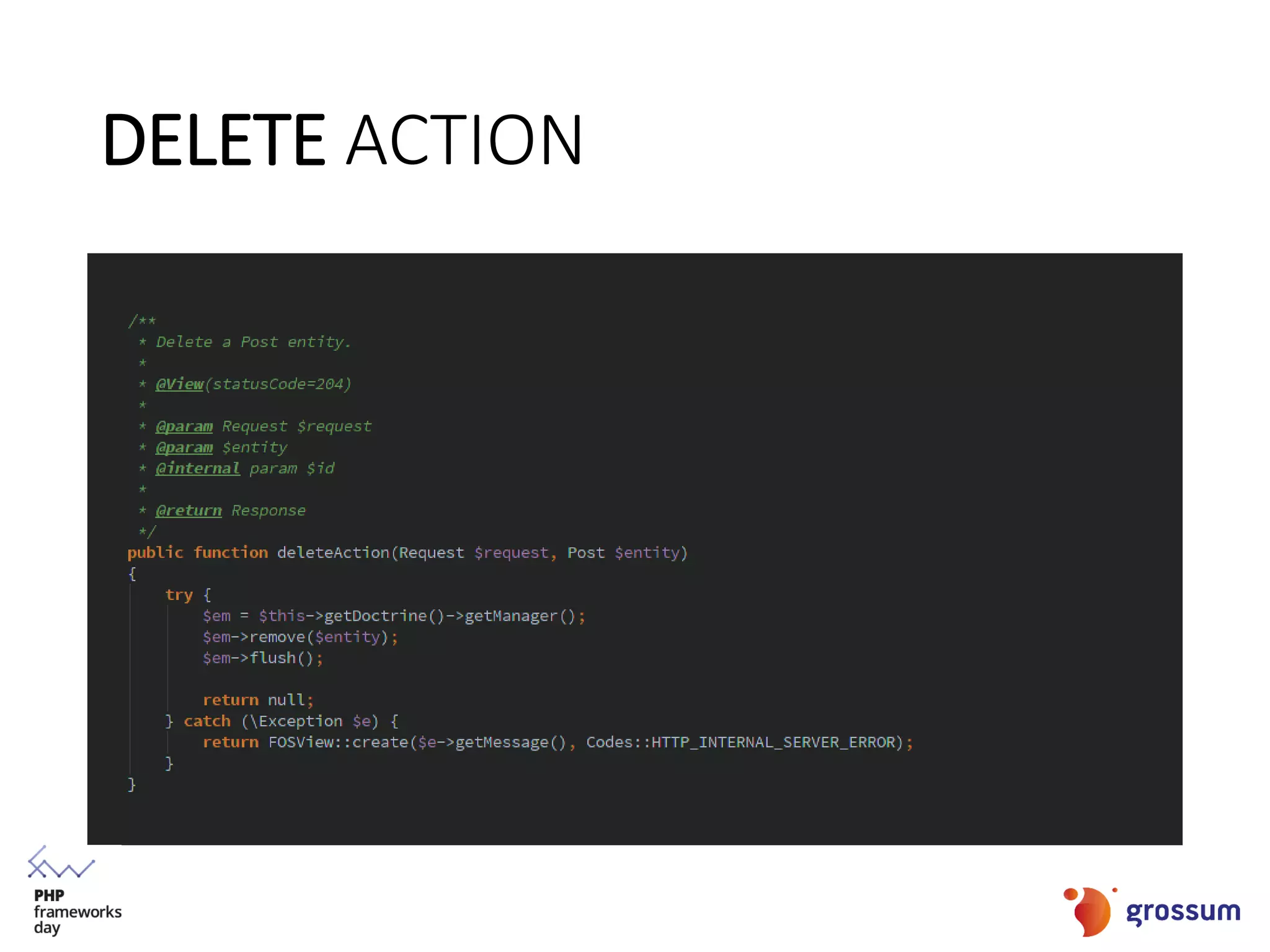
DELETE ACTION
THANK YOU! GOT QUESTIONS? Alexey Verkeenko alex.verkeenko@gmail.com Grossum

Алексей Веркеенко "Symfony2 & REST API"

  • 1.
    Symfony2 & RESTAPI Alexey Verkeenko Grossum alex.verkeenko@gmail.com
  • 2.
    WHAT IS REST? •REST (Representational State Transfer) is the software architectural style of the World Wide Web. • REST gives a coordinated set of constraints to the design of components in a distributed hypermedia system that can lead to a higher-performing and more maintainable architecture.
  • 3.
    A BIT OFREST HISTORY • This technology became popular, when it was described in detail and presented by Roy Fielding in his doctoral dissertation called “Architectural Styles and the Design of Network-based Software Architectures” in 2000.
  • 4.
    REST RULES • Thegeneral rule stands that each unit of information is identified by URL – which means, in turn, that URL in essence is the primary key for the data unit. • For example, third book on the bookshelf would have a view of /book/3, and 35th page of that book would be found here: /book/3/page/35.
  • 5.
    FULL LIST OFREQUEST TYPES • CONNECT • DELETE • GET • HEAD • OPTIONS • PATCH • POST • PUT • TRACE
  • 6.
    RESPONSE CODES • Thereare 38 response codes and you can see the list on the right:
  • 7.
    API TRANSACTION EXAMPLE •One transaction for this API would consist from following (minimum): • Request method, for example, GET • Request path, for example, /object/list • Request body, for example, form • Response code, for example, 200 OK • Response body, for example data in JSON format
  • 8.
    REST EXCLUSIONS • Youcannot call a service a REST one, if: • It has single point of entry • All requests are processed by POST method • Response metadata is located in the body of the response and not in its header • URL-addresses contain method names
  • 9.
    REST ADVANTAGES • Theadvantages of using REST in our projects: • All our resources have unique identifiers (URL), which gives us an opportunity to logically formulate our requests and structure URLs available for requests • Universality. You can use the same server response data to return back to XML or JSON for software processing or to wrap in a beautiful design for people to see. • REST is a service that implements actual service- oriented architecture (SOA), an architectural pattern in computer software design in which application components provide services to other components via a communications protocol, typically over a network.
  • 10.
    ERRORS GUIDELINES • Basicerror informing guidelines: • Use expected format • Do not neglect available response types • Show coherent messages
  • 11.
    USAGE PROBLEMS • Absenceof mutual agreement and standardization • Partial support of response headers • Different clients’ behavior for the same response code • Complex process of searching for errors during development
  • 12.
    REQUEST OPTIONS • Saferequest – a request that does not change the application’s condition. • Idempotent request – a request, the multiple execution of which equals to the single execution effect.
  • 13.
    CORRELATION TABLE • Tableof HTTP method correlation for safe and idempotent requests: HTTP-method Safe Idempotent GET Yes Yes HEAD Yes Yes OPTIONS Yes Yes PUT No Yes DELETE No Yes POST No No
  • 14.
    MONITORING GOALS • Inorder to choose correct instruments and concentrate your attention on really important issues, begin from identifying main needs you want to satisfy with monitoring.
  • 15.
    TWO QUESTIONS TOASK • Ask yourself these two questions: • What do I want to find out? • What am I planning to do based on this information?
  • 16.
    WRAPPER CLASS • Donot call API directly from your code. Instead, implement a wrapper class for it. • This allows you to: • Cache results if the response speed is not high or there is a big data exchange • In case you need to incorporate changes, you only have to do it in one place • Convenient implementation because you only deal with one class • Mock-object’s easy realization to change our wrapper class during the work on testing
  • 17.
    CREATION AND DOCUMENTATION •You can find information here: • https://restunited.com/ • https://apimatic.io/ • http://swagger.io/
  • 18.
    • Upload thebundle and its dependencies with the help of composer: • Connect it to the application core: IN THE BEGINNING…
  • 19.
  • 20.
  • 21.
  • 22.
  • 23.
  • 24.
  • 25.
  • 26.
  • 27.
    THANK YOU! GOT QUESTIONS? AlexeyVerkeenko alex.verkeenko@gmail.com Grossum