Download as PDF, PPTX




![find a note by id /note/3 def show @note = Note.find(params[:id]) end](https://image.slidesharecdn.com/rubykaigi2009-090717101103-phpapp01/75/Pragmatic-Patterns-of-Ruby-on-Rails-Ruby-Kaigi2009-51-2048.jpg)
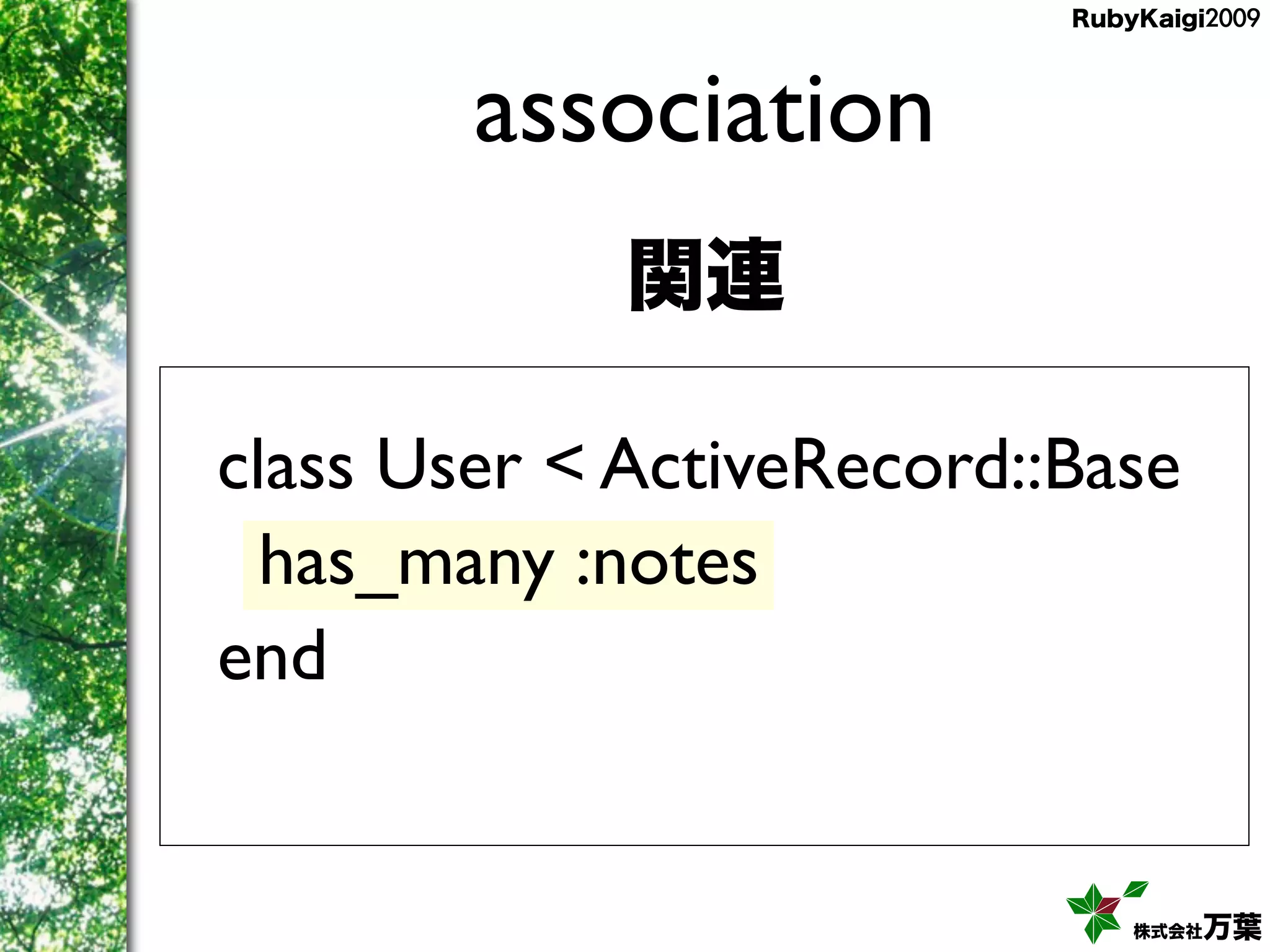
![find a note of the current user /note/3 @note = Note.find_by_id_and_user_id( params[:id], current_user.id) raise ActiveRecord::RecordNotFound unless @note](https://image.slidesharecdn.com/rubykaigi2009-090717101103-phpapp01/75/Pragmatic-Patterns-of-Ruby-on-Rails-Ruby-Kaigi2009-52-2048.jpg)
![/note/3 @note = Note.written_by( curret_user.id).find(params[:id])](https://image.slidesharecdn.com/rubykaigi2009-090717101103-phpapp01/75/Pragmatic-Patterns-of-Ruby-on-Rails-Ruby-Kaigi2009-54-2048.jpg)
![hard to notice the luck of condition! @note = Note.find(params[:id]) @note = Note.find_by_id_and_user_id( params[:id], current_user.id) @note = Note.written_by( current_user).find(params[:id])](https://image.slidesharecdn.com/rubykaigi2009-090717101103-phpapp01/75/Pragmatic-Patterns-of-Ruby-on-Rails-Ruby-Kaigi2009-55-2048.jpg)
![starts from an object def show @note = current_user.notes.find( params[:id]) end](https://image.slidesharecdn.com/rubykaigi2009-090717101103-phpapp01/75/Pragmatic-Patterns-of-Ruby-on-Rails-Ruby-Kaigi2009-58-2048.jpg)
![use the association def show @note = current_user.notes.find( params[:id]) end](https://image.slidesharecdn.com/rubykaigi2009-090717101103-phpapp01/75/Pragmatic-Patterns-of-Ruby-on-Rails-Ruby-Kaigi2009-59-2048.jpg)
![easy to notice problems @note = current_user.notes.find( params[:id]) @note = Note.find(params[:id])](https://image.slidesharecdn.com/rubykaigi2009-090717101103-phpapp01/75/Pragmatic-Patterns-of-Ruby-on-Rails-Ruby-Kaigi2009-61-2048.jpg)
![who can access @note = current_user.notes.find( params[:id])](https://image.slidesharecdn.com/rubykaigi2009-090717101103-phpapp01/75/Pragmatic-Patterns-of-Ruby-on-Rails-Ruby-Kaigi2009-63-2048.jpg)
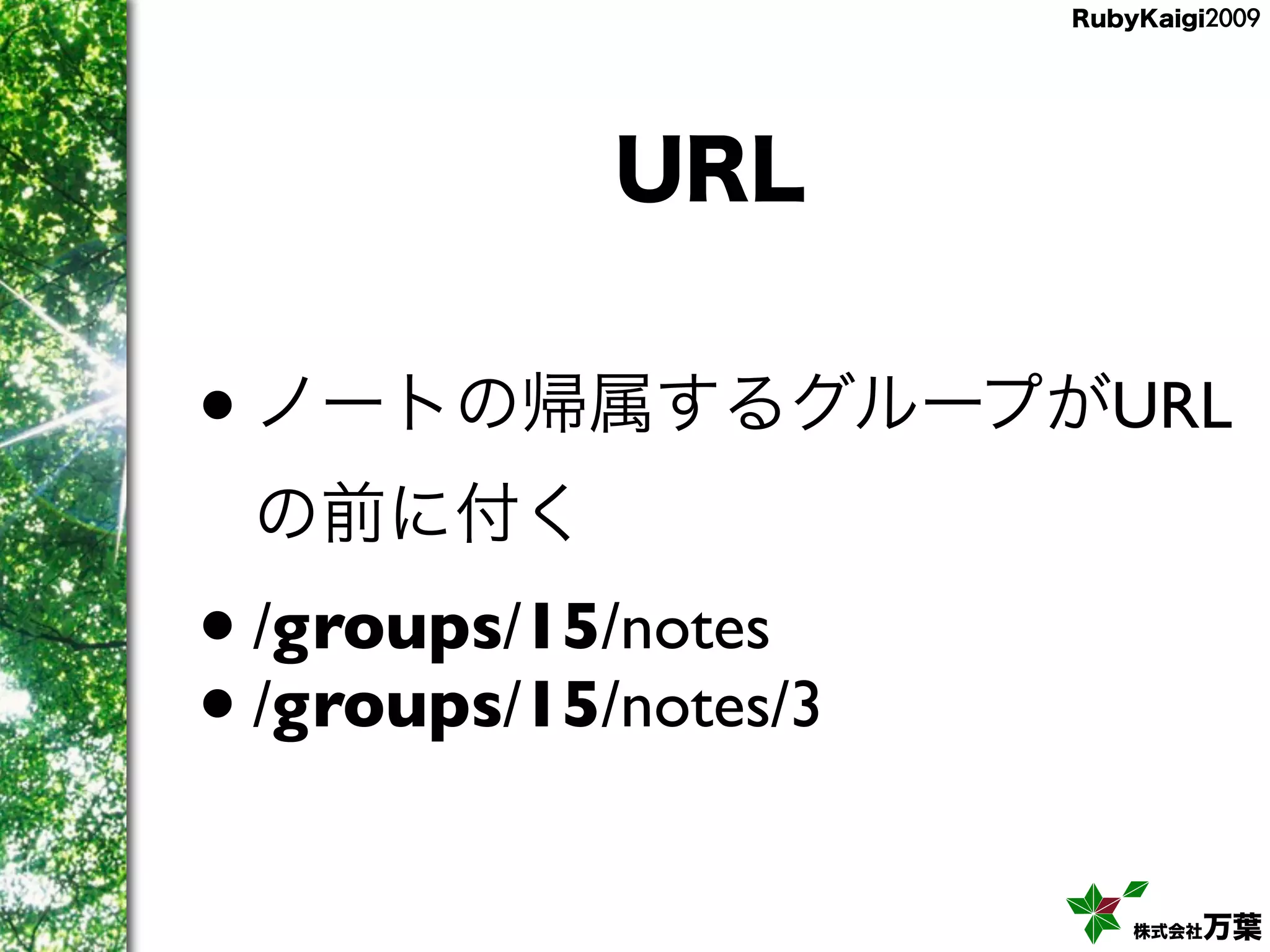
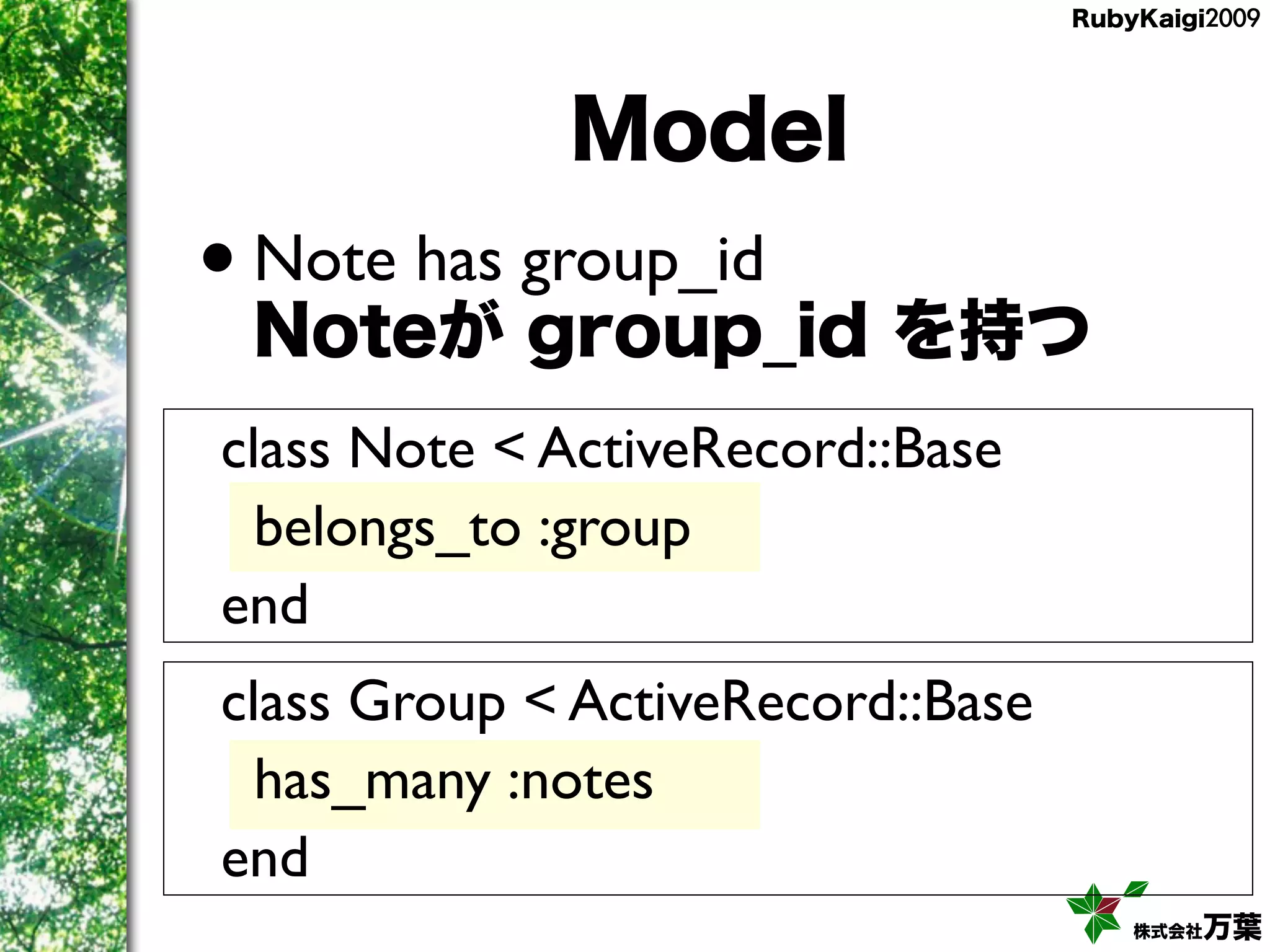
![def index @group = Group.find(params[:group_id]) @notes = @group.notes.paginate(:page => params[:page]) end def show @group = Group.find(params[:group_id]) @note = @group.notes.find(params[:id]) end](https://image.slidesharecdn.com/rubykaigi2009-090717101103-phpapp01/75/Pragmatic-Patterns-of-Ruby-on-Rails-Ruby-Kaigi2009-70-2048.jpg)
![the duplicated line @group = Group.find(params[:group_id])](https://image.slidesharecdn.com/rubykaigi2009-090717101103-phpapp01/75/Pragmatic-Patterns-of-Ruby-on-Rails-Ruby-Kaigi2009-71-2048.jpg)

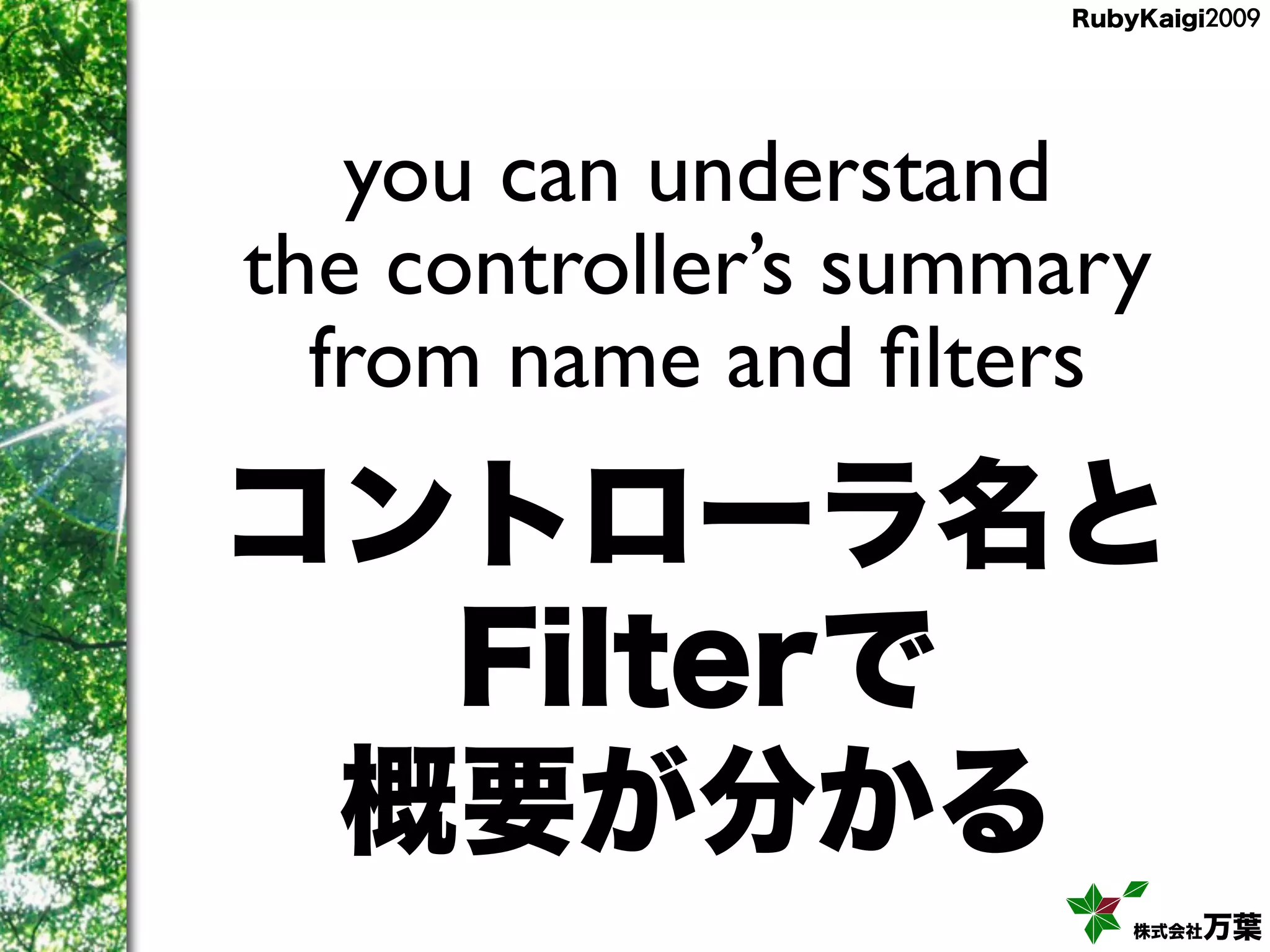
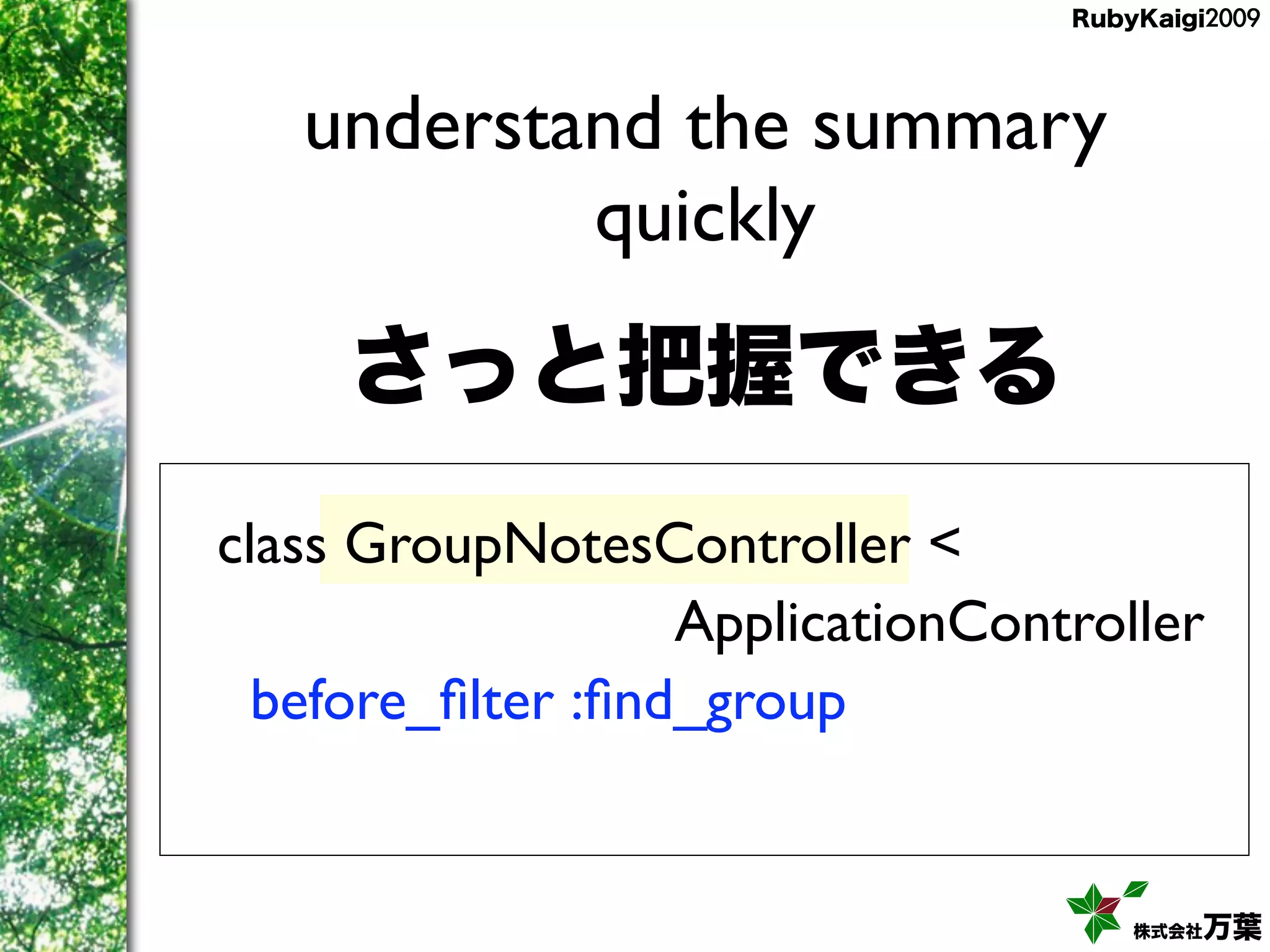
![find the group in a filter class GroupNotesController < ApplicationController before_filter :find_group .......actions ...... private def find_group @group = Group.find(params[:group_id]) end end](https://image.slidesharecdn.com/rubykaigi2009-090717101103-phpapp01/75/Pragmatic-Patterns-of-Ruby-on-Rails-Ruby-Kaigi2009-74-2048.jpg)
![DRY before_filter :find_group def index @notes = @group.notes.paginate(:page => params[:page]) end def show @note = @group.notes.find(params[:id]) end](https://image.slidesharecdn.com/rubykaigi2009-090717101103-phpapp01/75/Pragmatic-Patterns-of-Ruby-on-Rails-Ruby-Kaigi2009-75-2048.jpg)
![example; change to allow access to members only def find_group @group = current_user.groups.find( params[:group_id] end](https://image.slidesharecdn.com/rubykaigi2009-090717101103-phpapp01/75/Pragmatic-Patterns-of-Ruby-on-Rails-Ruby-Kaigi2009-77-2048.jpg)
![safe if it starts from @group def index @notes = @group.notes.paginate(:page => params[:page]) end def show @note = @group.notes.find(params[:id]) end](https://image.slidesharecdn.com/rubykaigi2009-090717101103-phpapp01/75/Pragmatic-Patterns-of-Ruby-on-Rails-Ruby-Kaigi2009-80-2048.jpg)
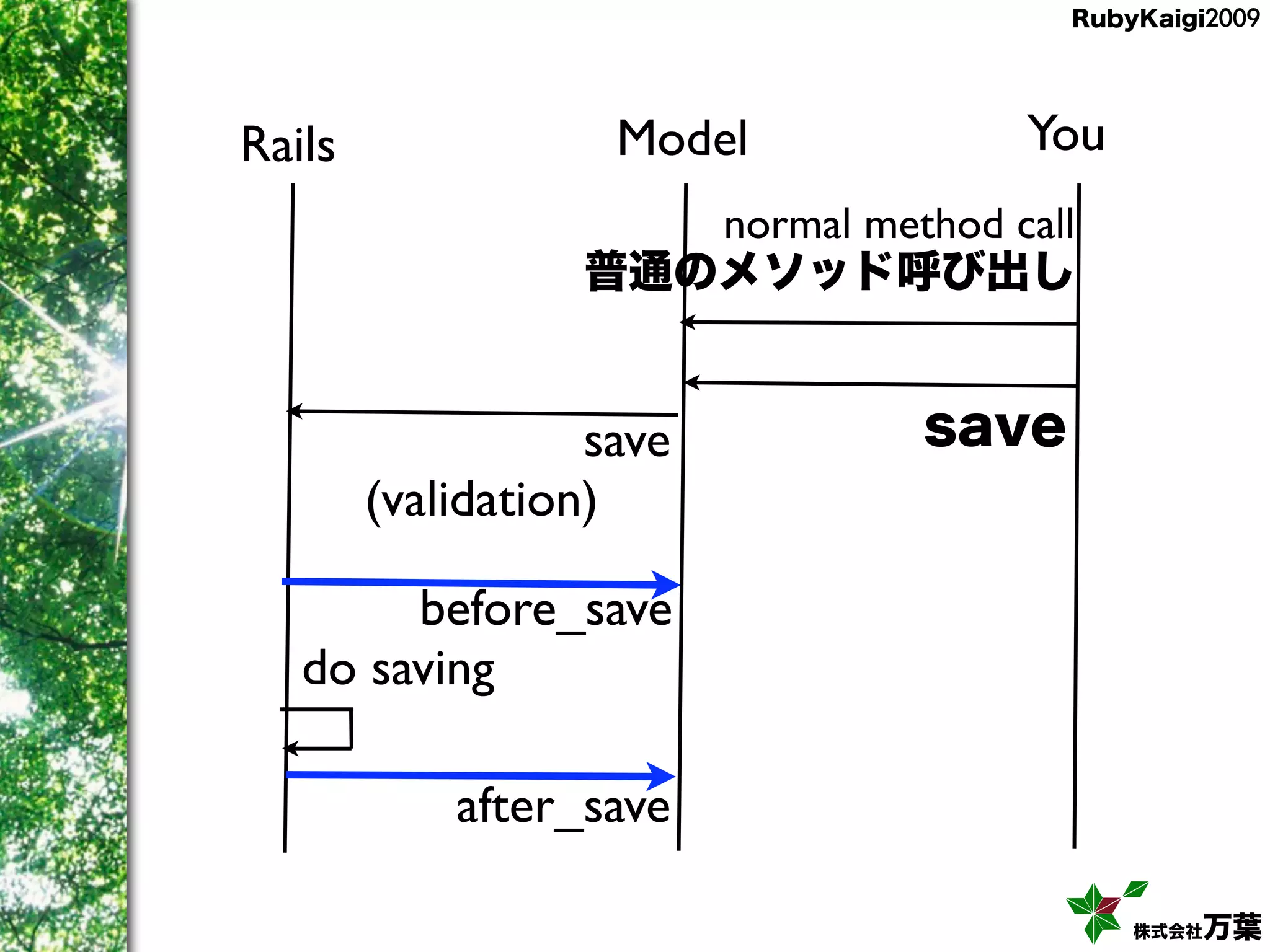
![branching on parameters def update @note.attributes = params[:note] @tags = params[:auto_tagging] == '1' ? generate_tags(@note) : [] # do saving and tagging ... end](https://image.slidesharecdn.com/rubykaigi2009-090717101103-phpapp01/75/Pragmatic-Patterns-of-Ruby-on-Rails-Ruby-Kaigi2009-98-2048.jpg)
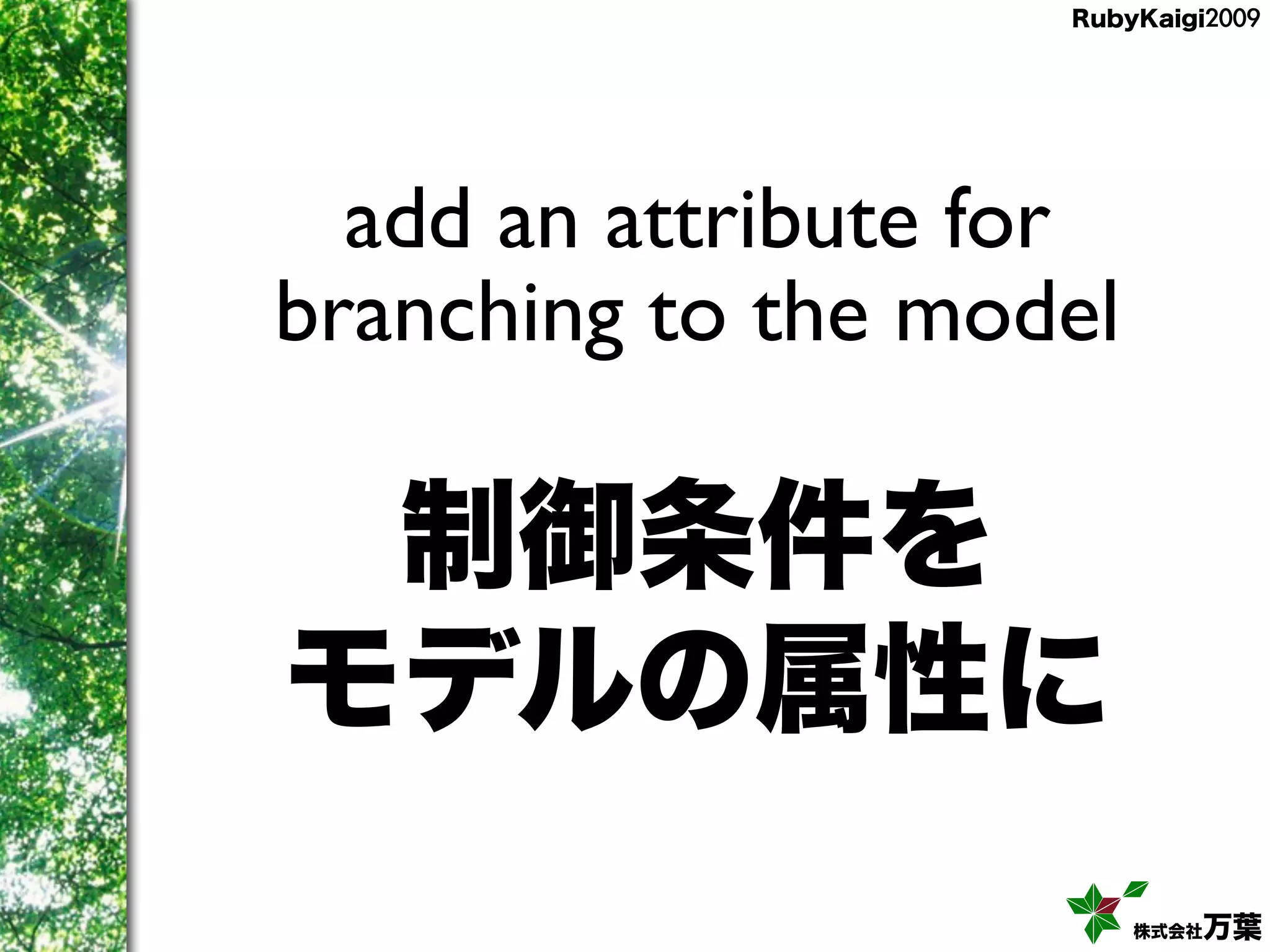
![the condition params[:auto_tagging] == '1'](https://image.slidesharecdn.com/rubykaigi2009-090717101103-phpapp01/75/Pragmatic-Patterns-of-Ruby-on-Rails-Ruby-Kaigi2009-102-2048.jpg)
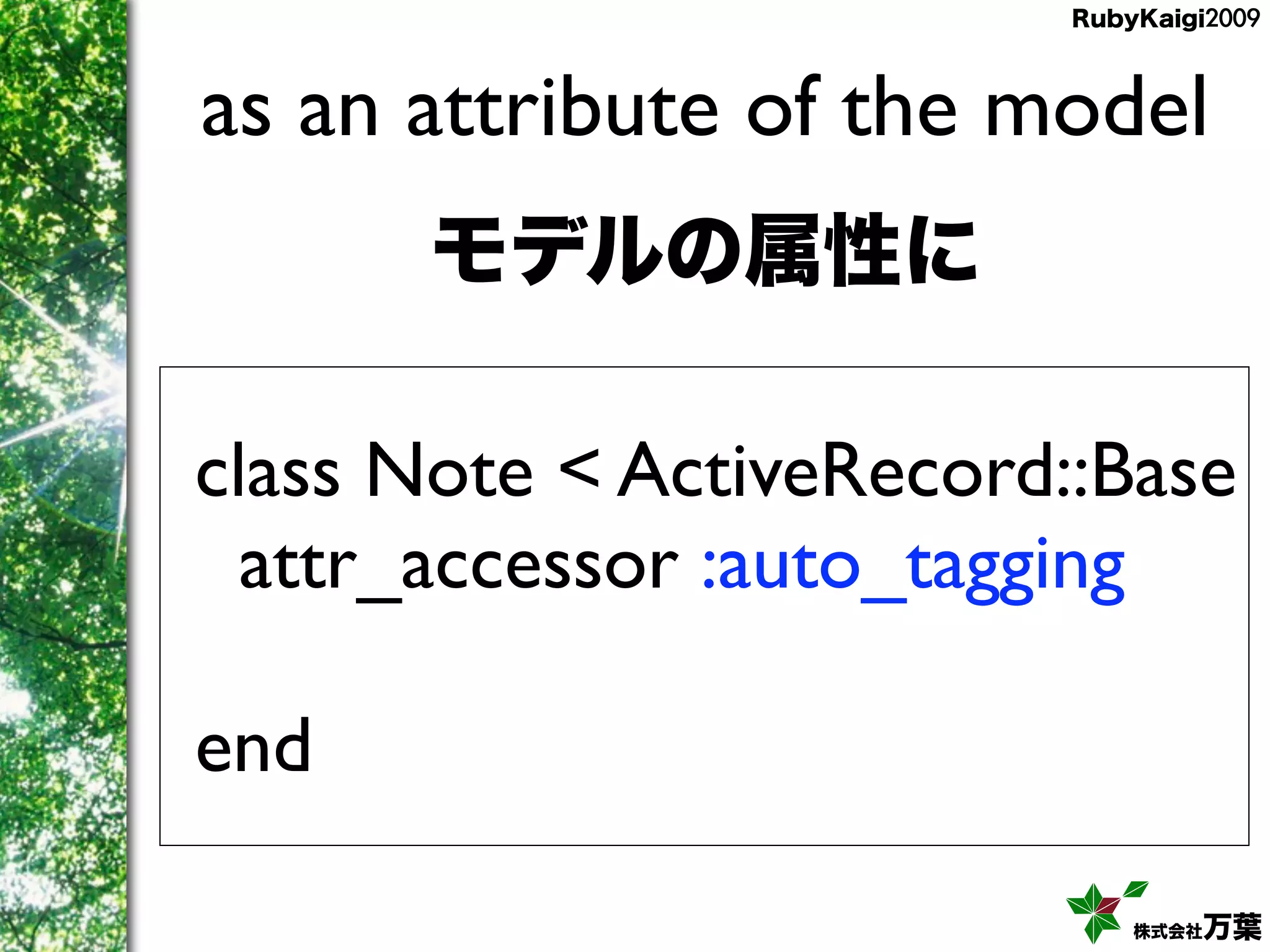
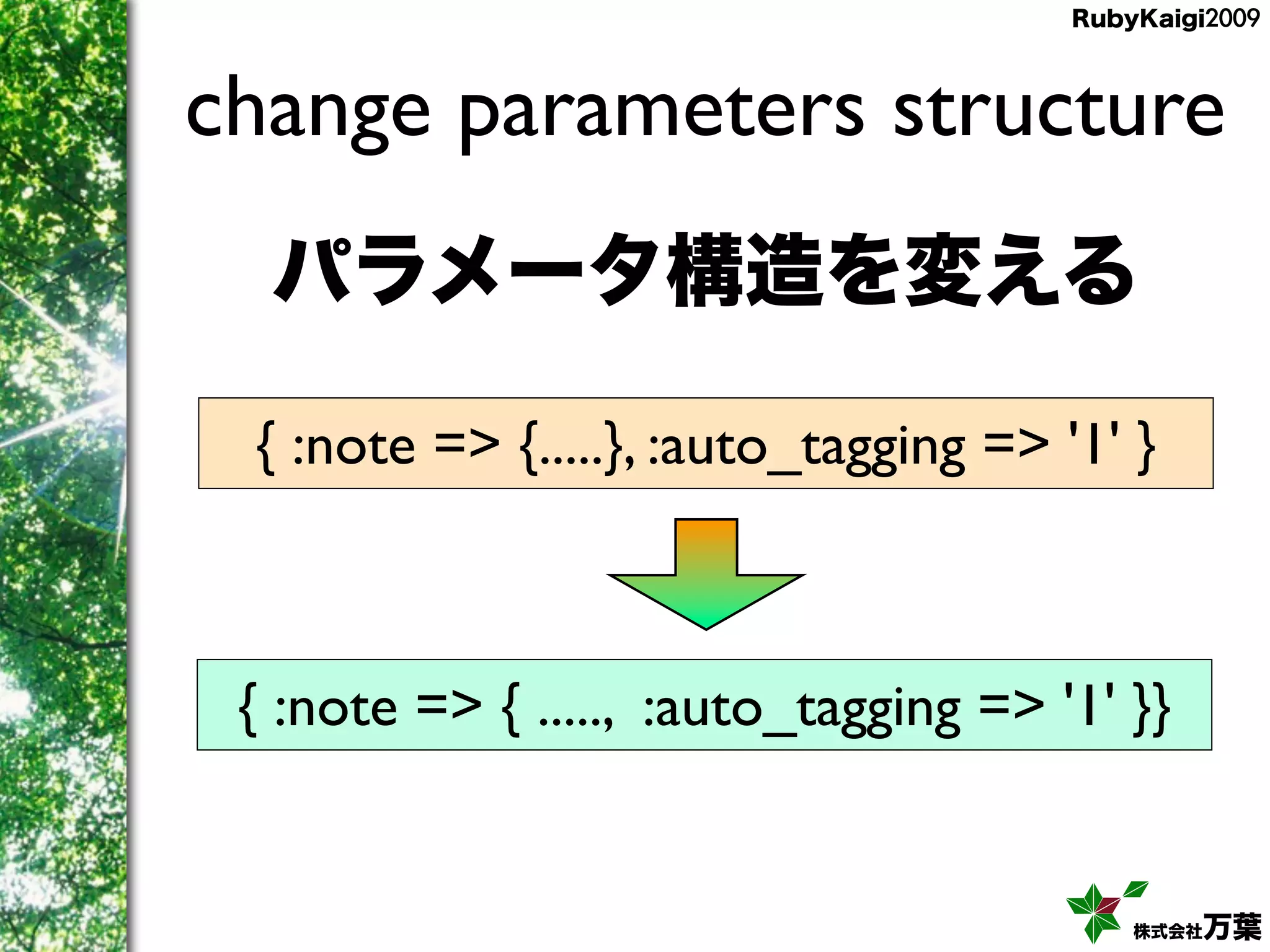
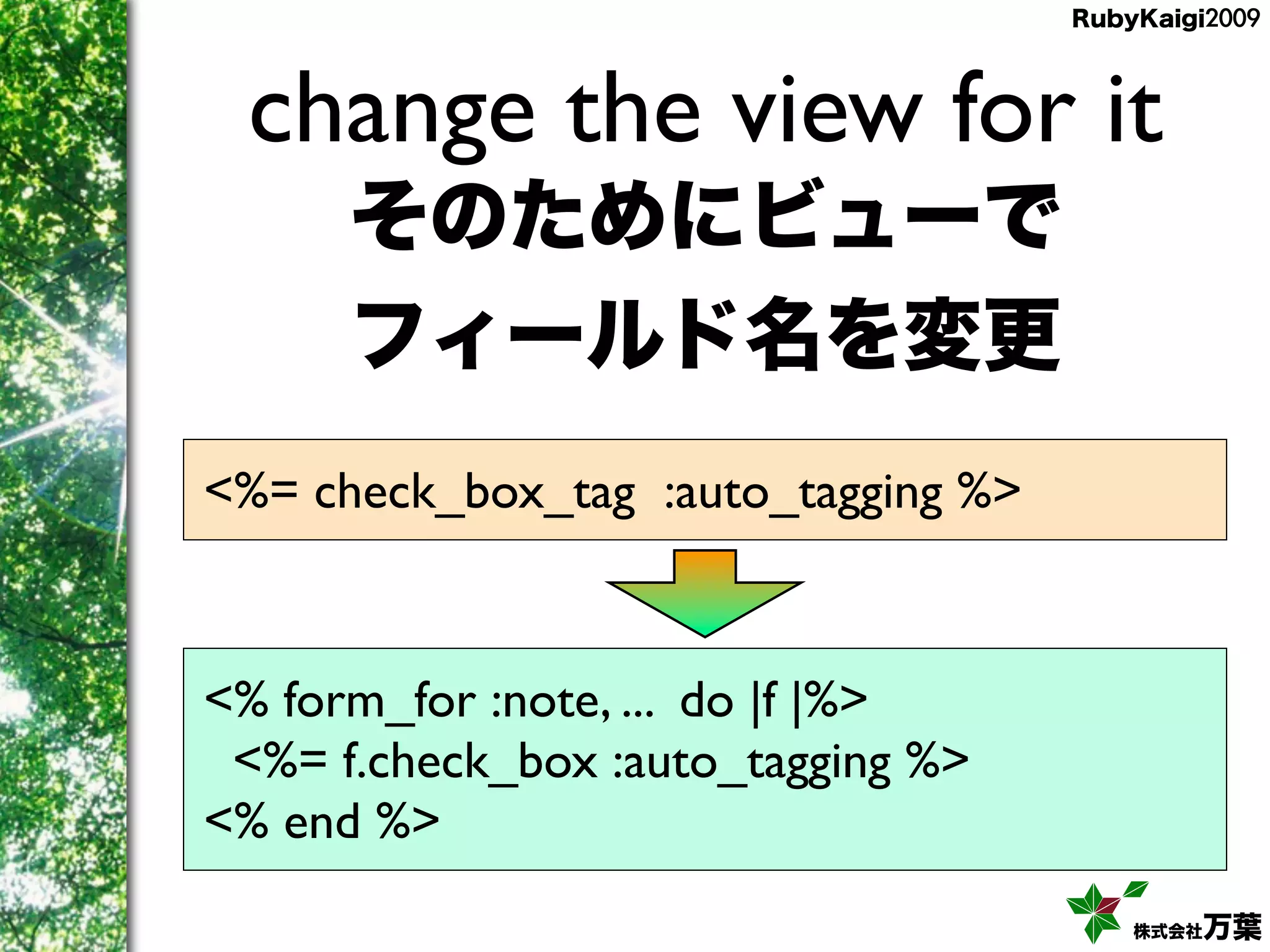
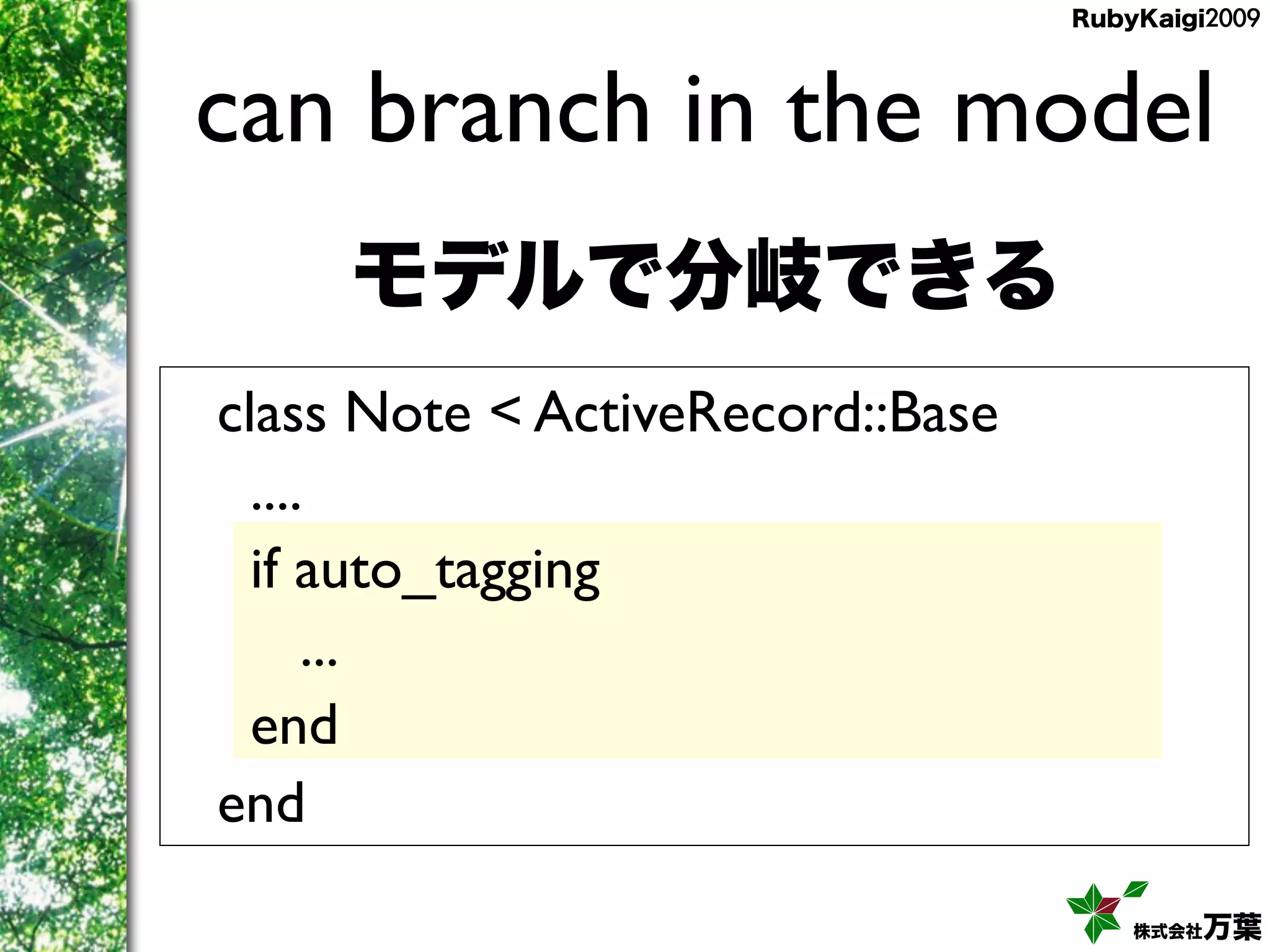
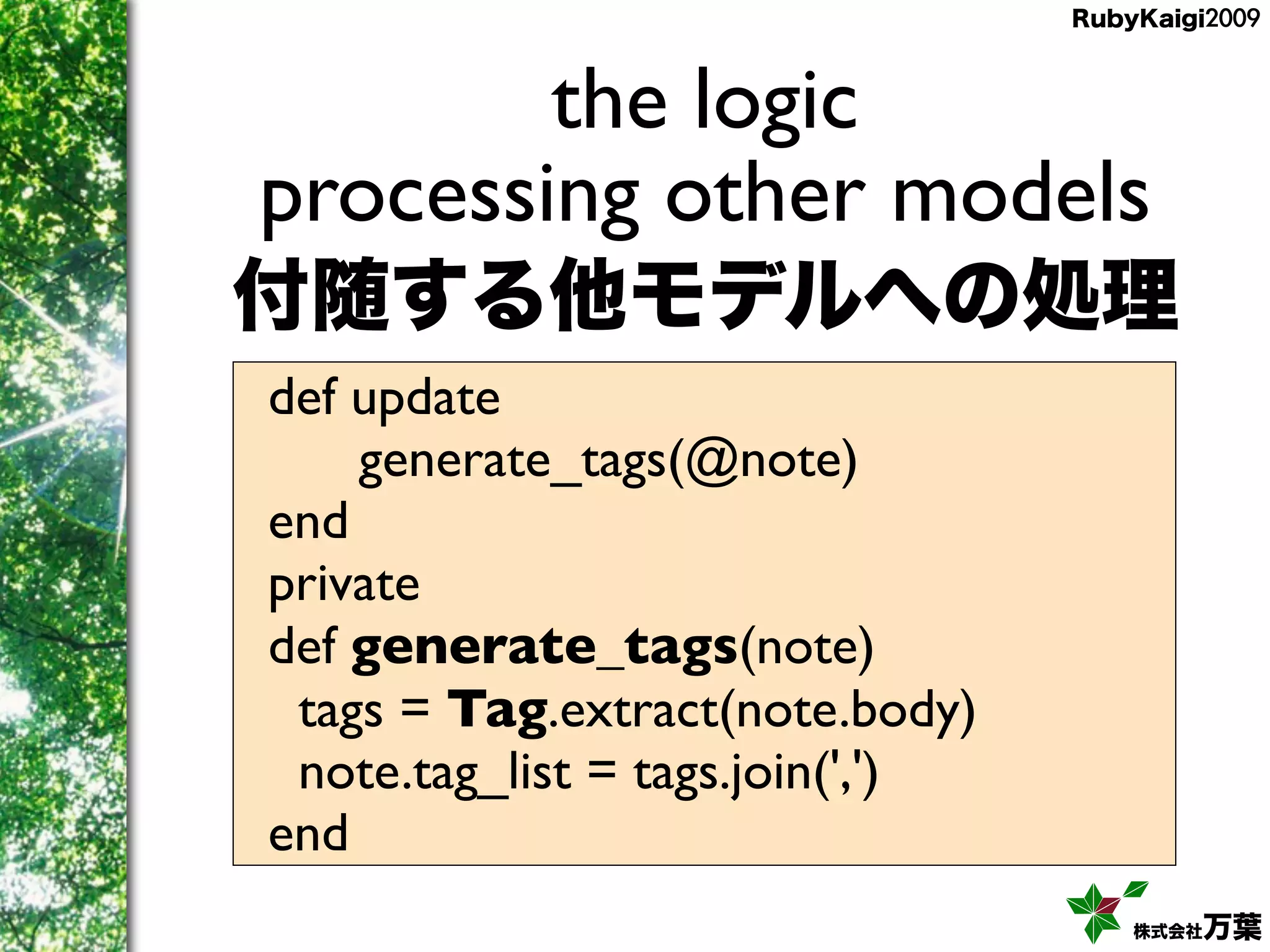
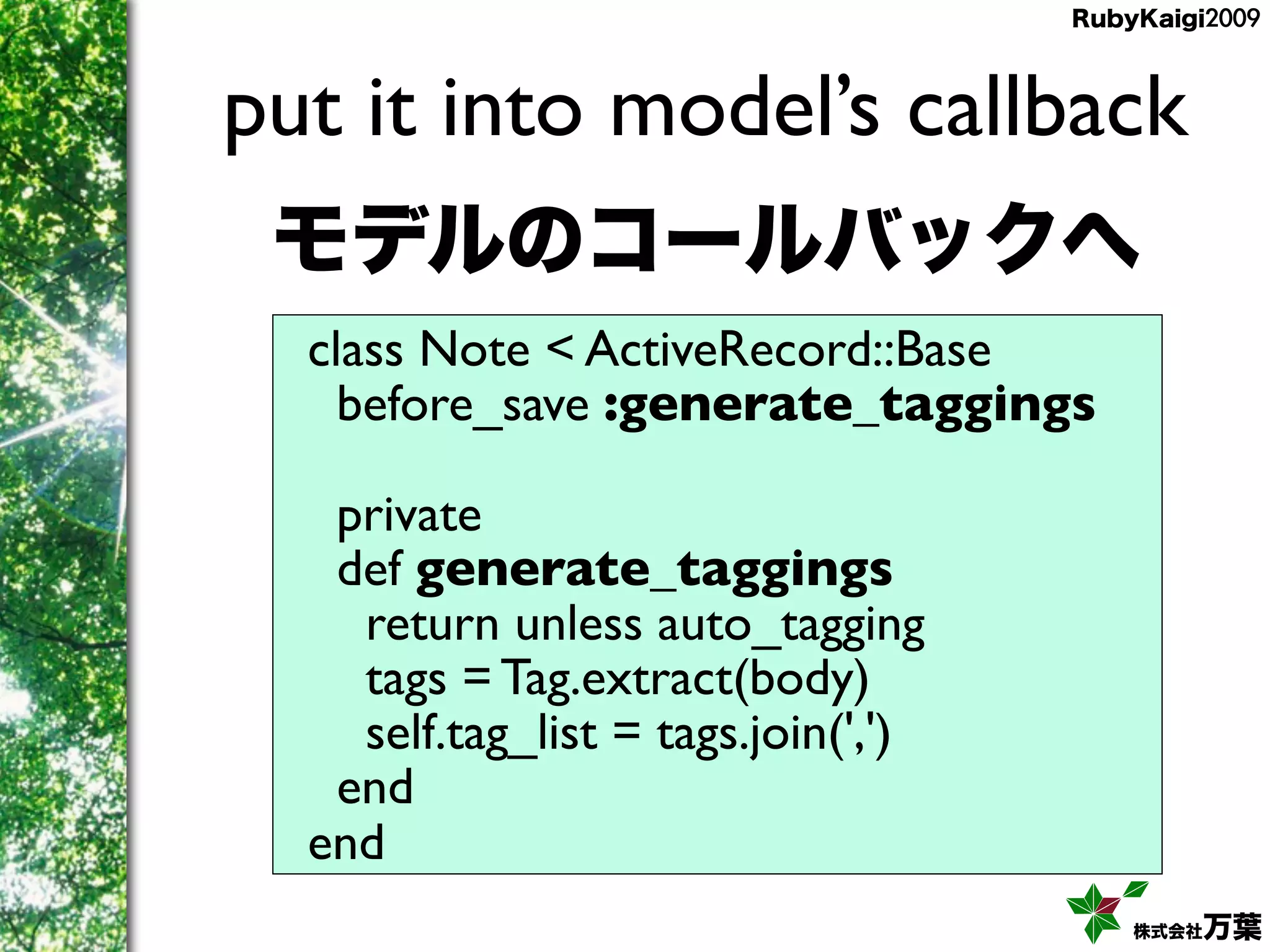
![now it’s in params[:note] def update @note.attributes = params[:note] if params[:auto_tagging] == '1' generate_tags(@note) end .....](https://image.slidesharecdn.com/rubykaigi2009-090717101103-phpapp01/75/Pragmatic-Patterns-of-Ruby-on-Rails-Ruby-Kaigi2009-106-2048.jpg)
![Note or User ? @note = Note.find_by_id_and_user_id( params[:id], current_user.id) @note = current_user.notes.find( params[:id])](https://image.slidesharecdn.com/rubykaigi2009-090717101103-phpapp01/75/Pragmatic-Patterns-of-Ruby-on-Rails-Ruby-Kaigi2009-127-2048.jpg)
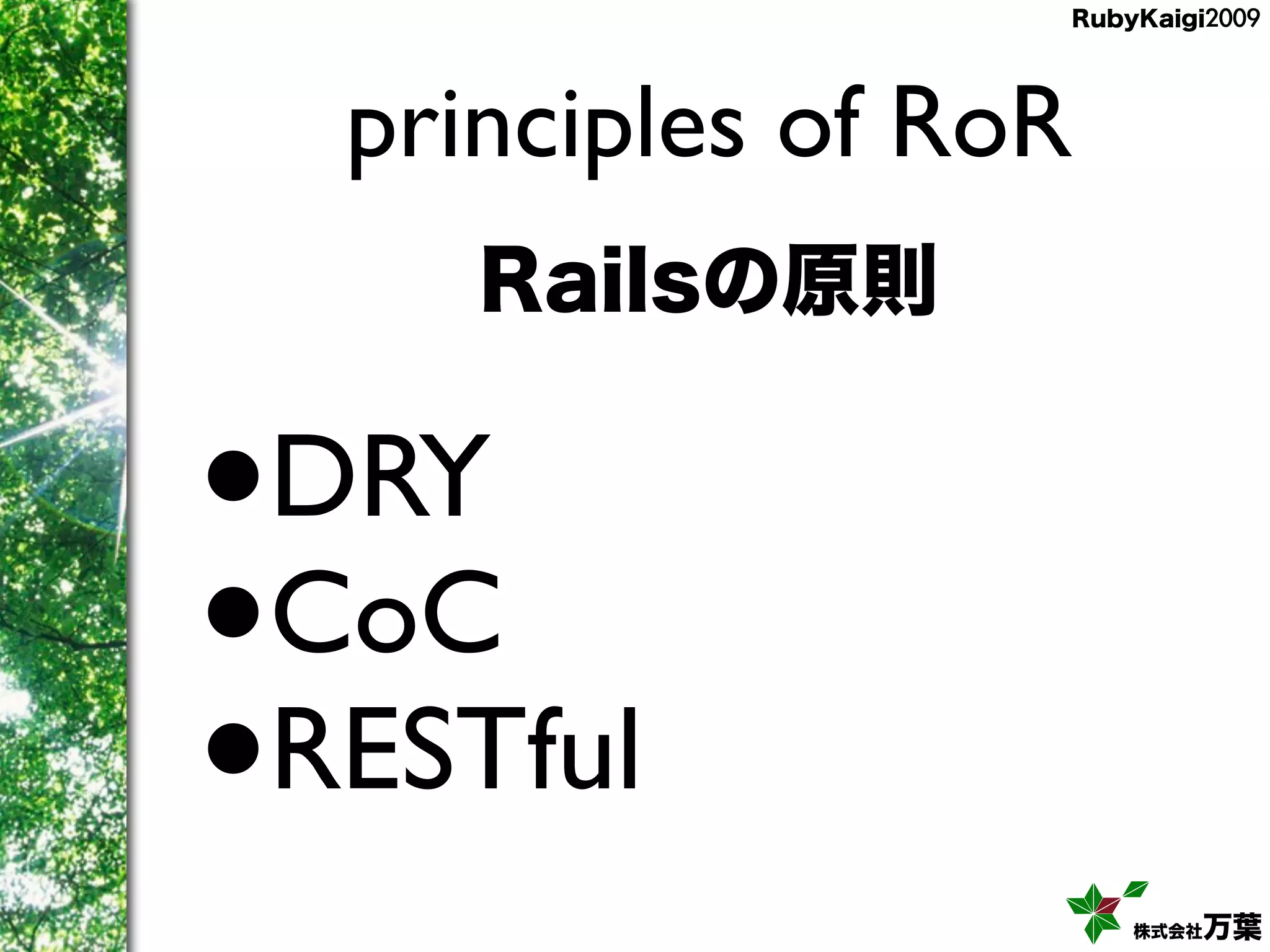


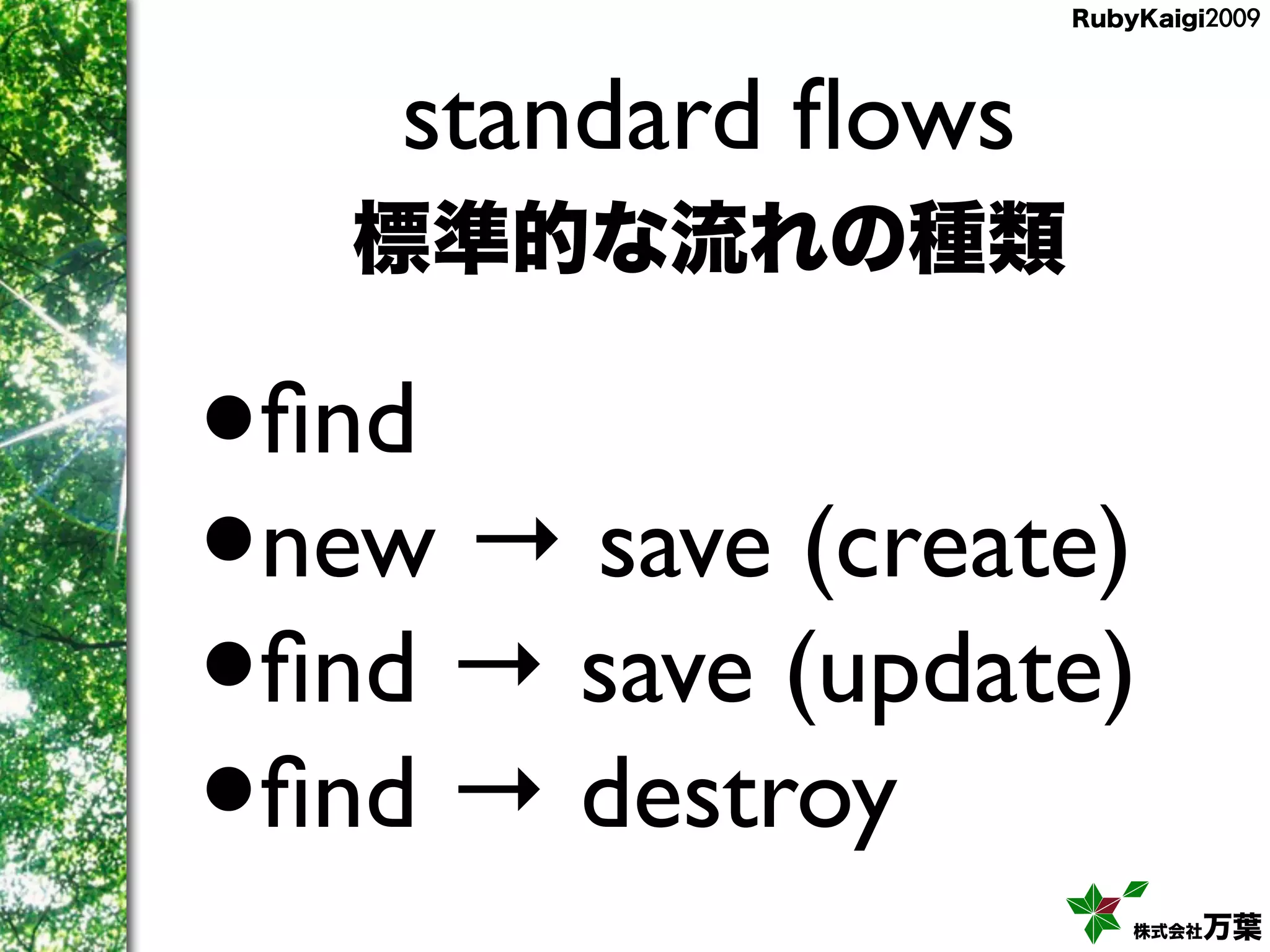
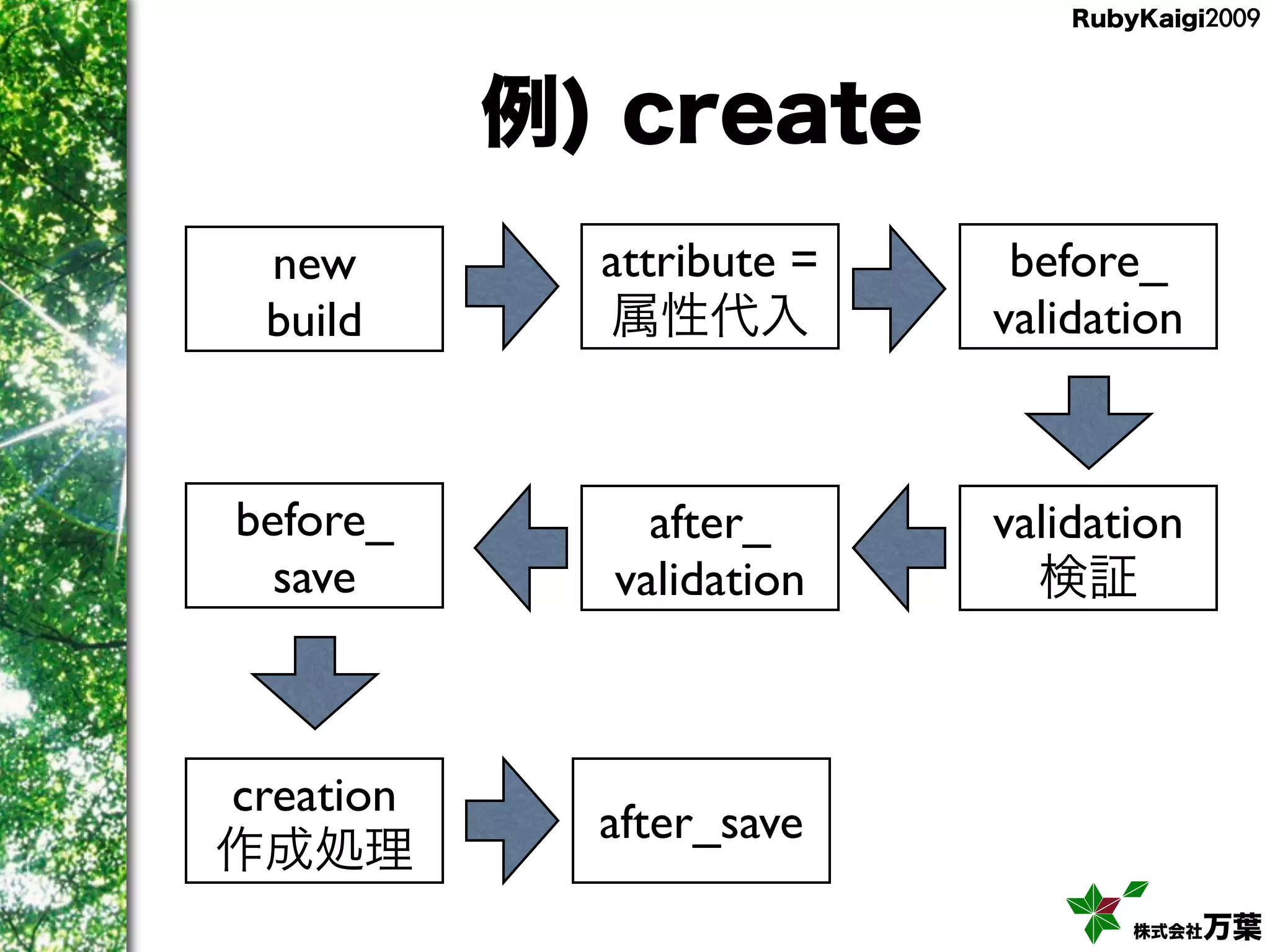
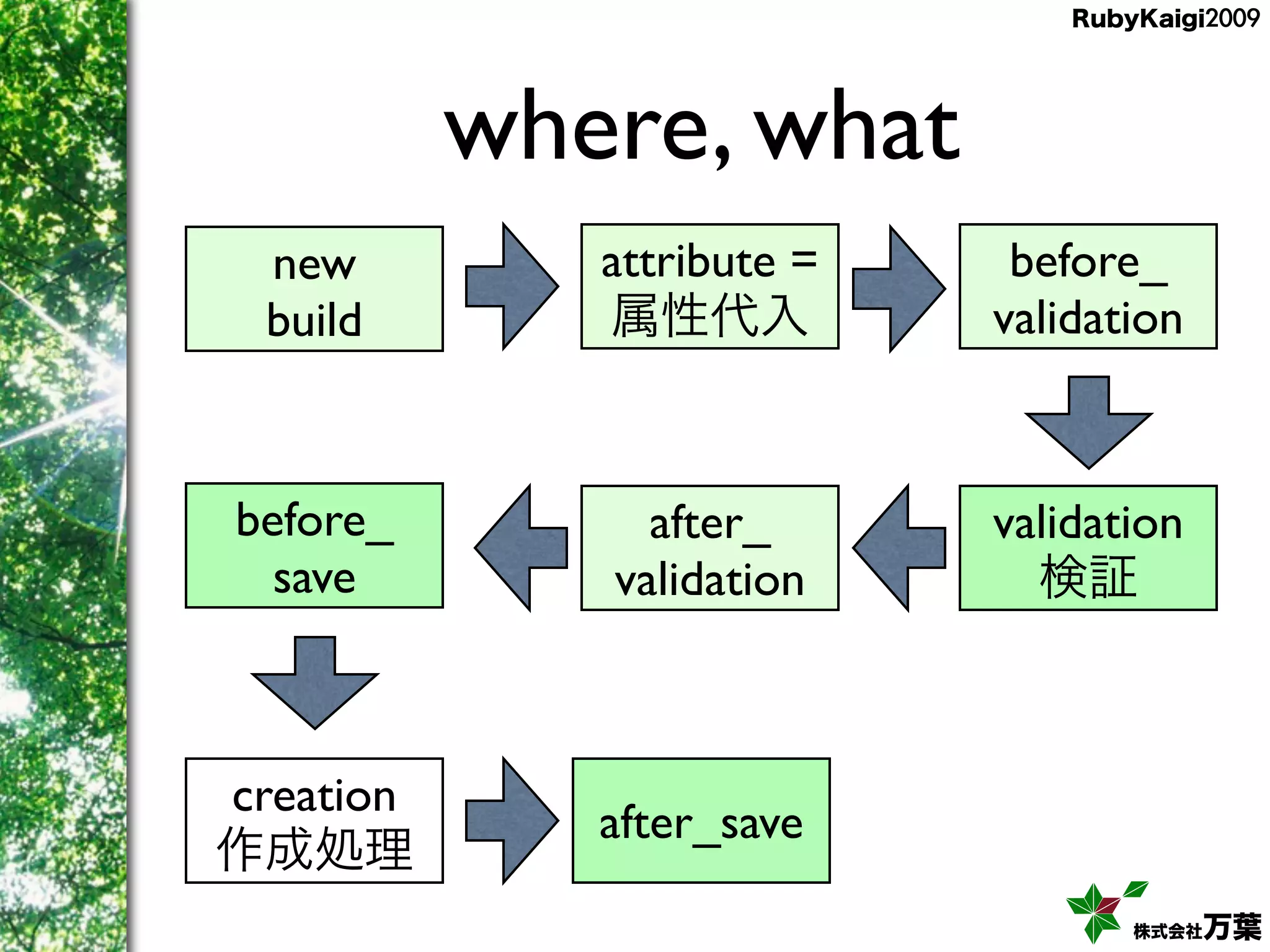
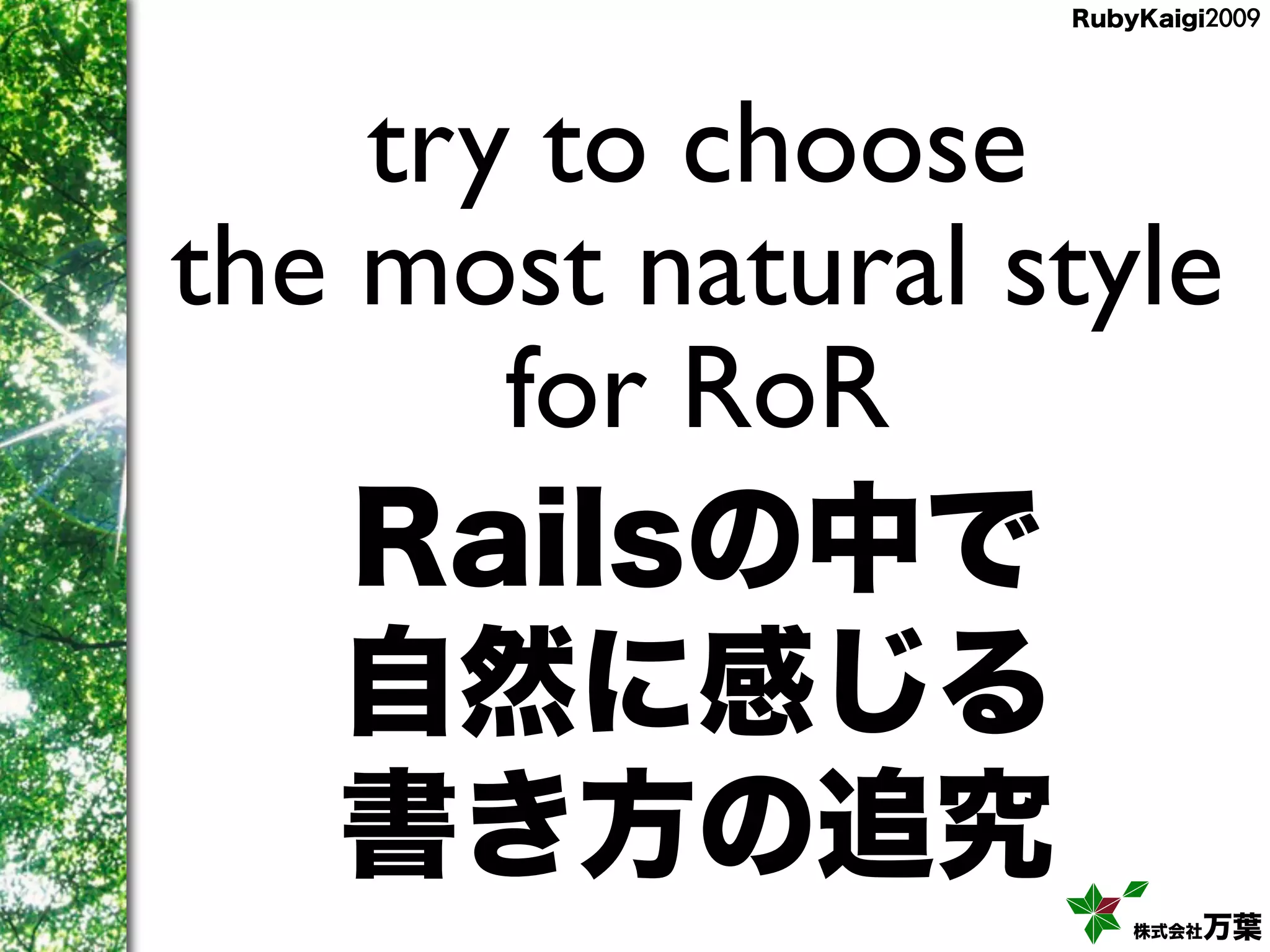

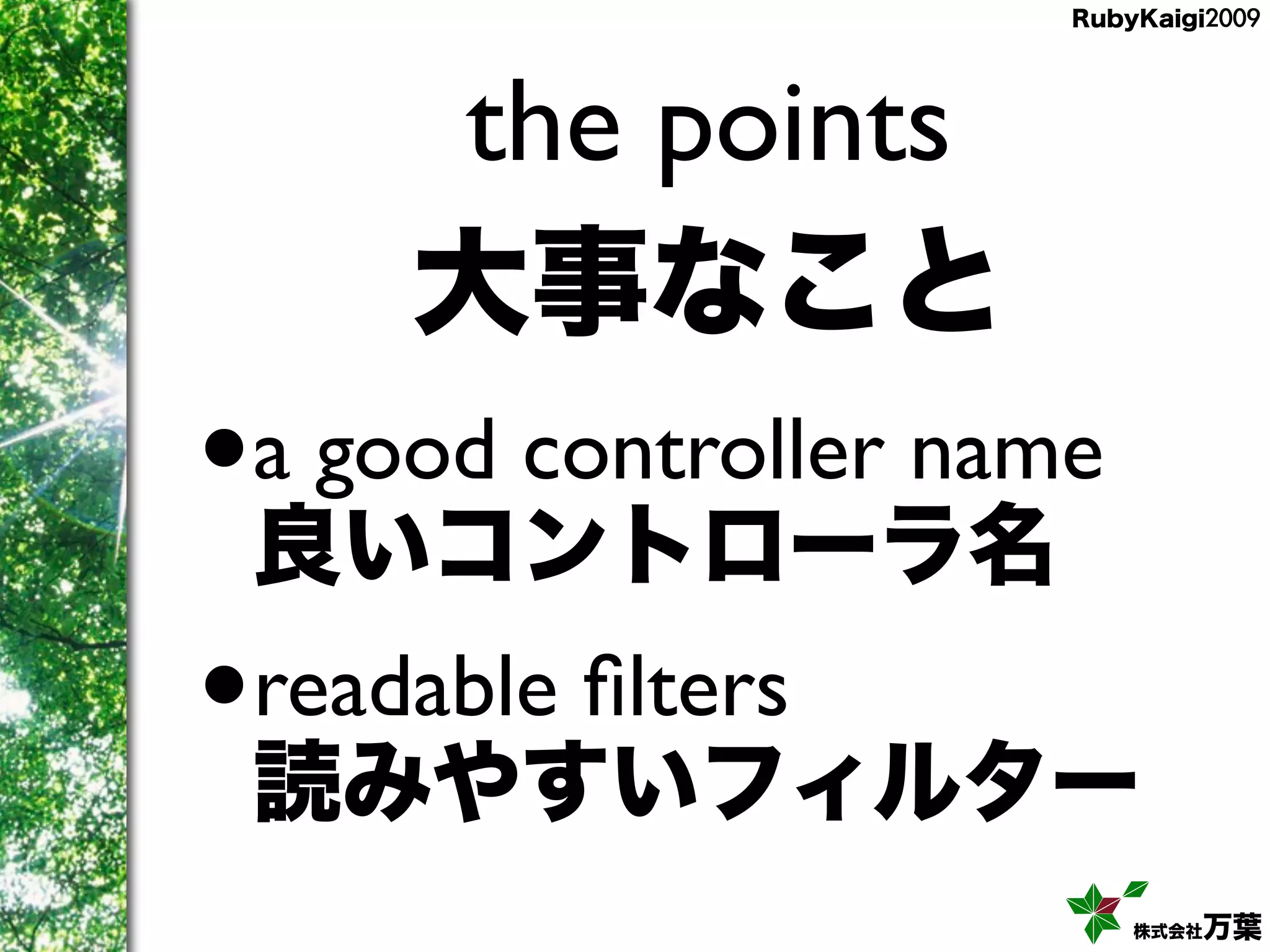
This document discusses coding patterns for developing large and complicated Ruby on Rails applications. It recommends expressing business logic in models using object-oriented principles, following DRY, CoC and RESTful principles, and writing code in models' standard flows like find, new/save, find/update, and find/destroy. Filter methods are suggested to avoid duplicating code and improve readability. Moving branching logic based on parameters and other model processing code from controllers to models improves testability and reusability. Choosing natural coding styles for Rails that follow its core principles helps keep code maintainable for other developers. Sharing such pragmatic patterns is important for developing large codebases.