Object Oriented CSS
Graeme Blackwood Creative Lead, Deeson Online deeson-online.co.uk @graemeblackwood
Props • Nicole Sullivan, http://www.stubbornella.org • Jonathan Snook (SMACSS), http://smacss.com • Everyone at http://thesassway.com • Chris Eppstein, http://compass-style.org • Kevin Poulton http://www.flickr.com/photos/kevinpoulton • And loads more!
Before we get going
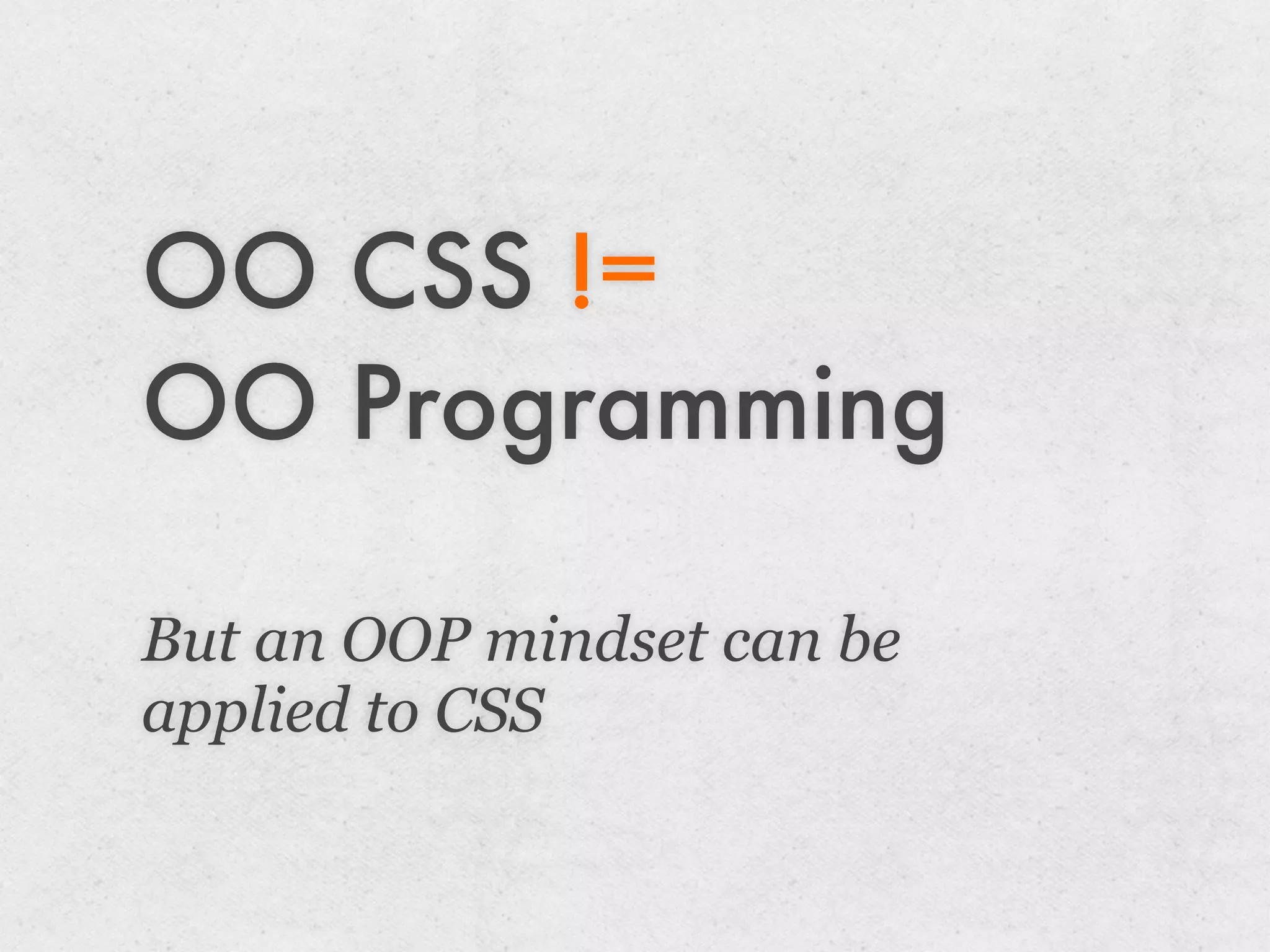
OO CSS != OO Programming But an OOP mindset can be applied to CSS
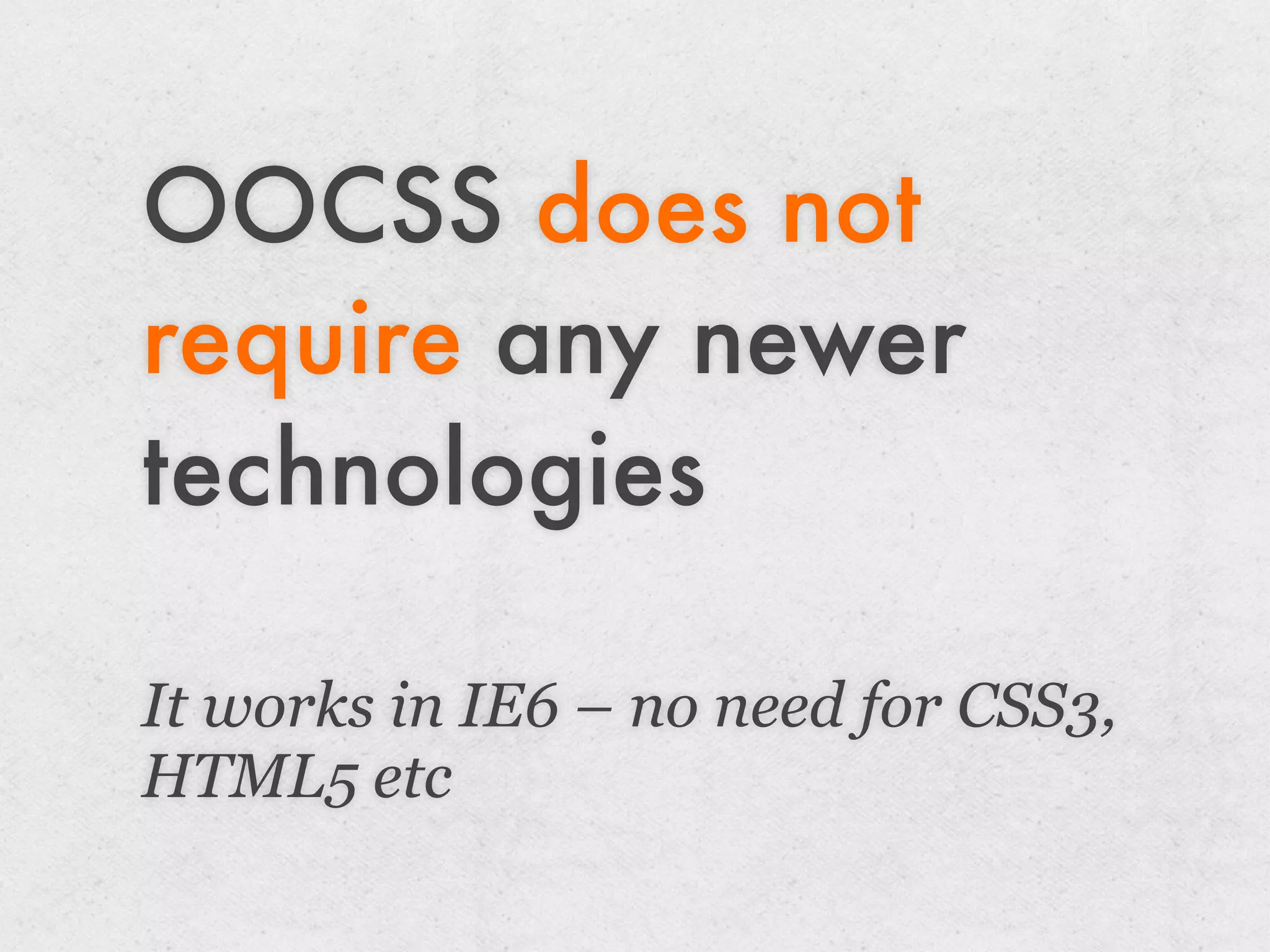
OOCSS does not require any newer technologies It works in IE6 – no need for CSS3, HTML5 etc
Semantic markup is very helpful, but usually not essential Semantic is better though!
The traditional approach to CSS
Style output as needed Each item / page individually...
Target styles by drilling down through nested elements
Problems with traditional CSS
Coding takes a lot longer
It gets bloated
It is difficult to read and hard to reuse
Traditional CSS is tough to maintain
‽
Object Oriented CSS A new way of thinking
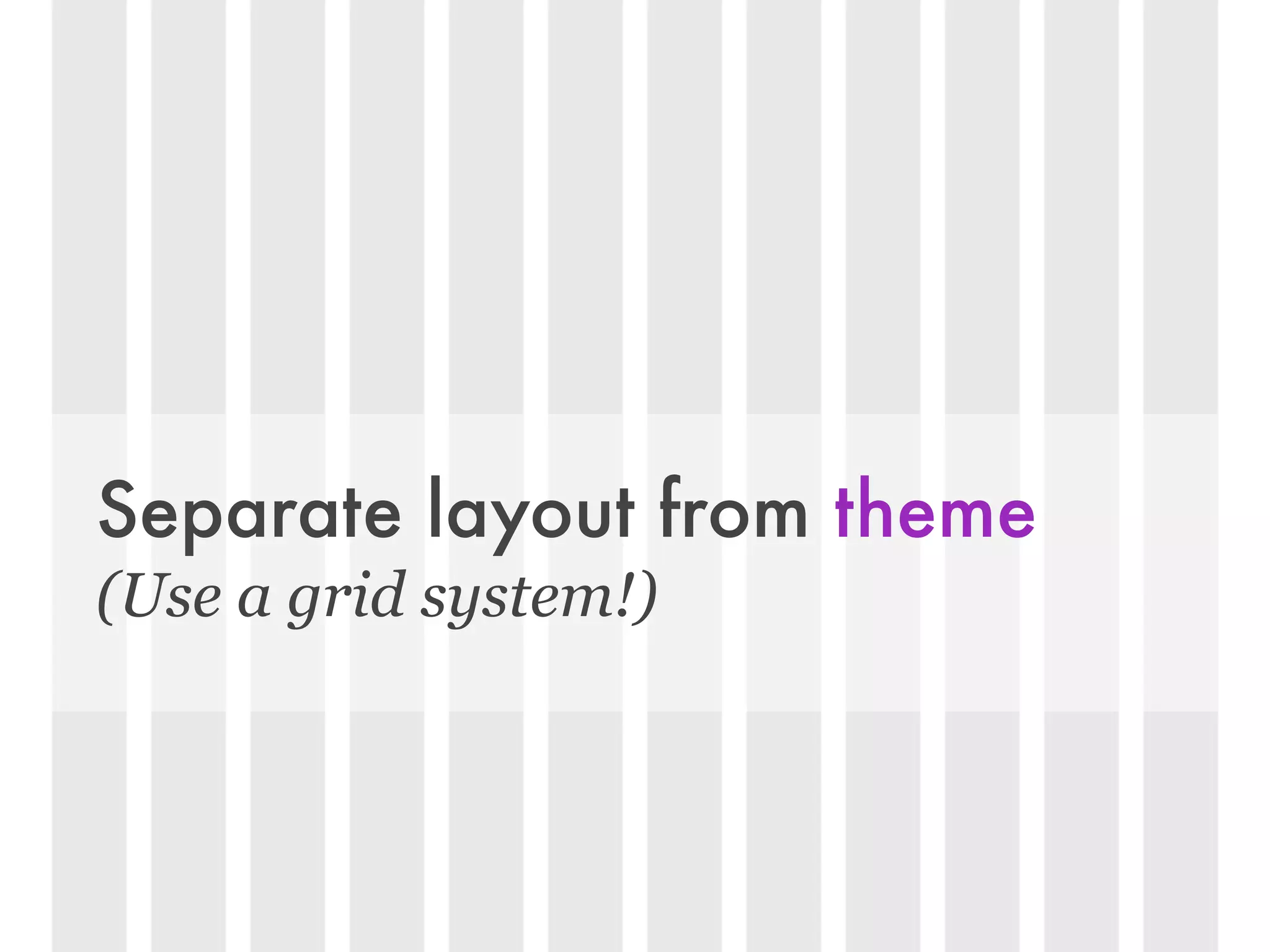
Separate layout from theme (Use a grid system!)
Separate the container from the content
Look for shared styles You will see them everywhere
Why should I care?
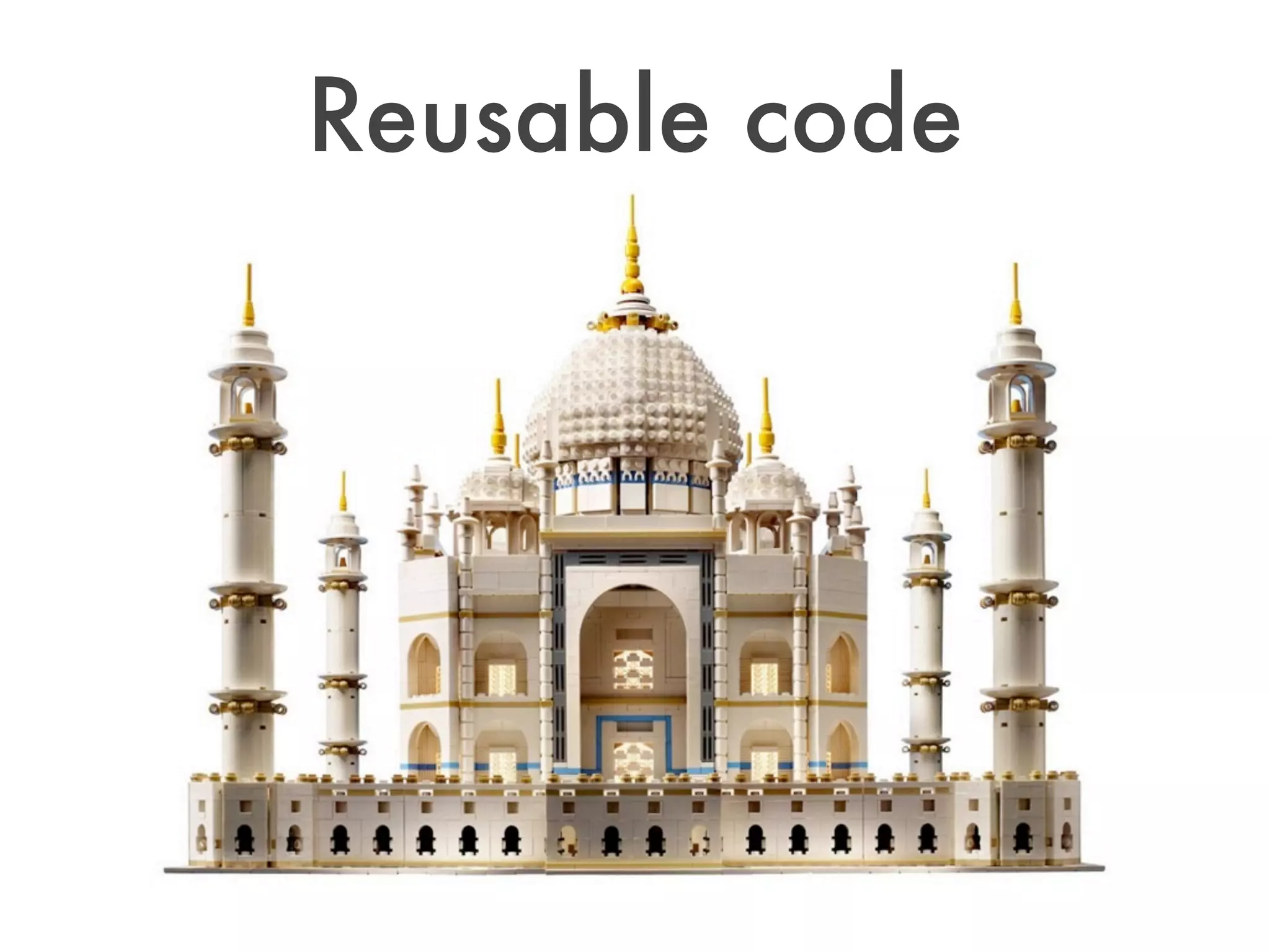
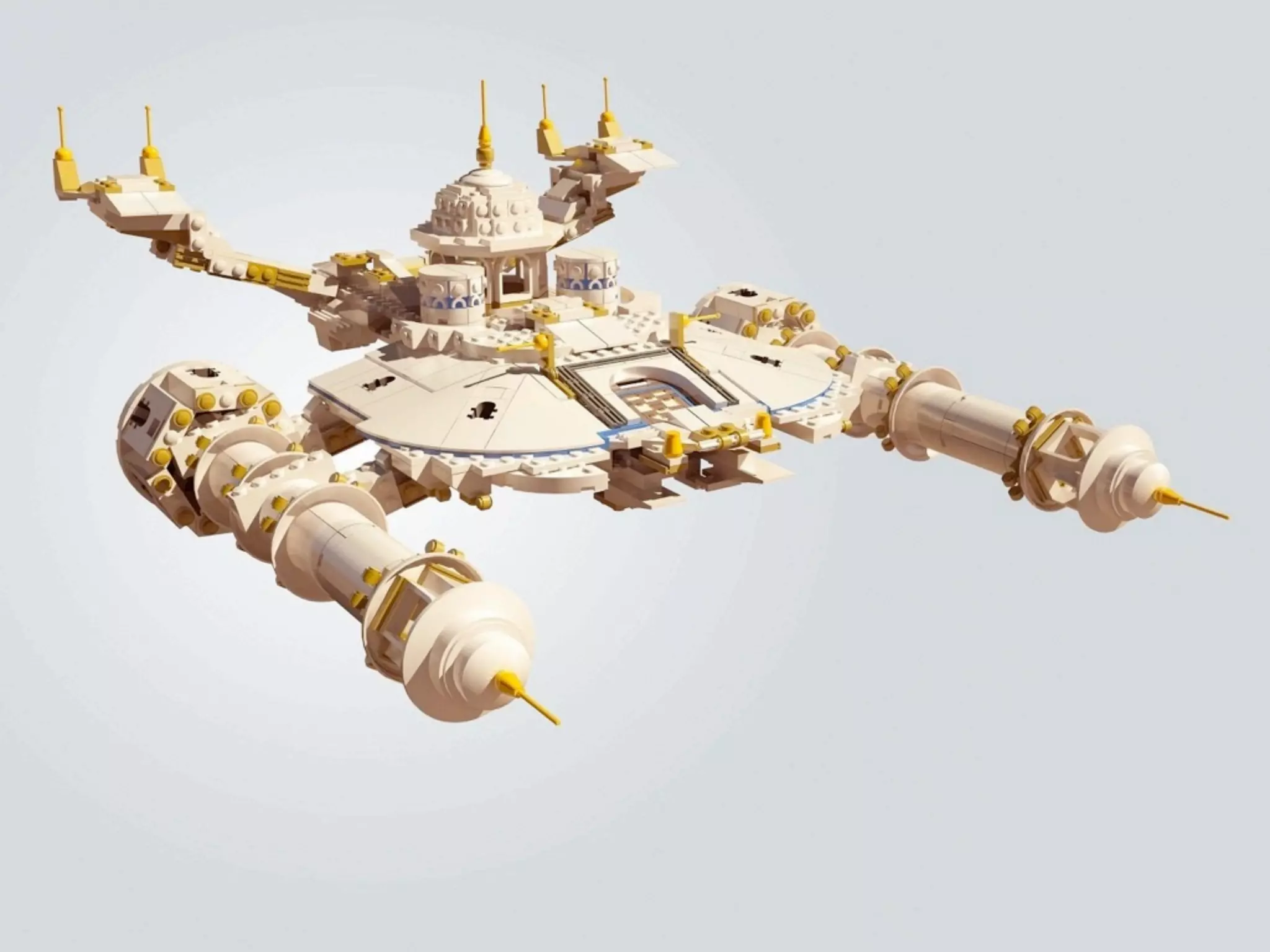
Reusable code
Faster development Less effort to code
Easier to maintain
Less code, smaller files
Getting started
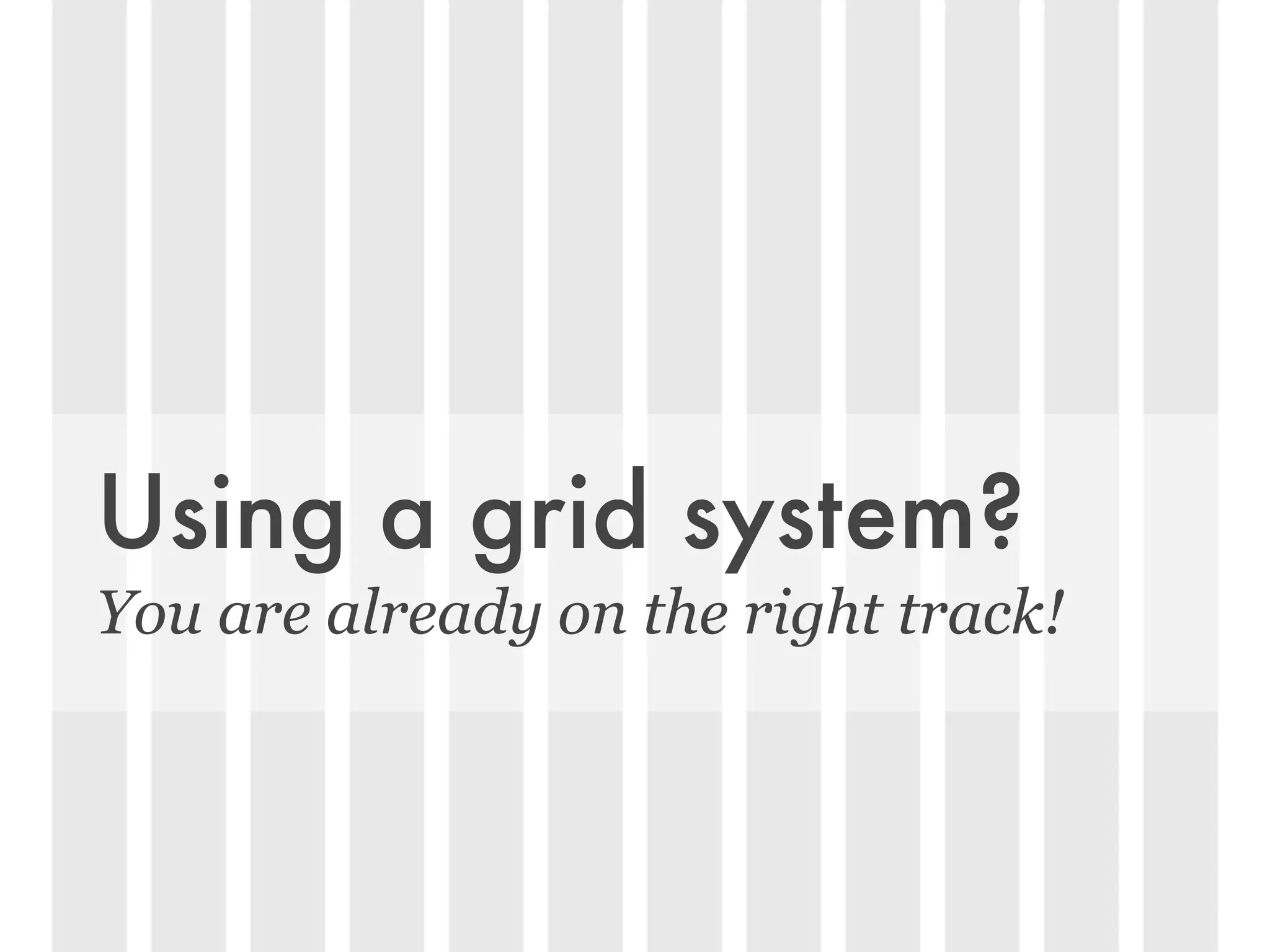
Using a grid system? You are already on the right track!
Use a reset stylesheet HTML5 boilerplate’s normalize.css
Set good base styles To minimise later overrides * {box-sizing: border-box} is pretty handy
Set good base styles Build HTML prototypes To minimise later overrides with Drupal in mind...
Clean up what Drupal throws at you Don’t just style, theme!
Lose unnecessary markup if it affects you Some divs are totally pointless!
Don’t be too obsessed with perfect markup Just enough is ok
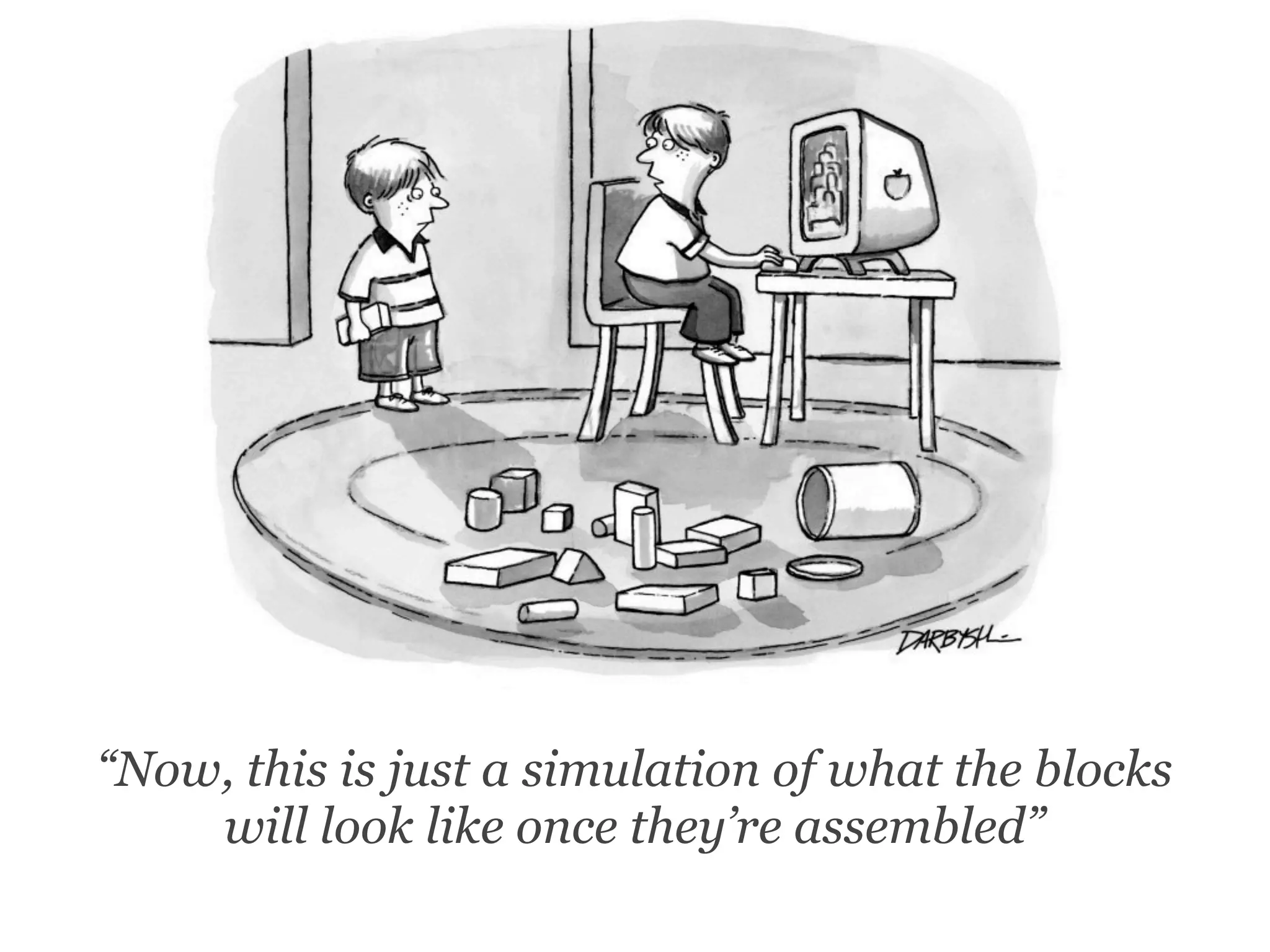
“Now, this is just a simulation of what the blocks will look like once they’re assembled”
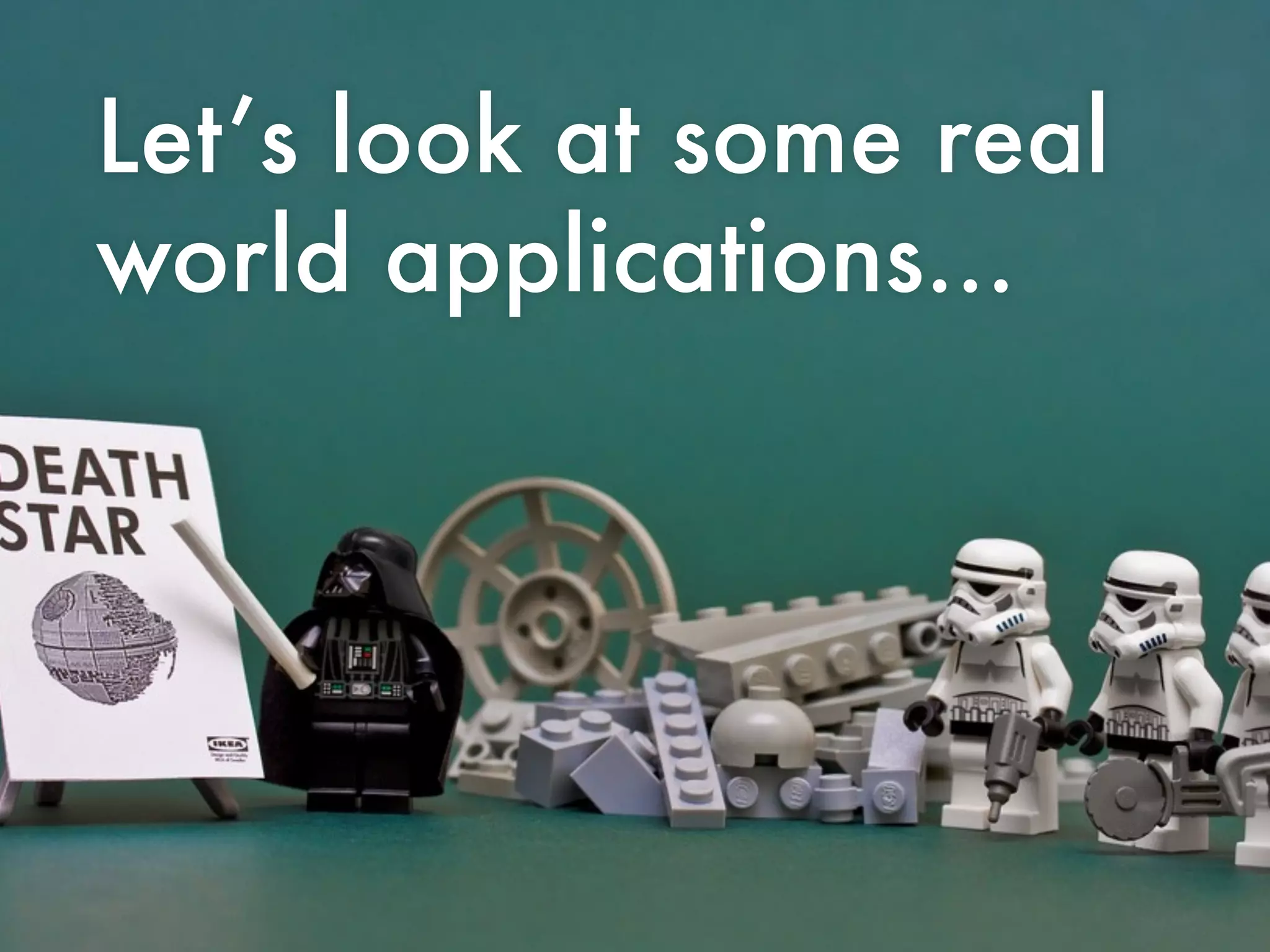
Let’s look at some real world applications...
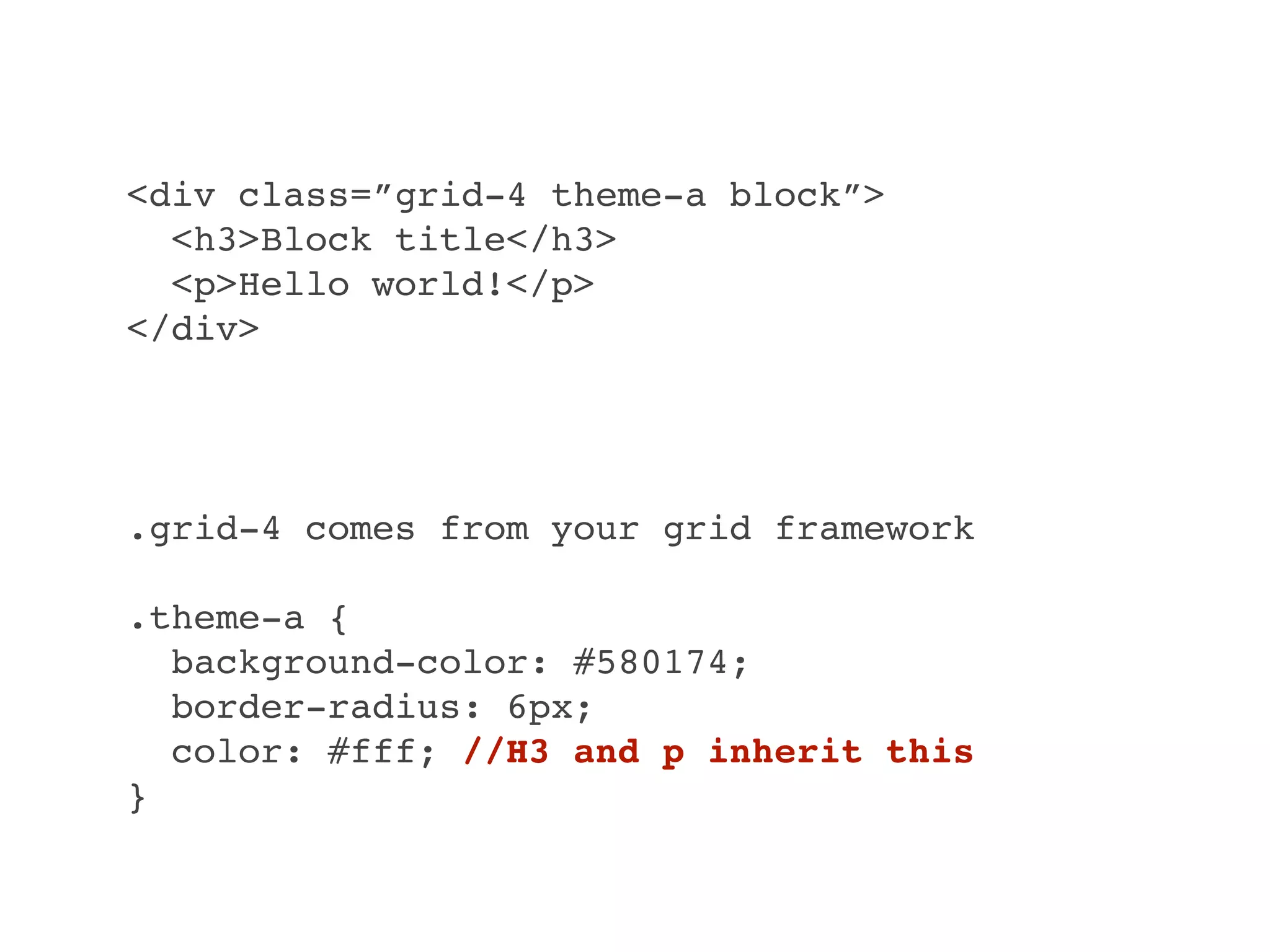
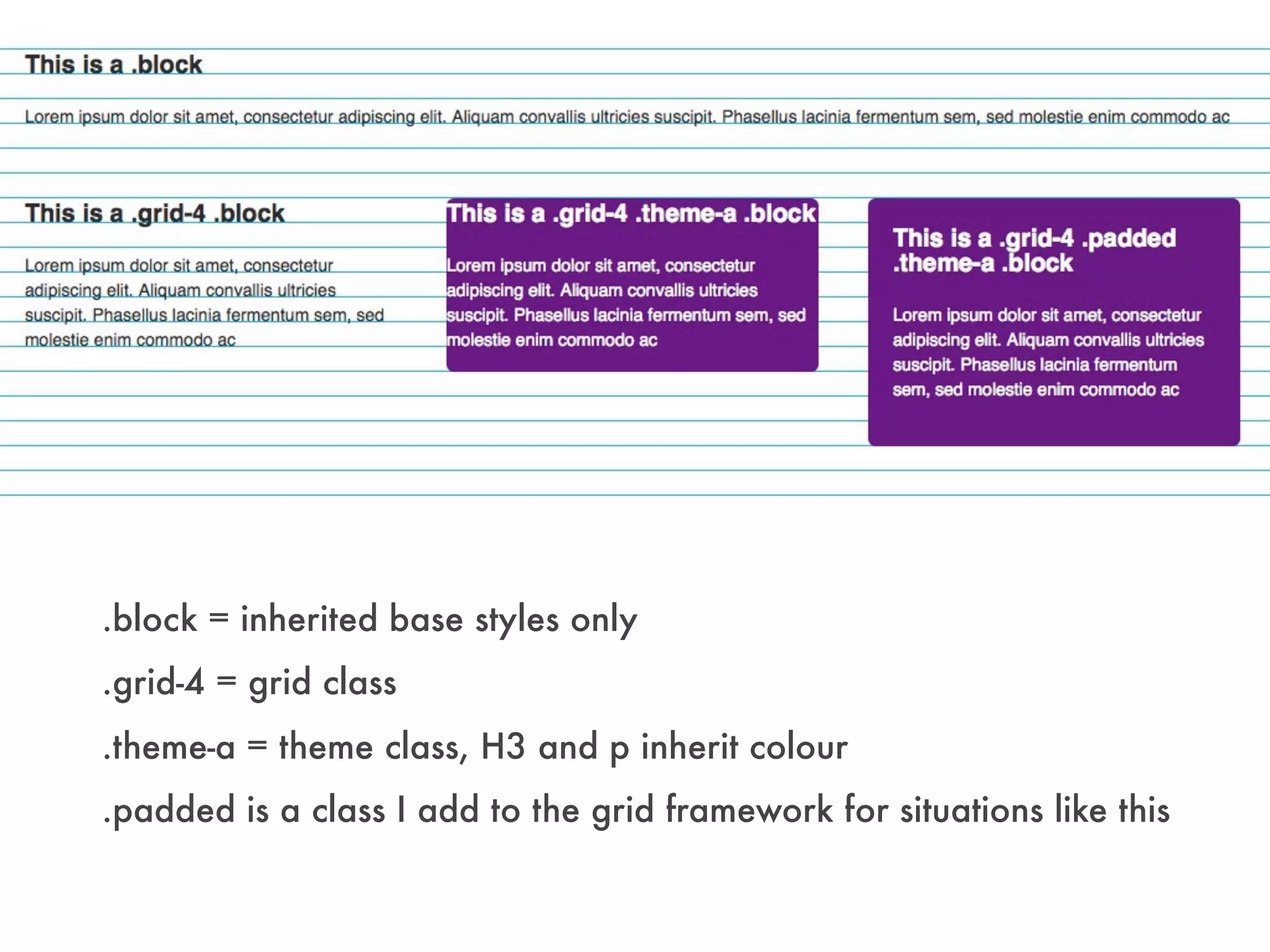
.block = inherited base styles only .grid-4 = grid class .theme-a = theme class, H3 and p inherit colour .padded is a class I add to the grid framework for situations like this
<div class=”grid-4 theme-a block”> <h3>Block title</h3> <p>Hello world!</p> </div> .grid-4 comes from your grid framework .theme-a { background-color: #580174; border-radius: 6px; color: #fff; //H3 and p inherit this }
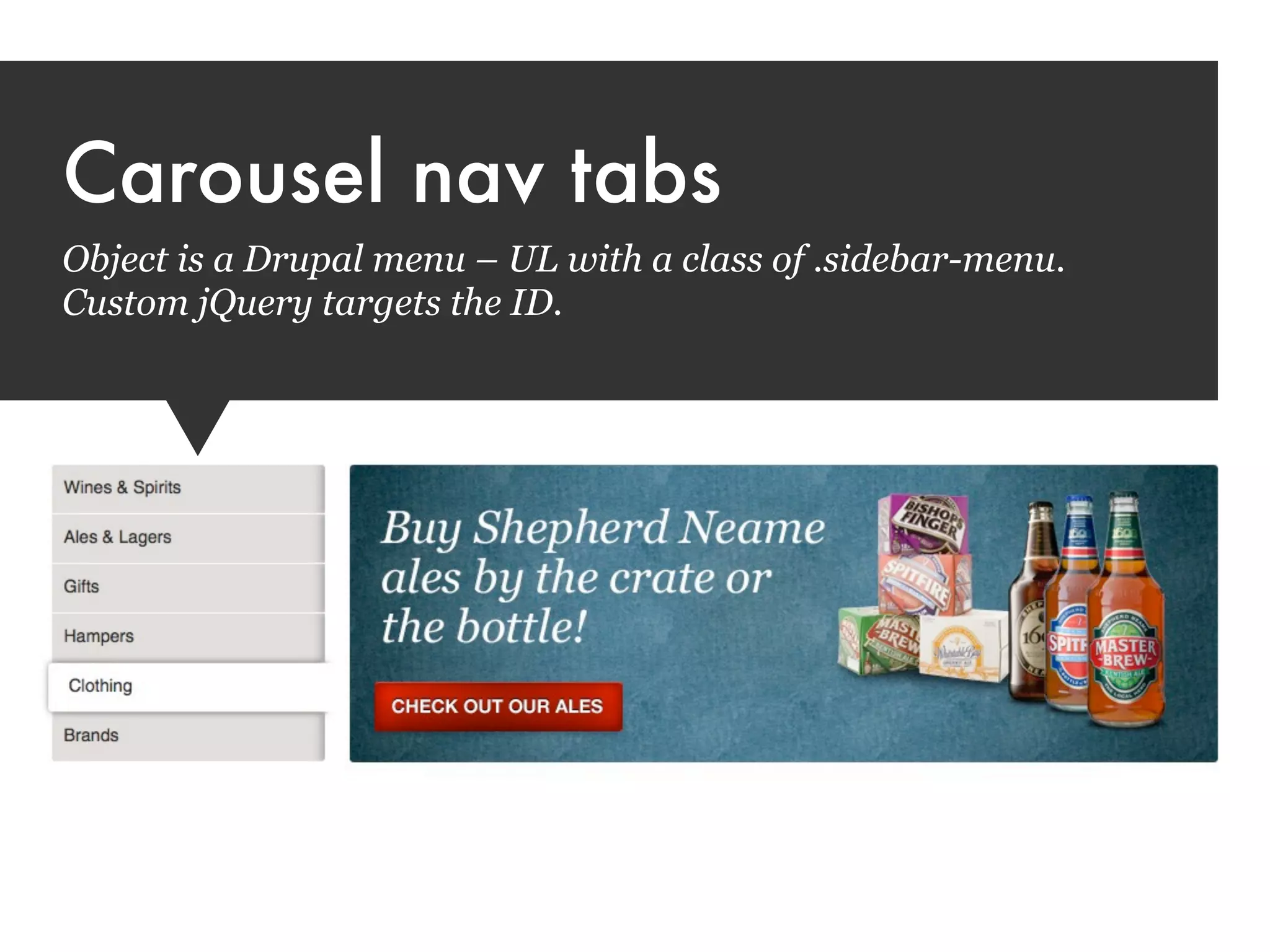
Carousel nav tabs Object is a Drupal menu – UL with a class of .sidebar-menu. Custom jQuery targets the ID.
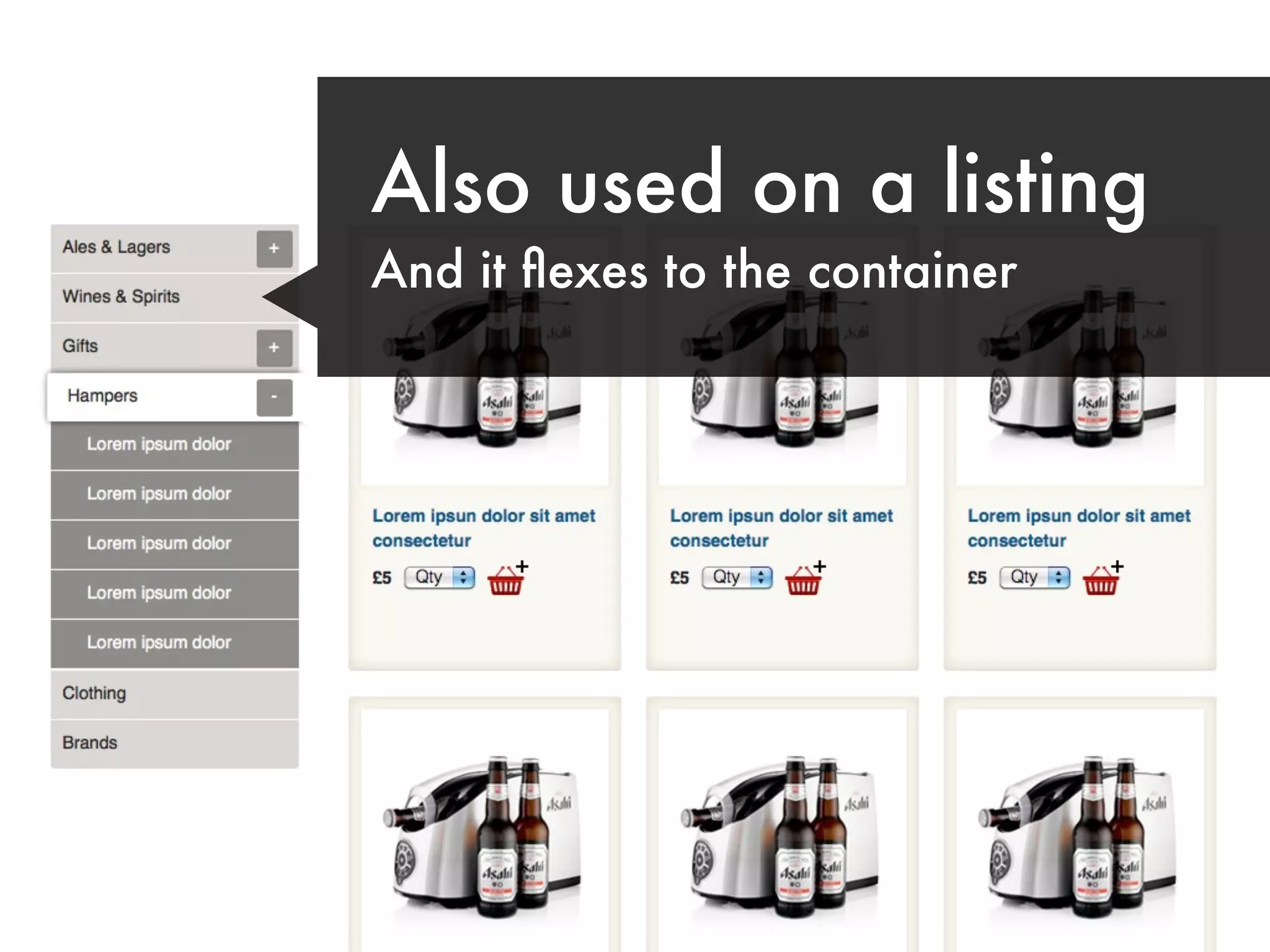
Also used on a listing And it flexes to the container
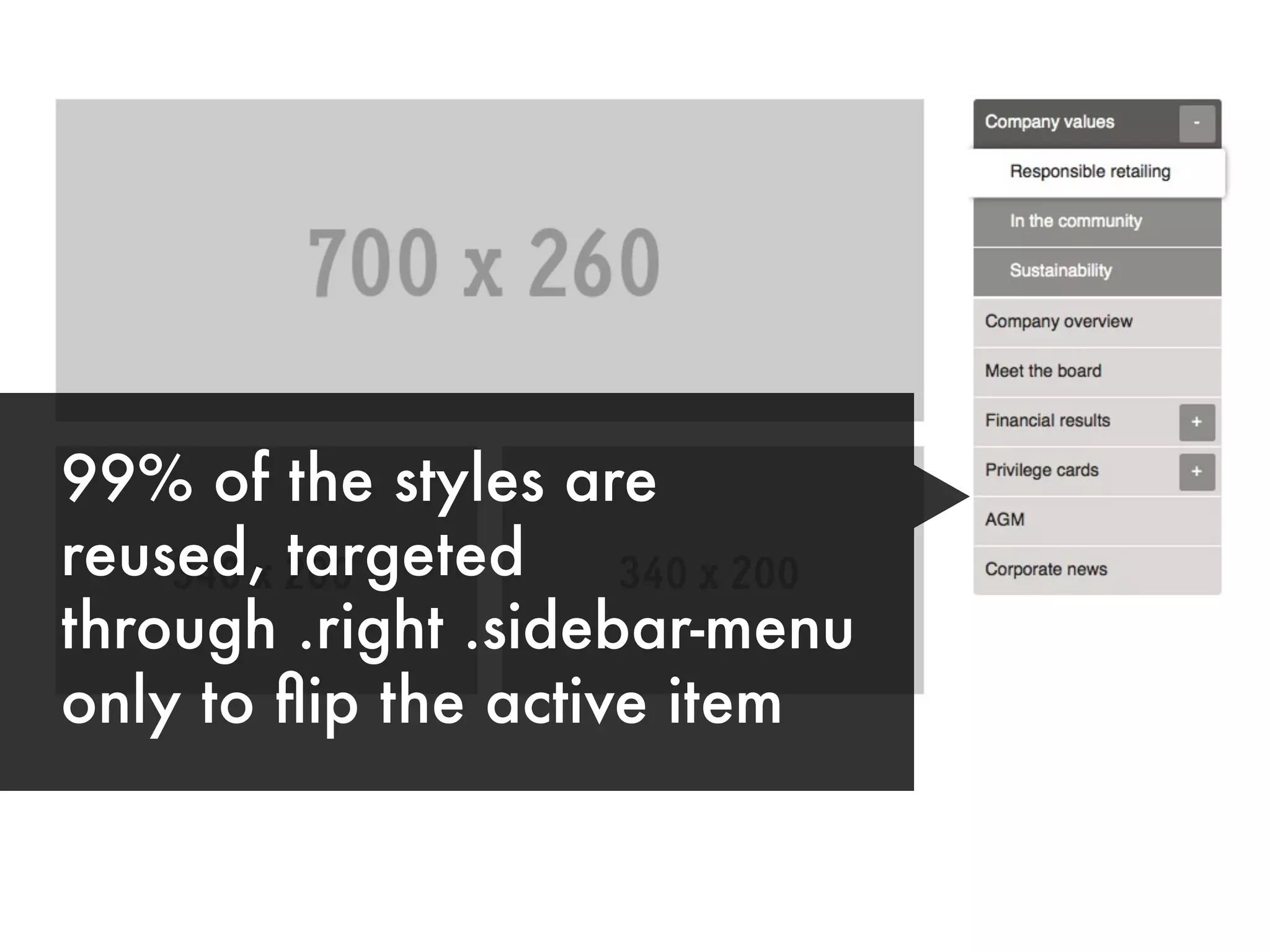
99% of the styles are reused, targeted through .right .sidebar-menu only to flip the active item
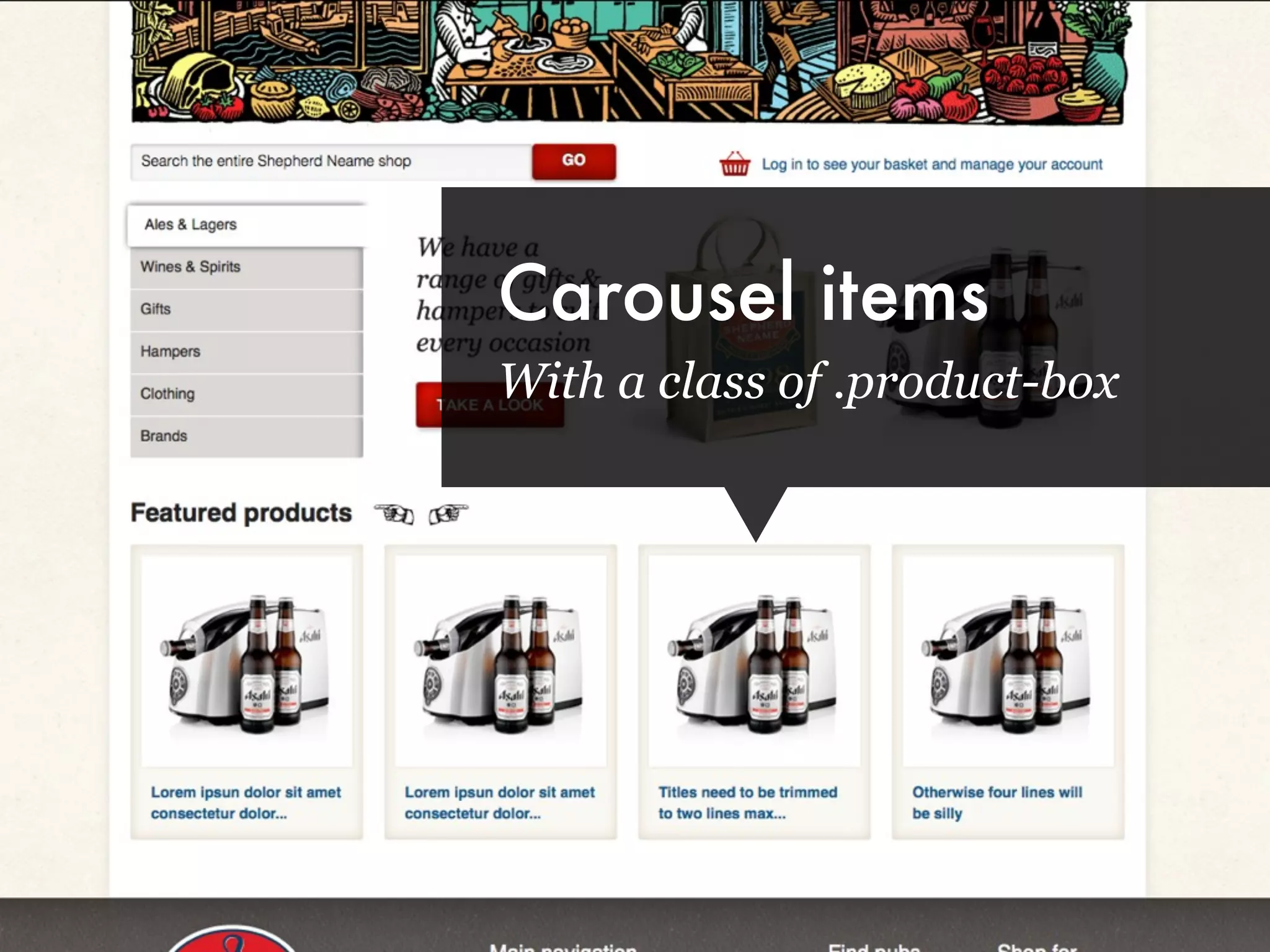
Carousel items With a class of .product-box
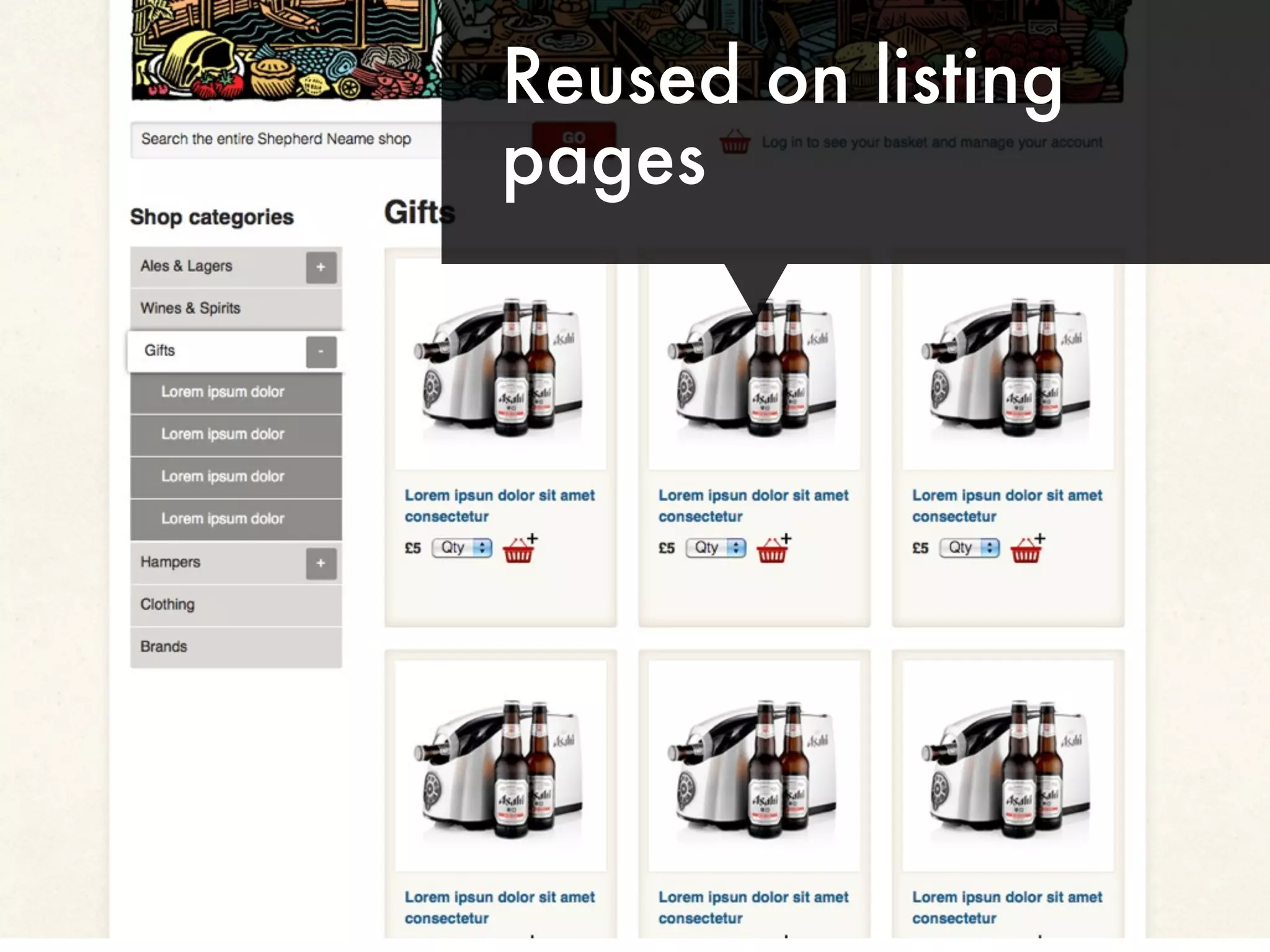
Reused on listing pages
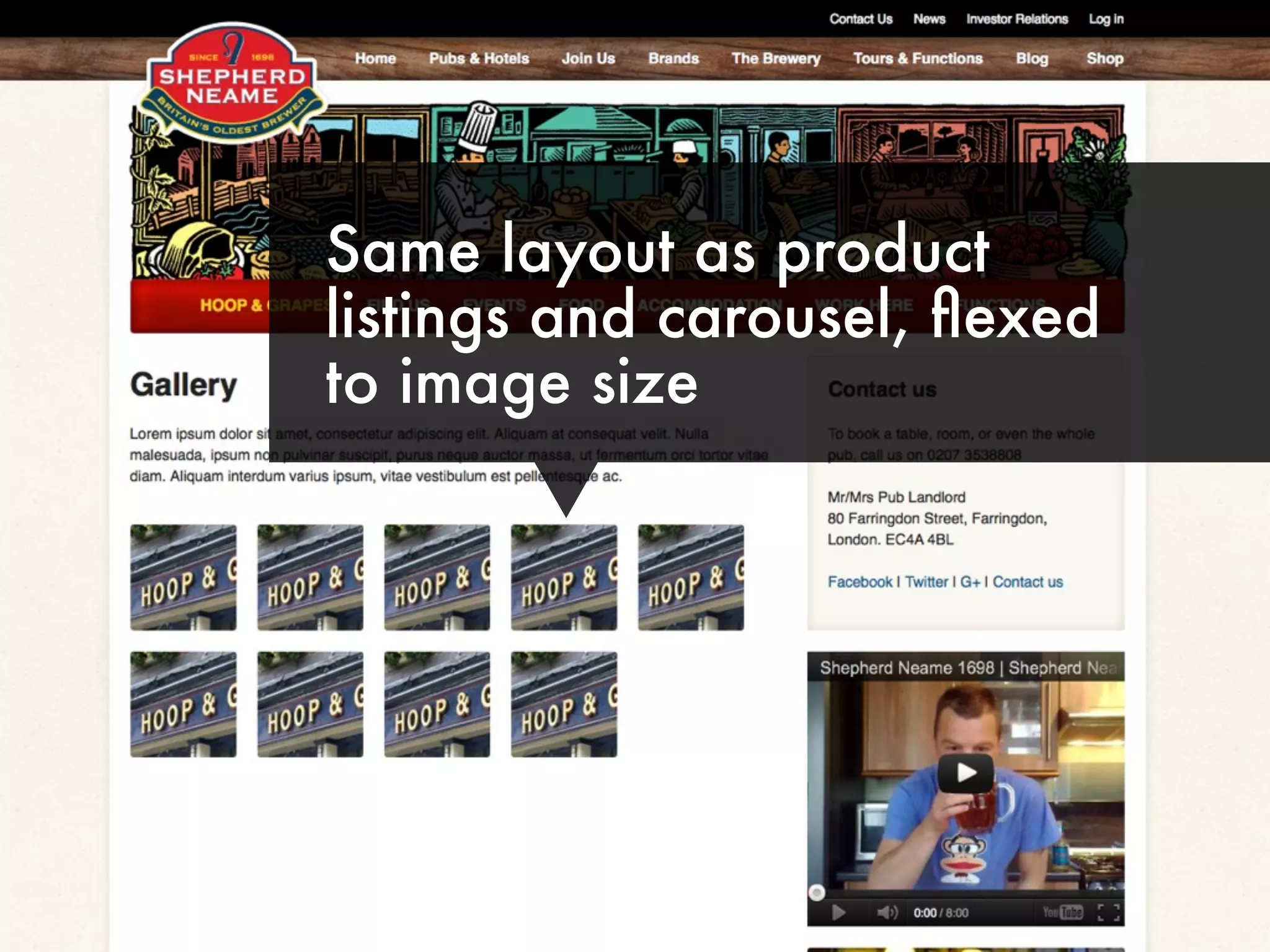
Same layout as product listings and carousel, flexed to image size
What about SASS and LESS? Why bother with presentational classes in markup anymore?
Not everyone wants to use a CSS preprocessor And the mindset of reduce, reuse & recycle is just as important even with one
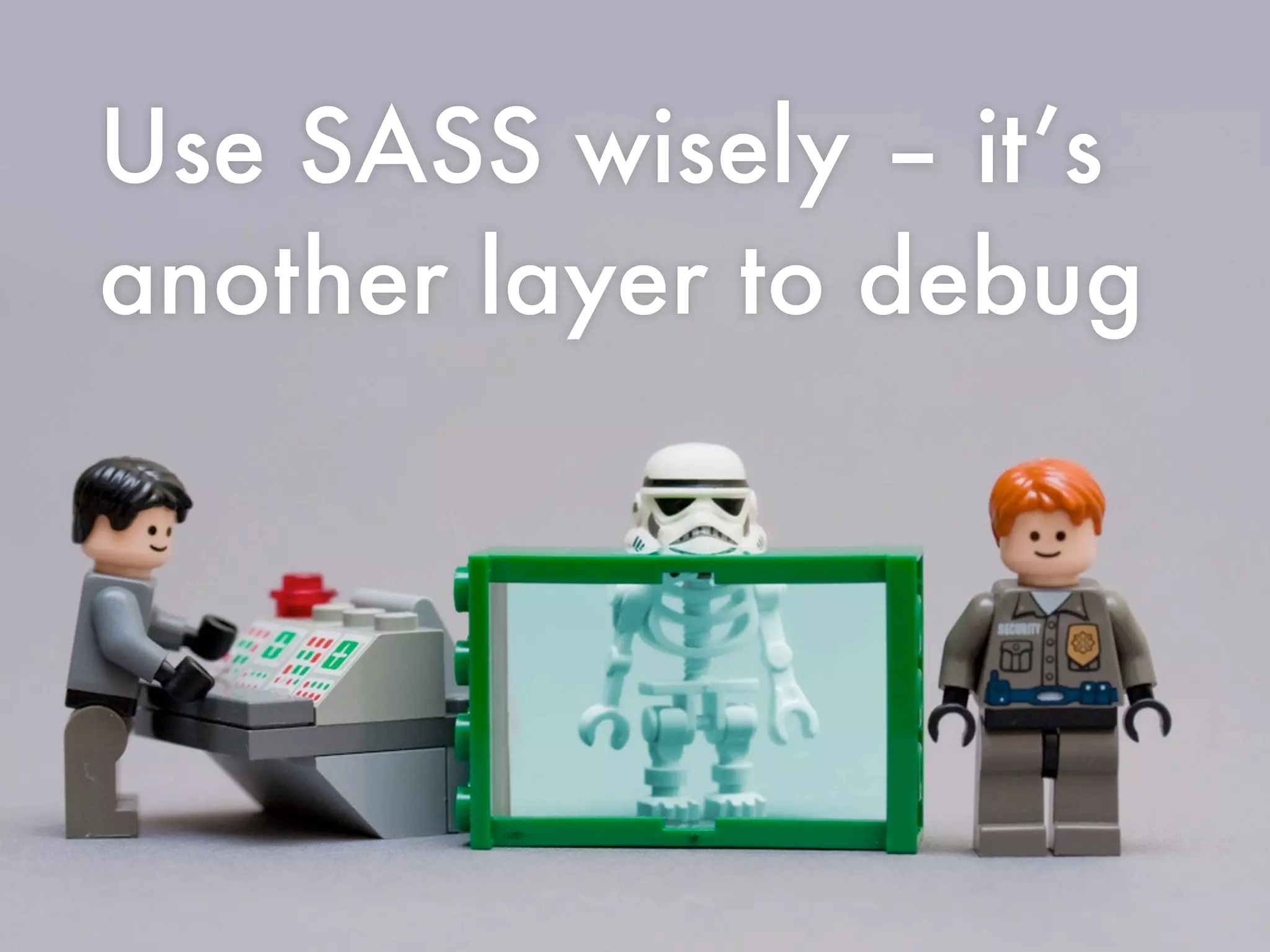
Use SASS wisely – it’s another layer to debug
Be particularly careful with nested selectors http://thesassway.com/beginner/the-inception-rule http://37signals.com/svn/posts/3003-css-taking-control-of- the-cascade
Disregarding the other principles of OOCSS may create pain later You could end up with generated CSS bloated even more than if you had hand-coded it
Summary • OOCSS is as much a mindset as a technique • The principles are to reduce, reuse and recycle code • This is done through separating layout from theme • and the container from the content • It relies primarily on reused classes and markup • We are working on Drupal 8 to make it much easier to change markup. In the meantime, try Display Suite or Skinr for node theming
Summary • CSS preprocessors like SASS and LESS are great • But they create another layer to debug • And the code they generate can be very bloated • Preprocessors are not an excuse to be lazy • They still need to be used with an OO mindset
Thanks for listening! Questions? @graemeblackwood Most of the fantastic lego images were by Kevin Poulton http://www.flickr.com/photos/kevinpoulton

Object Oriented CSS for rapid, scalable and maintainable development