Exploratory Testing Work Course Maaret Pyhäjärvi Email: <maaret@iki.fi> | Twitter: maaretp
Testing as Performance (Exploring) vs. Testing as Artifact Creation
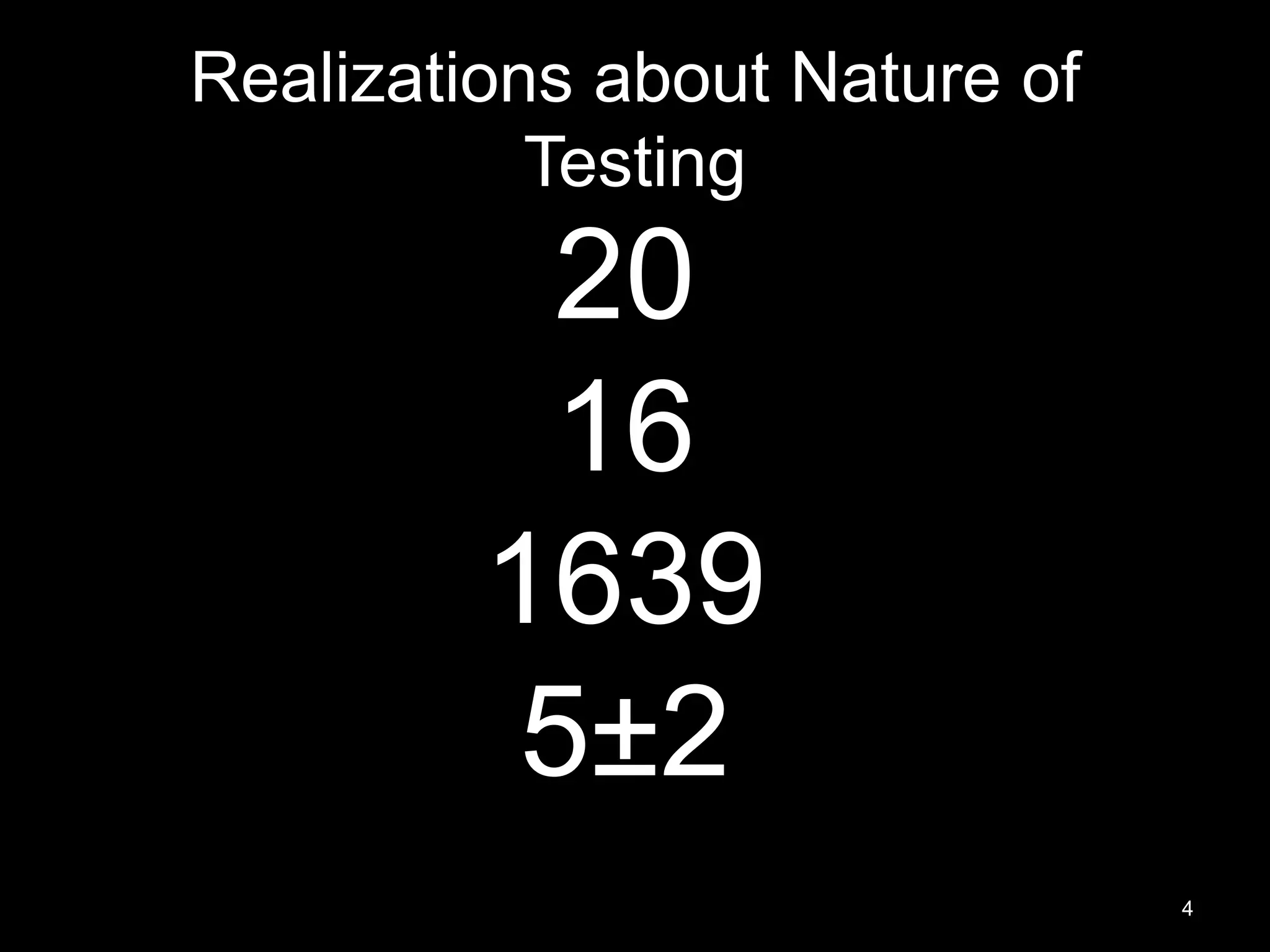
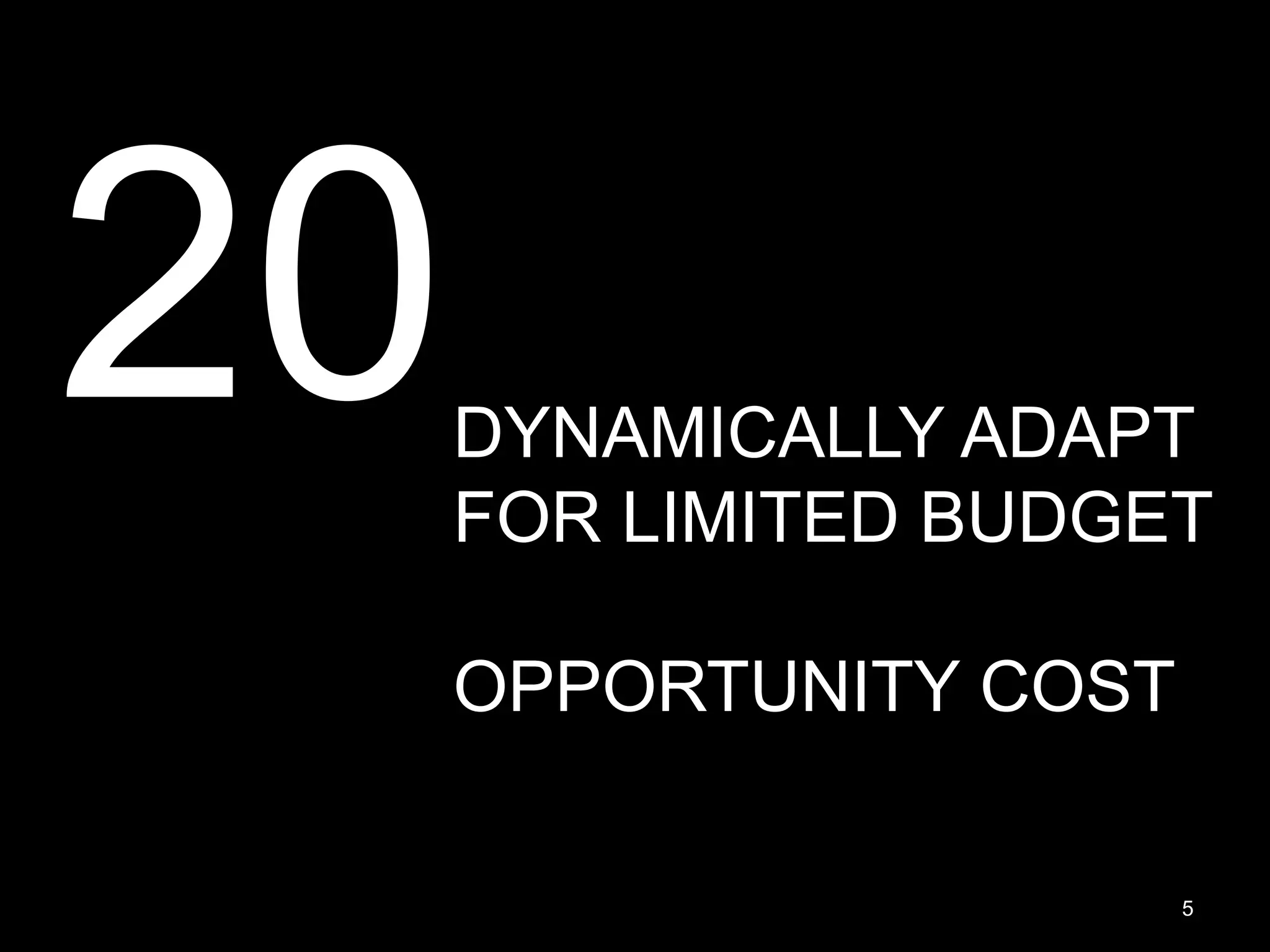
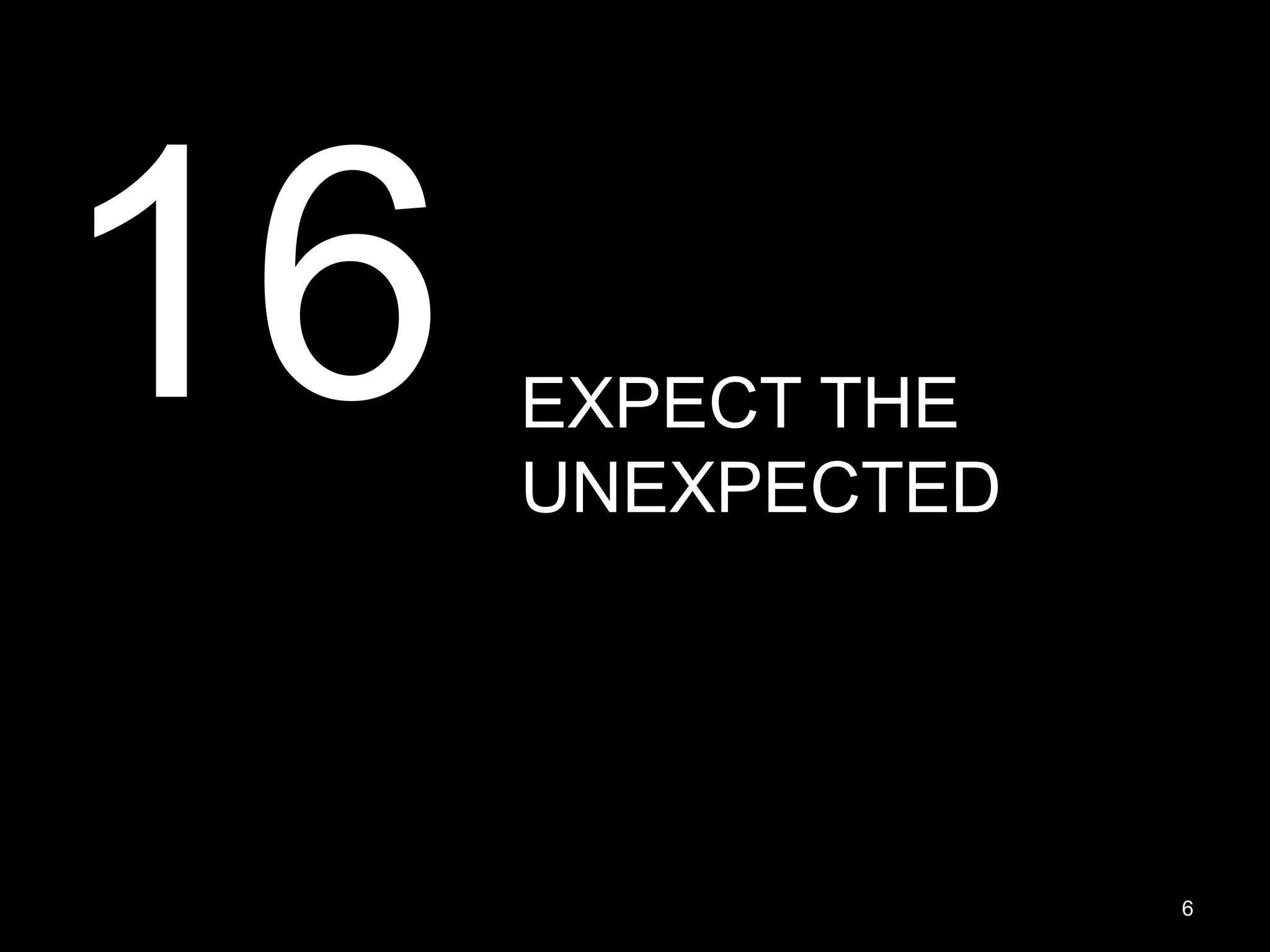
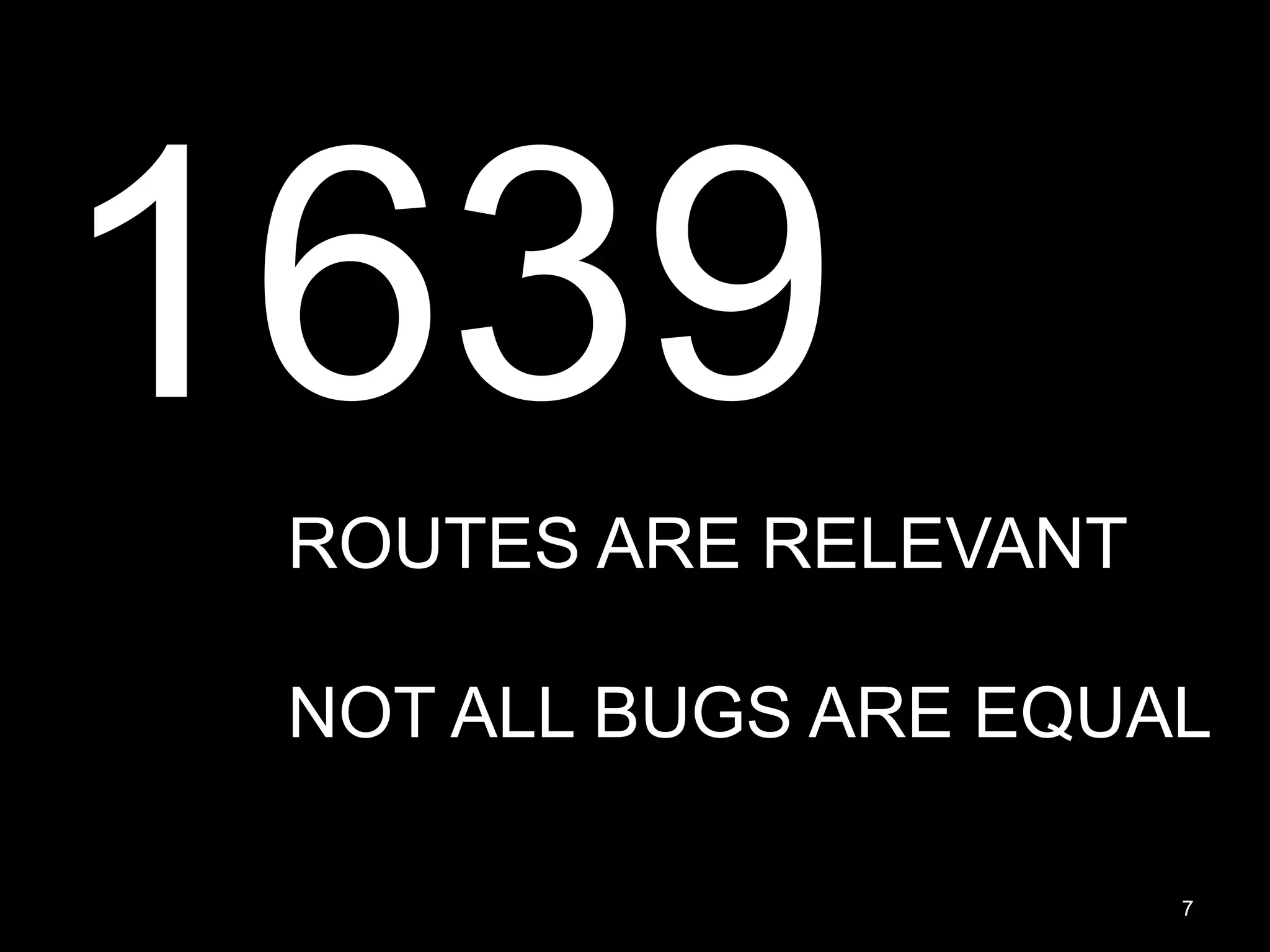
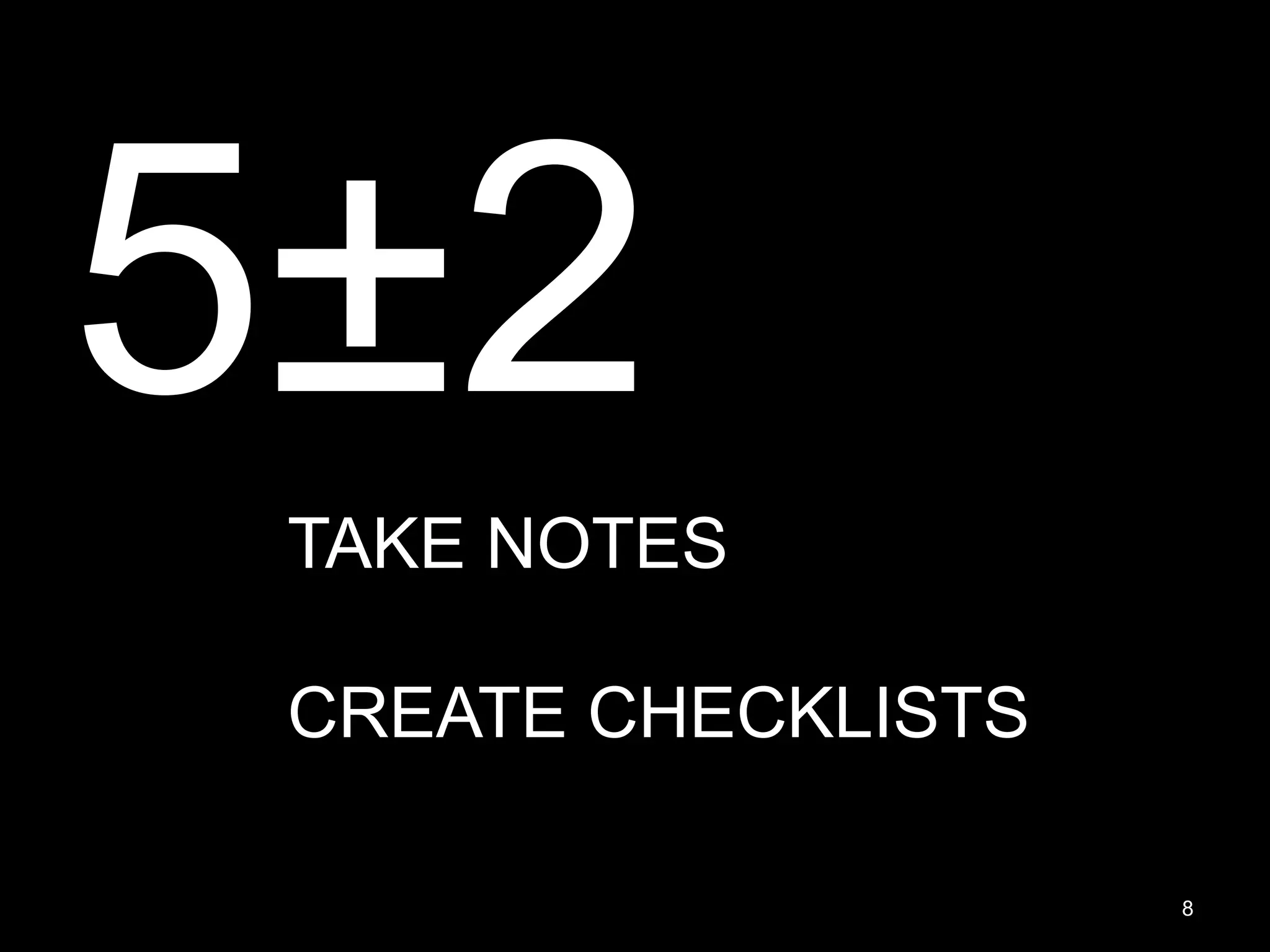
Realizations about Nature of Testing 20 16 1639 5±2 4
20DYNAMICALLY ADAPT FOR LIMITED BUDGET OPPORTUNITY COST 5
16 EXPECT THE UNEXPECTED 6
1639ROUTES ARE RELEVANT NOT ALL BUGS ARE EQUAL 7
5±2 TAKE NOTES CREATE CHECKLISTS 8
Getting Set Up • Google Freemind and download the latest beta version
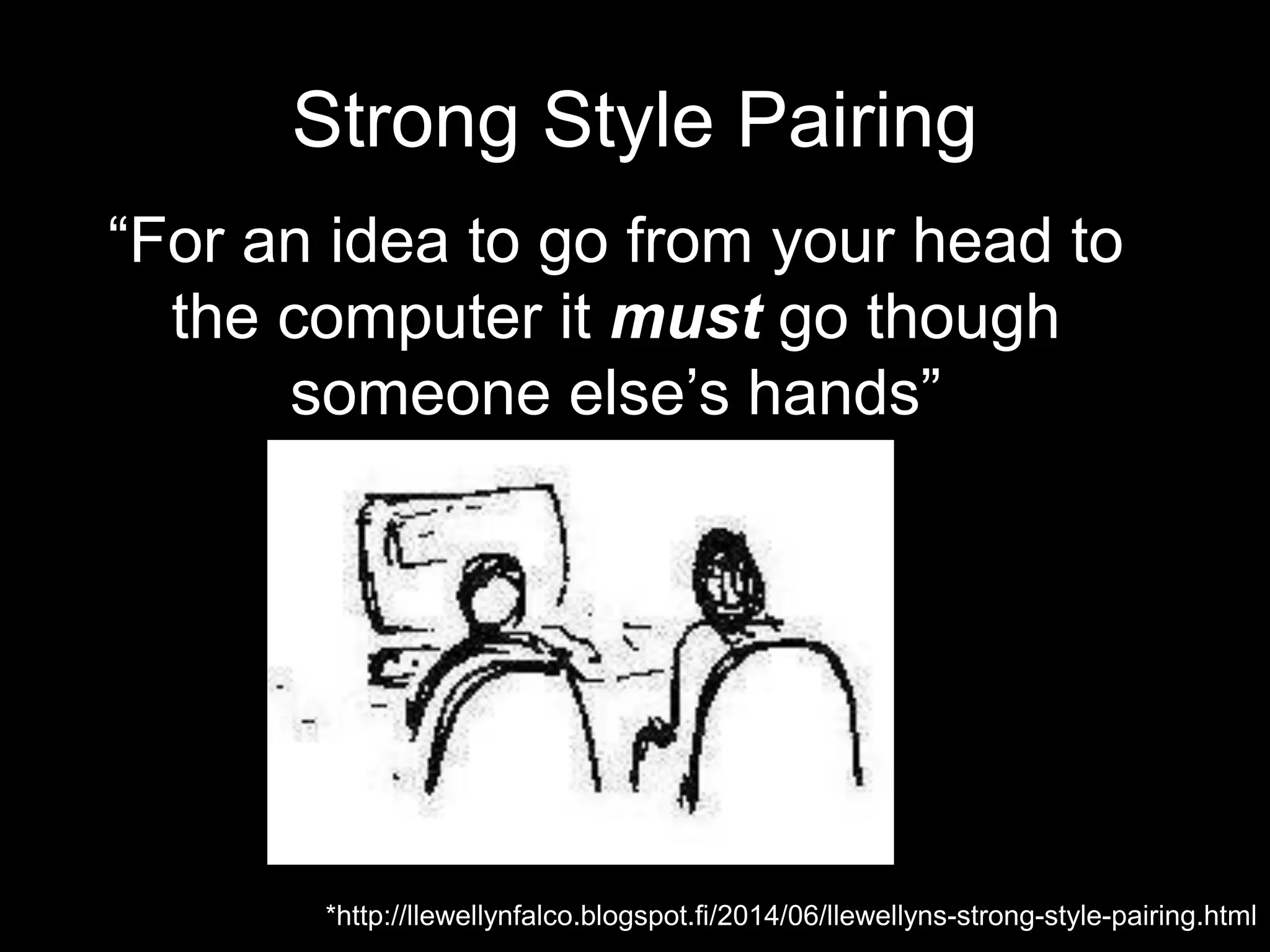
Strong Style Pairing “For an idea to go from your head to the computer it must go though someone else’s hands” *http://llewellynfalco.blogspot.fi/2014/06/llewellyns-strong-style-pairing.html
Mob Programming Rules for Exploratory Testing Activity • No thinking as the driver • Yes, and… • Kindness, consideration and respect
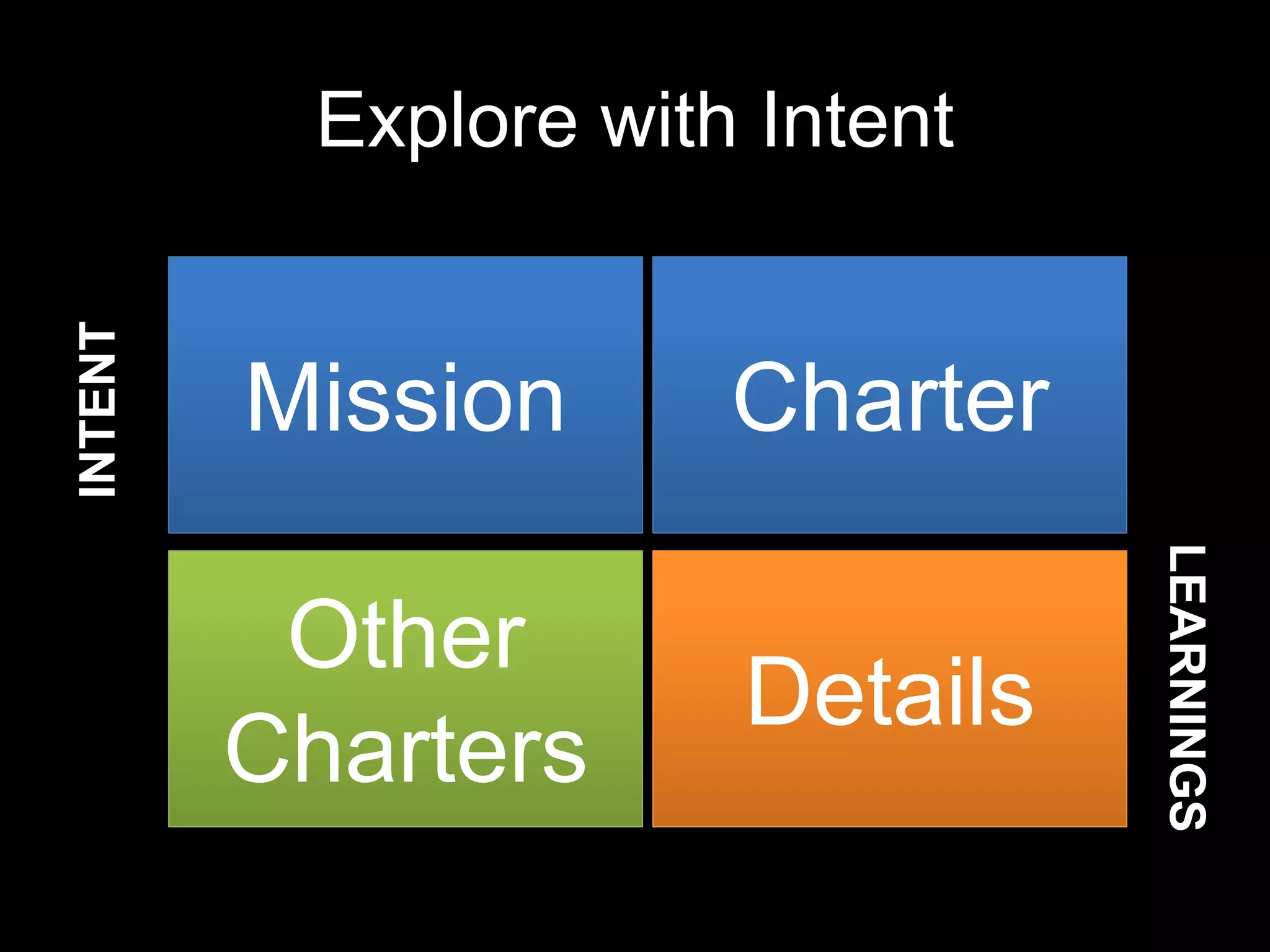
Explore with Intent Mission Charter Other Charters Details INTENT LEARNINGS
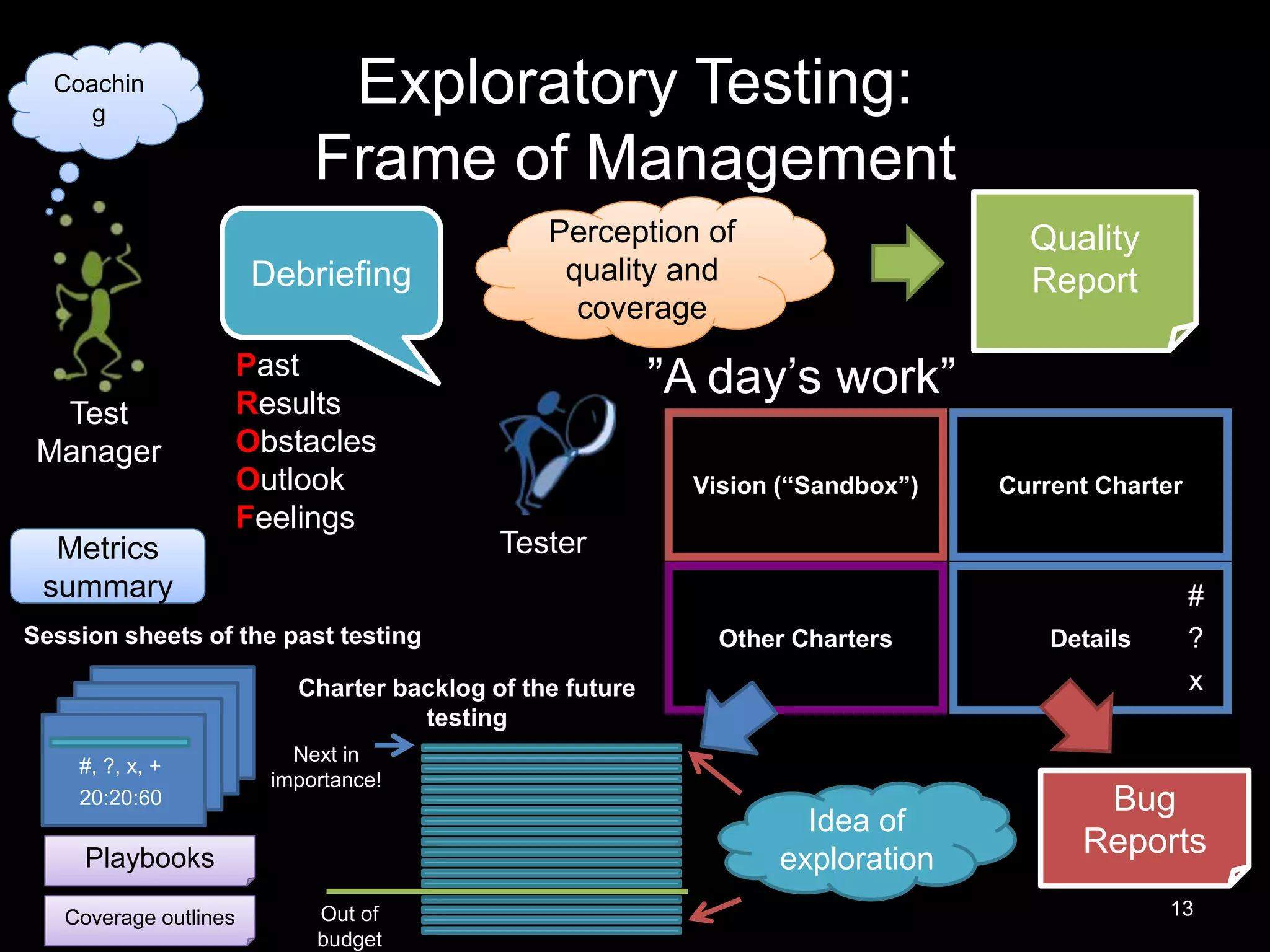
Exploratory Testing: Frame of Management ”A day’s work” Vision (“Sandbox”) Current Charter Other Charters Details Bug Reports Perception of quality and coverage Quality ReportDebriefing Tester Test Manager Past Results Obstacles Outlook Feelings ? # xCharter backlog of the future testing Out of budget Next in importance! #, ?, x, + 20:20:60 Session sheets of the past testing Idea of exploration Metrics summary Coachin g 13 Playbooks Coverage outlines
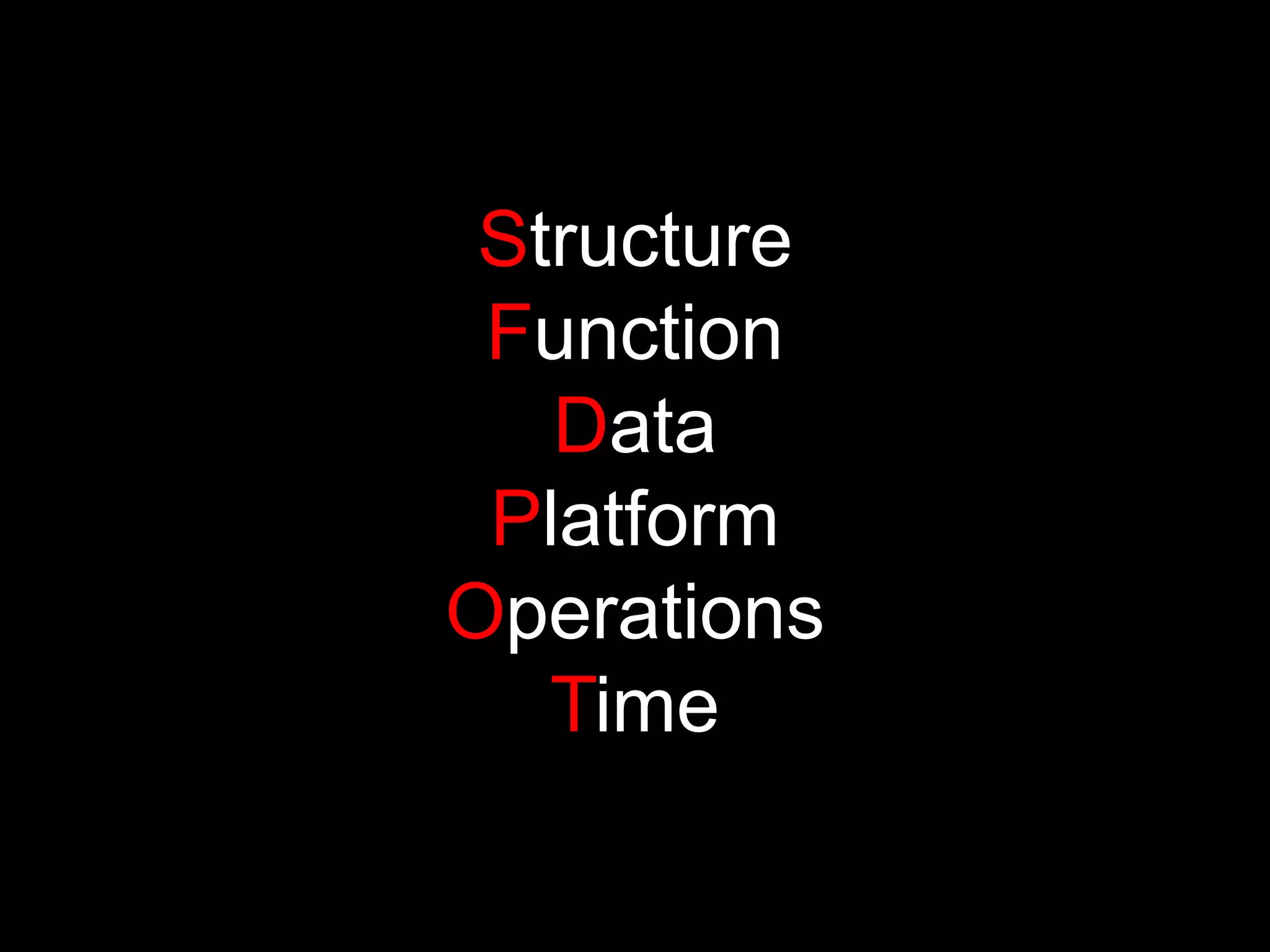
Structure Function Data Platform Operations Time
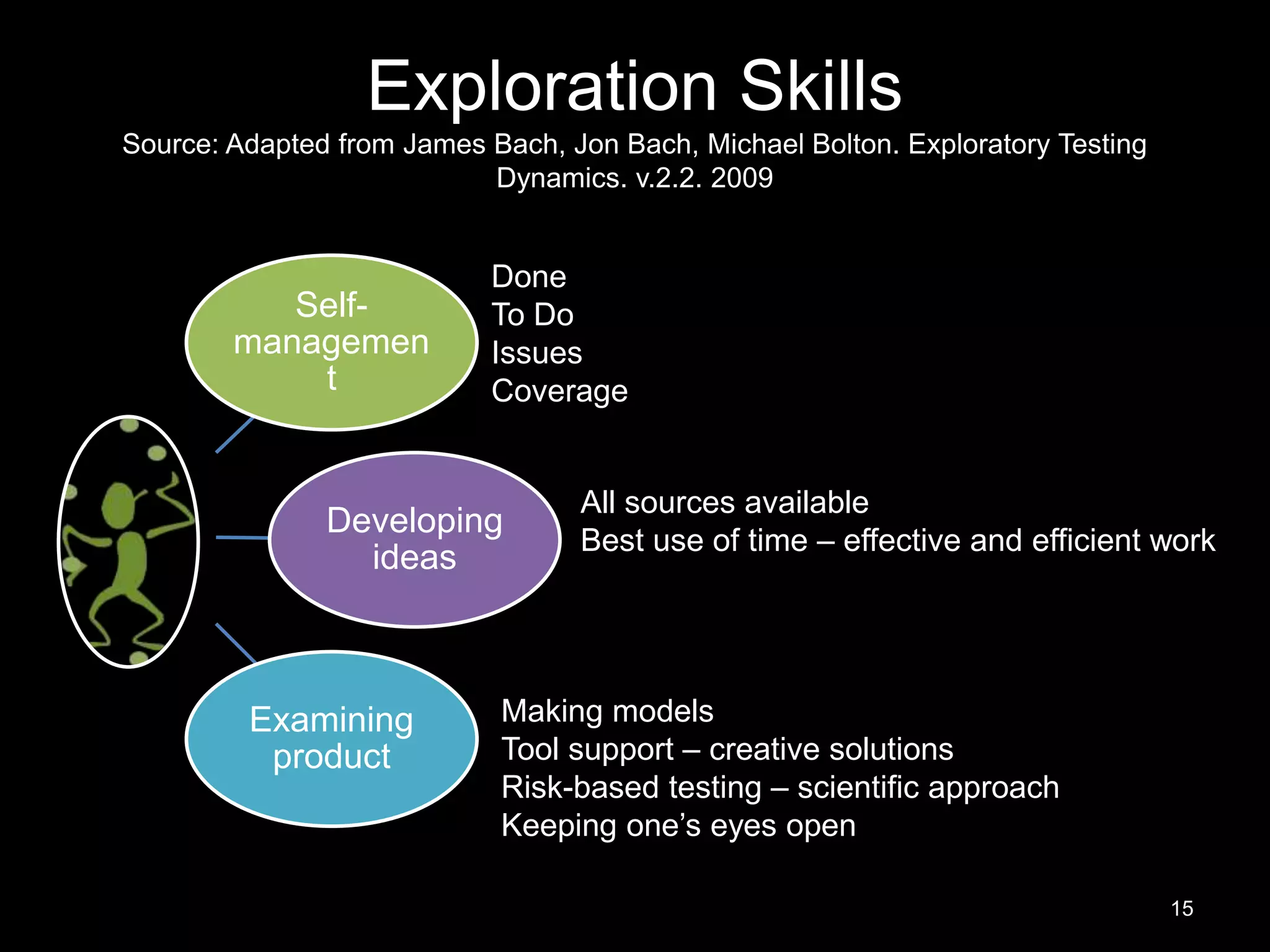
Exploration Skills Source: Adapted from James Bach, Jon Bach, Michael Bolton. Exploratory Testing Dynamics. v.2.2. 2009 Self- managemen t Developing ideas Examining product Done To Do Issues Coverage All sources available Best use of time – effective and efficient work Making models Tool support – creative solutions Risk-based testing – scientific approach Keeping one’s eyes open 15
Question, Thoughts? Feedback?

Exploratory Testing Work Course