Downloaded 47 times

![Simplest Rack application run lambda do |env| [200, { "Content-type" => "text/plain" }, ["Hello"]] end](https://image.slidesharecdn.com/marcin-kulik-euruko2010-111109053625-phpapp01/75/Building-web-framework-with-Rack-11-2048.jpg)
![Simplest Rack middleware class EurukoMiddleware def initialize(app) @app = app end def call(env) env['euruko'] = 2010 @app.call end end](https://image.slidesharecdn.com/marcin-kulik-euruko2010-111109053625-phpapp01/75/Building-web-framework-with-Rack-12-2048.jpg)
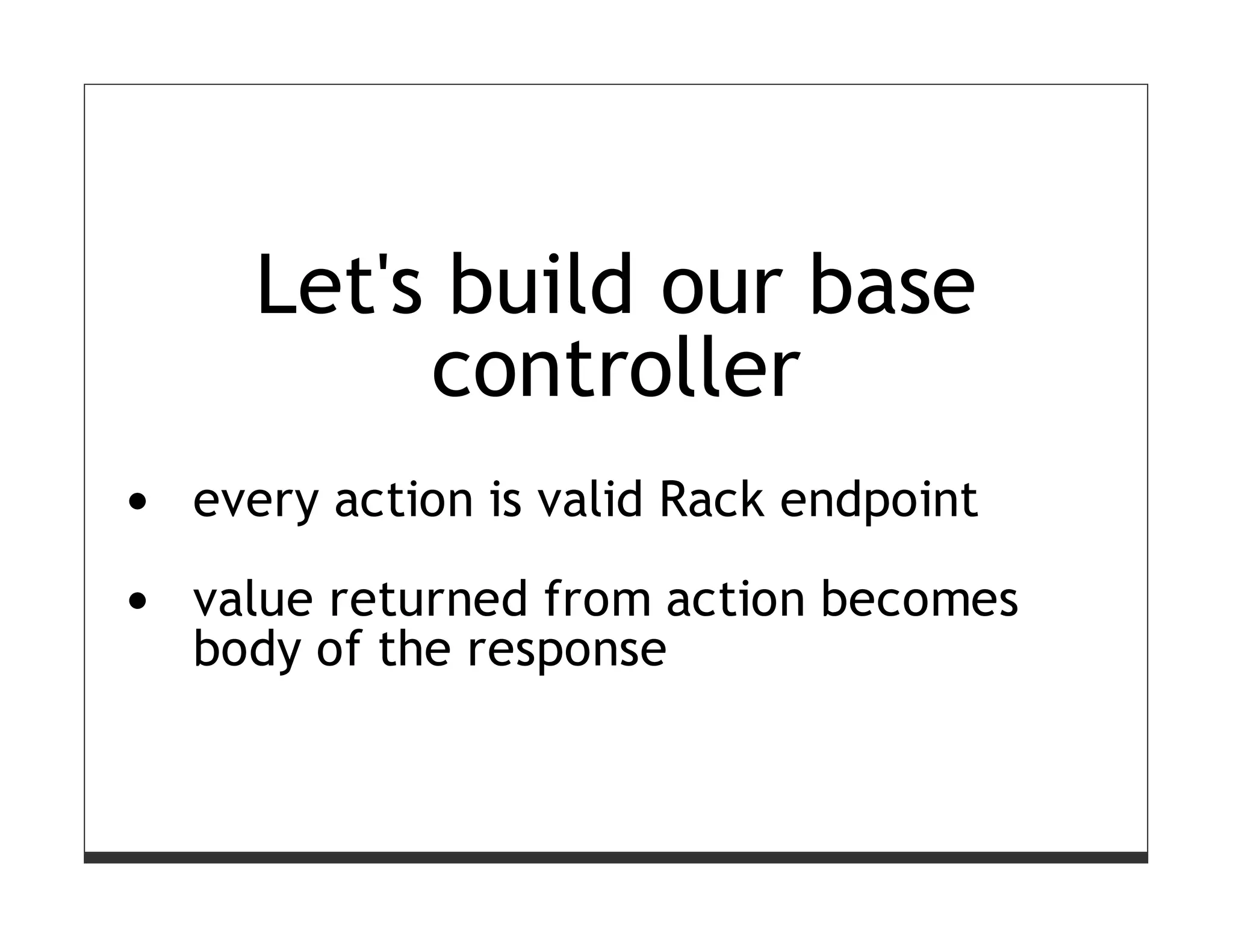
![# lib/base_controller.rb module Foobar class BaseController def call(env) @request = Rack::Request.new(env) @response = Rack::Response.new resp_text = self.send(env['x-rack.action-name']) @response.write(resp_text) @response.finish end def self.action(name) lambda do |env| env['x-rack.action-name'] = name self.new.call(env) end end end end](https://image.slidesharecdn.com/marcin-kulik-euruko2010-111109053625-phpapp01/75/Building-web-framework-with-Rack-29-2048.jpg)
![# config.ru require APP_ROOT / "lib" / "base_controller.rb" Dir[APP_ROOT / "app" / "controllers" / "*.rb"].each do |f| require f end](https://image.slidesharecdn.com/marcin-kulik-euruko2010-111109053625-phpapp01/75/Building-web-framework-with-Rack-30-2048.jpg)
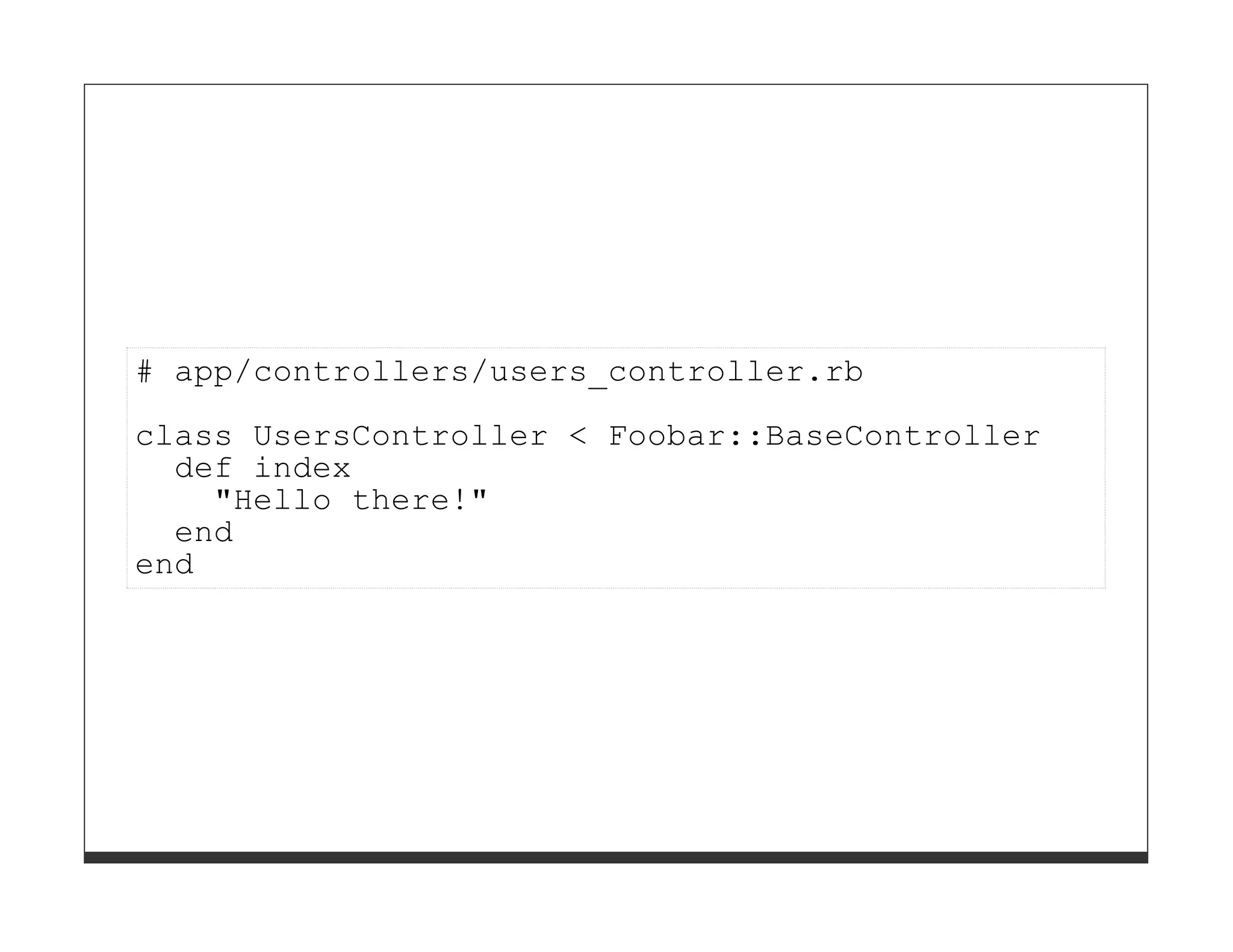

![# lib/base_controller.rb module Foobar class BaseController def status=(code); @response.status = code; end def headers; @response.header; end def session; @request.env['rack.session']; end def flash; @request.env['x-rack.flash']; end def url(name, opts={}); Router.generate(name, opts); end def redirect_to(url) self.status = 302 headers["Location"] = url "You're being redirected" end end end](https://image.slidesharecdn.com/marcin-kulik-euruko2010-111109053625-phpapp01/75/Building-web-framework-with-Rack-36-2048.jpg)
![# app/controllers/users_controller.rb class UsersController < Foobar::BaseController def openid if session["openid.url"] flash[:notice] = "Cool!" redirect_to "/cool" else render end end end](https://image.slidesharecdn.com/marcin-kulik-euruko2010-111109053625-phpapp01/75/Building-web-framework-with-Rack-38-2048.jpg)

![# lib/base_controller.rb module Foobar class BaseController def render(template=nil) template ||= @request.env['x-rack.action-name'] views_path = "#{APP_ROOT}/app/views" template_path = "#{views_path}/#{self.class.to_s.underscore}/" + "#{template}.html.erb" layout_path = "#{views_path}/layouts/application.html.erb" Tilt.new(layout_path).render(self) do Tilt.new(template_path).render(self) end end end end](https://image.slidesharecdn.com/marcin-kulik-euruko2010-111109053625-phpapp01/75/Building-web-framework-with-Rack-42-2048.jpg)
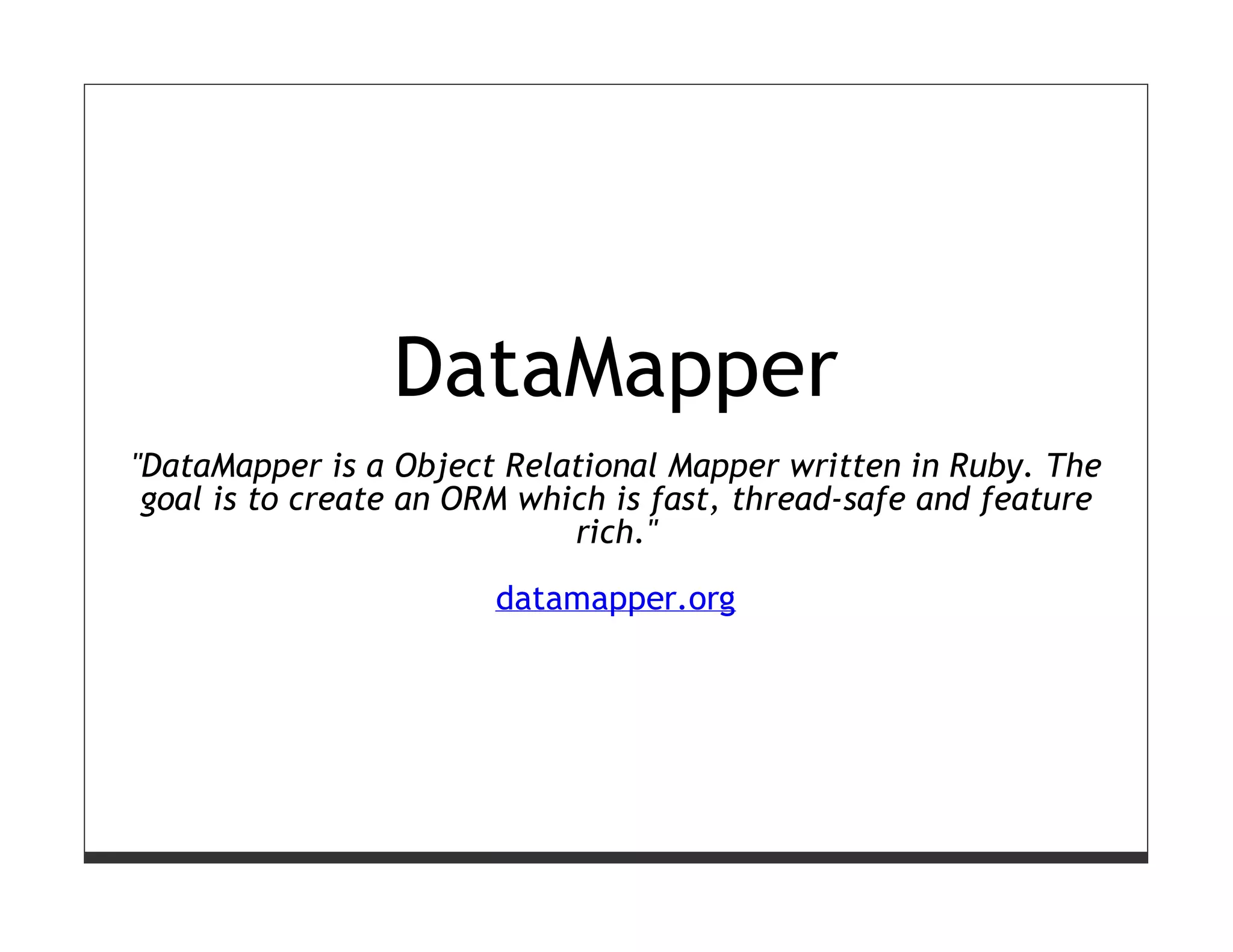
![# Gemfile gem "dm-core" gem "dm-..." # app/models/user.rb class User include DataMapper::Resource property :id, Serial property :login, String, :required => true property :password, String, :required => true end # config.ru Dir[APP_ROOT / "app" / "models" / "*.rb"].each do |f| require f end](https://image.slidesharecdn.com/marcin-kulik-euruko2010-111109053625-phpapp01/75/Building-web-framework-with-Rack-45-2048.jpg)
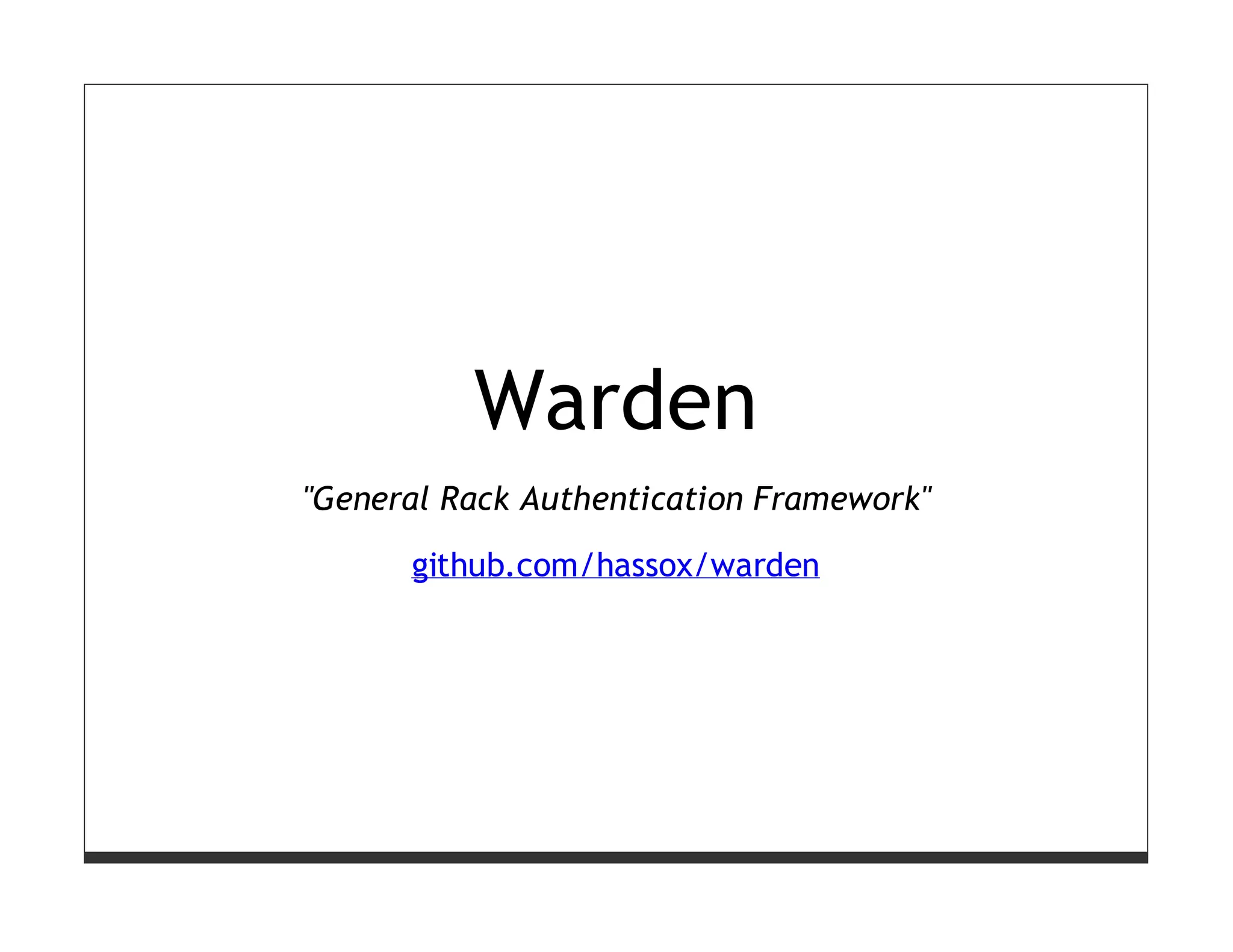
![# lib/warden.rb Warden::Manager.serialize_into_session do |user| user.id end Warden::Manager.serialize_from_session do |key| User.get(key) end Warden::Strategies.add(:password) do def authenticate! u = User.authenticate( params["username"], params["password"] ) u.nil? ? fail!("Could not log in") : success!(u) end end](https://image.slidesharecdn.com/marcin-kulik-euruko2010-111109053625-phpapp01/75/Building-web-framework-with-Rack-49-2048.jpg)
![# lib/base_controller.rb module Foobar class BaseController def authenticate! @request.env['warden'].authenticate! end def logout!(scope=nil) @request.env['warden'].logout(scope) end def current_user @request.env['warden'].user end end end](https://image.slidesharecdn.com/marcin-kulik-euruko2010-111109053625-phpapp01/75/Building-web-framework-with-Rack-50-2048.jpg)
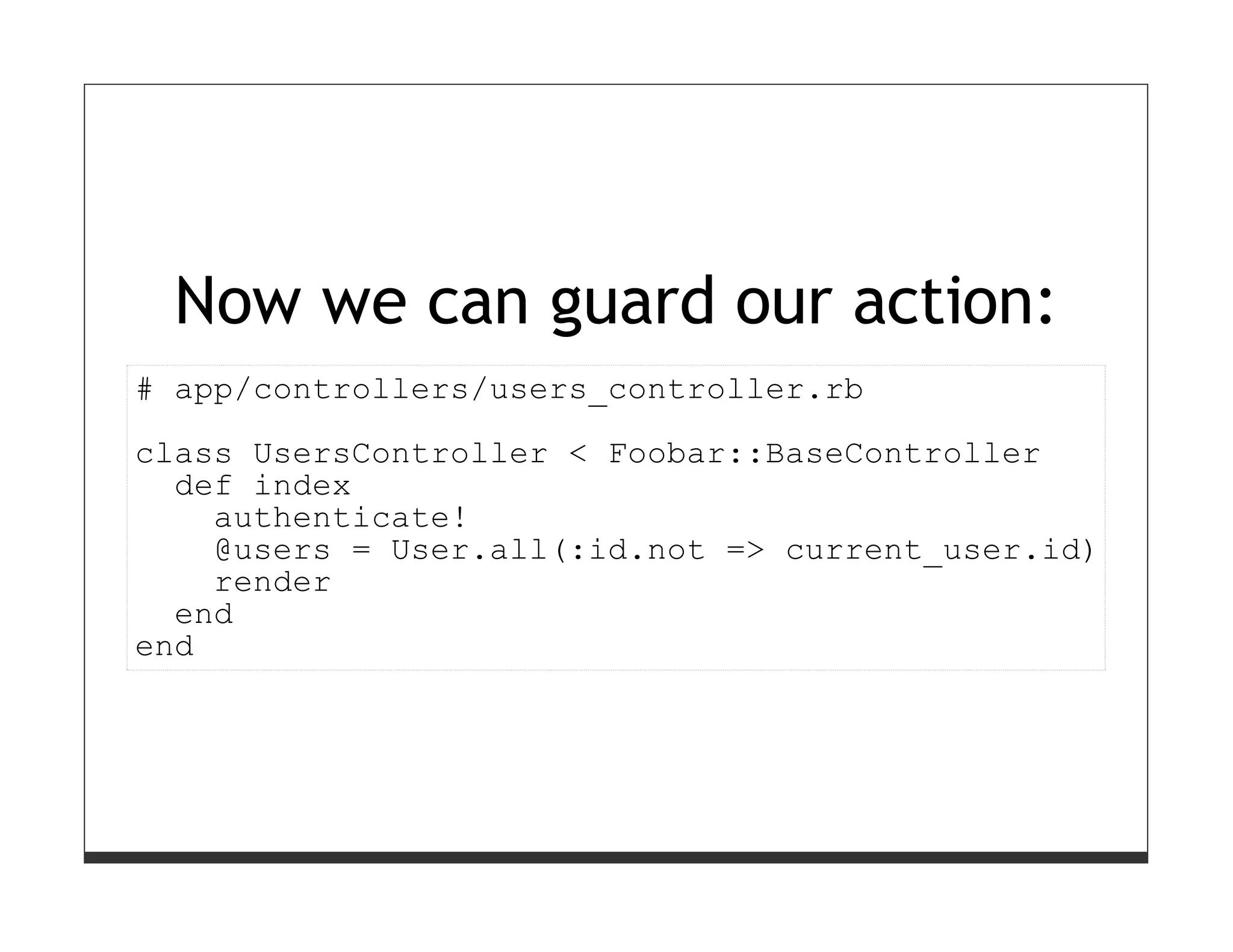
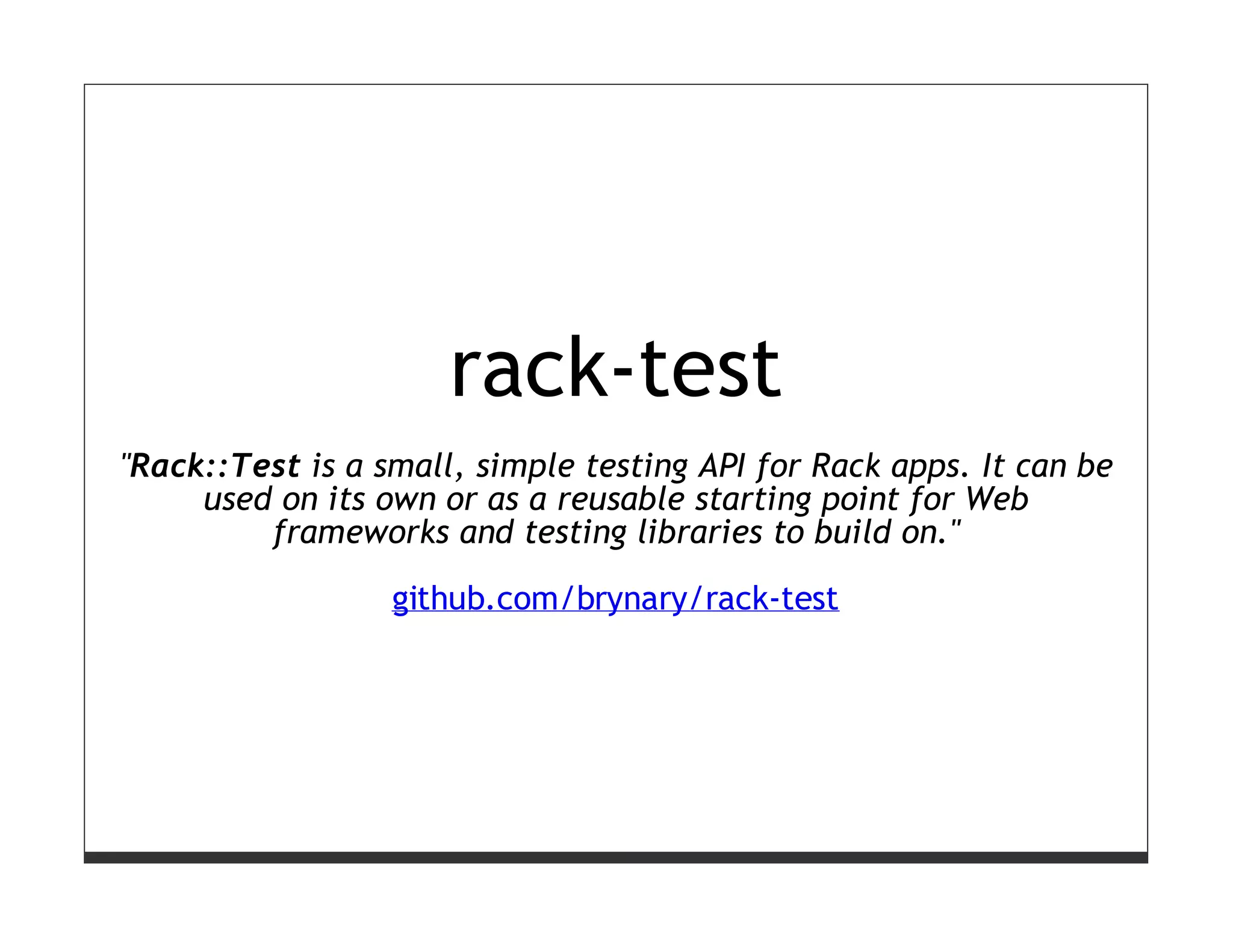
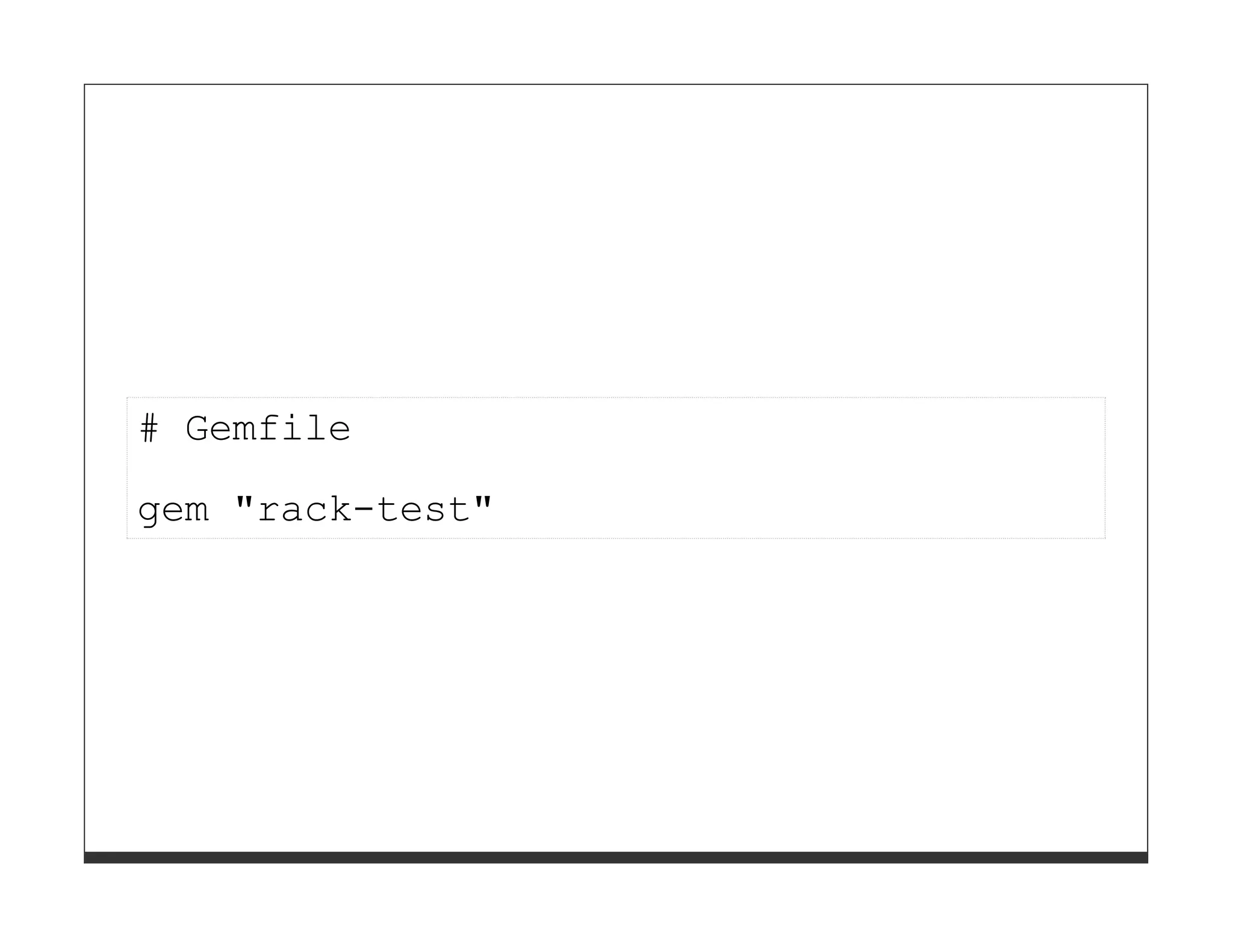
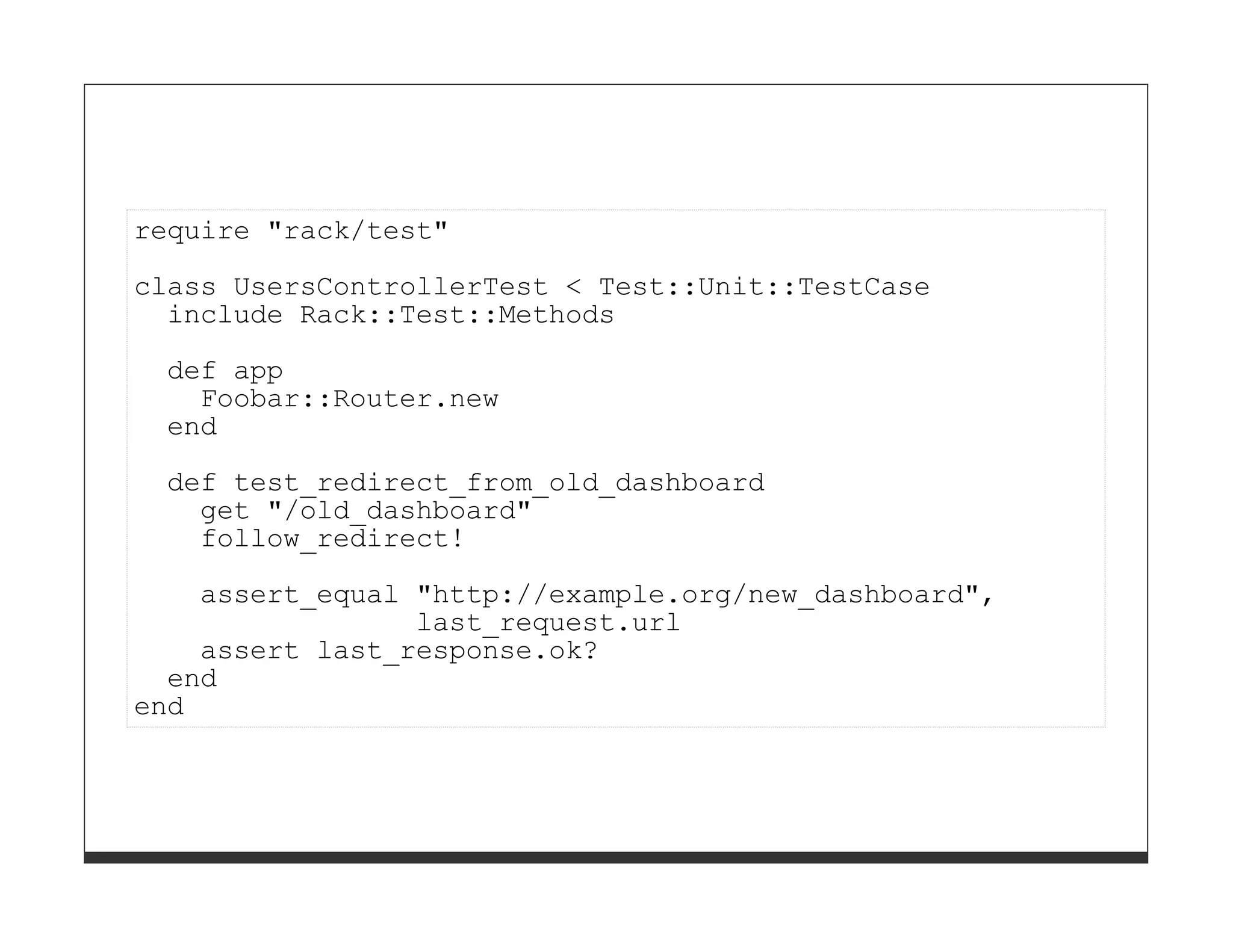
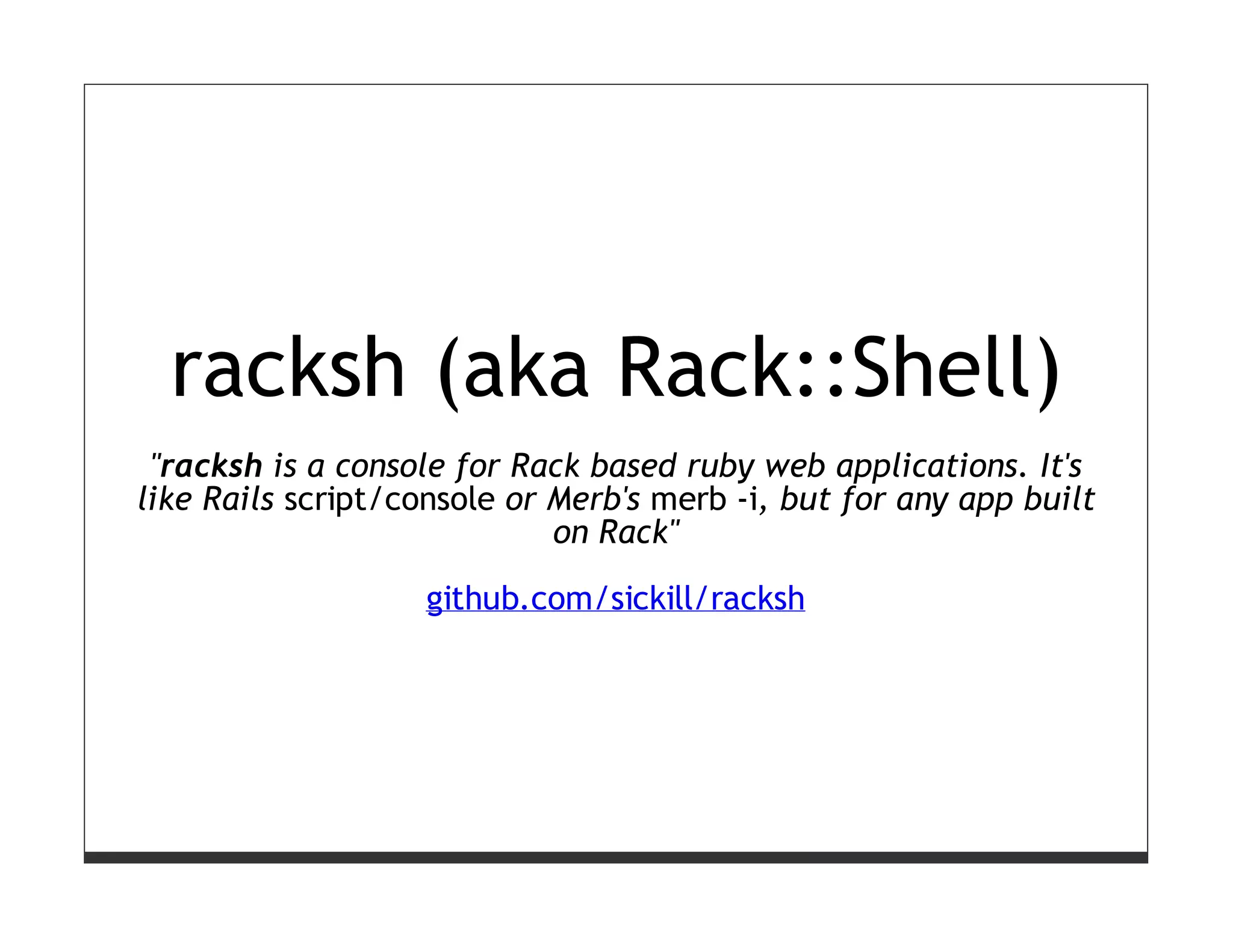
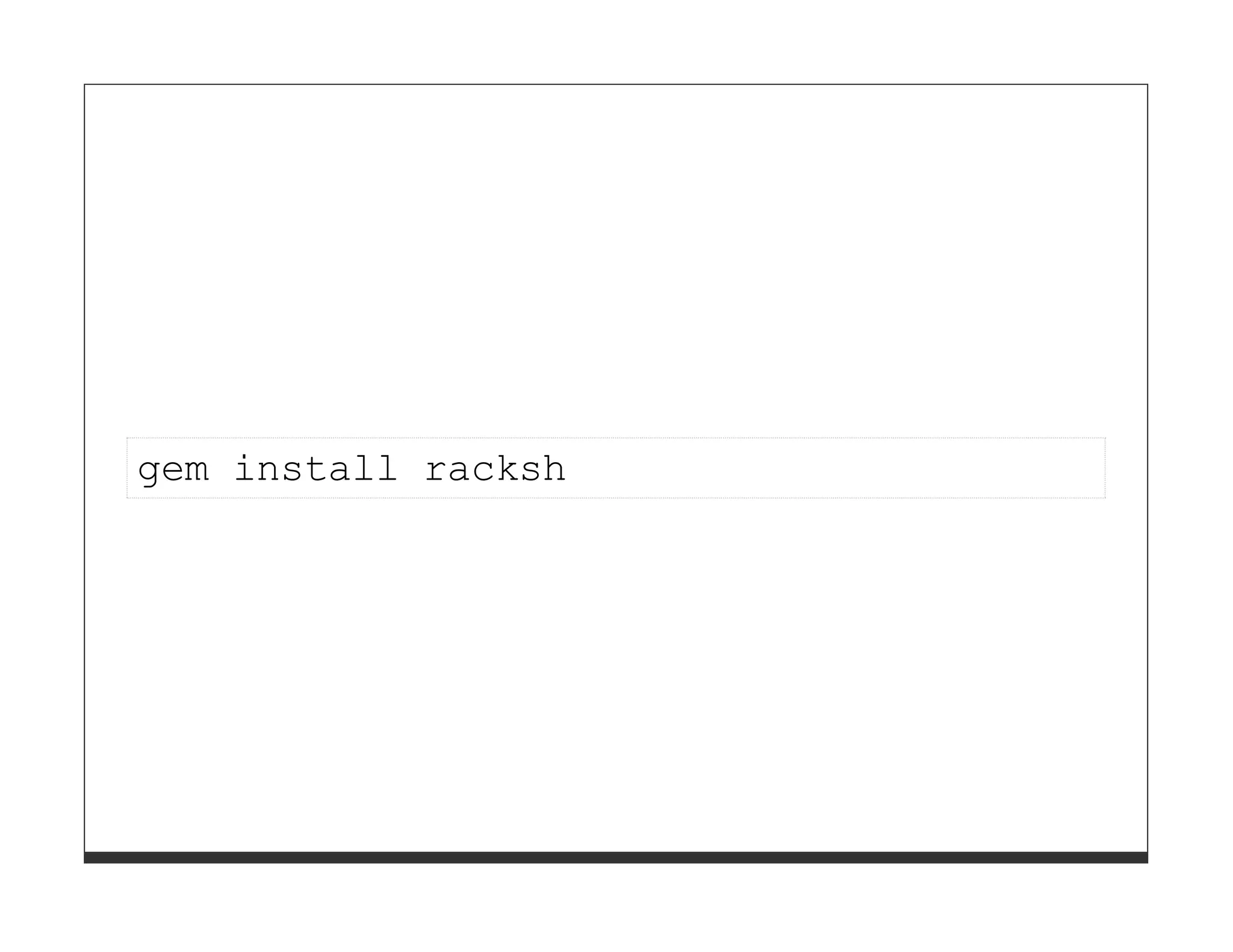
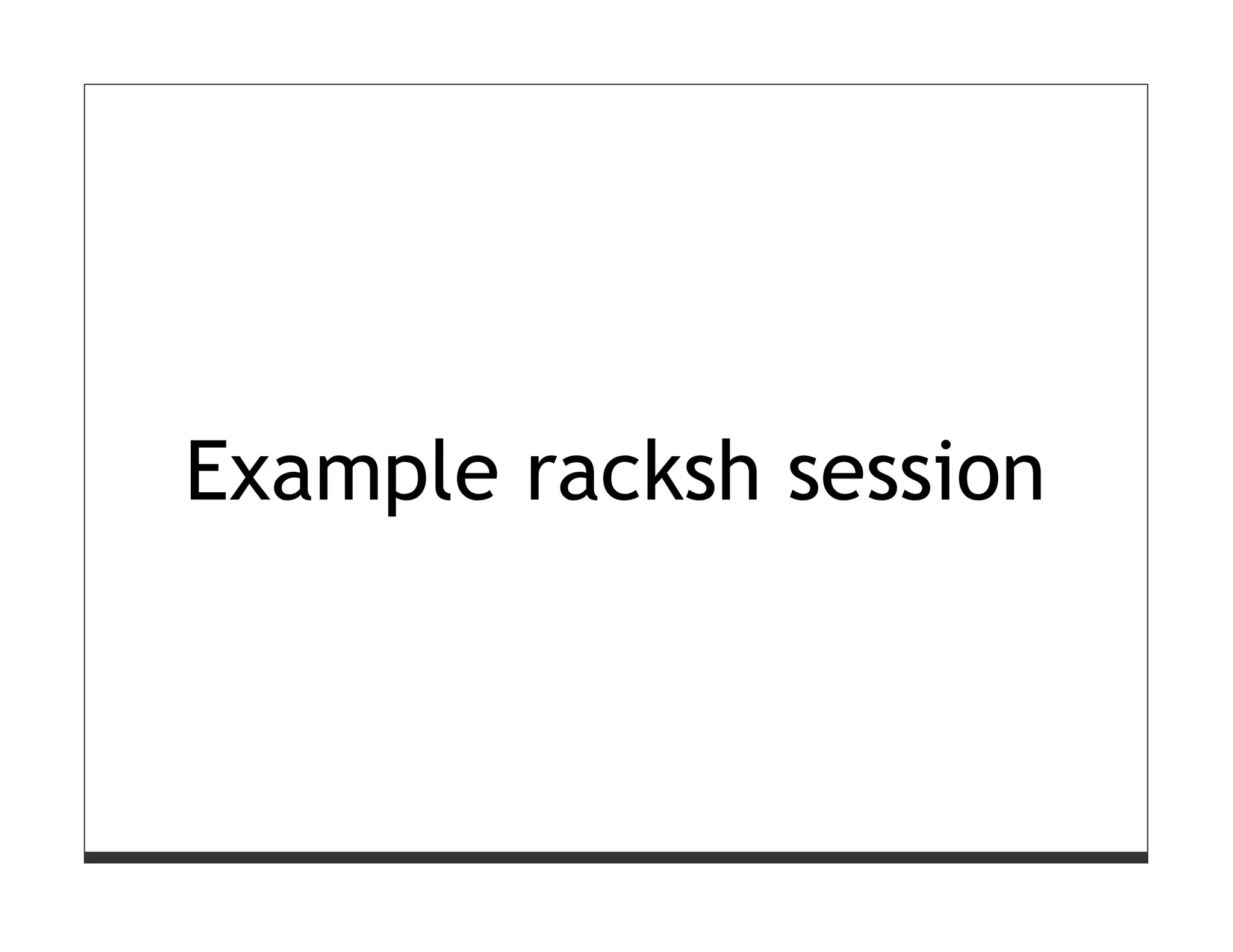
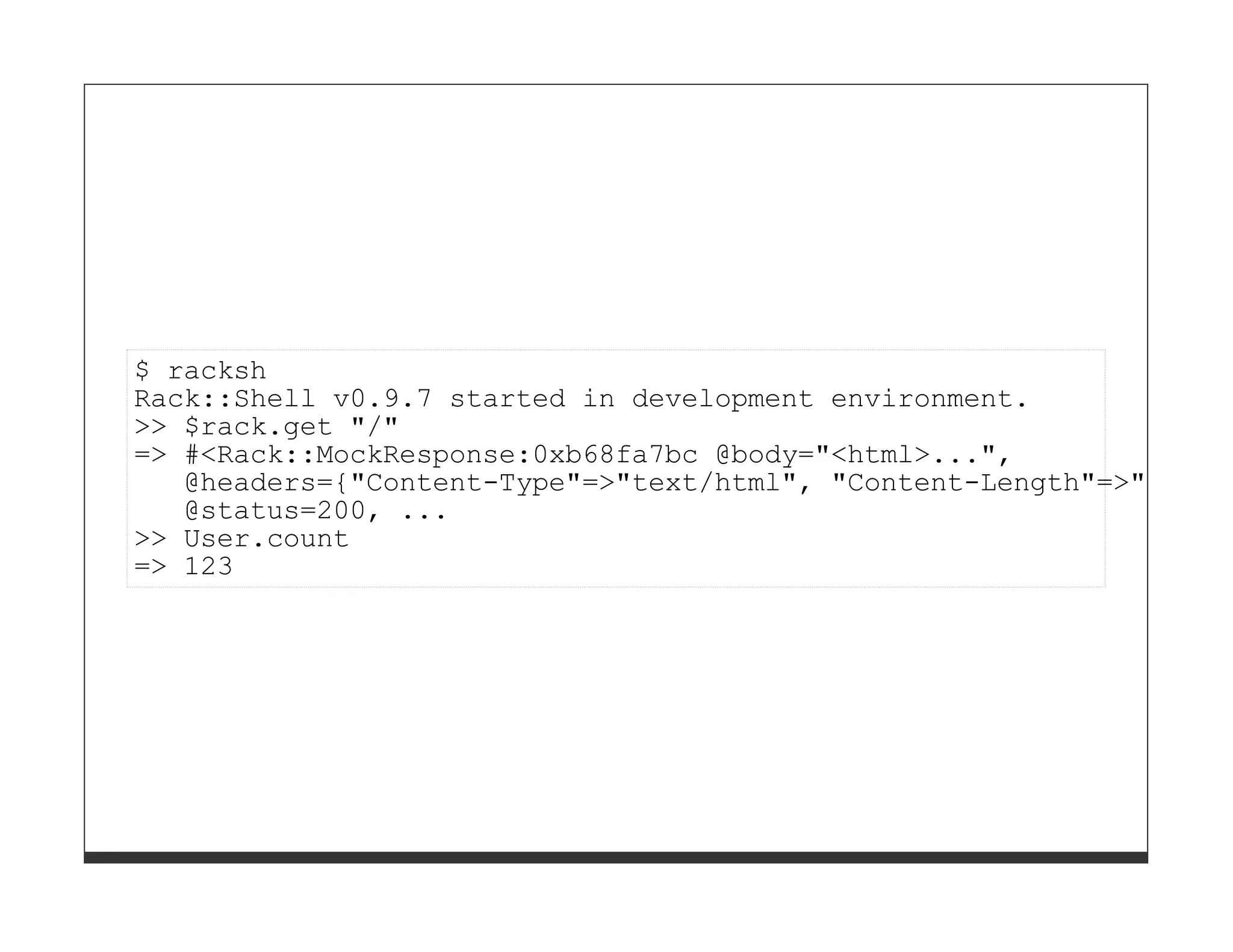

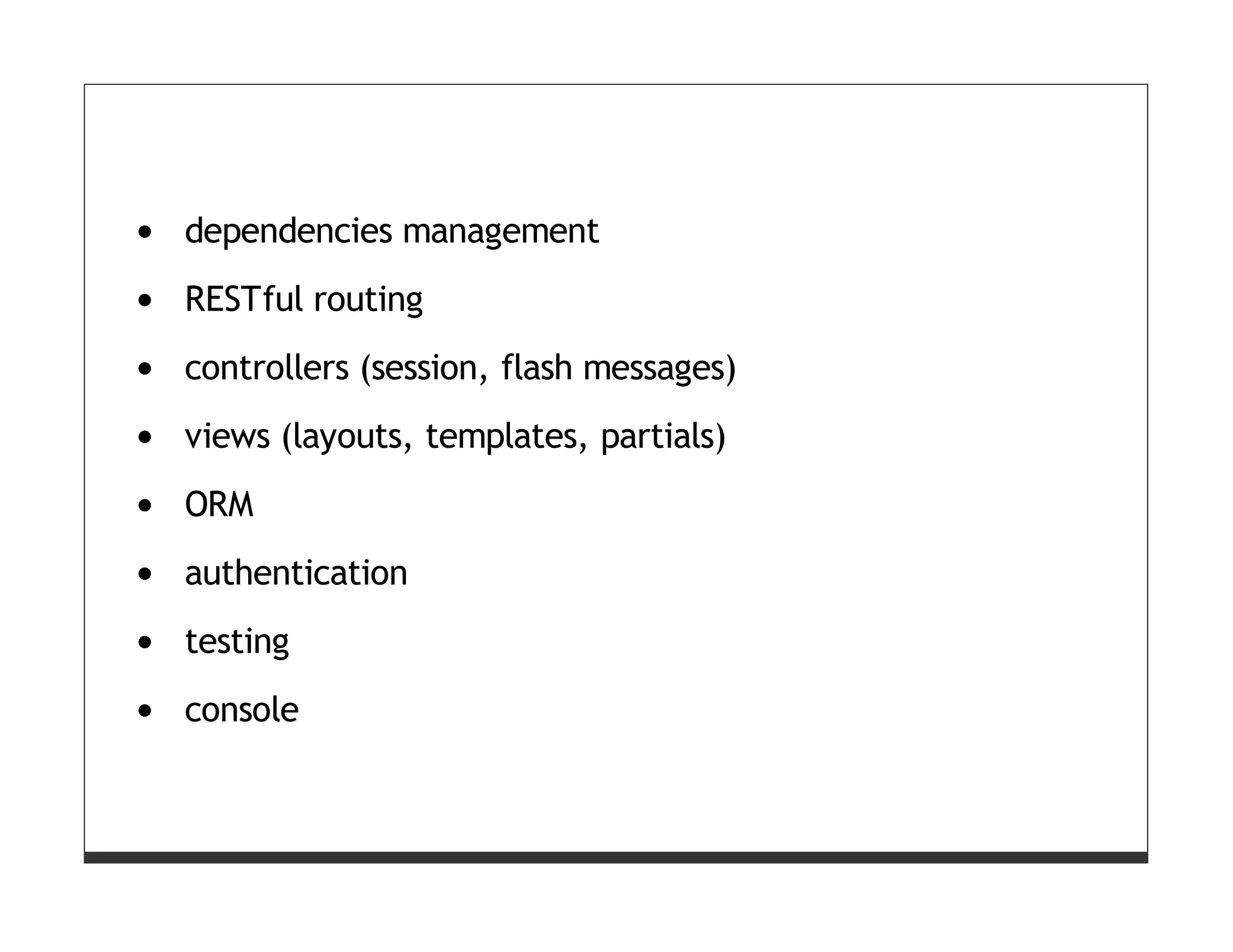
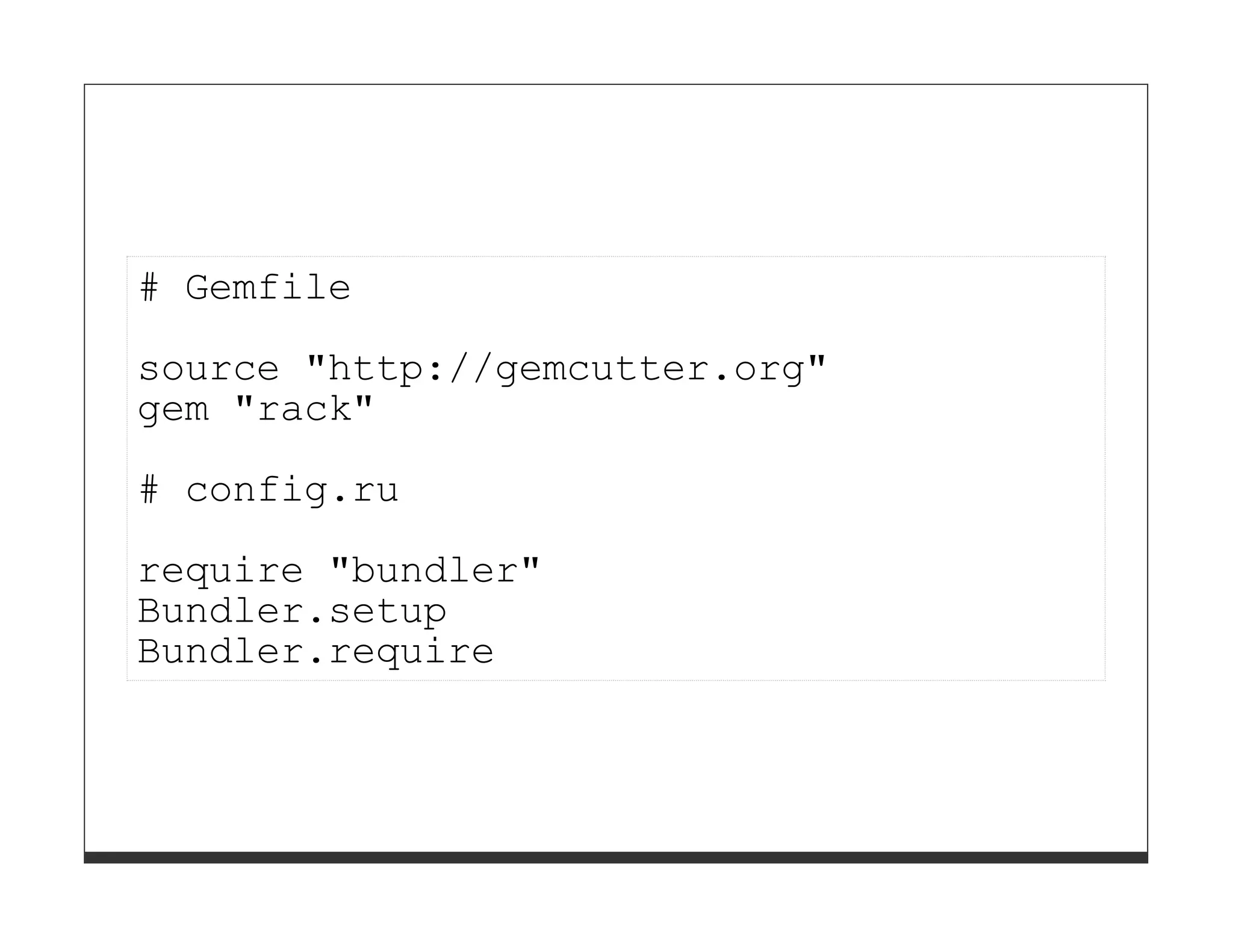
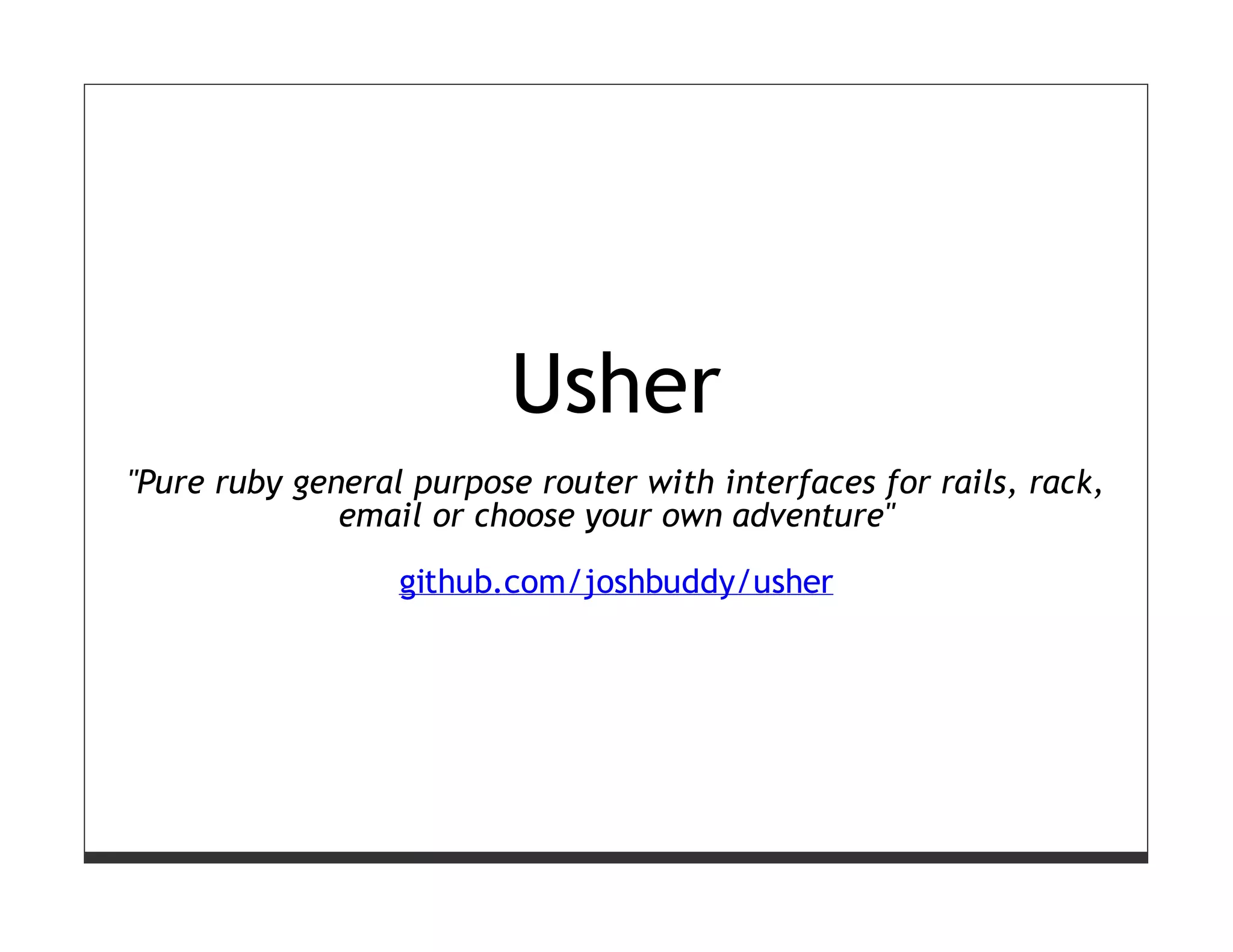
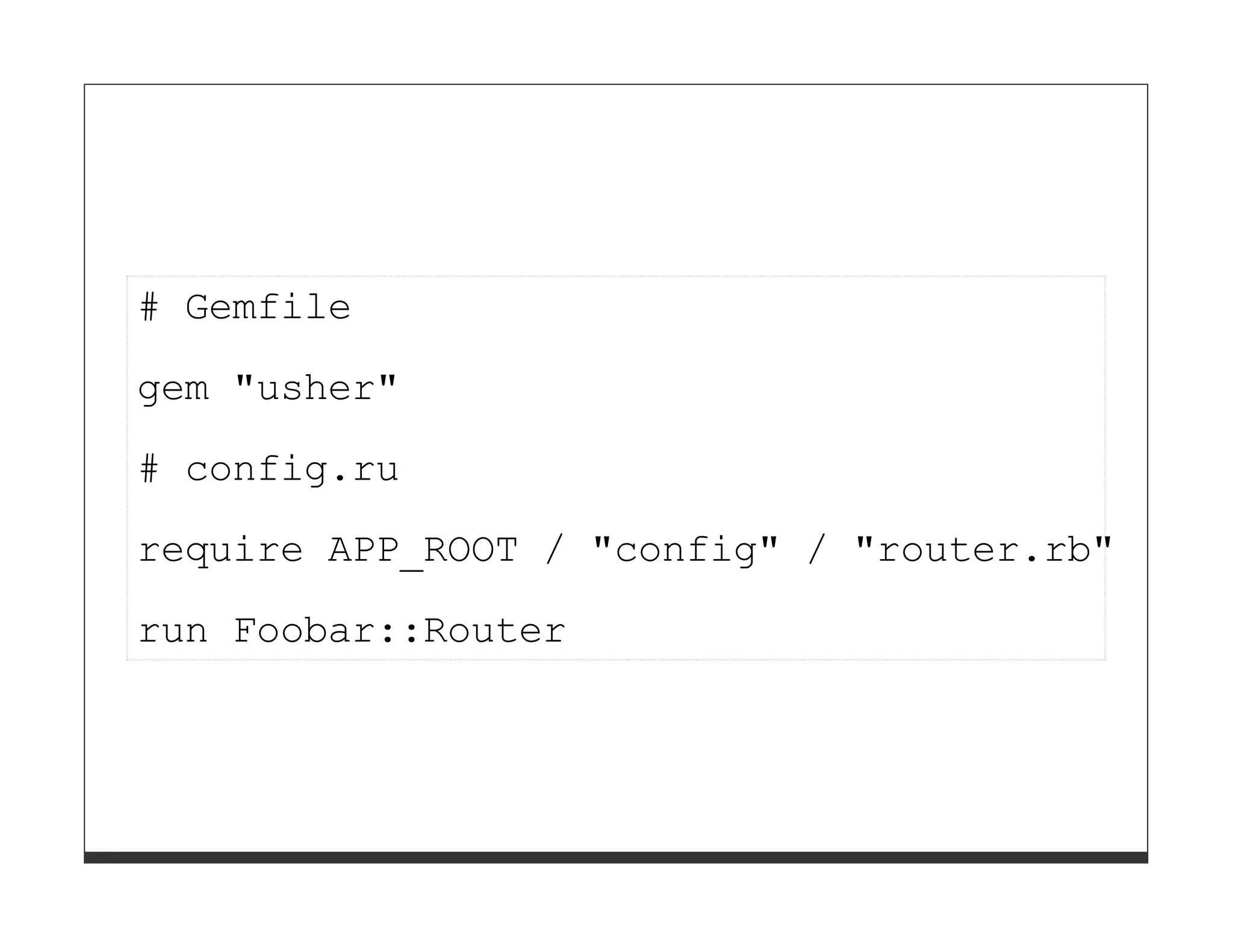
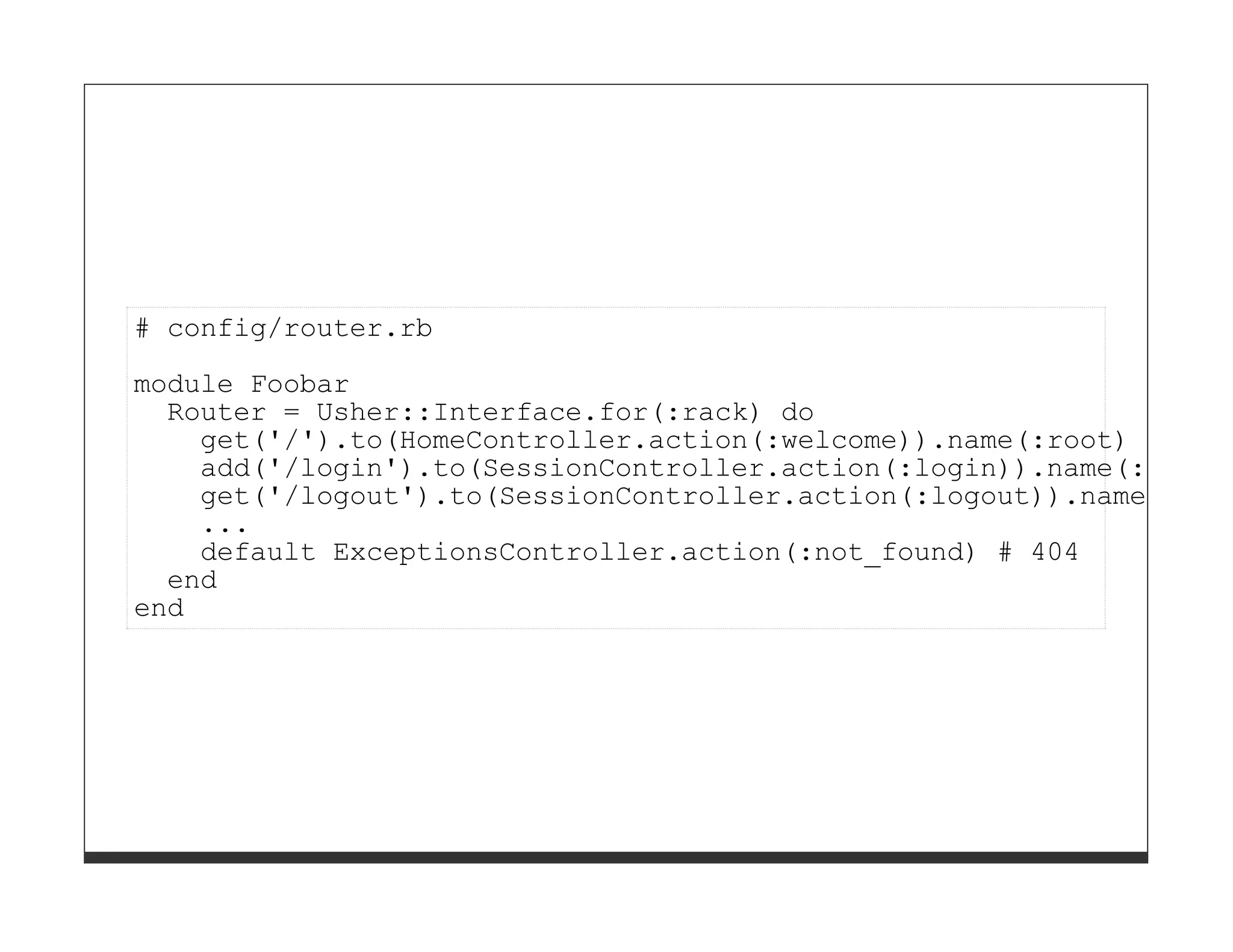
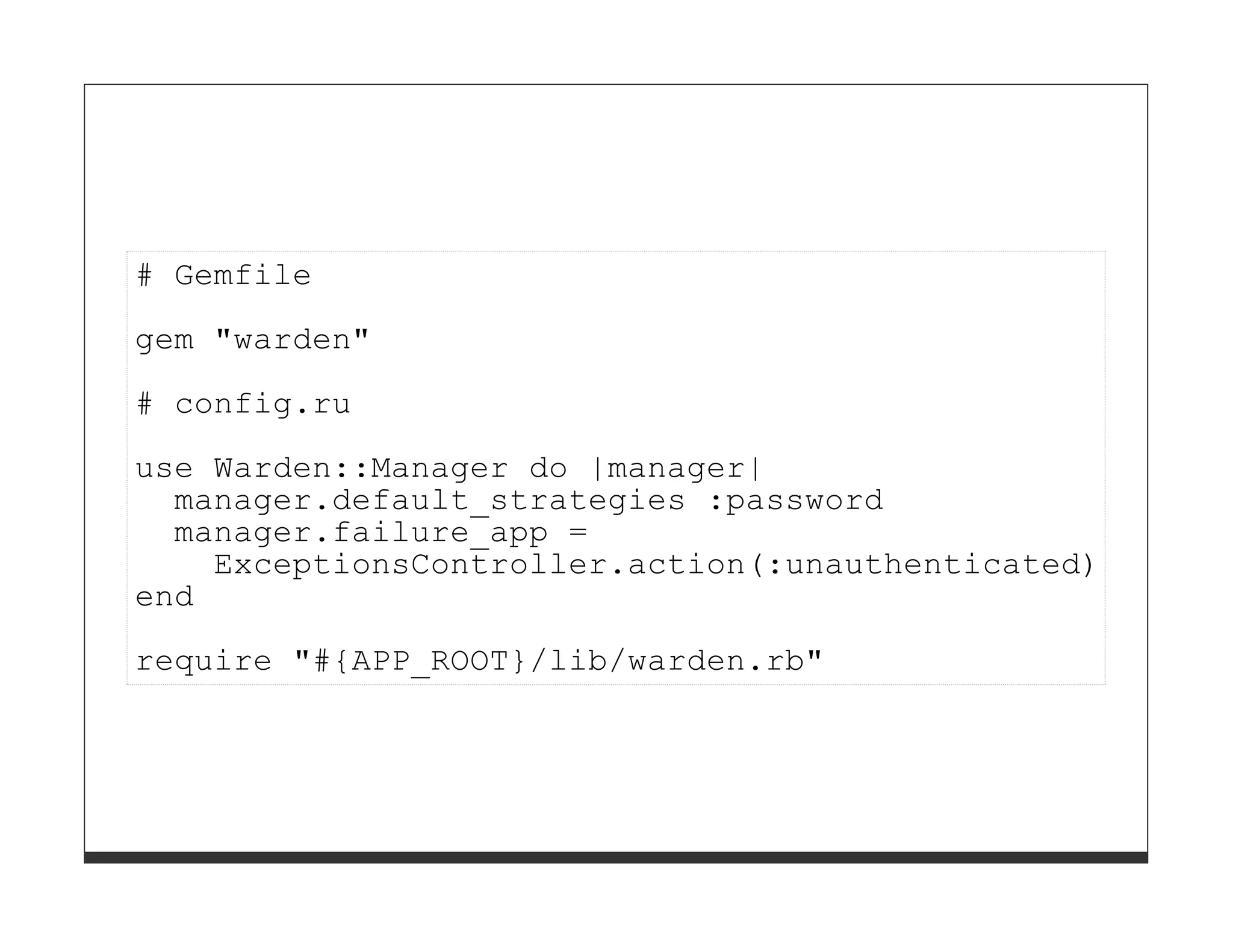
Rack provides a simple interface for building web applications in Ruby. This document outlines how to build a basic web framework on top of Rack by leveraging existing Rack middleware and tools. It demonstrates how to add features like routing, controllers, views, ORM, authentication, testing, and a console using middleware like Usher, Tilt, DataMapper, Warden, rack-test, and racksh. The goal is to create a simple but full-featured framework with minimal code by combining existing Rack components.