O B J E C T O R I E N T E D P R O G R A M M I N G SOLID PRINCIPLES
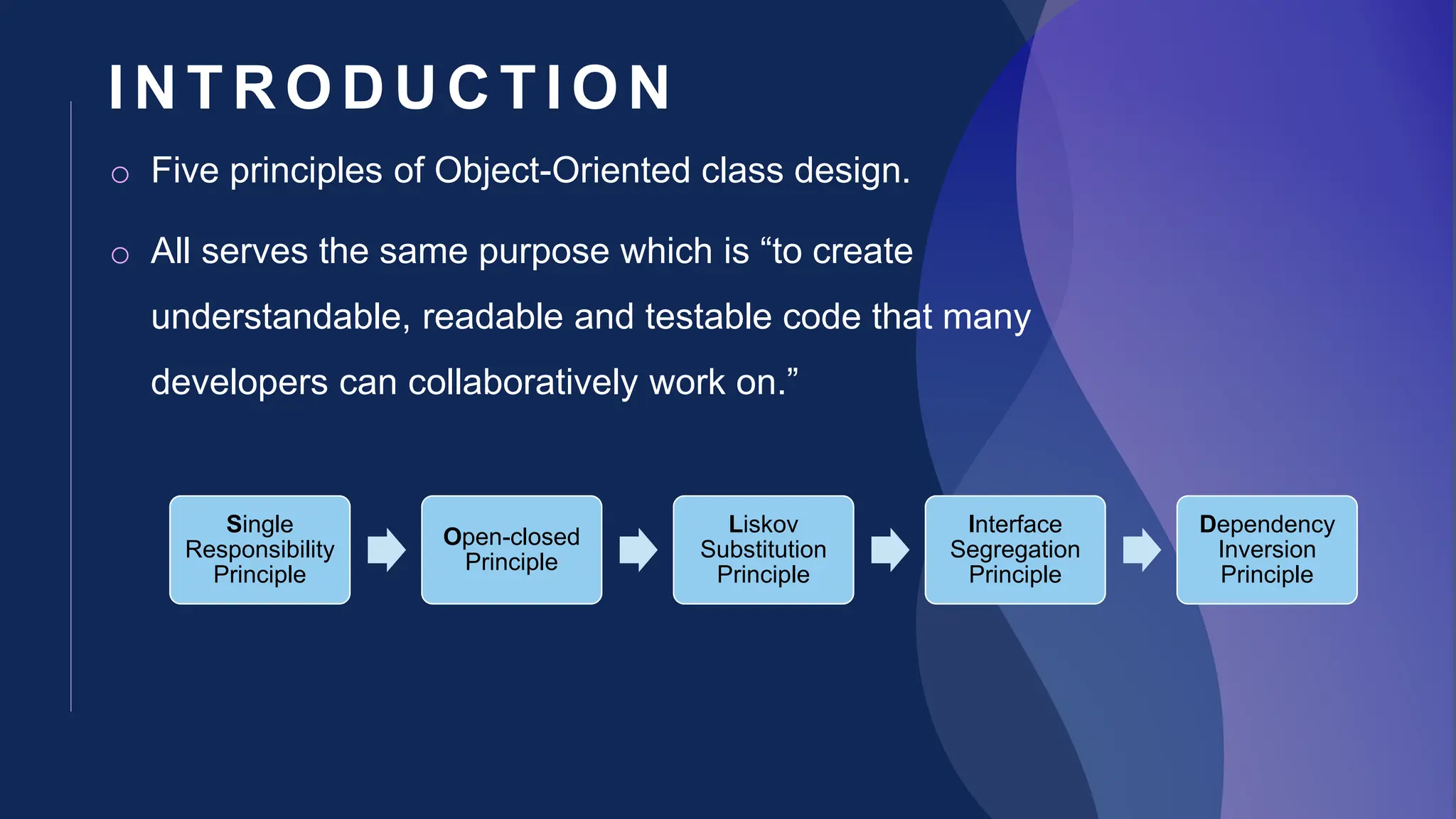
INTRODUCTION o Five principles of Object-Oriented class design. o All serves the same purpose which is “to create understandable, readable and testable code that many developers can collaboratively work on.” Single Responsibility Principle Open-closed Principle Liskov Substitution Principle Interface Segregation Principle Dependency Inversion Principle
SINGLE RESPONSIBILITY PRINCIPLE “A class must perform a single responsibility and thus should only have a single reason to change.”
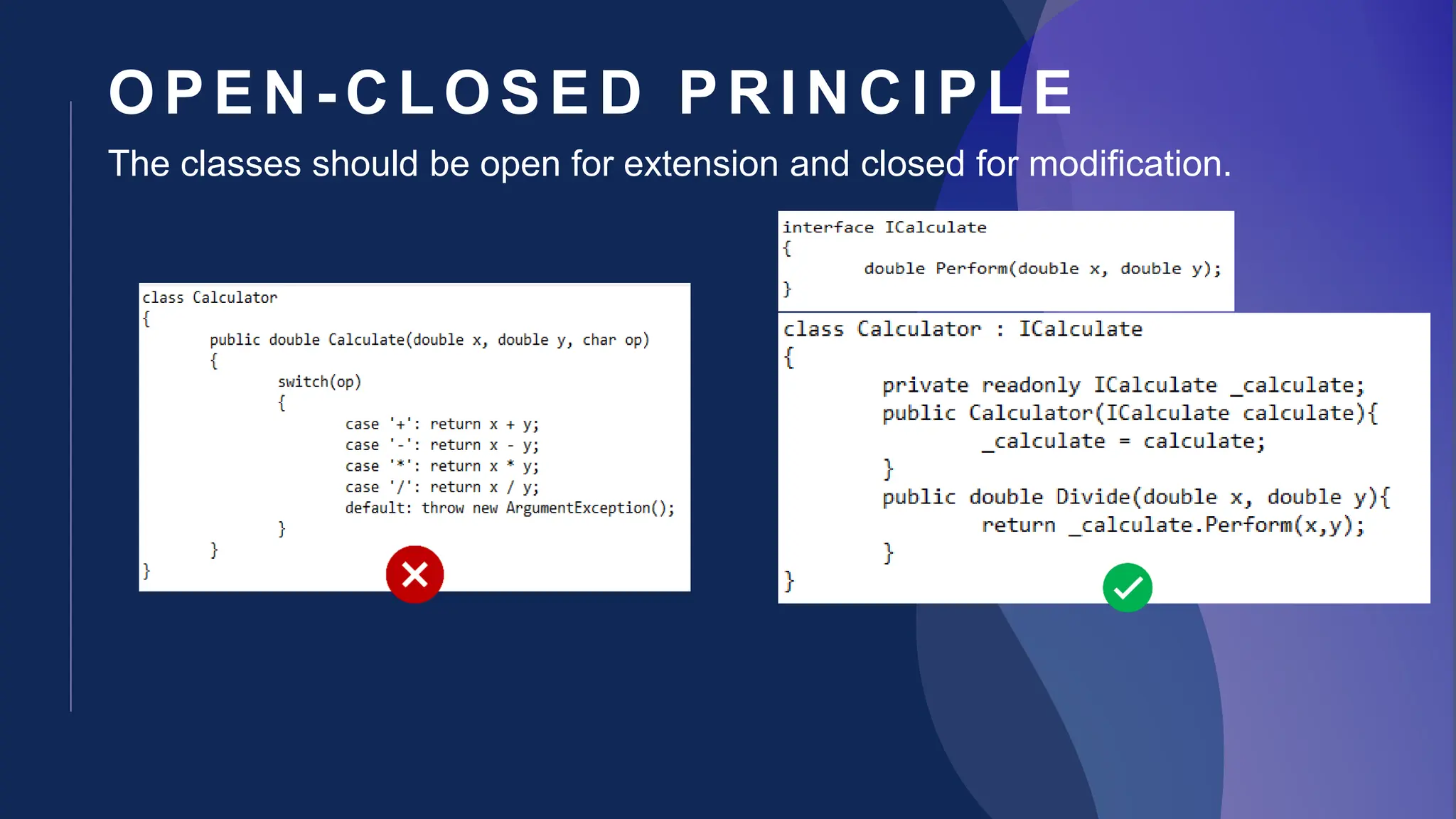
OPEN- CLOSED PRINCIPLE The classes should be open for extension and closed for modification.
LISKOV SUBSTITUTION PRINCIPLE Subclasses should be substitutable for their base classes. Base class
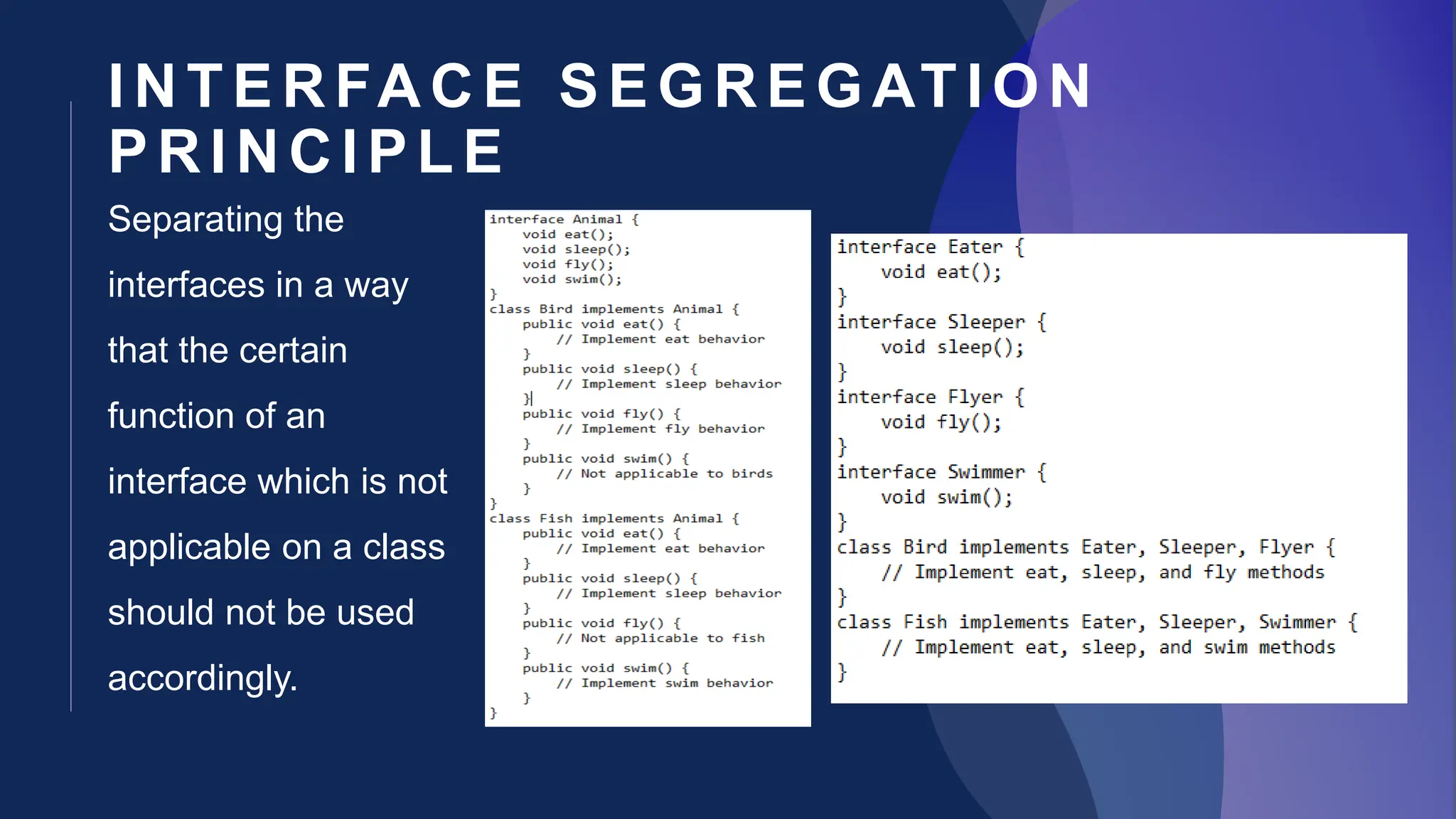
INTERFACE SEGREGATION PRINCIPLE Separating the interfaces in a way that the certain function of an interface which is not applicable on a class should not be used accordingly.
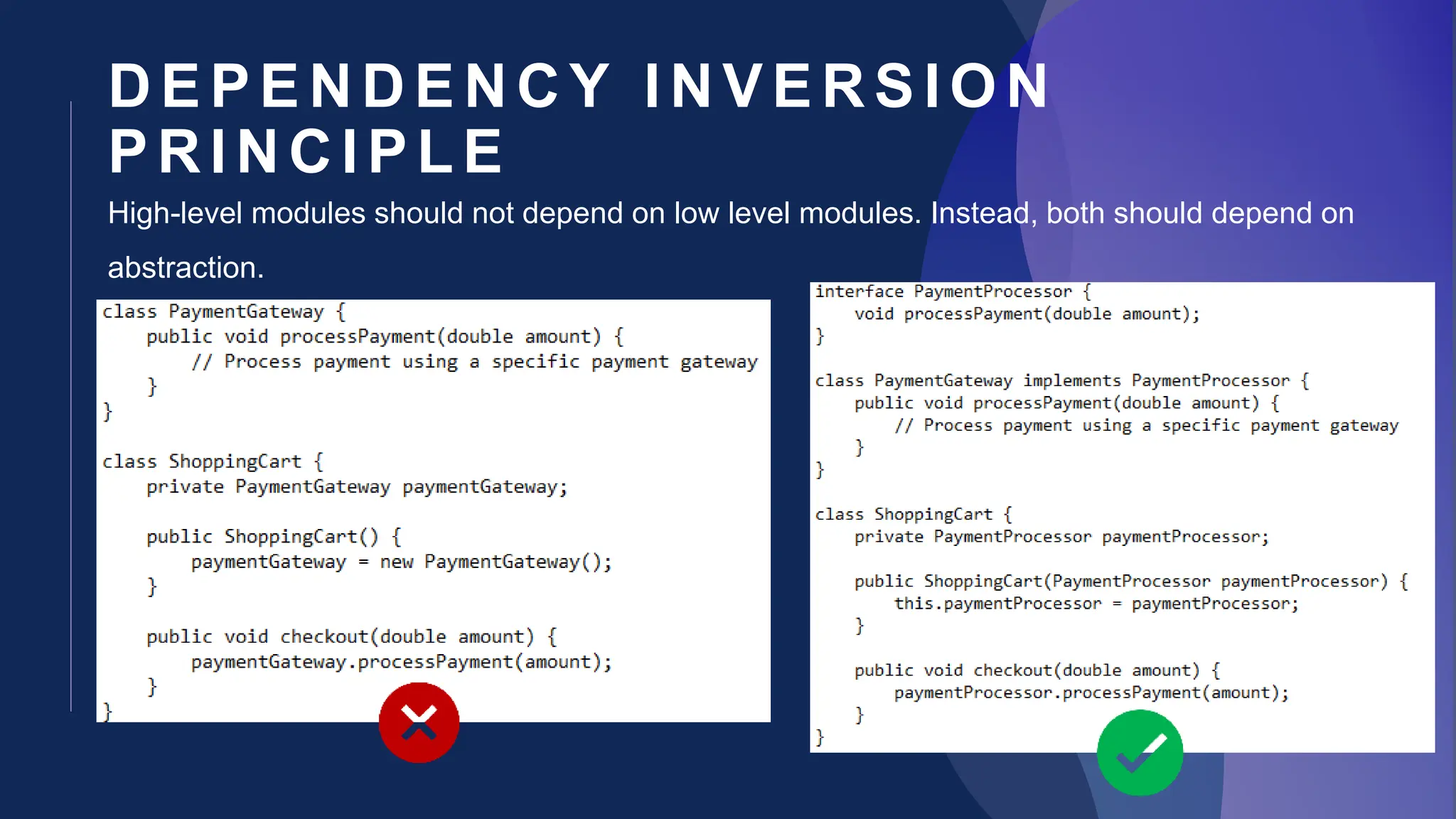
DEPENDENCY INVERSION PRINCIPLE High-level modules should not depend on low level modules. Instead, both should depend on abstraction.
THANK YOU

#4 | Object Oriented Programming's SOLID Principles | Sameer Siddiqui