Well-supported by highly skilled technicians, mainframes show no signs of disappearing. They remain the backbone of critical operations for financial services organizations. Yet, new and updated regulations will require enterprises to take a closer look at their approach to mainframe security. The stakes are high....
30 billion transactions run through IBM Z mainframes every day, including 90% of airline bookings and 87% of credit card payments. With such a massive volume of sensitive, high-value data, these systems remain prime targets for cyberattacks and must be secured with the highest standards. Now, with new regulations...
On the eve of enforcement for version 4.0 of the Payment Card Industry's Data Security Standard, the council relaxed rules for smaller merchants pertaining to combating malicious scripts in their e-commerce environment. Cue confusion and ongoing cybersecurity questions.
While PCI DSS 4.0 tackled evolving threats, the newly introduced version 4.0.1 focuses on phishing-resistant authentication factors. Yew Kuann Cheng, regional VP, Asia Pacific, PCI Security Standards Council, shared insights on adapting to the new requirements and the role of MFA.
In today's financial services landscape, speed, security, and compliance are intertwined. You need to deliver innovations rapidly, while adhering to strict regulations and safeguarding sensitive data. The JFrog Software Supply Chain Platform empowers financial institutions to achieve this critical balance. Download...
Embrace the future of payment security with this guide to PCI DSS v4.0, focusing on: Transitioning to PCI DSS v4.0: A practical roadmap for compliance before the March 2024 deadline, highlighting critical security control themes and solutions for a smooth transition. Enhancing Security...
Maintaining compliance is a difficult job—both in scope and in practical application. Organizations need to comply with a vast array of regulations, and the number is constantly increasing. Compliance is consistently tightening; businesses and financial institutions now have to learn and dive into the new Payment...
Protected Health Information (PHI) includes medical histories, lab results and vital signs, as well as addresses, social security numbers, birth dates, billing and payment card data, and other personally identifiable information (PII). It is no wonder the healthcare industry has become a favourite target for hackers,...
Today, complete medical records currently sell for as much as $1,000 on the Dark Web. It is no surprise that healthcare call and contact centers are prime targets for fraudsters, who are persistently – and ingeniously – looking for new ways to get their hands on your patients’ data. HIPAA, PCI DSS and a wide...
For healthcare providers and payers, finding new ways that allow consumers to transact with confidence in any channel – and on any device - while maintaining the security of payment and personally identifiable information (PII) is vital for ensuring they – and the patients they serve - are protected from...
For banking and financial organizations, protecting sensitive customer data and meeting compliance requirements for regulations is critical. Balancing those requirements with the speed of business and demands of modern banking can be a challenge. As you update your cybersecurity plans and data breach prevention...
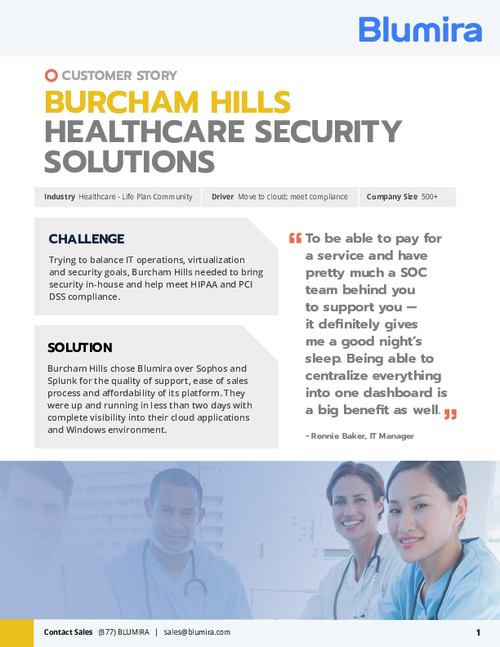
Struggling to Balance Security and Compliance in Healthcare? See How One Company Succeeded As an IT leader at a mid-sized healthcare organization, you face immense pressure: Meet HIPAA, PCI DSS, and other strict compliance regulations Detect and respond to constant cyber threats Modernize infrastructure and...
The PCI DSS standard is a moving target as it is frequently updated to address new security threats or to clarify issues that have been exposed as problems in prior versions. Being up to date on current compliance standards helps ensure you avoid hefty industry fines and helps protect you against a potentially costly...
The world is moving on from magnetic stripe payment cards, with one notable exception: the United States. Credit card issuers, banks and consumers agree the magnetic stripe is prone to hacking - so why is one of the largest markets for plastic payment still clinging to decades-old technology?
Our website uses cookies. Cookies enable us to provide the best experience possible and help us understand how visitors use our website. By browsing databreachtoday.com, you agree to our use of cookies.