Read article here
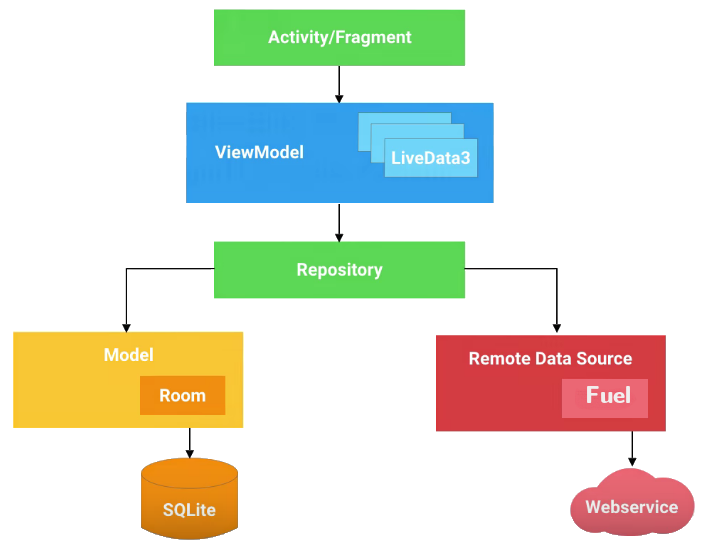
Android Architecture Components (AAC) is a new collection of libraries that contains the lifecycle-aware components. It can solve problems with configuration changes, supports data persistence, reduces boilerplate code, helps to prevent memory leaks and simplifies async data loading into your UI. I can’t say that it brings absolutely new approaches for solving these issues, but, finally, we have a formal, single and official direction.
AAC provides some abstractions to deal with Android lifecycle:
- LifecycleOwner
- LiveData
- ViewModel
The main benefit is the fact that our UI components, like TextView or RecycleView, observe LiveData, which, in turn, observes the lifecycle of an Activity or Fragment, using a LifecycleObserver.
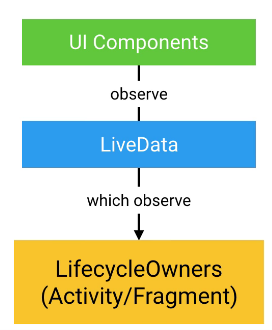
Combination of these components solves main challenges faced by Android developers, such as boilerplate code or modular. To explore and check an example of this concept, I decided to create the sample project. It just gets a list of repositories from Github and shows one using RecyclerView.
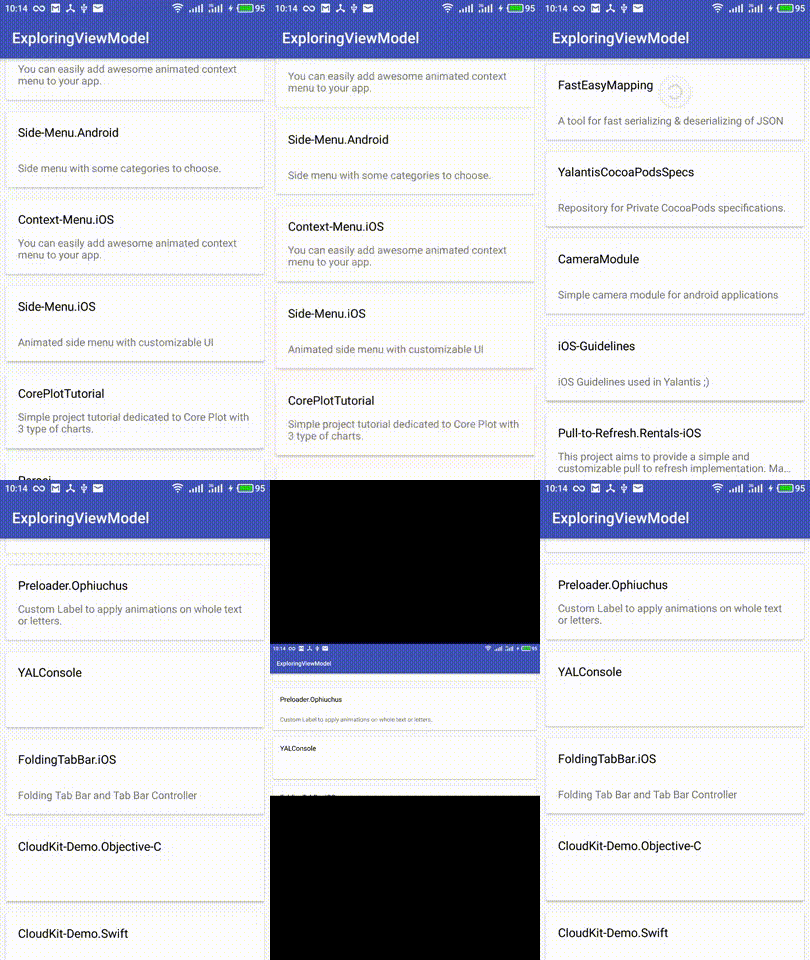
As you can see, it handles configuration changes without any problems, and an Activity looks very simple:
class ReposActivity : BaseLifecycleActivity<ReposViewModel>(), SwipeRefreshLayout.OnRefreshListener { override val viewModelClass = ReposViewModel::class.java private val rv by unsafeLazy { findViewById<RecyclerView>(R.id.rv) } private val vRefresh by unsafeLazy { findViewById<SwipeRefreshLayout>(R.id.lRefresh) } private val adapter = ReposAdapter() override fun onCreate(savedInstanceState: Bundle?) { super.onCreate(savedInstanceState) setContentView(R.layout.activity_repos) rv.setHasFixedSize(true) rv.adapter = adapter vRefresh.setOnRefreshListener(this) if (savedInstanceState == null) { viewModel.setOrganization("yalantis") } observeLiveData() } private fun observeLiveData() { viewModel.isLoadingLiveData.observe(this, Observer<Boolean> { it?.let { vRefresh.isRefreshing = it } }) viewModel.reposLiveData.observe(this, Observer<List<Repo>> { it?.let { adapter.dataSource = it } }) viewModel.throwableLiveData.observe(this, Observer<Throwable> { it?.let { Snackbar.make(rv, it.localizedMessage, Snackbar.LENGTH_LONG).show() } }) } override fun onRefresh() { viewModel.setOrganization("yalantis") } }How you have probably noticed, our activity assumes minimum responsibilities. ReposViewModel holds state and view data in the following way:
open class ReposViewModel(application: Application?) : AndroidViewModel(application) { private val organizationLiveData = MutableLiveData<String>() val resultLiveData = ReposLiveData().apply { this.addSource(organizationLiveData) { it?.let { this.organization = it } } } val isLoadingLiveData = MediatorLiveData<Boolean>().apply { this.addSource(resultLiveData) { this.value = false } } val throwableLiveData = MediatorLiveData<Throwable>().apply { this.addSource(resultLiveData) { it?.second?.let { this.value = it } } } val reposLiveData = MediatorLiveData<List<Repo>>().apply { this.addSource(resultLiveData) { it?.first?.let { this.value = it } } } fun setOrganization(organization: String) { organizationLiveData.value = organization isLoadingLiveData.value = true } }Testability
@RunWith(AndroidJUnit4::class) class SampleInstrumentedTest { @get:Rule val activityRule = ActivityTestRule<ReposActivity>(ReposActivity::class.java, true, true) private var viewModel: ReposViewModel? = null @Before fun init() { viewModel = ViewModelProviders.of(activityRule.activity).get(ReposViewModel::class.java) } @Test fun testNotNull() { activityRule.activity.runOnUiThread { viewModel?.setOrganization("yalantis") viewModel?.reposLiveData?.observe(activityRule.activity, Observer<List<Repo>> { assertNotNull(it) }) } } }
