Inspiration
The inspiration for GradLink struck during a conversation with a recent graduate struggling to navigate their career transition. They felt disconnected from their alma mater, unsure how to leverage their alumni network or find mentors who had walked similar paths. Simultaneously, current students were drowning in generic job boards, missing out on exclusive opportunities hidden within their college community.
But here's what really moved me: I spoke with administrators at smaller colleges and institutions across the country. Their stories were heartbreaking. Thousands of dedicated alumni wanted desperately to give back, to mentor students, share job opportunities, and support their colleges. Yet these institutions lacked the resources to build a platform enabling this connection.
I heard from a dean at a regional college: "Our alumni care deeply, but we can't afford a developer team. We watch our graduates drift away, and we watch our current students miss life-changing opportunities. It feels like we're failing both groups. And when we launch fundraising campaigns for scholarships or infrastructure, we can't reach our alumni effectively. Our students don't even know about the major updates happening on campus."
That conversation changed everything. I realized that the digital divide isn't just about individual access, it's about institutional capacity. Thousands of worthy educational institutions are left behind simply because they can't afford custom development. Their communities are fragmented. Their potential is untapped. And their students suffer because alumni support never reaches them.
I envisioned GradLink as the great equalizer, a ready-made, affordable platform that democratizes access to powerful community-building technology. No coding required. No six-figure budget needed. Just plug in, configure your college, and watch your alumni network come alive.
What It Does
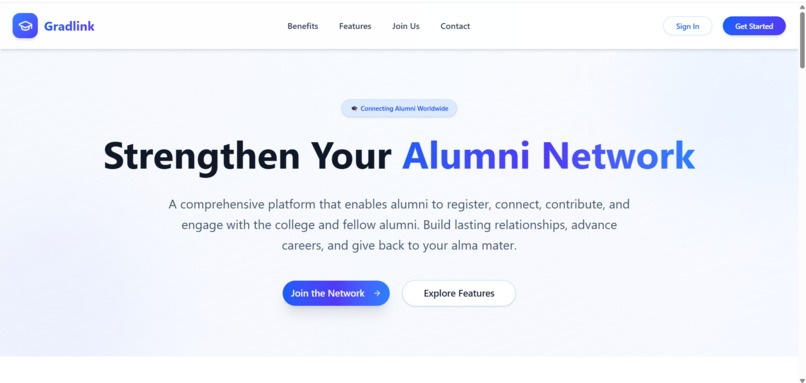
GradLink transforms educational communities into thriving digital ecosystems that benefit everyone:
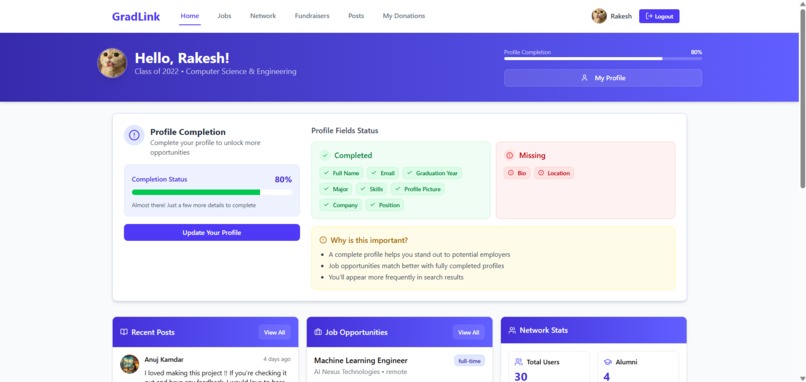
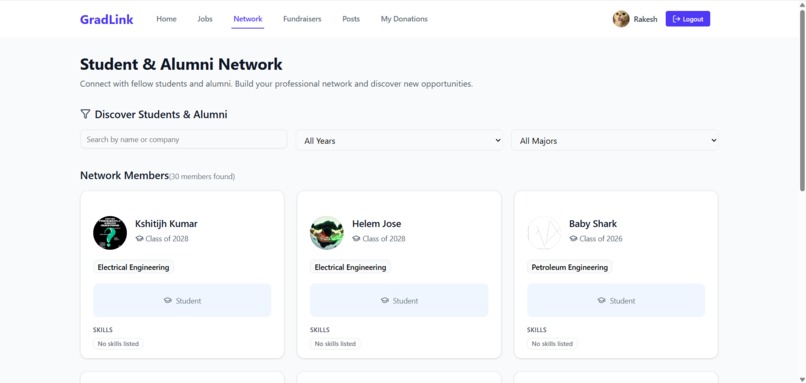
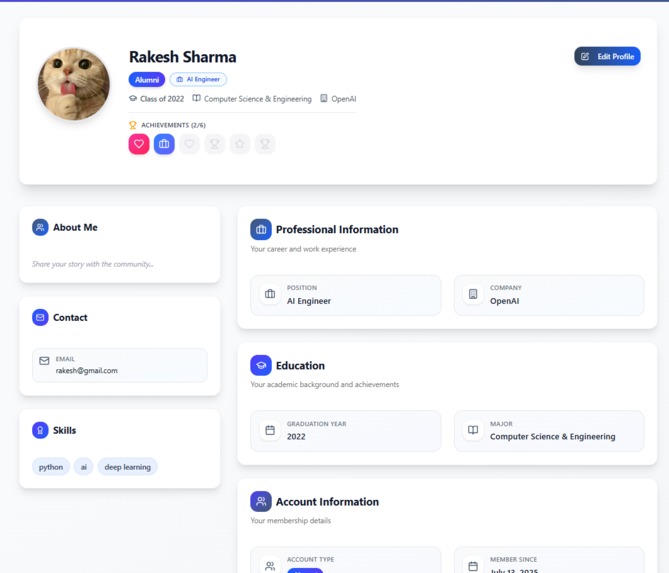
Reconnects Communities: Alumni and students discover each other through searchable profiles filtered by graduation year, major, company, and skills. Breaking the silence that currently separates them.
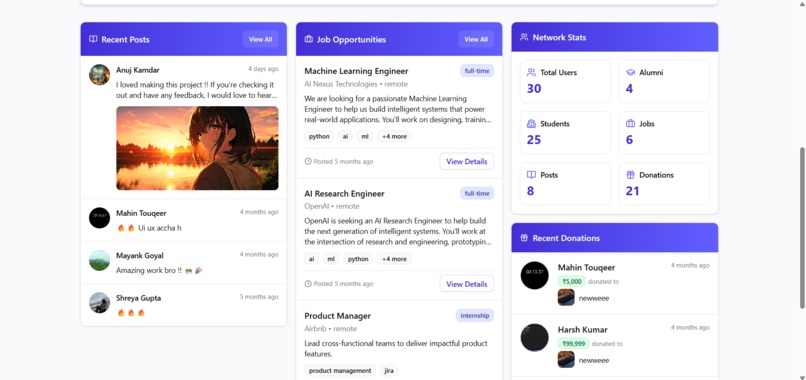
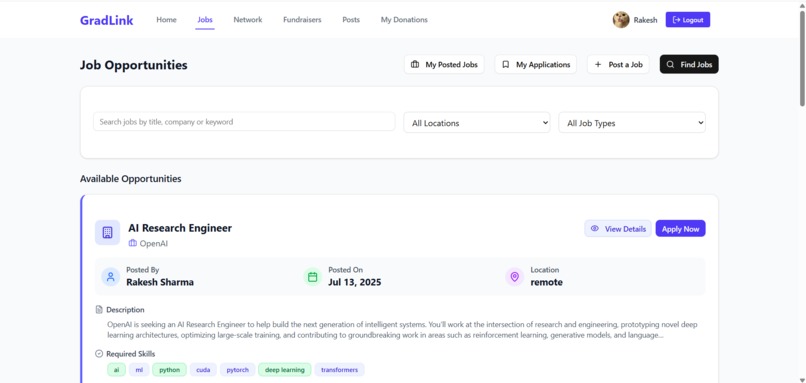
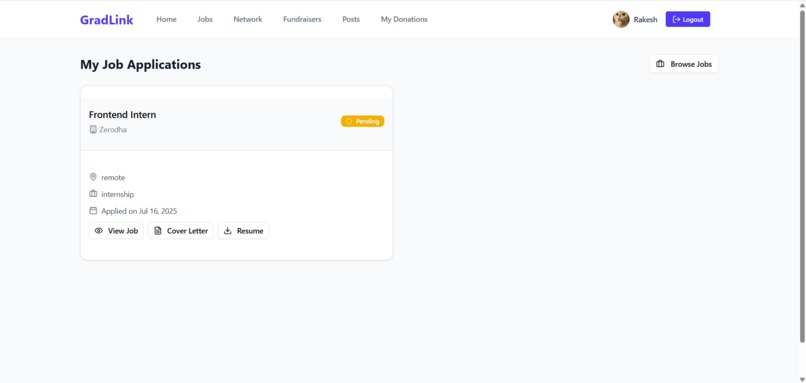
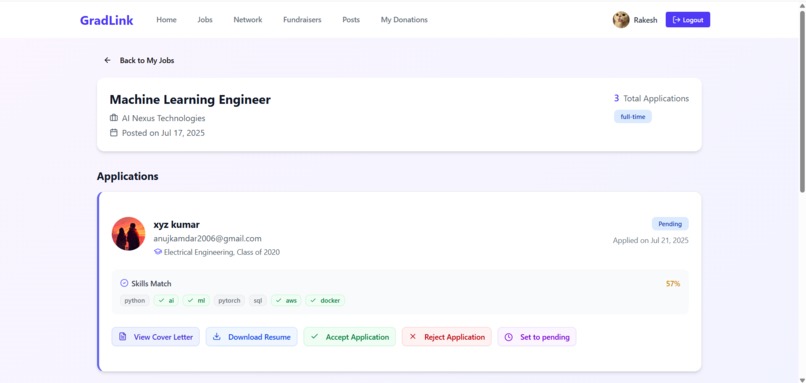
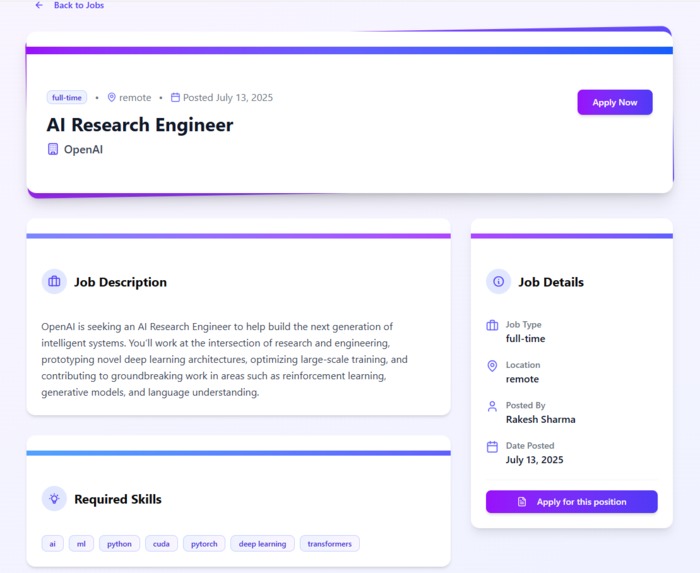
Creates Career Pathways: Alumni post exclusive job opportunities and students apply with integrated resumes. Capturing opportunities that currently exist only in coffee shop conversations.
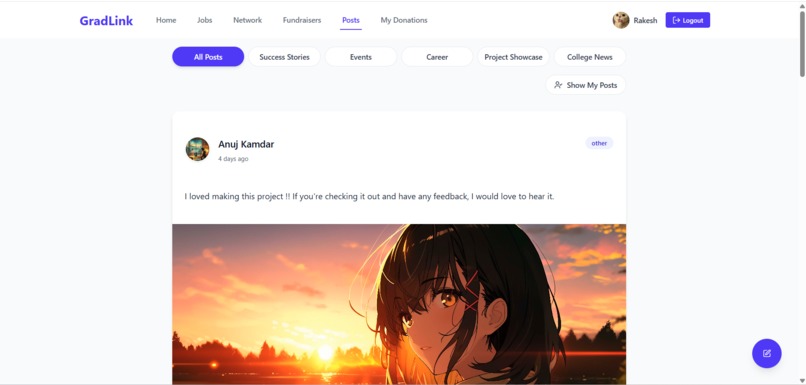
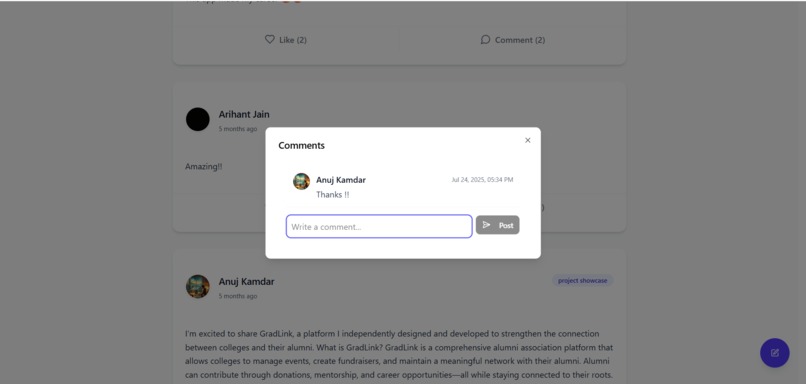
Fosters Engagement: A social feed enables meaningful discussions and success story sharing, turning passive networks into active communities.
Gamifies Participation: Achievement badges reward donors, active contributors, and recruitment leaders because recognition matters.
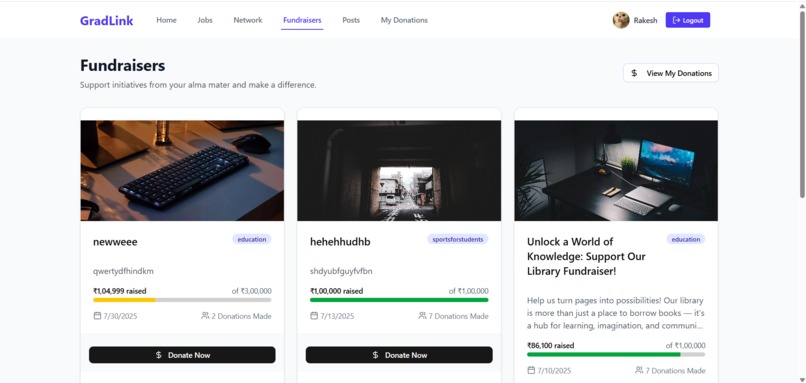
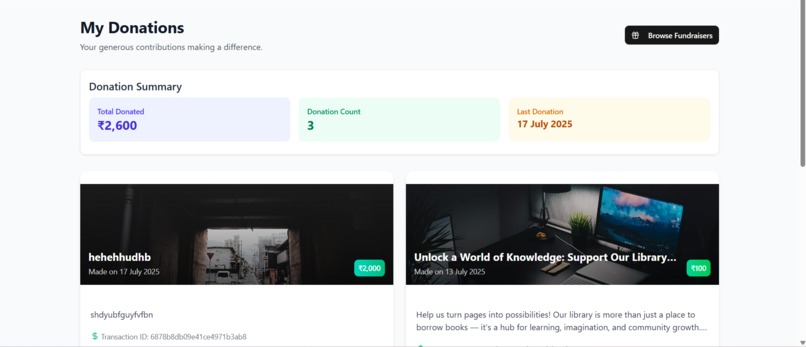
Direct Student Impact Through Fundraising: Event-based fundraising campaigns let alumni support scholarships, infrastructure, mental health services, and campus improvements. Every dollar raised directly benefits current students whether it's funding scholarships for underserved students, upgrading library facilities, or supporting emergency aid programs. Students see exactly where donations go and feel the tangible impact of alumni generosity.
Keep Alumni Connected to Campus: Alumni receive updates about major college developments like new degree programs, campus renovations, achievements of their peers, upcoming reunions, and institutional milestones. They stay emotionally connected even decades after graduation, because they're not just alumni. They're lifelong stakeholders in their college's success.
Keeps Everyone Connected: Automated email notifications ensure opportunities never slip through the cracks.
Most importantly: GradLink is a complete solution, not a blank canvas requiring months of development and thousands in consultant fees. Colleges simply configure it and launch.
How I Built It
I architected GradLink as a modern, scalable full-stack application designed for institutions to deploy with minimal technical overhead:
Frontend: React 19 with Vite, Tailwind CSS, and shadcn/ui components create an intuitive, responsive interface deployed on Vercel for global accessibility. Colleges don't need to maintain servers.
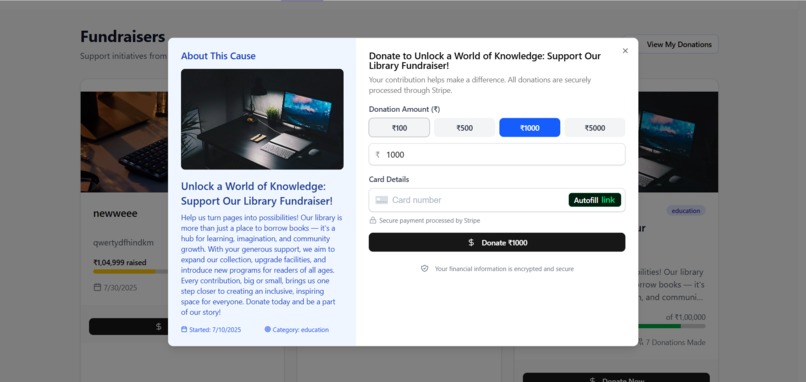
Backend: Node.js with Express powers a robust RESTful API managing complex user relationships, real-time notifications via email-based alerts, and secure payment processing through Stripe. All cloud-deployed on Render.
Database: MongoDB with Mongoose ODM ensures flexible, scalable document modeling. My schema intelligently handles interconnected relationships without requiring database administrators.
Infrastructure:
- Cloudinary handles media storage (colleges never manage server storage)
- Nodemailer automates email campaigns at scale
- JWT tokens provide stateless, secure authentication
- Stripe integration ensures payment processing
Challenges I Ran Into
1. Interconnected Data Modeling with 8 Collections
Managing relationships across User, College, Job, JobApplication, Post, Comment, Fundraiser, and Donation collections while maintaining data integrity was complex. Each entity had multiple relationships: users to jobs, jobs to applications, posts to likes, fundraisers to donations. I had to carefully design the schema to avoid circular dependencies and ensure efficient queries. Mongoose relationships and proper indexing became essential.
2. Role-Based Access Control Across Platform
Distinguishing between student and alumni permissions across networking features, job posting, fundraising, and social features required implementing granular JWT-based authorization. Students can apply for jobs and donate, but only alumni can post jobs. Managing these permissions across the frontend UI and backend API endpoints meant creating middleware that validated user roles on every sensitive operation.
3. Email Notification Pipeline
Building three types of automated emails (welcome emails for new registrations, job application alerts for alumni, and skills-matched job alerts for students) required integrating Nodemailer with the business logic. I had to ensure emails were triggered at the right moments without overwhelming users.
4. Secure Payment Integration with Stripe
Integrating Stripe for fundraising donations demanded handling sensitive payment information securely without storing card details on my servers.
5. Building a Scalable Job Application System
The job portal needed to handle multiple applicants per job, allow alumni to review applications, accept or reject candidates, and notify applicants of their status. I built an application tracking system that tracks status changes (pending, accepted, rejected), stores cover letters and resumes, and triggers appropriate email notifications to both alumni and students.
6. Deployment Across Multiple Platforms
Coordinating frontend deployment on Vercel and backend deployment on Render meant managing separate environments, configuring CORS correctly, handling API base URLs for different environments (development, staging, production), and ensuring database connections remained stable. Debugging issues required coordinating changes across both platforms simultaneously.
7. Building Solo at Scale
Building a full-stack platform entirely solo meant juggling frontend complexity, backend architecture, database design, deployment, security, and user experience simultaneously. I had to make strategic decisions about what features to prioritize and learned to leverage open-source libraries and cloud services to multiply my impact. Time management and staying focused on the core vision were critical.
Accomplishments I'm Proud Of
End-to-End Product: From concept to functional platform in limited time, a complete solution colleges can actually use, not a proof-of-concept requiring six more months of work. Built entirely by one person.
Student-Centric Fundraising: I built campaigns that directly benefit current students and track impact transparently. Alumni see the difference they make. Students see the support they receive. It's not abstract, it's real.
Alumni Stay Connected to Campus: My campus update system ensures alumni aren't just donors or job posters. They're lifelong community members who care about their college's evolution. They receive meaningful updates and feel ownership in institutional success.
User-Centric Features: Achievement badges, skills-matched job alerts, and social engagement weren't added last. They're core because I spoke with actual alumni and students about what would re-engage them emotionally.
Production-Ready Security: JWT authentication, Stripe integration, encrypted passwords. Because I'm asking institutions to trust me with their community's most sensitive data and financial transactions.
Solo Development Experience: Delivering a professional, production-ready full-stack application as a solo developer demonstrates deep technical competency, exceptional time management, and strategic prioritization.
What I Learned
Full-Stack Mastery: Building end-to-end taught me how frontend decisions impact backend complexity. Responsive design isn't a just nice-to-have, it's essential when your users span urban tech workers to rural alumni in tier 3 cities.
Emotional Connection Drives Engagement: Alumni don't just want to give back, they want to feel their impact. When they see that their $500 donation funds a semester of textbooks for an underprivileged student, engagement skyrockets. Transparency isn't just good ethics, it's good business.
Students Benefit When Alumni Stay Connected: Current students aren't just job applicants. They're the soul of the college. When alumni see campus updates and feel invested in campus life, they become mentors, donors, and advocates. It's a virtuous cycle.
Database Design Matters: Poor schema decisions cascade through the codebase. My ERD became the foundation for every feature, especially the complex relationships between donations, campaigns, and student outcomes.
Emotional Design Resonates: Badges, success stories, community features, and transparency dashboards aren't just gamification. They're about making people feel like they belong to something larger and that their actions matter. Alumni donate when they feel connected and see impact, not just when asked.
Strategic Use of Tools & Services: As a solo developer, I learned that leveraging third-party services (Stripe, Cloudinary, Nodemailer) strategically allowed me to focus on core platform logic rather than reinventing the wheel. This multiplied my effectiveness exponentially.
What's Next for GradLink
Phase 2 - Enhanced Intelligence:
- AI-powered job recommendations using skill matching algorithms
- Automated mentor-mentee pairing based on career goals and expertise
- Personalized success story digest emails
Phase 3 - Student-Focused Expansion:
- Scholarship management portal where students apply and track funding
- Emergency financial aid access through the platform
- Career development resources connecting students to alumni mentors
- Student success stories showcasing how alumni support transformed their lives
Phase 4 - Community Features Expansion:
- Alumni reunion planning tools and event coordination
- Integrated video mentoring sessions (Zoom/Meet integration) so geography doesn't limit connection
- Class notes and reunion communities to maintain lifelong bonds
Phase 5 - Impact Metrics Dashboard:
- Transparency for college leadership: jobs filled, donations raised, scholarships funded, network growth
- Success stories: track placements, career transitions, scholarship recipients, students who received emergency aid
- Impact reports proving ROI because colleges need to justify platform adoption to boards
- Student testimonials showing how alumni support changed their lives
Phase 6 - College Customization & Branding:
- White-Label Support: Colleges can customize the platform with their own logos, colors, and branding without touching code
- Configurable Features: College administrators toggle features on/off based on their institutional needs
- Custom Email Templates: Colleges design branded email templates for notifications and campaigns
- Institutional Settings: Configure college-specific information, mission statements, and custom fields for user profiles
- Theme Builder: Intuitive drag-and-drop interface for non-technical administrators to customize the look and feel
GradLink isn't just software, it's a movement to restore the soul of alumni networks, democratize institutional technology, directly improve student lives through alumni support, and prove that the best ideas shouldn't be reserved only for schools that can afford six figure development budgets.
"Every college has amazing alumni. Every college has talented students. The only thing standing between them and meaningful connection shouldn't be money."
Built with love for educational communities, from R1 research universities to small regional colleges fighting to stay relevant, and for every student whose life can be transformed by alumni support.
Built With
- axios
- cloudinary
- express.js
- jwt
- mongodb
- mongodb-atlas
- mongoose
- node.js
- nodemailer
- radix-ui
- react
- render
- shadcn/ui
- socket.io
- stripe
- tailwind-css
- vercel
- vite


Log in or sign up for Devpost to join the conversation.