-
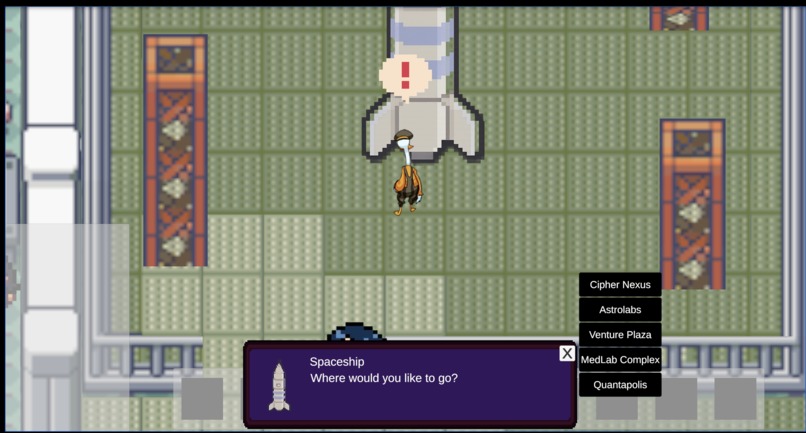
Example of the dialogue/travel system - This specific piece of dialogue is for traveling to different areas across the map.
-
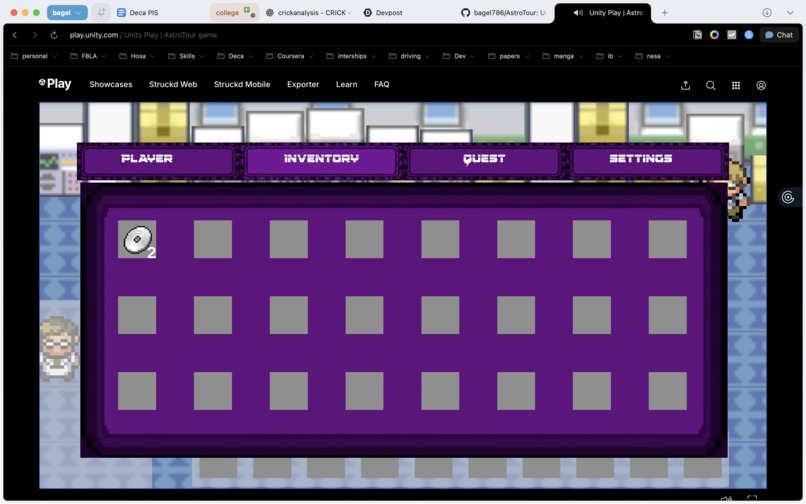
Inventory UI - complete with stacking, splitting, dragging, as well as dropping to the map and picking back up.
-
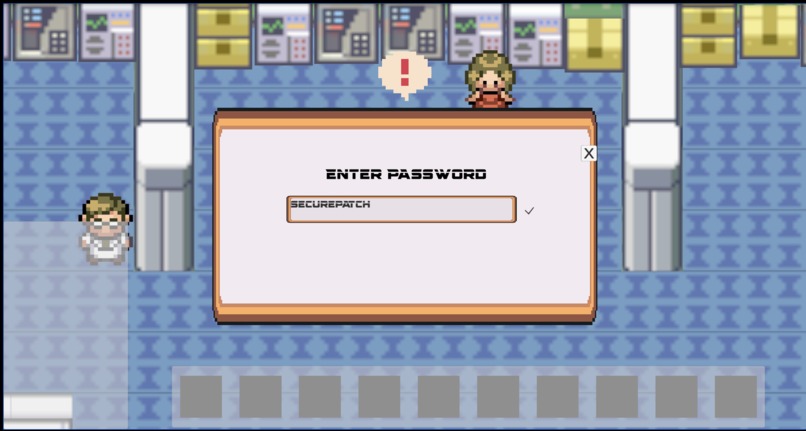
Example of one of the puzzle games - Players have to find clues around the map to decode the caesar cipher.
-
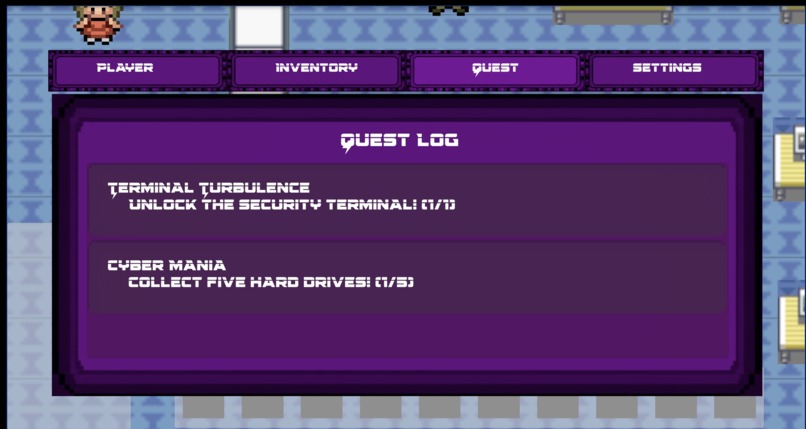
Quest UI - retroactively and proactively updates based on dialogue, inventory changes, and game state updates.
-
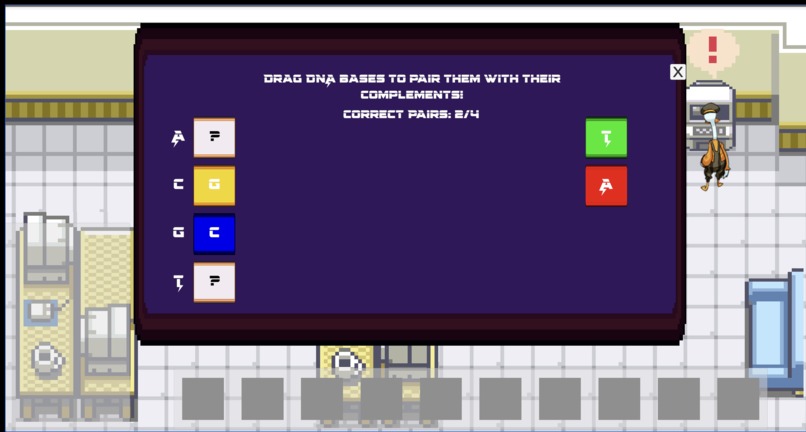
Example of a DNA puzzle: player must correctly transcribe the DNA (happens in PCR, etc)
-
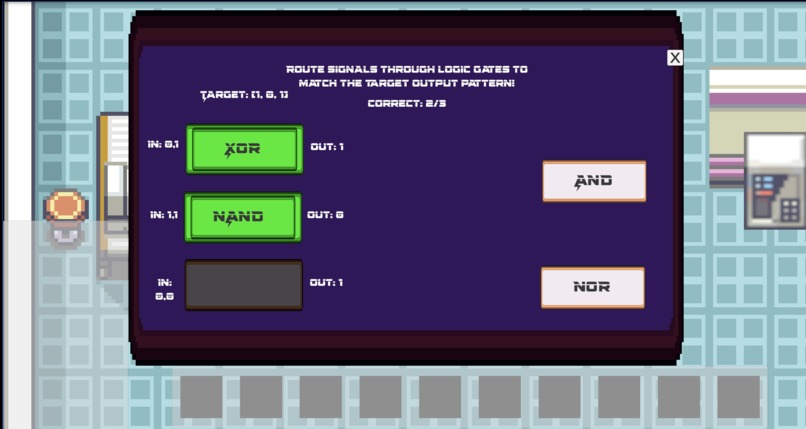
Example of a gate puzzle: the player must match the correct gate to get the desired output.
-
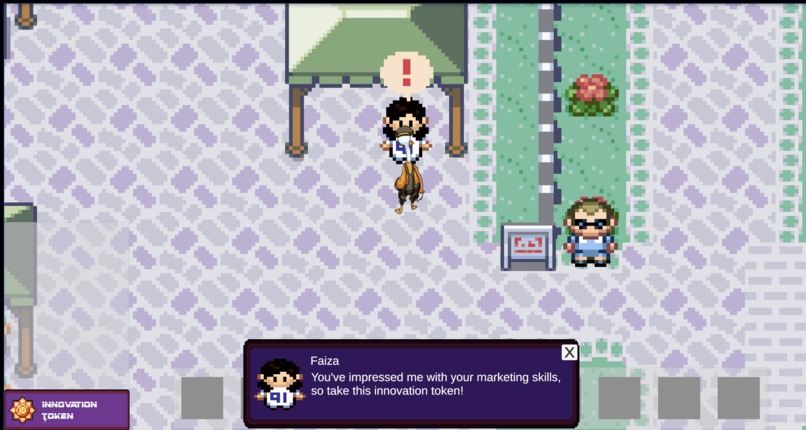
Example of a finished dialogue task, as well as item pop up screen.
Inspiration
Pokemon games, where the goal is to collect 'badges' as proof of completing a task (defeating a gym leader). AstroTour follows a similar concept, where to collect a badge from a career 'world', you must first complete a series of tasks to prove competence & knowledge in that field.
What it does
AstroTour is an adventure game with a touch of rpg elements incorporated. It takes players on an educational adventure through career worlds. Players will explore various professional fields, completing challenges to earn badges. Features:
- Puzzle based games - Logic gate puzzles, DNA sequencing challenges, Marketing strategies, and Cipher puzzles
- Multiple choice + critical thinking questions - Extensive interactive branching dialogue with NPCs who present career-related questions & scenarios to test understanding as well as decision making.
- Inventory System - Allows for collection and management of items throughout gameplay, with a hotbar for quick access & persistent save functionality.
- Quest System - Track progress through structured quests in each career world obtained from NPCs, with objectives that guide you towards earning badges.
- Interactive Mini-Games - engagement with specialized terminals/workstations
- Exploration & Discovery - Navigation through different maps & career worlds, interact with NPCs, smooth map transitions between areas, and discover items to aid your journey.
- Progression System - Earn badges by completing challenges, cloud save support to track achievements. ## How we built it AstroTour was built using Unity 2D with C# scripting. Several Unity packages and systems were used. ### Technical Stack:
- Unity 2D Animation & Sprite Systems - For character animations and visual assets
- Unity Input System - Modern input handling for player controls (keyboard)
- Cinemachine - Smooth camera following and transitions
- Universal Render Pipeline (URP) - Enhanced 2D graphics and lighting.
- Tilemap System - level design and world building ### Core Systems Developed:
- Custom Dialogue System (
DialogueController,NPCDialogue) - Branching conversations with NPCs that adapt based on player choices - Quest Management (
QuestController,Quest) - Structured objective tracking with rewards - Inventory & Hotbar (
InventoryController,HotbarController) - Item collection and quick-access management - Save System (
SaveSystemManager,CloudSaveSystem,LocalFileSaveSystem) - Dual save support with both local and cloud persistence - Mini-Game Controllers:
SimpleDNASequencingController- DNA matching puzzles for biology career pathLogicGateController- Circuit building challenges for engineering pathMarketingGameController- Strategy-based marketing scenariosSimpleConsolePassword- Cipher and password-cracking challenges
- Map System (
MapController,MapTransition) - Seamless world transitions with loading screens - Player Interaction (
InteractionDetector,PlayerItemCollector) - Context-sensitive interactions with NPCs and objects - Audio Management (
SoundEffectManager,SoundEffectLibrary) - Dynamic sound effects and feedback ## Challenges we ran into - Unity Library Issues - Due to large amount of assets in the project/an issue with my computer's hard drive, everytime I needed to make an edit to the project, I would need to clone my Github repository, make the edit, commit, and then delete the project from local storage.
- Save System Complexity - Figuring out the persistent saving feature using both local & cloud saves while maintaining data consistency was challenging with the large amount of different game states. To solve this we implemented a modular save system with interfaced to handle multiple save backends.
- Dialogue Branching System - Creating a flexible dialogue system that could handle complex branching paths, quest integration, and reward distribution. We developed a custom controller that manages dialogue flow and connects to other game systems
- Mini-Game Integration - Each career path needed unique, engaging mini-games that felt cohesive with the overall game. It was also a challenge to account for all possible game states (completing the mini game before the quest was accepted, etc), so we built specialized terminal systems that could easily be configured for various challenge types.
- Performance Optimization - Multiple systems such as inventory, quests, dialogue, and more had to be ran simultaneously without any performance drops. Efficient event systems and triggers were implemented to optimize resource management. ## Accomplishments that we're proud of
- Comprehensive Career Exploration - Successfully created engaging representations of multiple career fields (Health, cybersecurity, entrepreneurship/business, and finance) that are both educational and fun for a broad audience.
- Polished Player Experience - Smooth map transitions, responsive controls, intuitive UI, and satisfying audio feedback to create an engaging game for the player.
- Modular Architecture - Clean, reusable code structure that makes adding new features pretty straightforward.
- Interactive Learning - Players learn about different careers through hands-on challenges rather than passive reading ## What we learned
- Game Design for Education - How to make learning content engaging through interactive mechanics and storybuilding.
- Unity's Modern Systems - Gained experience with Unity's Input System, Cinemachine, and URP.
- Data Persistence Patterns - Implementing robust save systems with multiple backends & data validation
- UI/UX for Games - Creating intuitive interfaces for complex systems (inventory, quests, dialogue trees)
- Project Architecture/Planning - Structuring a large project with multiple interconnected systems while maintaining code quality and modularity. ## What's next for AstroTour
- Additional Career Worlds - Expanding to include more fields like law, arts, and trades
- Multiplayer Features - Allow players to explore worlds together and collaborate to complete challenges
- Achievement System - Collectibles beyond badges
- Mobile Port - Adapting controls and UI for iOS and Android platforms
- Career Mentor NPCs - Real-world professionals providing insights and guidance in their respective fields
- Difficulty Scaling - Adaptive challenges that adjust on player performance
- Expanded Narrative - Deeper storyline connecting the different career worlds into a cohesive story.

Log in or sign up for Devpost to join the conversation.