
Building load forecasting: Hospital in SF#
We can train a forecaster on another commom energy problem. In this, case we are training a 1-step ahead forecaster to predict the electricity consumption of a building.
The dataset contains one year of hourly observations. The training will occur on 11 months of the data, reserving the last month for evaluation.
[1]: if "google.colab" in str(get_ipython()): # uninstall preinstalled packages from Colab to avoid conflicts !pip uninstall -y torch notebook notebook_shim tensorflow tensorflow-datasets prophet torchaudio torchdata torchtext torchvision !pip install git+https://github.com/ourownstory/neural_prophet.git # may take a while #!pip install neuralprophet # much faster, but may not have the latest upgrades/bugfixes import pandas as pd from neuralprophet import NeuralProphet, set_log_level set_log_level("ERROR") [2]: data_location = "https://raw.githubusercontent.com/ourownstory/neuralprophet-data/main/datasets/" sf_load_df = pd.read_csv(data_location + "energy/SF_hospital_load.csv") sf_load_df.head(3) [2]: | ds | y | |
|---|---|---|
| 0 | 2015-01-01 01:00:00 | 778.007969 |
| 1 | 2015-01-01 02:00:00 | 776.241750 |
| 2 | 2015-01-01 03:00:00 | 779.357338 |
Generic forecast: Time-based features only#
In this first section, we will train a model with time-features only like we would do with Facebook Prophet.
[ ]: m = NeuralProphet( weekly_seasonality=6, daily_seasonality=10, trend_reg=1, learning_rate=0.01, ) df_train, df_test = m.split_df(sf_load_df, freq="H", valid_p=1.0 / 12) metrics = m.fit(df_train, freq="H", validation_df=df_test, progress="bar") [4]: metrics.tail(1) [4]: | MAE_val | RMSE_val | Loss_val | RegLoss_val | epoch | MAE | RMSE | Loss | RegLoss | |
|---|---|---|---|---|---|---|---|---|---|
| 108 | 57.975113 | 80.128593 | 0.008979 | 0.0 | 108 | 46.005161 | 63.305355 | 0.004436 | 0.0 |
[5]: forecast = m.predict(df_train) m.set_plotting_backend("plotly-static") m.plot(forecast) 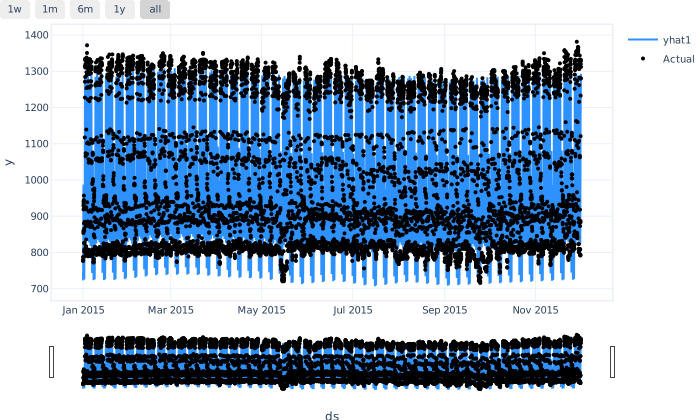
[6]: forecast = m.predict(df_test) m = m.highlight_nth_step_ahead_of_each_forecast(1) m.plot(forecast[-7 * 24 :]) 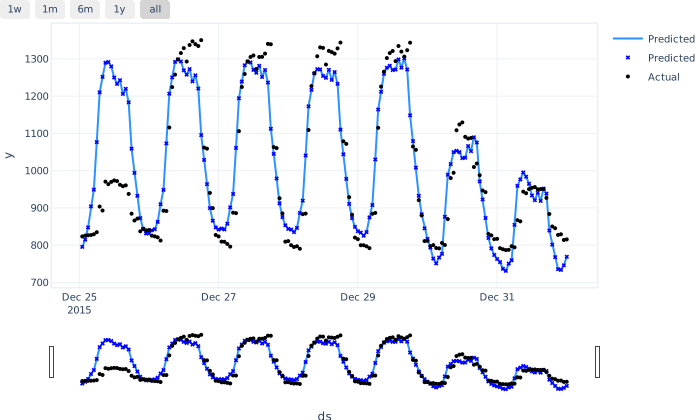
[7]: m.plot_parameters() 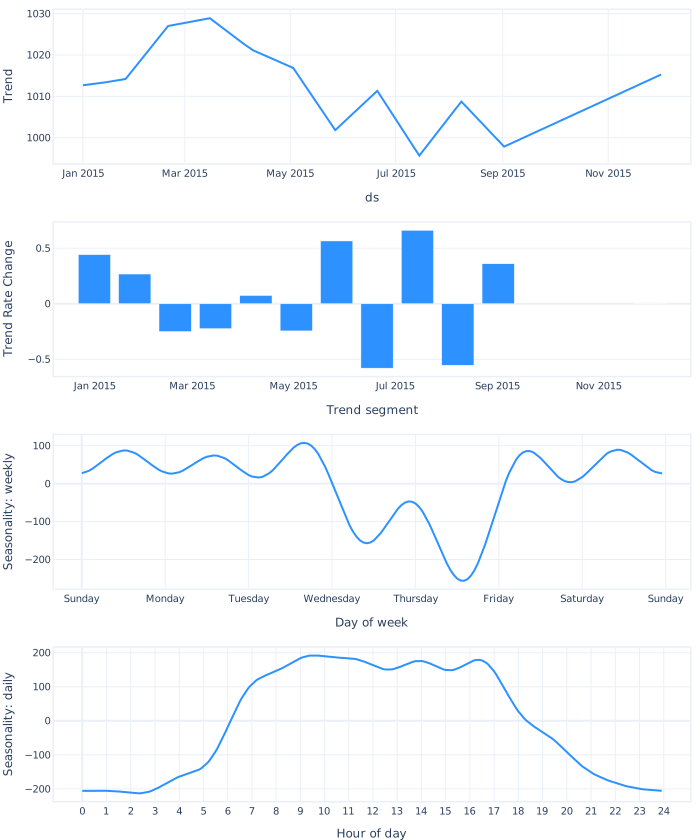
1-step ahead forecast with Auto-Regression#
[ ]: m = NeuralProphet( growth="off", yearly_seasonality=False, weekly_seasonality=False, daily_seasonality=False, n_lags=3 * 24, ar_reg=1, learning_rate=0.01, ) df_train, df_test = m.split_df(sf_load_df, freq="H", valid_p=1.0 / 12) metrics = m.fit(df_train, freq="H", validation_df=df_test, progress="bar") [9]: metrics.tail(1) [9]: | MAE_val | RMSE_val | Loss_val | RegLoss_val | epoch | MAE | RMSE | Loss | RegLoss | |
|---|---|---|---|---|---|---|---|---|---|
| 108 | 24.246571 | 37.293633 | 0.002822 | 0.000877 | 108 | 23.822706 | 35.911766 | 0.002339 | 0.000877 |
[10]: forecast = m.predict(df_train) m.set_plotting_backend("plotly-static") m.plot(forecast) 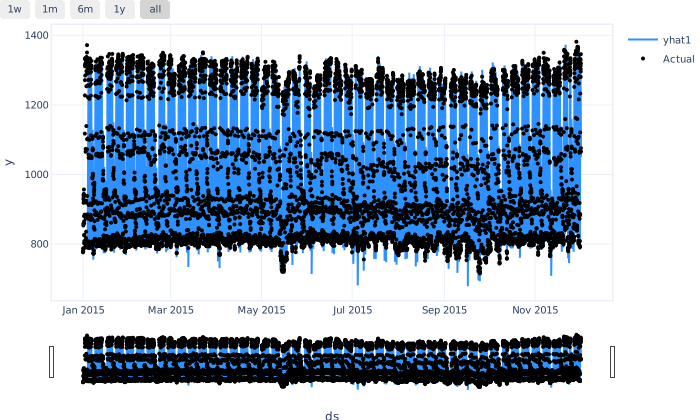
[11]: forecast = m.predict(df_test) m = m.highlight_nth_step_ahead_of_each_forecast(1) m.plot(forecast[-7 * 24 :]) 
[12]: m.plot_parameters() 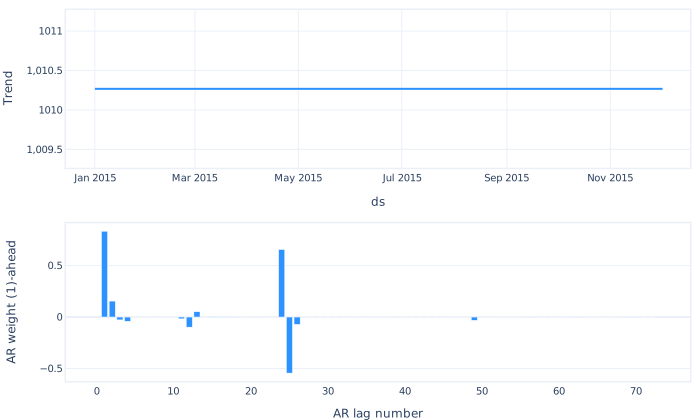
1 step ahead forecast with AR-Net: Using a Neural Network#
Here, we will use the power of a neural Network to fit non-linear patterns.
[ ]: m = NeuralProphet( growth="off", yearly_seasonality=False, weekly_seasonality=False, daily_seasonality=False, n_lags=3 * 24, ar_layers=[32, 32, 32, 32], learning_rate=0.003, ) df_train, df_test = m.split_df(sf_load_df, freq="H", valid_p=1.0 / 12) metrics = m.fit(df_train, freq="H", validation_df=df_test, progress="bar") [14]: metrics.tail(1) [14]: | MAE_val | RMSE_val | Loss_val | RegLoss_val | epoch | MAE | RMSE | Loss | RegLoss | |
|---|---|---|---|---|---|---|---|---|---|
| 108 | 7.14312 | 10.696775 | 0.00016 | 0.0 | 108 | 6.197587 | 9.060362 | 0.000093 | 0.0 |
[15]: forecast = m.predict(df_train) m.set_plotting_backend("plotly-static") m.plot(forecast) 
[16]: forecast = m.predict(df_test) m = m.highlight_nth_step_ahead_of_each_forecast(1) m.plot(forecast[-7 * 24 :]) 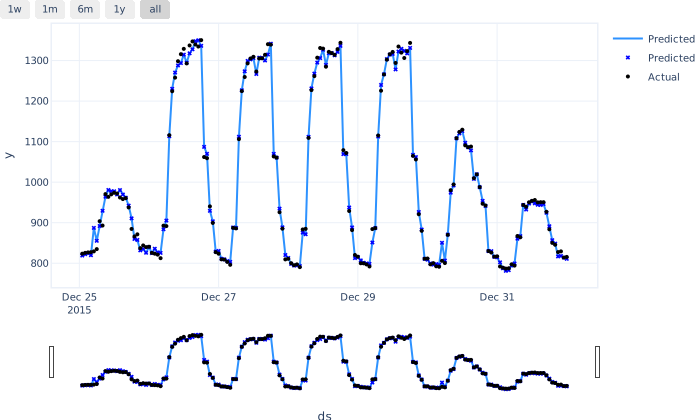
[17]: m.plot_components(forecast[-7 * 24 :]) 