In this article, I'll explore the 10 best JavaScript frameworks to learn this year.
Whether you’re aiming for a new role or upgrading your tech stack, the landscape has shifted. While staples like React remain dominant, performance-focused newcomers like Astro and SolidJS are redefining how we build for the web.
What is a JavaScript framework?
Think of a framework like a fully equipped workshop. Instead of building a table with just a hand saw and raw lumber (Vanilla JS), a framework gives you power tools, blueprints, and pre-measured materials. It handles the heavy lifting—like routing, state management, and rendering—so you can focus on the unique features of your app.
With front-end developer salaries averaging over $85K, mastering the right tools is your fastest path to a career upgrade.
Let's dive into the top performers for the year.
The 10 Best JavaScript Frameworks
1. React
Best for: Dynamic, enterprise-grade user interfaces and a massive job market.
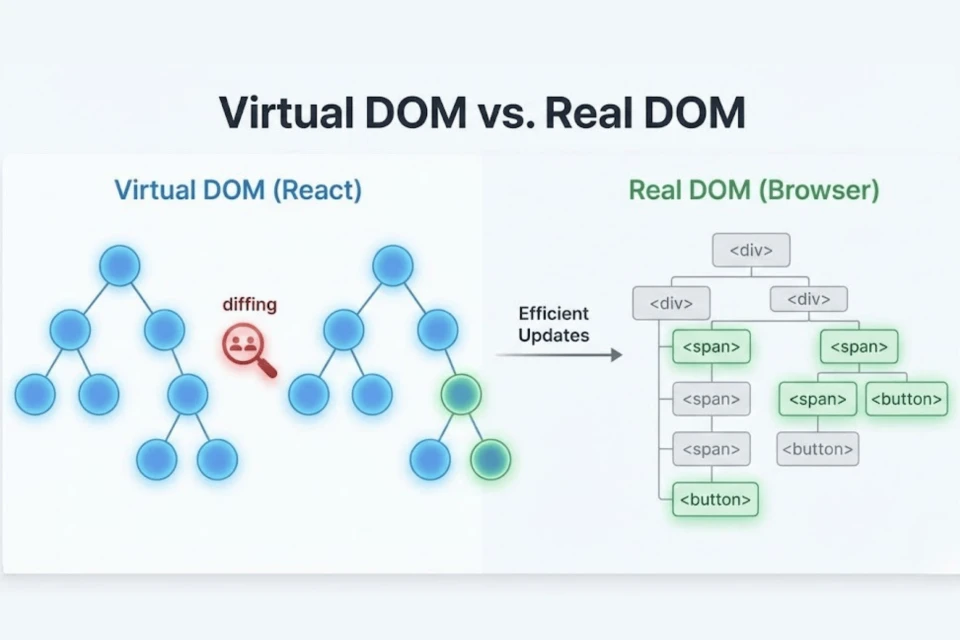
React isn't just a library anymore; it's an ecosystem. With the release of React 19 and features like the React Compiler and Server Components, it remains the undisputed king of frontend development. It focuses on reusable components and a Virtual DOM to ensure high performance. While it requires a steeper learning curve than some alternatives, its dominance makes it the safest bet for employability.
Features:
- React Compiler: Automatically optimizes re-renders, removing the need for manual memoization.
- Server Components (RSC): Allows components to render on the server for faster initial page loads and better SEO.
- Virtual DOM: Efficiently updates the UI by only changing the parts of the DOM that have actually changed.
- Massive Ecosystem: An unparalleled selection of third-party libraries for UI, state management, and more.
| Pros | Cons |
|---|---|
| Largest job market and community support. | Steep learning curve, especially with modern features like Server Components. |
| Highly reusable component architecture. | Requires many third-party libraries for a complete app (routing, state). |
| Excellent performance with React 19 updates. | Ecosystem churn can be overwhelming for beginners. |
2. Express
Best for: Minimalist backend APIs and legacy Node.js applications.
Express is the "standard" server framework for Node.js. It is battle-tested, unopinionated, and powers millions of web applications. While newer competitors like Hono and Fastify offer better performance, Express remains essential learning due to the sheer volume of existing codebases that rely on it.
Features:
- Minimalist Core: Provides a thin layer of fundamental web application features without obscuring Node.js features.
- Middleware: A powerful and flexible system for handling requests, authentication, and logging.
- Routing: A simple and robust routing API for defining application endpoints.
- Unopinionated: Gives developers complete freedom in how they structure their application.
| Pros | Cons |
|---|---|
| Incredible simplicity and ease of use. | Slower performance compared to modern alternatives like Hono or Fastify. |
| Massive ecosystem of middleware packages. | Lack of built-in structure can lead to messy code in large projects. |
| Huge community and endless documentation. | Does not support modern features like Edge runtimes out of the box. |
3. Next.js
Best for: Full-stack React applications with Server-Side Rendering (SSR).
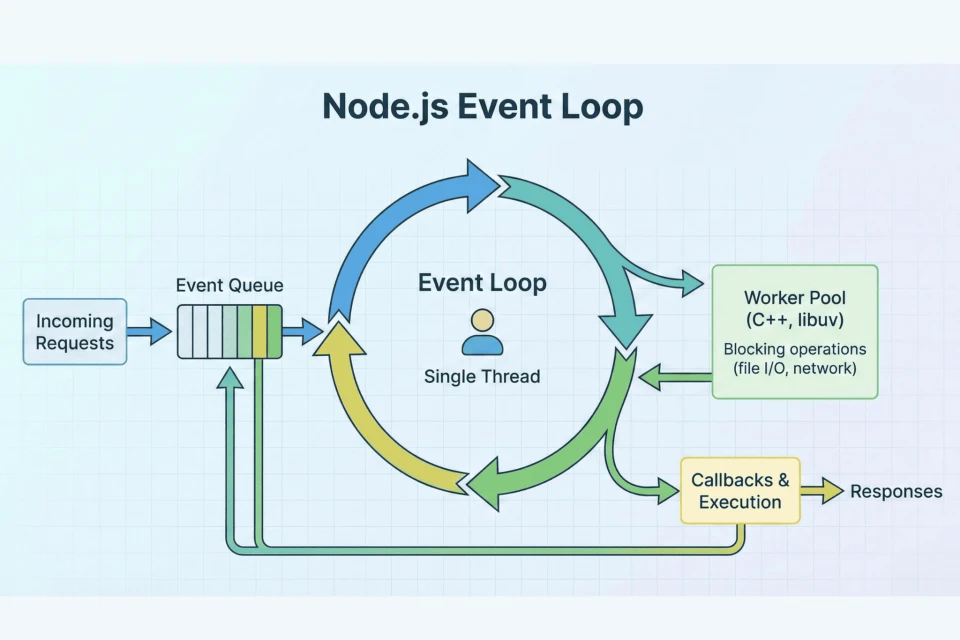
If React is the engine, Next.js is the car. It wraps React with production-ready features like file-system routing, automatic image optimization, and API routes. It is the default choice for starting a new React project, bridging the gap between frontend and backend.
Features:
- App Router: A modern, file-system-based router built on React Server Components.
- Hybrid Rendering: Support for Server-Side Rendering (SSR), Static Site Generation (SSG), and Incremental Static Regeneration (ISR).
- Built-in Optimizations: Automatic optimization for images, fonts, and scripts to improve Core Web Vitals.
- API Routes: Easily build backend API endpoints within the same project.
| Pros | Cons |
|---|---|
| The best way to build modern, SEO-friendly React apps. | Can feel bloated for simple, static websites. |
| Excellent developer experience with zero-config setup. | Highly opinionated structure tied to the Vercel ecosystem. |
| Seamless deployment, especially on Vercel. | Learning curve for advanced features like middleware and server actions. |
4. Vue.js
Best for: A flexible, approachable learning curve with powerful features.
Vue.js strikes a perfect balance. It is easier to learn than React but powerful enough for complex applications. With its "Vapor Mode" (a performance optimization that bypasses the Virtual DOM), Vue remains a top contender for developers who want speed without the complexity.
Features:
- Vapor Mode: An opt-in compilation strategy that improves performance by compiling components into efficient JavaScript that doesn't rely on a Virtual DOM.
- Composition API: A flexible way to organize component logic, similar to React Hooks but often considered more intuitive.
- Single-File Components (SFCs): Keeps HTML, CSS, and JavaScript for a component in one file for better organization.
- Progressive Framework: Can be dropped into existing HTML pages or used to build full-scale SPAs.
| Pros | Cons |
|---|---|
| Gentle learning curve and excellent documentation. | Smaller job market compared to React in many regions. |
| Flexible and easy to integrate into existing projects. | Ecosystem of third-party libraries is not as vast as React's. |
| Great performance, especially with Vapor Mode. | Community is split between Options API (legacy) and Composition API (modern). |
5. Angular
Best for: Large-scale, strict enterprise applications.
Angular has had a massive renaissance. With the introduction of "Signals" for fine-grained reactivity and the removal of legacy complexity (Zone.js), Angular is faster and more modern than ever. It provides a complete "batteries-included" experience, making it a favorite for large corporate teams.
Features:
- Signals: A modern reactive primitive that makes state management drastically simpler and more performant.
- Standalone Components: Removes the need for complex NgModules, simplifying the application structure.
- Full TypeScript Support: Built with TypeScript from the ground up for robust type safety.
- Batteries-Included: Includes a powerful router, form validation, and HTTP client out of the box.
| Pros | Cons |
|---|---|
| Provides a complete, standardized solution for large teams. | Still has the steepest learning curve of the major frameworks. |
| Excellent for enterprise applications with strict requirements. | Can feel verbose and heavy for small projects. |
| Modern updates have significantly improved developer experience and speed. | Highly opinionated, leaving little room for architectural flexibility. |
6. SolidJS
Best for: Maximum performance and reactivity.
SolidJS looks like React but cheats the laws of physics. It abandons the Virtual DOM entirely, updating the real DOM directly. This makes it significantly faster than React or Vue. If you want the developer experience of React but the raw speed of vanilla JavaScript, SolidJS is the framework to watch this year.
Features:
- No Virtual DOM: Compiles components to real DOM nodes and updates them directly for blazing speed.
- Fine-Grained Reactivity: Only the specific data that changes causes an update, rather than re-rendering entire components.
- React-like Syntax: Uses JSX and a Hooks-like API (Signals), making it familiar for React developers.
- Small Bundle Size: Extremely lightweight runtime resulting in faster load times.
| Pros | Cons |
|---|---|
| Best-in-class performance benchmarks. | Niche ecosystem with fewer third-party UI libraries. |
| Familiar syntax for existing React developers. | Very limited job market compared to the big three. |
| Simple mental model for reactivity. | Relatively new, meaning fewer resources and tutorials online. |
7. Svelte
Best for: Writing less code and building highly interactive apps.
Svelte shifts the work from the browser to the build step. Instead of shipping a heavy framework to your users, Svelte compiles your code into tiny, efficient JavaScript. Svelte 5 introduced "Runes," a new reactivity model that makes handling state in large applications clearer and more robust.
Features:
- Compiler-First: Shifts the work to the build step, resulting in no framework runtime being shipped to the browser.
- Runes (Svelte 5): A new, explicit way to declare reactive state (e.g., `$state`, `$derived`) that scales better than previous versions.
- Less Boilerplate: You write significantly less code to achieve the same result compared to React or Angular.
- Built-in Animations: Easy-to-use animation engines included out of the box.
| Pros | Cons |
|---|---|
| Extremely fast runtime performance and tiny bundle sizes. | Svelte 5 introduced a major shift in syntax, splitting the community slightly. |
| Excellent developer experience; it feels like writing standard HTML/JS. | Smaller job market than React or Vue. |
| Great for highly interactive widgets and animations. | Fewer component libraries available compared to React. |
8. NestJS
Best for: Structured, scalable backend systems with TypeScript.
NestJS brings the structure of Angular to the backend. It relies heavily on TypeScript and Dependency Injection, making it perfect for large teams building complex microservices or enterprise APIs. If you need a backend that enforces clean architecture, NestJS is the industry standard.
Features:
- Modular Architecture: Organizes code into modules, controllers, and services, making it easy to scale.
- First-Class TypeScript: Built for TypeScript lovers, ensuring type safety throughout your backend.
- Dependency Injection: A powerful container for managing dependencies, making code easier to test and maintain.
- Microservices Ready: Built-in support for various transport layers like gRPC, MQTT, and Redis streams.
| Pros | Cons |
|---|---|
| Provides excellent structure for large backend teams. | High cognitive overhead and a steep learning curve. |
| Great for building complex enterprise applications. | Can be overkill for simple APIs or side projects. |
| Forces good architectural practices. | Relies heavily on decorators, which can feel like "magic" to some devs. |
9. Nuxt
Best for: The ultimate Vue.js full-stack experience.
Just as Next.js is to React, Nuxt is to Vue. It provides a batteries-included experience with auto-imports, file-based routing, and server-side rendering. Nuxt 4 has pushed performance even further, making it the default choice for modern Vue development.
Features:
- Auto-imports: Automatically imports components and composables, reducing boilerplate imports.
- Universal Rendering: Seamlessly switch between SSR, SSG, or client-side rendering based on the route.
- File-based Routing: Creates routes automatically based on your file structure.
- Nuxt Modules: A rich ecosystem of high-quality modules for adding PWA support, SEO, Auth, and more.
| Pros | Cons |
|---|---|
| The best developer experience in the Vue ecosystem. | Adds another layer of abstraction on top of Vue. |
| Incredible performance and SEO out of the box. | Upgrading between major versions has historically been painful. |
| Robust module system makes adding features easy. | Some "magic" features (like auto-imports) can confuse beginners. |
10. Astro
Best for: Content-driven websites, blogs, and marketing sites.
Astro has replaced Gatsby as the king of static sites. Its "Island Architecture" allows you to ship zero JavaScript to the client by default, hydrating only the interactive parts of your page. You can even bring your own UI components from React, Vue, or Svelte into an Astro project. For pure speed and SEO, Astro is unbeatable.
Features:
- Zero JS by Default: Ships only HTML and CSS to the browser, resulting in incredible load speeds.
- Islands Architecture: Isolates interactive components into "islands" that hydrate independently.
- Framework Agnostic: Build components using React, Vue, Svelte, or Solid within the same project.
- Content Collections: A powerful, type-safe way to manage markdown and CMS content.
| Pros | Cons |
|---|---|
| Unmatched performance for content-heavy websites. | Not designed for complex, highly stateful web applications (like dashboards). |
| Excellent SEO capabilities out of the box. | The concept of "Islands" takes a moment to understand. |
| Flexibility to use your favorite UI component library. | Smaller community than the major application frameworks. |
Best Practices for Modern JavaScript Development
Picking a framework is only step one. To build applications that last, you need to follow modern architectural standards. Here are the non-negotiables for high-quality JavaScript development.
- TypeScript by Default: TypeScript is no longer optional for professional work. It prevents entire classes of bugs and serves as living documentation for your code.
- Composability over Inheritance: Whether using React Hooks, Vue Composables, or Angular Signals, prioritize small, reusable logic functions over complex class structures.
- Edge-First Deployment: Design your apps to run on the Edge (closer to the user) rather than a centralized server. Frameworks like Next.js, Hono, and Astro support this natively.
- Accessibility (a11y) is Core: Use semantic HTML and ARIA labels from day one. Modern frameworks provide linting tools to catch accessibility errors before you commit code.
Backend Frameworks: The Shift to Performance
While full-stack meta-frameworks (Next.js, Nuxt) handle many backend tasks, dedicated backend development has evolved significantly.
The Decline of Legacy Node: Traditional, heavy Node.js monoliths are being replaced by lightweight, standards-compliant servers.
- Hono: The breakout star of backend JavaScript. It runs on any runtime (Node, Bun, Deno, Cloudflare Workers) and is significantly faster than Express.
- Fastify: The performance king for standard Node.js servers. If you aren't using Edge runtimes, Fastify provides the lowest overhead.
- NestJS: Remains the standard for enterprise architecture where strict structure and Dependency Injection are required.
Application Development: Mobile & Desktop
JavaScript's "Write Once, Run Anywhere" dream is more alive than ever.
- React Native (New Architecture): With the rollout of the "Bridgeless" architecture, React Native performance is nearly indistinguishable from native Swift or Kotlin apps.
- Tauri v2: For desktop apps, Tauri has largely replaced Electron for new projects. It uses the native OS webview (instead of bundling Chrome), resulting in installers that are 90% smaller and use half the RAM.
- Capacitor: The go-to for turning existing web apps (built with Vue, React, or Svelte) into mobile apps without rewriting the codebase.
Developer Productivity Tools
Speed isn't just about app performance; it's about how fast you can ship features. The tooling ecosystem in 2026 focuses on removing friction.
- Vite: The build tool that won the war. It powers almost every modern framework (Vue, Svelte, Solid, Astro). It offers instant server starts and lightning-fast Hot Module Replacement (HMR).
- Biome (formerly Rome): A Rust-based successor to Prettier and ESLint. It formats and lints code in milliseconds, saving hours of CI/CD time.
- AI Coding Assistants: Tools like GitHub Copilot Workspace have moved beyond autocomplete to full-feature scaffolding, allowing developers to generate boilerplate code for these frameworks instantly.
Achieving Fast Performance (Core Web Vitals)
Google’s Core Web Vitals are stricter than ever. To rank high in search results, your framework choice matters, but your architecture matters more.
- Islands Architecture (Astro): The most effective way to improve performance is to ship less JavaScript. Islands allow you to keep the majority of your site static HTML.
- Resumability (Qwik): A newer concept where apps pause execution on the server and resume instantly on the client, eliminating "Hydration" costs entirely.
- Server Components: By moving data-heavy operations to the server (React Server Components), you prevent large data libraries from bloating the user's browser bundle.
Performance Benchmarks & Test Results (Current Edition)
Marketing claims are one thing; raw numbers are another. Based on the latest JS Framework Benchmark (the "Krausest" benchmark), here is how the top contenders stack up in raw DOM manipulation and startup metrics.
- The Speed Kings: SolidJS and Svelte 5 consistently top the charts for "Time to Interactive" (TTI) and memory efficiency. Because they don't use a heavy Virtual DOM, they run nearly as fast as vanilla JavaScript.
- The Middle Ground: Vue and React 19 sit in the middle. While slightly slower in synthetic benchmarks due to their runtime overhead, React's new compiler has narrowed the gap significantly compared to 2024.
- The Trade-off: Angular and Next.js have larger initial bundle sizes, which impacts "First Contentful Paint" (FCP), but they excel in "Cumulative Layout Shift" (CLS) stability due to strict hydration processes.
Data Structures: Signals vs. Virtual DOM
The biggest architectural shift in 2026 is how frameworks handle data structures to manage state. The industry is moving away from diffing large objects toward fine-grained reactivity.
- The Old Way (Virtual DOM): React stores state in Objects. When data changes, it re-renders the component tree, compares the old DOM tree to the new one, and applies changes. This is computationally expensive (O(n)).
- The New Way (Signals & Proxies): Solid, Vue, Angular, and Svelte use Signals. These are data structures that hold a value and a list of subscribers. When a Signal updates, it notifies only the exact text node or attribute that depends on it. This is O(1) complexity—instantaneous and efficient.
Use Cases: Which Framework Fits Your Project?
There is no "One Framework to Rule Them All." Here is the breakdown of the best tool for specific business scenarios.
| Use Case | Recommended | Why? |
|---|---|---|
| E-Commerce / Marketing | Astro or Next.js | Critical need for SEO, image optimization, and fast First Contentful Paint. |
| Enterprise Dashboard | Angular or React | Complex forms, strict TypeScript enforcement, and long-term stability are key. |
| Real-Time / Social | SolidJS or Svelte | High-frequency updates require the fine-grained performance of Signals. |
| Microservices Backend | NestJS | Architecture (Modules/Controllers) mirrors backend standards like Java Spring or .NET. |
JS Modules (ESM) & The Death of CommonJS
In 2026, the transition is complete. Modern frameworks have fully embraced ECMAScript Modules (ESM) over the legacy CommonJS (`require`).
- Tree-Shaking: Frameworks now rely on ESM's static structure to "shake out" unused code during the build process. If you import a library but only use one function, only that function ends up in the user's browser.
- No-Build Dev Servers: Tools like Vite use native browser ESM to serve files instantly. When you update a file, the browser only re-requests that specific module, rather than rebuilding the whole bundle.
Essential JavaScript Libraries (The "Framework Agnostic" Stack)
A framework provides the skeleton, but libraries provide the muscles. In 2026, we see a trend of "Headless" and "Framework Agnostic" libraries that work everywhere.
- State Management: TanStack Store and XState have largely replaced framework-specific state tools (like Redux), allowing you to move logic between React, Vue, and Svelte easily.
- Data Fetching: TanStack Query remains the gold standard for managing server state, caching, and background updates.
- Validation: Zod and Valibot handle data structures and form validation with TypeScript inference, ensuring your data shapes are correct at runtime.
- Styling: Tailwind CSS (v4) is the default styling engine for most frameworks, though zero-runtime CSS-in-JS libraries like Panda CSS are gaining ground for enterprise apps.
Wrapping Up
The "Best" framework in 2026 depends entirely on your goals:
- Want a job? Learn React and Next.js.
- Building a blog? Use Astro.
- Obsessed with speed? Try SolidJS.
- Love structure? Go with Angular or NestJS.
Which one will you try next? Let me know in the comments!
