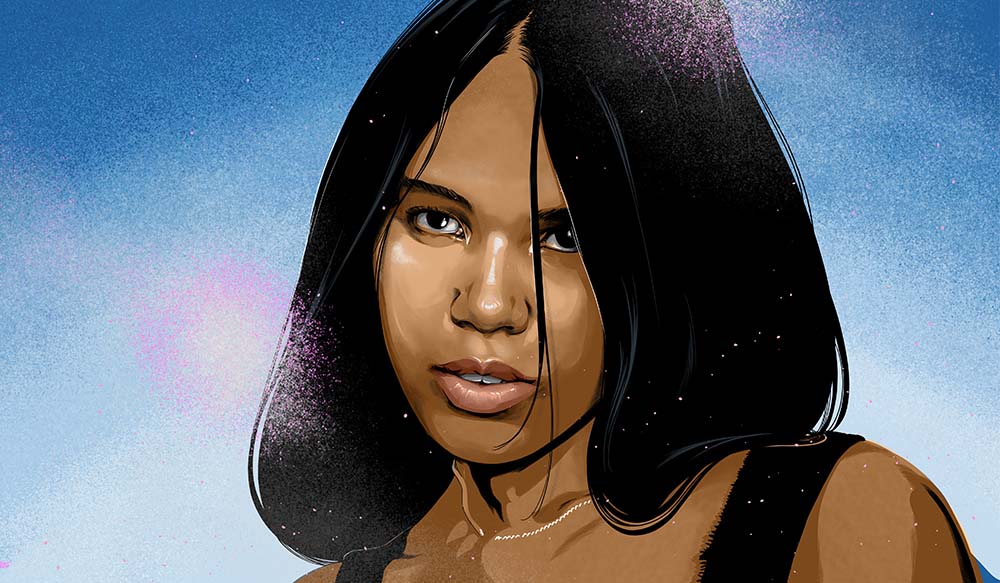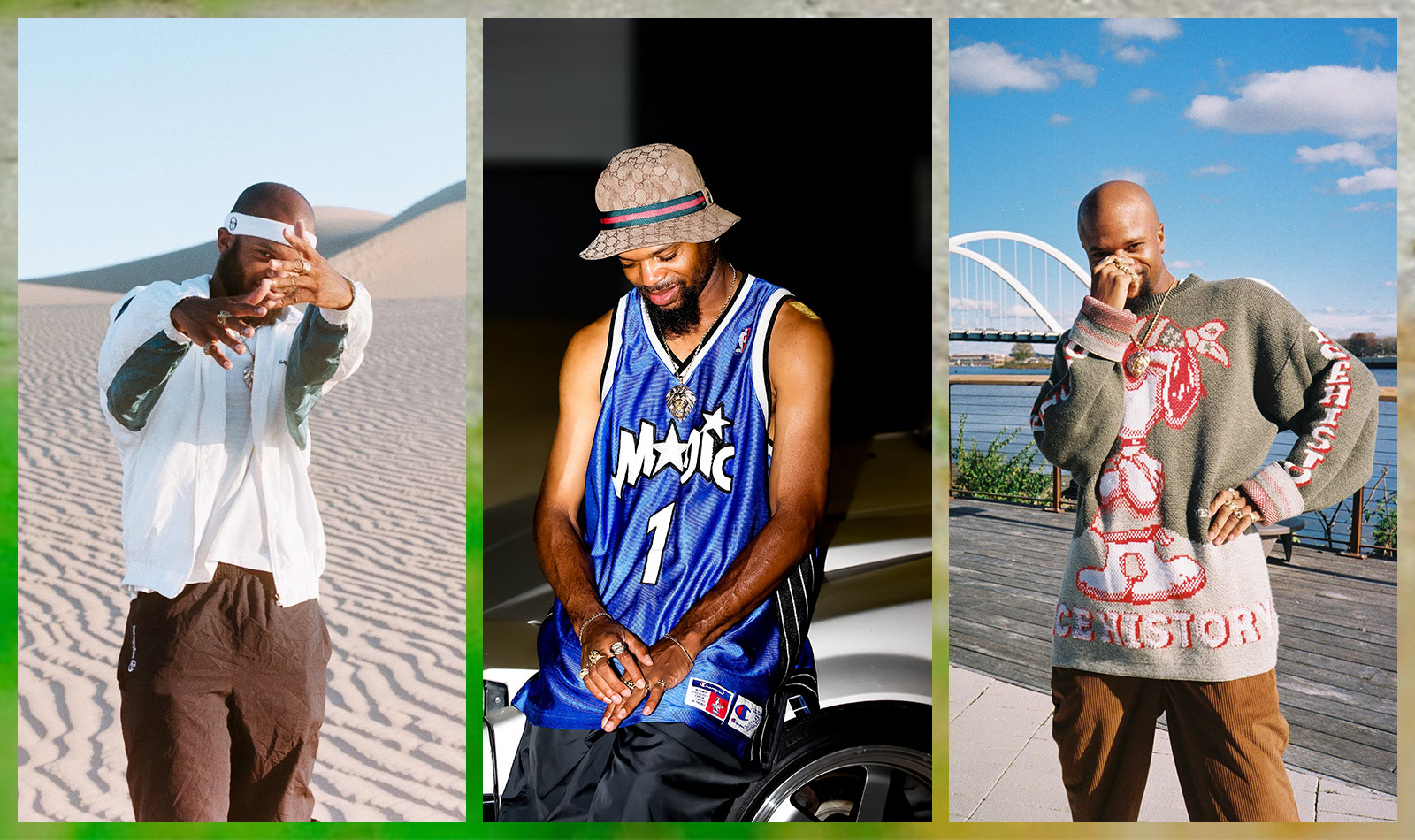
Wandering around Washington, D.C.’s Union Market is a surreal experience. It’s a collision of the old and new, where wholesalers hawking cheap sunglasses and butchers selling halal meats sit next to fourth-wave coffee shops, high-end taquerias that promise “authentic” experiences, and a Warby Parker storefront softly jamming generic tech-house. The mishmash of vibes is initially jarring; but linger in the neighborhood long enough, and it begins to feel inviting. The few tourists milling about seem confused, departing as quickly as they arrived. Mostly, it seems populated by regular locals running errands and looking for a decent meal. It’s the perfect place to meet D.C. rapper Rahiem Supreme, whose eccentric, affable style feels at once thoroughly lived in and completely brand new.
He greets me while I’m flipping through LPs at Byrdland Records, asking if I’ve noticed any Japanese jazz albums he could add to his modest vinyl collection. Rahiem cuts a swaggy figure—brown BWYL tracksuit, tan L.A. Dodgers hat, and a gold ring on each finger. Every time he parks his 1984 Nissan Datsun 300ZX Turbo (which appears on several of his albums covers, including Everything Became Beautiful and Phenomenon Raski), he detaches the magnetic steering wheel, stashing it beside the driver’s seat. “This car was designed for drifting,” he tells me with a wide, toothy grin as we roar down Georgia Ave. He has a distinct, head-turning presence: People shout praise for his car from corners at various points during our day-long trek through the District; the folks working behind the counter at Joint Custody, a record shop at U Street and 16th, praise his outfit when he walks in to consign a couple of LPs; as we chat over plates of Jamaican curry chicken on a park bench in Logan Circle, I notice three people do a double take as they walk by.
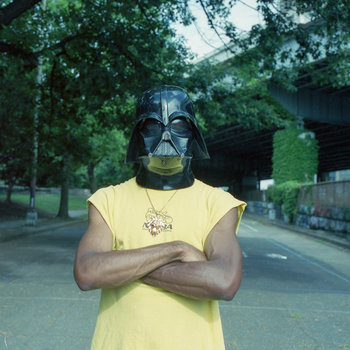
In RZA’s 2004 book The Wu-Tang Manual, renowned linguist and poet-philosopher Ghostface Killah issued one of the greatest explanations of abstraction put to record. “I don’t give a fuck if you don’t know what I’m talking about—this is art,” he exclaims. “When you go see a painting on the wall and it looks bugged out because you don’t know what the fuck he thinking, because he ain’t got no benches, no trees there, it’s just a splash. The n—-a that did it know what the fuck it is.” It’s a typically brash bit of Ghostface bluster, but it offers a simple, timeless truth: You don’t need to understand meaning to feel intention. “Splash” is the keyword here: It’s unexpected, visceral, vibrant. For Rahiem, it’s a guiding philosophy that applies to everything—fashion, lyrics, cadence, simply appearing in a room—even if its definition can’t be easily articulated. “It’s like Egyptian hieroglyphics and shit,” he explains with a laugh. “If you get it, you get it.”
There’s a line on “Splash Ketchum,” a smoldering track near the end of Furious Splash, Rahiem’s most recent collaboration with Japanese producer Budamunk, that echoes Ghostface’s thesis. “We’re abstract artists,” Rahiem raps with sing-song fluidity, an assertion that comes after a flurry of references to exorcisms, American pro wrestler Scott Steiner, and the hazy memory of a sexual encounter. Each image melts into the next, creating a mesmerizing burst of color that Rorschachs into a vivid, animated shape. The songs on Furious Splash all have “splash” in the title, a reminder that even if you have trouble following Rahiem through the rivulets of his brain, it’ll still sound fly as fuck.
Rahiem dropped his first mixtape, Genesis, in 2011. Like many tapes in the blog era, it was an exercise in pure rapping, with Rahiem repurposing beats from the likes of Outkast, Mobb Deep, and Common. The tape earned praise from the likes of 2dopeboyz and Earmilk, some of the era’s biggest websites, but Rahiem was unsure of what moves to make next. “I just started to perform a lot locally, did a few things up in New York,” he says. “Mostly, I just kept dropping and doing guest verses.” In just a few short years, he’d built a decent following in the DMV, racking up opening slots for legends like Nipsey Hussle, Rakim, and Benny the Butcher.
He’d landed on a “super boom-bap” sound, occasionally mixing it up with a trap beat, and often rapped in a harsh, sustained shout. “I just felt that yelling was the only way to get my point across,” he says; but that approach didn’t feel true to his character. Something unlocked inside of him the late ‘10s and early ‘20s, and both his voice and his preference for hard-edged production softened. “It’s still in the lane of looped soul,” he says, describing his signature style, “but it’s more of a cousin to boom-bap.” He leaned further into his study of rappers like Sadat X, Slick Rick, and Devin the Dude, developing a lilting, conversational flow that can feel like he’s rapping entire paragraphs at a time.
Cassette
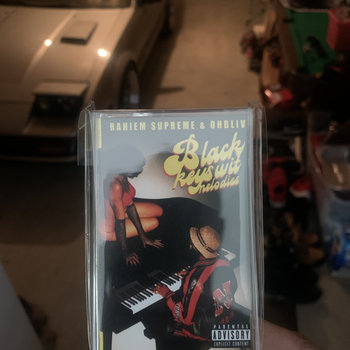
Rahiem remains unconquerably prolific. He’s already released multiple projects in 2025 and tells me that he’s finished recording another one with Long Beach producer Ahwlee. There’s always something bubbling in the periphery, including a long-gestating project with DJ Muggs and a record helmed by YUNGMORPHEUS. When I ask him how he keeps up such an impressive work rate, he shrugs and says, “I gotta be at peace to create.” What do you do to get to that place of peace? “I go out and live my life. Accepting whatever your circumstances are can bring you harmony. Then I come back and splash that shit together.”
Choosing where to start with Rahiem Supreme’s vast catalog can be intimidating, so below is a selection of some of his best and most vital work.
Rahiem Supreme & WiFiGawd
Yung $aks 5th
Vinyl LP
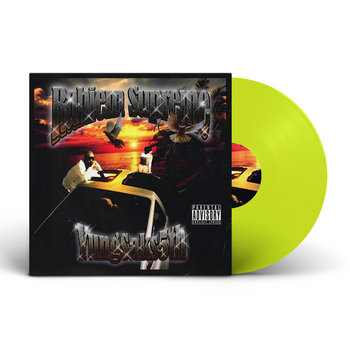
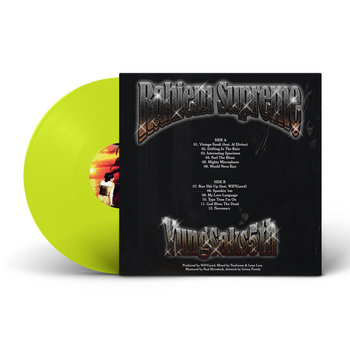
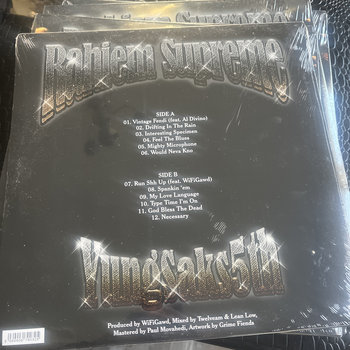
Despite only clocking in at 27 minutes, Yung $aks 5th is one of Rahiem’s most ambitious and experimental releases. His pairing with weirdo D.C. rapper-producer WiFiGAWD is incredibly inspired and pushes Rahiem into new pockets. The album has two discrete halves. The first half, which concludes with the ghostly doo-wop of “Would Neva Kno,” is all lush loops and off-kilter sample chops and finds Rahiem in his storytelling bag. In the second half, WiFi supplies Rahiem with the candy-colored, Tony Seltzer-esque trap beats. Rahiem pushes the boundaries of his elastic voice, resulting in some of his most animated, melodic work. It’s daring, catchy, and endlessly listenable.
Rahiem Supreme & Wino Willy
Snake & Crane Secret
Vinyl LP
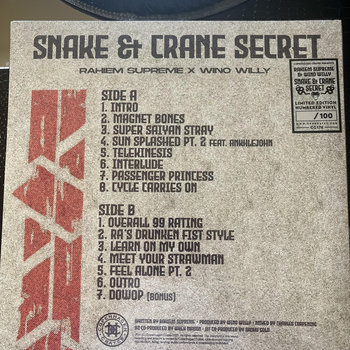
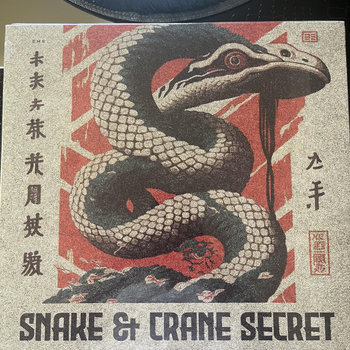
When Rahiem speaks of New Orleans producer Wino Willy, there’s an air of wide-eyed reverence in his voice. “He got a certain type of head knock to his shit,” he says. “It’s boom-bap, but I couldn’t find another producer that made boom-bap with that kind of knock.” Snake & Crane Secret is one of Rahiem’s grimiest works and bears perhaps his heaviest resemblance to Ghostface. Wino Willy’s beats snap and crumble in equal measure, reminiscent of Wu affiliates like 4th Disciple and True Master. “Sun Splashed Pt. 2” with fellow D.C. heavyweight Ankhlejohn is a particular highlight.
Rahiem Supreme & Argov
Behold the White Pale Horse
Behold the White Pale Horse opens with a recording of Rahiem and his mother discussing the feeling of his late father’s lingering presence. It sets up one of his most spiritual projects, with Rahiem waxing existential and musing about the possibilities of the afterlife. As he raps in “we b n r own way,” Behold the White Pale Horse is a “message from an oracle,” a transmission from the beyond about actualizing one’s peace. His meditations float in a pleasant haze, as Argov provides pulsing beats full of deep sidechain compression that emanate from the speakers like heat lines off asphalt.
Rahiem Supreme
Everything Became Beautiful
Vinyl LP
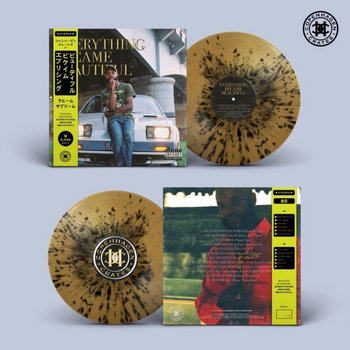
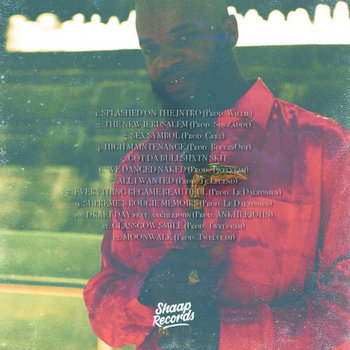
Released at the top of 2020, Everything Became Beautiful feels like a transitional moment for Rahiem, the beginning of his move from loud, boom-bap traditionalist to the weirder, more cerebral artist he is now. It’s one of the few multi-producer records in his discography, but it retains a unified, groove-first vision. Since the beginning of his career, Rahiem has had an excellent ear for beats, but Everything Became Beautiful is an especially lovely showcase for his taste. The glowing production on songs like “The New Jerusalem” and “Supreme’s Bougie Memoirs” feels like spiritual jazz, while “All I Wanted” and “High Maintenance” marry simmering melodies with steady, churning hi-hats.
Rahiem Supreme & axpuzzles
BBQ or Mildew
Compact Disc (CD), Vinyl LP, Cassette
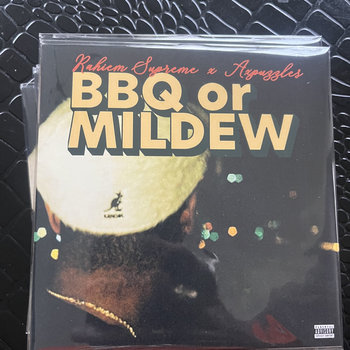
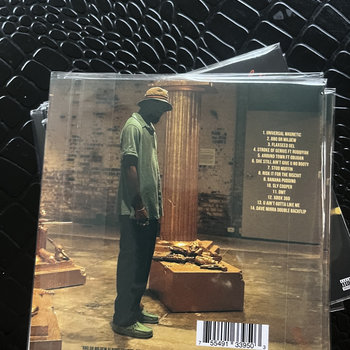
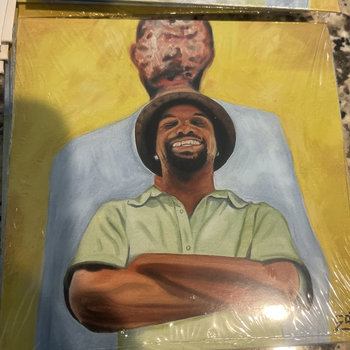
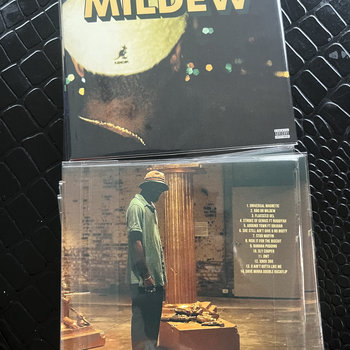
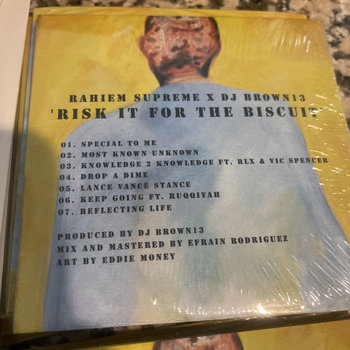
The mysterious axpuzzles is one of Rahiem’s most frequent collaborators, and their music together is probably the very definition of the Rahiem Supreme sound. He describes the beats he gets from puzzles as activating his sense memory: “The tastes, smells, where we at in the environment—puzzles’s beats give me that.” BBQ or Mildew, their newest and best collaborative work yet, is murky and muffled, full of dusty funk grooves and corroded textures that prompt Rahiem to reach into his memory banks. He offers stories about pre-gentrification D.C., family members acting strange at backyard barbecues, and bizarre drug experiences. “Stud Muffin” sounds like late-period A Tribe Called Quest trapped beneath a concrete slab; “Risk It For the Biscuit” has the retro-futuristic feel of a technicolor sci-fi film.
Rahiem Supreme & al.divino
Splash Bandicoot
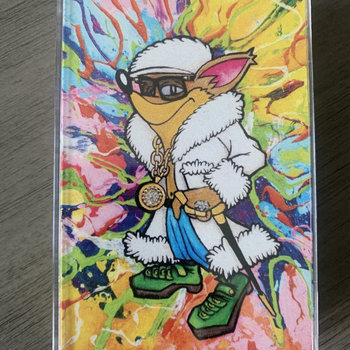
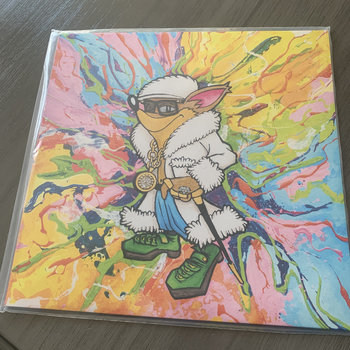
Cassette, Vinyl LP
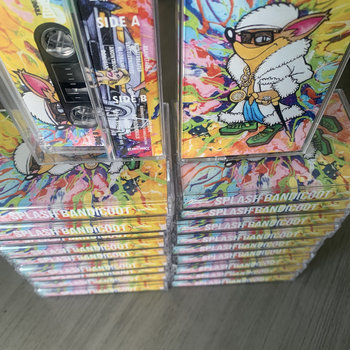
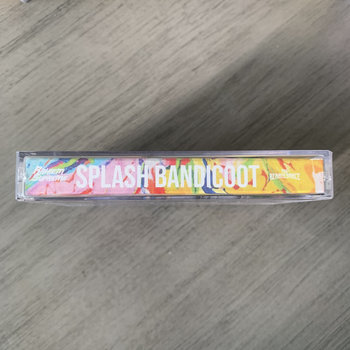
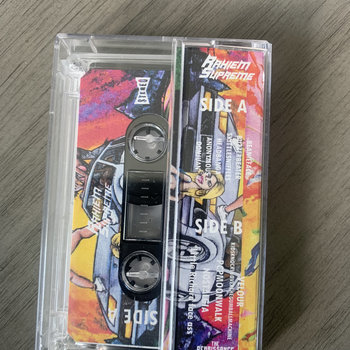
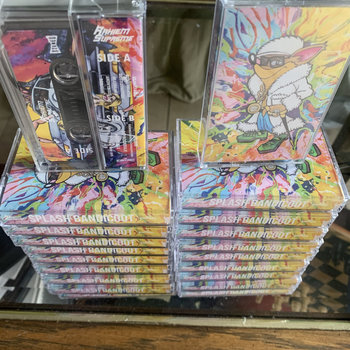
Splash Bandicoot, entirely produced by Lynn, Massachusetts psych-rap auteur al.divino, is one of the most pivotal albums in the Rahiem Supreme oeuvre. He first met divino and Estee Nack when they were in D.C. to work with WiFiGAWD, and later traveled to Lynn to work on what would become a full-length album. His memories of the time are hazy, as the experience was fueled by psychedelics (“We got some acid, got some shrooms, and got to work,” he says), but the result is a crumbling, loop-driven slab of extremely trippy rap music. Rahiem has excellent chemistry with the Lynn set, their worlds meshing with frictionless ease.
Rahiem Supreme
The Treacherous Charm
Compact Disc (CD)
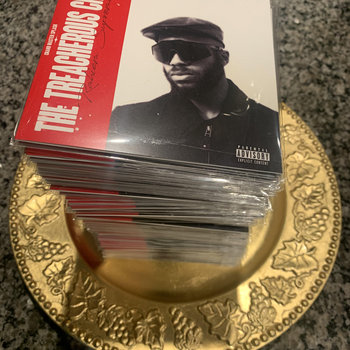
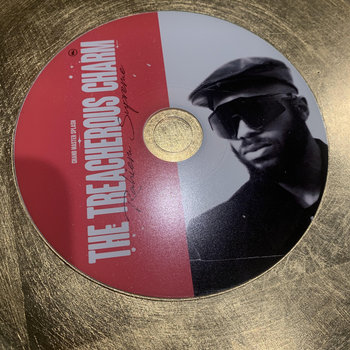
The Treacherous Charm continues the transformative phase Rahiem started with Everything Became Beautiful, moving through various styles to see which one sticks. It foreshadows Splash Bandicoot, as al.divino produces six of the 17 tracks; but other frequent collaborators like HvyArms, axpuzzles, and Twelve AM also appear. Atmospheric trap songs like “weaintneva” sit next to woozy loop jams like “itsnorules” and “iluvumama,” all blending into a kaleidoscopic whole. It works incredibly well, however, as Rahiem’s personality is the glue to these disparate sounds. The Treacherous Charm is a fascinating look at an artist documenting his development in real-time.
Rahiem Supreme
Dogon Sirius
Compact Disc (CD), T-Shirt/Apparel, Cassette
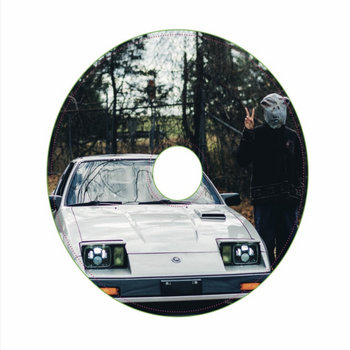
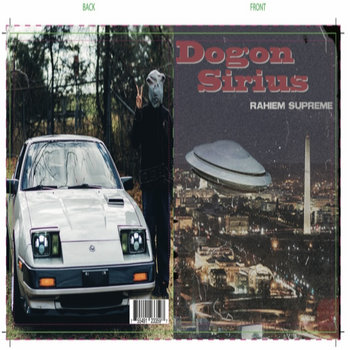
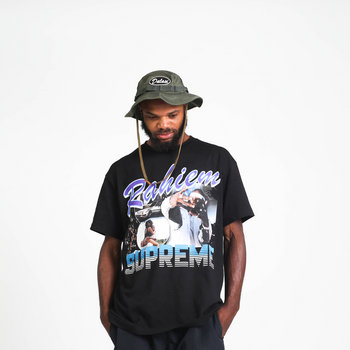
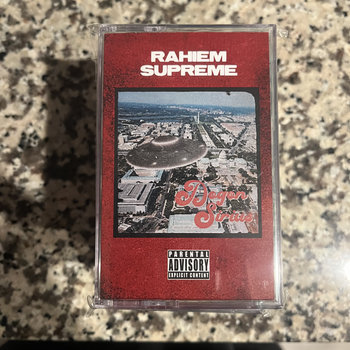
Once again linking with axpuzzles (though Obii Say and HvyArms each produce a track here), Dogon Sirius is perhaps Rahiem’s most cookout-ready album. It’s not as foggy as BBQ or Mildew or distorted as The 9 diagrams, but it’s still gauzy, as if being played on a stereo system two floors down. The beats feel brighter, and you can imagine Rahiem writing these songs as he cruises around the District during cherry blossom season, windows down, weed smoke billowing. The album features some of Rahiem’s wordiest flows, as if his thoughts and ideas are rushing to the front of his brain to become known.
Rahiem Supreme & axpuzzles
The 9 diagrams
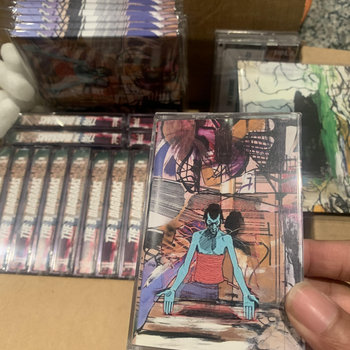
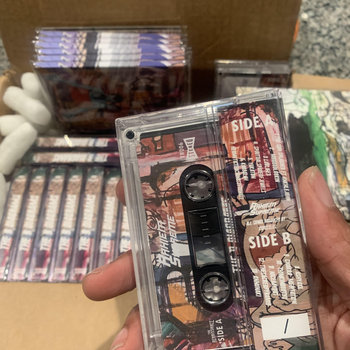
Compact Disc (CD), Cassette
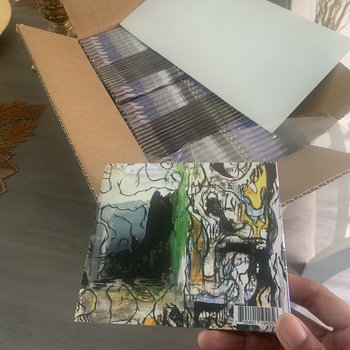
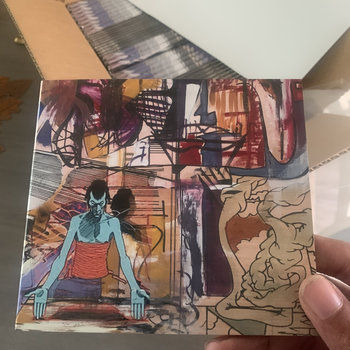
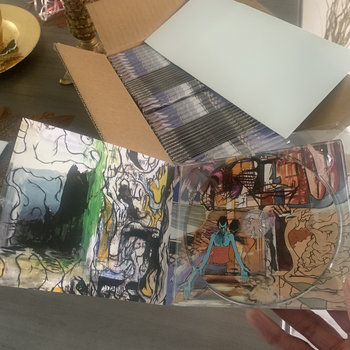
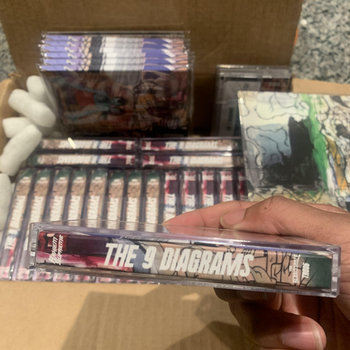
Another excellent collaboration with axpuzzles, The 9 diagrams is bruised and raw, each beat and vocal take mere millimeters from the red. Much like Behold the White Pale Horse, the album finds Rahiem in a spiritual, contemplative mindset, poring over childhood memories and reminiscing about long-passed loved ones. It has some of his most pained vocal performances, as if he’s trying to exorcise whatever’s plaguing his soul. Still, there’s respite in the beyond: Rahiem turns to ancient texts and practices to seek salvation. In the spoken intro to the smeared, dirt-caked “Kabbalah,” Rahiem offers a simple thesis, declaring that “everything’s connected.”