It would be accurate to call this spring’s role-playing video game Clair Obscur: Expedition 33 the “sleeper hit of the year.” The game, which lives at the unlikely intersection of grief-stricken and whimsical, has exceeded most commercial expectations—selling 3.3 million copies in its first 33 days, according to its developers—and found a devoted fanbase.
The sales numbers are less interesting than the game’s underdog origin story: Expedition 33’s creators were drop-outs from larger game studios with an ambitious dream project that only snowballed in scope over its six years of development, without the benefit of major game studio backing. They recruited key members of their team using the video game-world equivalents of Craigslist ads.
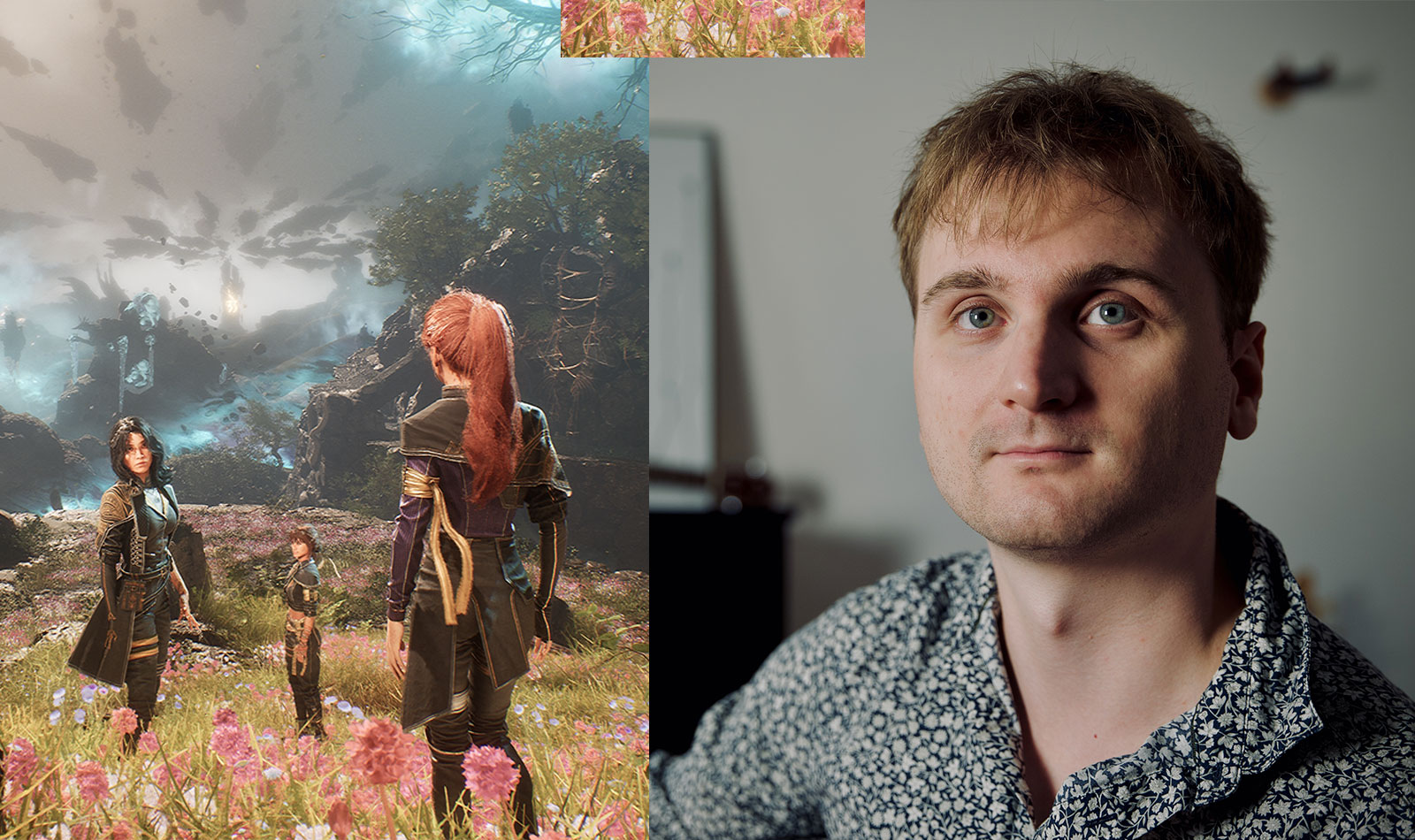
Clearly, Expedition 33 lead Guillaume Broche had an eye for creative talent. His writers developed a strange and emotionally impactful tale that’s part Harry Potter and part Logan’s Run. But Broche’s ear to the underground proved just as crucial. Instead of looking to game music royalty to soundtrack his project, he searched obscure online forums. That’s where he found Lorien Testard, a French composer and guitar teacher who longed to work in game music, but had no professional experience writing for them. Broche fell in love with Testard’s SoundCloud page, which featured dozens of imagined game themes and boss battle songs, and hired him via email.
Five years later, Testard’s debut as a game music composer is an absolute shocker: An eight-hour-plus tour de force (nearly 10 if you consider the newly released ‘Nos vies en Lumière’ bonus edition) that features majestic orchestral pieces, gutting choral arrangements, convincing forays into heavy metal and gorgeous melodic themes woven throughout the epic game. It’s also an unusually lyrical—in every sense of the word—effort for a game soundtrack, with Testard’s collaborator Alice Duport-Percier providing both songwriting and supplying the elegant lead vocals on many of Expedition 33’s tracks.
Clair Obscur: Expedition 33 is already long-listed for a World Soundtrack Award, and both the soundtrack and the game are widely expected to clean up during awards season. The label, London-based Laced Records, recently announced a variety of physical releases for the soundtrack, including a six-LP vinyl box set. Speaking via email, he declined to answer some questions directly related to the game’s success (perhaps it’s all a bit much; even French president Emmanuel Macron praised the game’s development team as “a shining example of French audacity and creativity”), his enthusiasm and passion are evident throughout the interview.
The game is set in a fantasy version of the Belle Époque era, and it’s so densely packed with allusions and imagery from Paris and from French culture, from the names to the fighting mimes to the Grande Roue de Paris. How much research went into the musical side of that?
This process was more intuitive than research-based. I didn’t intentionally try to make the music sound French (except for the song ‘In Lumière’s Name.’ I really needed a French theme for fighting mimes with baguettes). I think that, since I was born in France and grew up listening to French songs all my life, it naturally shaped the way I hear and create music. And since I often look at the game’s concept art while composing, the Belle Époque and the French atmosphere that comes through influence my musical direction!
Was there a level of national pride this team had while working on the game? Was that conscious?
I don’t think that’s something that ever crossed our minds. I can’t speak on behalf of the studio, but I think we mostly just wanted to have fun doing our own thing, spending time every day developing the game of our dreams.
The plot, as others have pointed out, very much revolves around processing grief and fighting impossible battles. These characters are, in a way, facing off against their God. How did you get yourself into their world, emotionally?
I spent time immersing myself in the game’s concept art and script. When I compose, I often have the character’s concept art next to me. It allows me to spend time feeling what emanates from that character. Then, I interpret it with my sensitivity and start looking for musical ideas to create their song. I’m grateful every day for the chance to compose their themes. It’s a wonderful and immense gift, I spent an enormous amount of time with the characters of Expedition 33 and with their musical themes. I feel deeply emotionally connected to them.

There are a lot of fun songs and moments in the game, too, from the jazzy Gestral themes to some of the epic battle music, which often involves rock and electronic elements. That genre-mashing “Lampmaster” battle music comes to mind.
This track is one of the oldest in the project! Back in the We Lost [the game’s original working title] days, we had created a non-player character who was an opera singer, and she inspired this song with those haunting, ghostly opera voices that come and go, layered over a remix of a Handel concerto I had played around with. At the time, I had called it “Last Opera Before the End of the World.” But when We Lost was rebooted and became Expedition 33, the opera and the NPC were no longer part of the game. So I left the track in my drafts pile for years. It was Guillaume [Broche, the game’s director], who regularly listens to all my tracks on SoundCloud, who dug it back up, because he felt it worked perfectly for the Lampmaster.
You were putting this game together in the thick of the Covid pandemic. What kind of effect did that have on you?
Covid triggered my career switch. I was a guitar teacher, and in my free time I had started composing for We Lost. But when the pandemic hit, I was no longer able to give lessons to my students, I ended up spending all my time composing for the game and it became my full-time job!
For a game soundtrack, there are tons of voices of words (in French and English) across this soundtrack, including many exchanged with your collaborator Alice Duport-Percier. Why was it important for you to have so much human voice in the game?
The human voice is an instrument that moves me; it brings out a lot of emotion in me. I feel the voice as a direct connection and bound to the heart. When Alice sings, I can feel every inflection, and there’s so much emotion in her words. It touches me deeply. Those are the emotions and the feelings I hoped to share with the players. The human voice also makes it possible to include lyrics in the soundtrack! I’m especially fond of writing lyrics and text, it allows me to tell another layer of musical story to the players. I enjoyed, a lot, imagining and creating the lyrics of Clair Obscur.
Is that your voice on “Lumière s’éteint”? Why did you decide to deliver that yourself, if so?
Yes, that’s me! In the past, I was a guitarist for spoken-word bands. When I started writing the lyrics for this track, I realized they weren’t really meant to be sung; spoken words felt more natural with this text. So I took a breath and recorded myself in my room for this song. It’s a little nod to the musician I used to be, and it felt like the most direct and raw way to deliver the text I had written for this song.
The reality is that game projects, especially projects piloted by small and relatively independent teams, often lose their way or are cancelled at some juncture. Did you ever doubt that this one would get to the finish line?
Expedition 33 is my first professional experience in video games, and I was focused on creating the soundtrack every day. I also saw the whole team at Sandfall moving forward with the same mindset for the whole game, so I didn’t leave too much room for that in my mind. There were a few internal release date delays, but they were smart and conscious decisions made for the game’s quality and what we wanted to share with players. So I never doubted that Expedition 33 would see the light of day! That said, the final months before release felt incredibly slow. From late 2024 until launch on April 24th, 2025, I was counting the days one by one, bursting with impatience for that long-awaited day to arrive!
Do you still teach guitar?
No, I completely stopped to become a music composer!
You have mentioned Zelda and Mario music as favorites from your youth. Are there any more underrated or obscure soundtracks that you’d like to shout out?
It’s hard to think of something on the spot, but what comes to mind right now are actually some anime soundtracks. The Gintama soundtrack, for example, along with the soundtracks from Steins;Gate and Lupin III, hyped me up and moved me deeply during some of the most emotional scenes in their respective shows. I don’t know if they’re necessarily underrated globally, but they’re not very well known here in France.
I have to imagine you’ve already had offers for more projects. Are you working on a new game already?
Right now, I’m working on a lot of projects related to Expedition 33, like creating the vinyl editions, the bonus album, and preparing the Clair Obscur concerts. I’m planning to take some time following the release of the game and the soundtrack to reflect and imagine how my music will evolve. During intense production periods like the last few years of Clair Obscur, I was fully focused on the game and the soundtrack so now it feels like a good moment to explore and imagine my new way of creating music for the years to come.