
As 2025 comes to a close, it’s time to partake in the time-honored tradition of celebrating the most essential rap releases to grace Bandcamp. Listed in diplomatic alphabetical order, here are the 10 best hip-hop albums of the year.
Aesop Rock
Black Hole Superette

Black Hole Superette is an album about unseen forces. Over 20 self-produced tracks, Aesop Rock zeroes in on those micro-moments that can shape a person’s life. Like, for example, the day his pet hamster escaped. “In ’86 I had a hamster named Elizabeth/ Got her at the mall with that whole Habitrail tube system shit,” Aesop raps on “Unbelievable Shenanigans,” over a backdrop of warm fuzz. “Cried a month when she escaped captivity all by herself/ That winter mother found her behind the dryer alive and well/ Strangely, I recall that over how and when she died.” As Black Hole Superette plays out, Aesop builds on the idea of memory-making in the context of aging, capped by the image of a plum tree in a garden sparking philosophical thoughts on “Black Plums.” Backed by moody ’80s synths and brittle snares, the MC opens the track with an observation: “Black plums getting fatter every summer/ Half us in the cabinet getting sadder every upper.” Then he delivers a series of sepia-toned lines that convey the heart of Black Hole Superette: “A hundred years in the future, I bet some photo exists/ Of some historic moment happening somewhere close to the crib/ Maybe some heavenly zealot yelling and wielding a piece/ And there I am in the back enjoying that seasonal treat/ Oblivious and doing my version of smelling a rose/ Stupid look on my face–I am never in vogue.”
Armand Hammer & The Alchemist
Mercy

Vinyl LP, Compact Disc (CD), Cassette
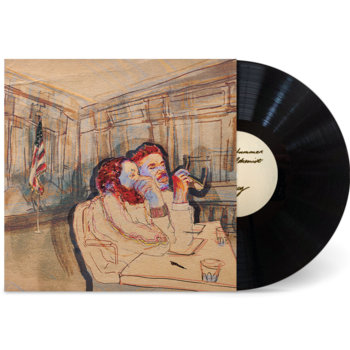

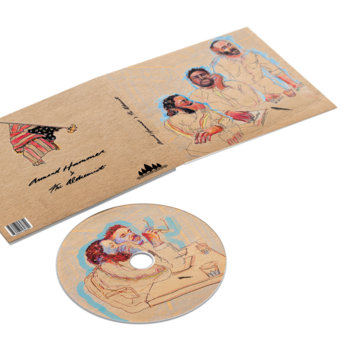
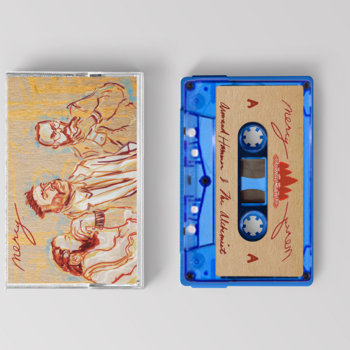
2025 was a sterling year for the Backwoodz Studioz universe. Label figurehead billy woods furthered his credentials as an MC with an unparalleled eye for detail on GOLLIWOG; rapper Gabe ‘Nandez found a perfect production foil in DJ Preservation for Sortilège; while PremRock continued in an ever bluesier and ruminative direction on Did You Enjoy Your Time Here…? (to say nothing of releasing a whopping three albums as ShrapKnel with Curly Castro over on Fused Arrow). All of them are vital, but it’s Mercy, recorded by woods and ELUCID with supreme beat scientist The Alchemist, that claims the title of “most essential.” The duo’s verses shift between the cryptic and the declarative, all of them delivered with unwavering conviction. Behind the boards, Alchemist crafts beats that pare back the percussion to allow loops of mystical keys and glowing synths to bolster the MCs’ words. “Should have killed me when you had the chance/ Now it’s out your hands/ I don’t need an advance/ I don’t dance/ Herzog voiceover, the camera pans/ Everybody’s a cameraman,” woods seethes over eerie, heaving guitar on “Laraaji,” before issuing a damning state-of-the-year decree: “The world doesn’t turn anymore/ Half burns, the other side will never thaw/ Burning books to keep warm/ Should have killed him when you had the chance.”
clipping.
Dead Channel Sky

2 x Vinyl LP, Compact Disc (CD), T-Shirt/Shirt



Dead Channel Sky is a potent slab of cyberpunk-inspired electro-funk. Roaming a dystopian sci-fi landscape, Daveed Diggs opens the album by jacking into a digital zone over the sound of 56K modem dial-up dissonance, then blazes through the pulsing high-octane “Dominator” with a commentary about the ills of unchecked techno-capitalism: “Avatar opportunity is creating the capital/ And no cap, audiences are infinitely more valuable/ When they thinking they ugly, inactive, fat and unfashionable.” Then comes the kicker: “Consciousness is a memory stick/ And that means that you can plug it in and feel what they believe.” Backing Diggs’s vivid worldbuilding, producers William Hutson and Jonathan Snipes punch techno and electronic influences in and out of the mix, creating a shape-shifting palette that gives Dead Channel Sky warp-speed musical momentum.
Dot Dev
There Was A Wind, But No Chime
Compact Disc (CD)
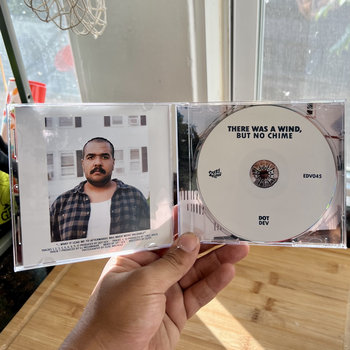
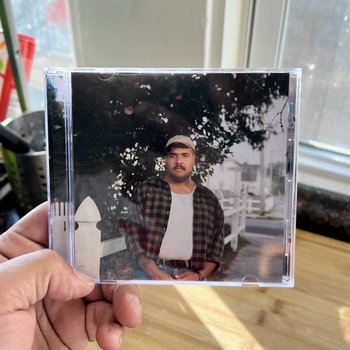
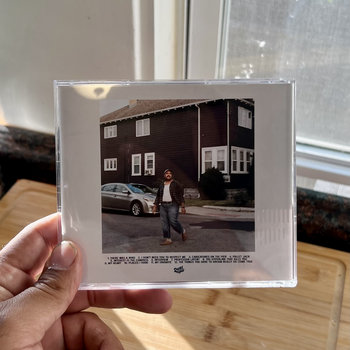
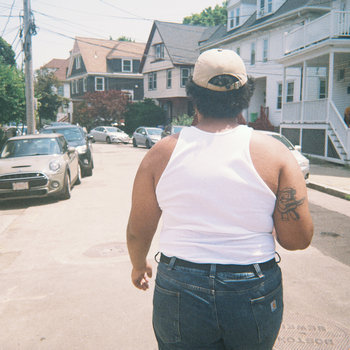
From the very beginning, There Was A Wind, But No Chime strikes a heartbreaking note. Backed by cushion-y synths and quiet splashes of cymbal, Dot Dev (who used to record as Pink Navel) fumbles through the emotions that accompany the loss of a parent, at one point realizing, “Now someone else has your phone number, a specter of what’s old/ And, you know, I didn’t even think about this part.” Similar feelings of disorientation occur through the intimate album. On the fuzz-soaked “I Don’t Need You To Respect Me,” Dot Dev ponders the worth of his artistic calling: “What’s it mean to be creative when the kitchen stinks?” he questions, before lamenting, “Driving to appointments just to fuck it up on follow through.” But amongst all the doubt, Dot Dev finds small patches of solace. That sense of safety is captured most evocatively on “Places I Rode,” where riding a bike and watching nature provides a sense of serenity amidst the album’s turmoil and anxiety.
Ho99o9
Tomorrow We Escape

Compact Disc (CD), Vinyl LP


Extreme noise is cleansing. Distortion is rousing. Those are the tonal truths the Newark-based duo of theOGM and Yeti Bones, aka Ho99o9, spend Tomorrow We Escape proving. From the outset, the album is agitated, amped up, and proudly angry. As “Target Practice” growls along, the MCs fire off anti-industry sentiments, with theOGM firing off sarcastic shots at conformity—“Lucky me, another label telling me what’s a hit!”—followed by Bones reveling in the group’s outsider status: “This ain’t Carti, this ain’t Drake/ This ain’t rock, this ain’t fake/ This the Joker with a blade, cut a smile on your face/ This ain’t metal, this ain’t trap/ Give a fuck where you at.” The project is peppered with criticisms of corrupt cops, oppressive governments, and corporate warlords, all set to abrasive industrial sonics that make Tomorrow We Escape an unstoppably intense listen.
La Rat
La Rat

Vinyl LP

Until you’ve heard La Rat, you probably hadn’t thought too deeply about how badly you might need a psychedelic, rodent-themed, helium-voiced Dutch rapper. The brainchild of Amsterdam-based musicians Goya van der Heijden and Tobias Jansen, the duo’s eponymously titled project brings to mind Madlib’s pitch-shifted Quasimoto alias meeting Steinski’s encyclopedic cut-and-paste sampling smarts. Gleefully off-kilter, the wildly immersive eight-track La Rat is fueled by funk-soaked loops and dusky, low-slung drums: “Crab Dish” combines fuzzy rolling bass and crackling static with seafood philosophizing in a way that recalls Paul’s-Boutique-era Beastie Boys; “Problems” is a sonic gumbo of creepy heavy breathing, radio distortion, and deliciously syncopated percussion; and “Puppet Show” is proudly odd, boasting a wonky and warped violin riff and a screwy voice that details a ceremonial parade that seems to involve cigarette smoke and a lot of dogs. With the vinyl version of the album already sold out, La Rat seems primed to be a real-deal cult collector’s classic.
Myka 9 & Blu
God Takes Care Of Babies & Fools

Vinyl LP, Compact Disc (CD)
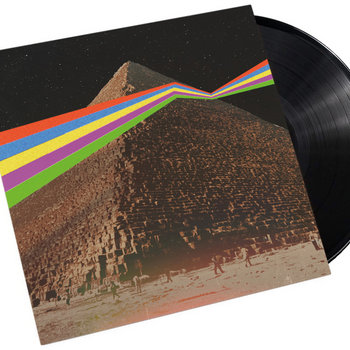
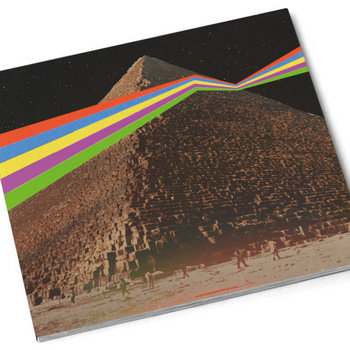

There’s a whole lot of L.A. love and camaraderie on God Takes Care Of Babies & Fools, a cross-generational rap album that spotlights the love of lyricism that bonds Blu and Myka 9. “Freestyle Fellowship specialist/ Wrecking it below the heavens/ With the most heaven-sent to ever bless the blend/ Blu, B-L-U out of the zoo/ Old school, new school, no rules just do you,” flows Blu over an energetic keys-and-guitar funk loop on opener “Free,” before Myka 9 smashes together references to Jack Kerouac, Langston Hughes, and Edgar Allen Poe. “LA CA” is a thrilling salute to the duo’s home state, and the duo tackle homelessness on “Park Bench” (an update of Freestyle Fellowship’s “Park Bench People”), dabble with ideas of God on “Illohim,” and sound downright jubilant on “Happy.” Smartly, the entire album calls on the beatmaking prowess and crate diggin’ nous of Mono En Stereo, who comes through with a collection of some of the most deliciously funk-saturated concoctions of the year.
Navy Blue
The Sword & The Soaring
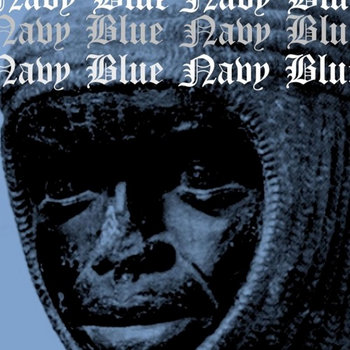
Navy Blue raps with a rare grace and gratitude. Never rushed, always composed, there’s a balletic elegance to the way the Los Angeles-raised, Brooklyn-based MC recites rhymes. On the serene and tranquil The Sword & The Soaring, the theme of balance emerges as the album’s principal motif, with the MC carefully weighing competing emotions in a bid to find comfort and a place of acceptance. “When in danger they will always have the prophet to be slain first/ The same surrender on the stained earth/ Trust, being full of shame hurts/ The chicken or the egg/ Whichever came first/ It don’t matter,” he raps over a delicate piano refrain from producer Chris Keys on opener “The Bloodletter,” before contemplating “the bottom of the hourglass as sand gathered.” As the album unfolds, Navy Blue’s soul-searching and philosophizing begins to exude a sense of thankfulness, with the MC considering himself lucky to even be in a position where he can contemplate the good and bad in life. “My parents wrapped their love and care around me/ I went through hell so I could share about me, share about grief/ When it was terror ’round me sharing my peace,” he raps over pastoral flutes and droplets of keys on “Sharing Life,” before offering a sincere sign-off: “I’m sharing life, it found me/ Sharing my peace/ I’m sharing life, it found me.”
Open Mike Eagle
Neighborhood Gods Unlimited
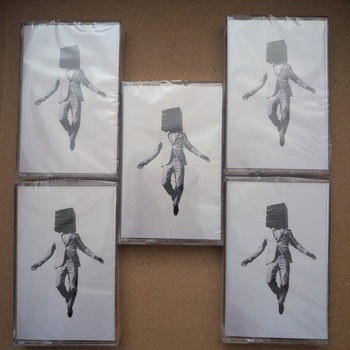
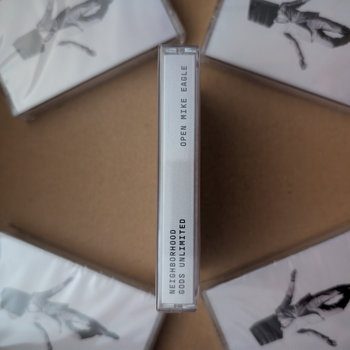
Vinyl LP, Cassette

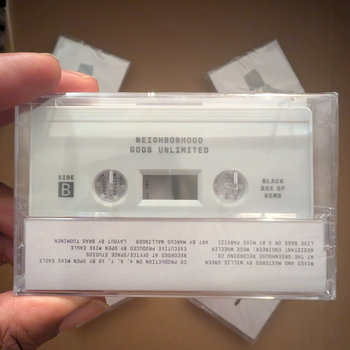
Neighborhood Gods Unlimited opens with a moment of realization. Set to the accompaniment of producer K-Nite 13’s chunky drums and wavering strings, Open Mike Eagle recalls falling “asleep ignorant” and waking up “knowing everything.” The song moves from conspiracy theories being bandied around a barbershop to OME delivering a damning state-of-the-union: “I had the whole United States wrong/ This country stays what it’s based on/ These pagans escaped to make laws/ Only having faith in a bank drawer/ And this whole shit’s an experiment/ When you only value inheritance/ The only freedoms we project is disrespectful and arrogant.” The song ends with Eagle witnessing a broken person putting themself back together. This sort of smart and ambitious songwriting—which sees Eagle shifting easily from personal reflection to broader social commentary—has always been a crucial facet of the MC’s discography, and Neighborhood Gods Unlimited continues that creative streak. “Me and Aquil stealing stuff from work” recalls days of retail grind at a shoe store and “ok but im the phone screen” highlights the way lives and thoughts become increasingly compartmentalized—even held captive—inside phones. It’s as whip-smart as a modern rap album gets.
WAVE GENERATORS
RUN AWAY WITH A WILD AND A RARE ONE

Vinyl LP
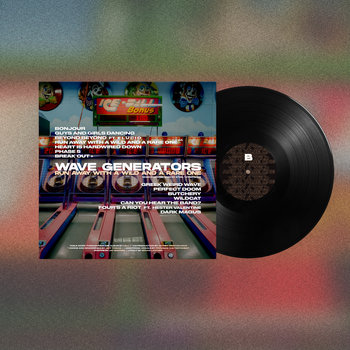
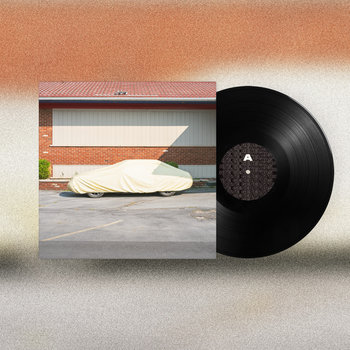
RUN AWAY WITH A WILD AND A RARE ONE sounds like a lost demo tape recorded in the legendary NYU dorm studio where Rick Rubin masterminded Def Jam’s early classics. Across the album, drums thump and smack with pugilistic power; guitars thrash and clang, and lyrics are hollered out with both vigorous force and cocksure vitality. High credit is due, then, to the project’s instigators—Nosaj from ‘90s rap experimentalists New Kingdom and Baltimore’s Height Keech—for successfully channeling the attitude and unbridled energy of a rowdier rap era. For a snapshot of the album’s visceral appeal, head straight to “GUYS AND GIRLS DANCING” to hear Nosaj howling in all his raspy glory, weaving in Digital Underground references over some supremely knotty and gnarly guitar.